
A forecast frost can make any fig grower nervous, especially when the tree has been giving you sweet fruit all season. The good news is that a cold night does not always hurt a fig. Young trees, tender new growth, and potted figs are the ones that need help first.
A few simple steps this week can lower the risk and save you worry later.
A frost can damage growth without killing the fig
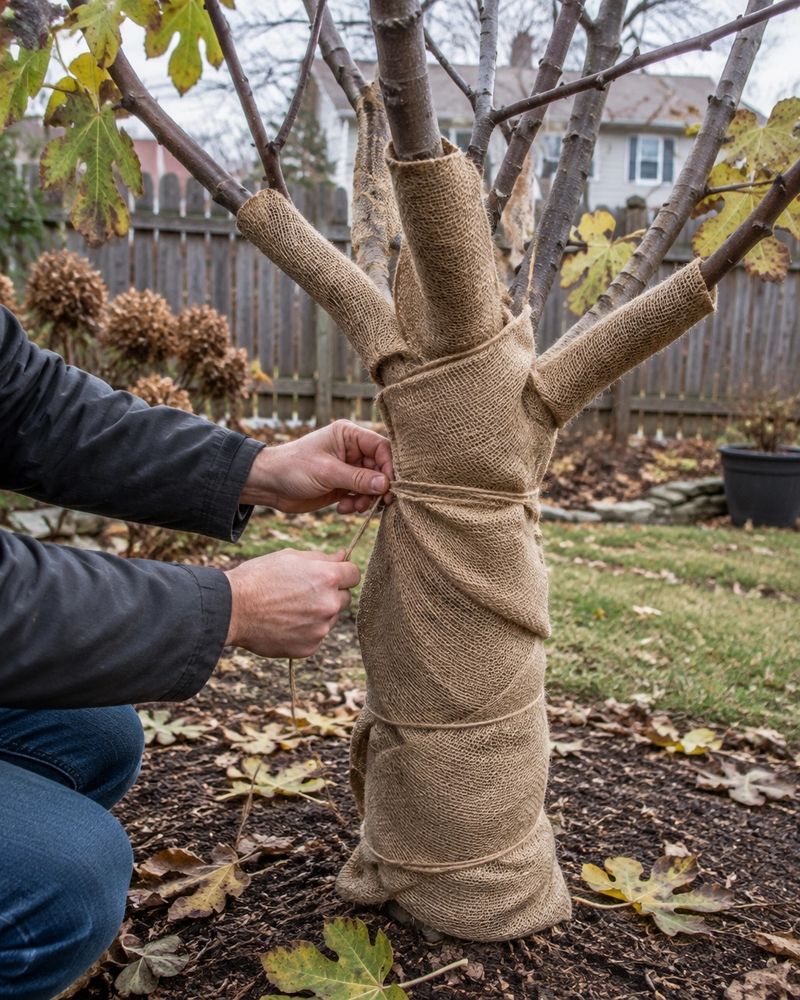
Frost worry is fair, but a cold night does not automatically wreck a fig. Injury depends on how cold it gets, how long it stays cold, and what shape the tree is in. Leaves and soft new shoots are the first to suffer, while dormant wood and roots handle far more.
Texas A&M guidance says established figs can usually tolerate sustained temperatures around 17°F, while young plants and tender trunks are more vulnerable. That number is not a promise for every tree, since cultivar, soil moisture, and cold conditioning all change the outcome.
Even a fig that freezes back can recover. UF/IFAS Gardening Solutions describes figs that lose branches and regrow from the base.
NC State Extension notes that fruiting may be delayed while new growth develops. So the real risk is often a smaller or later harvest, not a lost tree.
Which figs need attention before a freeze?
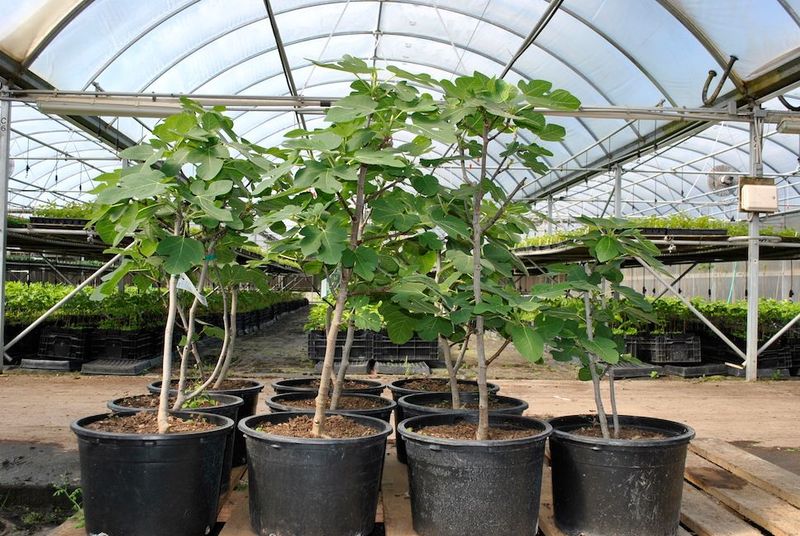
Start with the forecast, then look at your tree. Young figs, trees still pushing soft new growth, and figs in pots deserve attention first.
A large, established tree that has gone dormant usually needs far less help.
Dormancy matters because a tree that has had gradual cooling is better prepared. UF/IFAS says fully dormant, properly cold-conditioned trees can handle roughly 15 to 20°F without severe damage, but tender growth can be killed by temperatures just below freezing.
It also notes that Florida figs may not be cold-conditioned before a cold snap arrives.
Texas differs from Florida, and even within Texas conditions vary. Texas A&M describes differences by cultivar, moisture, and conditioning, so treat any number as a range with conditions.
Pots are the other weak spot, because University of Maryland Extension points out that above-ground roots face more cold than roots in soil.
Water dry soil ahead of the freeze, not until it is soggy
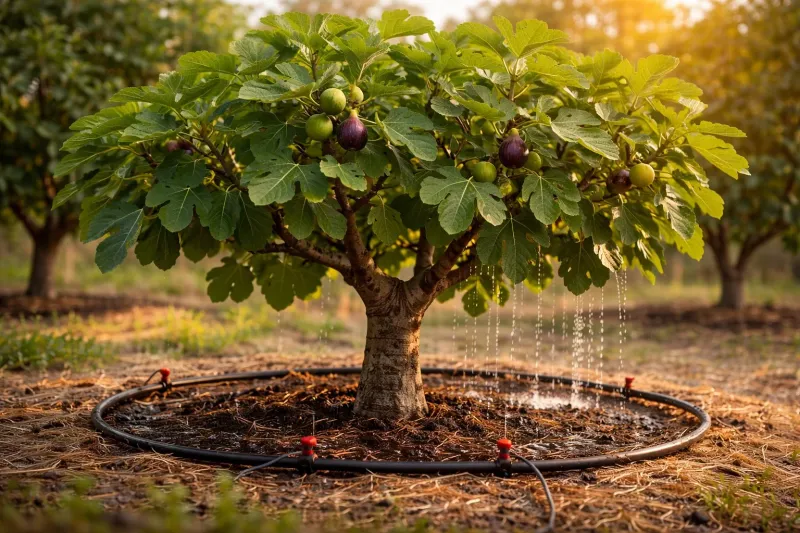
Dry soil gives up its warmth quickly, while moist soil holds and releases more heat overnight. That is why a little planning helps.
If your fall or winter soil is dry, water the root zone a few days before a hard freeze, as Texas A&M recommends.
Check first by pushing a finger or trowel several inches down. If the soil already feels damp, skip it.
Soggy ground does not add protection, and UF/IFAS warns that prolonged saturation harms roots.
This is a one-time preparation, not a growing push. Late-season fertilizer or extra irrigation meant to coax fresh growth works against you, because new shoots are the tissue that can be killed by temperatures just below freezing.
Hold off on feeding until spring.
Cover a small in-ground fig down to the ground
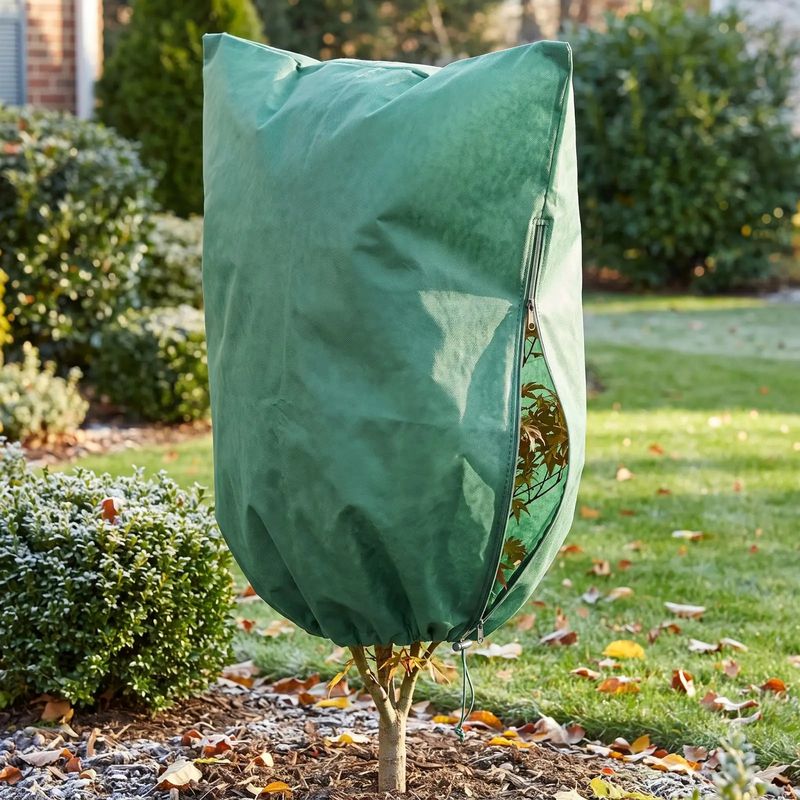
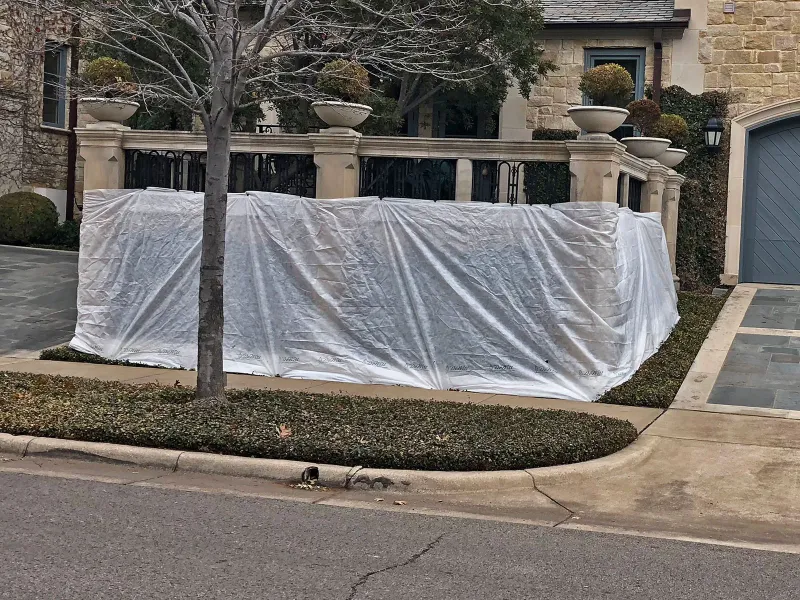
For a small tree in the ground, a temporary cover is the practical move when a freeze is forecast. Use frost cloth, a sheet, or a blanket, and drape it so it reaches the soil.
A cover that stops short lets heat from the ground escape, as UF/IFAS cold protection guidance explains.
Secure the edges with stakes, bricks, or clips so wind cannot lift it. If the material sags onto leaves, push a few stakes or a simple frame into the ground first to hold it up.
Put the cover on in the late afternoon and take it off once temperatures rise the next day.
Keep this in proportion. Sources for colder regions, such as University of Maryland Extension, describe burying or heavily insulating figs, but that is not needed for every Southern fig or an ordinary light frost.
A simple, temporary cover is plenty for most nights.
A potted fig is easier to shelter than an in-ground tree
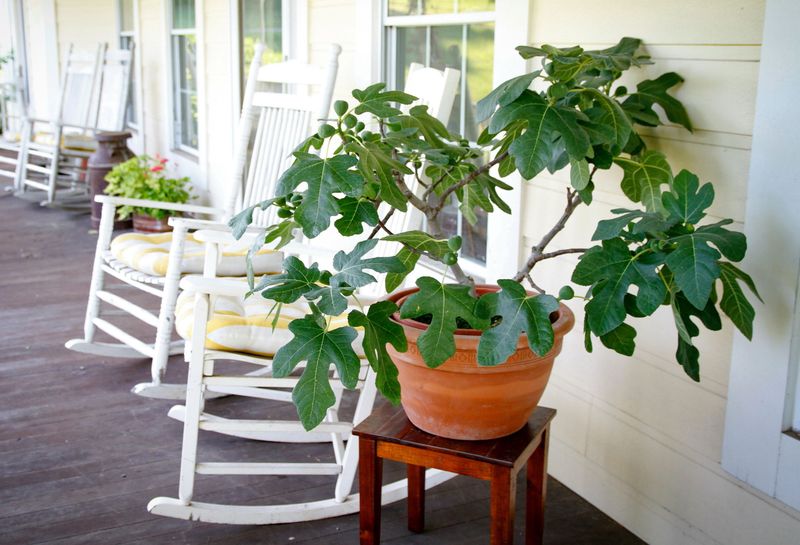
Here is one advantage of growing in a pot: you can move it. When a freeze is forecast, roll or carry the container into a garage or another protected, cool spot if you can.
A porch wall or a shed can also help when space is tight.
The reason is simple. Roots in a pot sit above ground, and University of Maryland Extension notes that they are more exposed to cold than roots in the soil.
The soil mass in a container cools from every side, so the root zone can get colder than the same tree would in the ground.
Plan the move around the forecast, then bring the pot back out when the cold passes. Pick a spot that stays cool rather than warm, and check that the potting mix is not bone dry.
This is a short-term shelter for a cold snap, not a full overwintering routine that every container fig needs.
Avoid protection methods that can create new problems
Good intentions can backfire in two common ways. The first is plastic.
It can trap heat on a sunny morning and cook the leaves underneath, so remove it or open it up for ventilation once the cold period ends and before the sun warms things up. Cloth is gentler, but it should still come off after the cold.
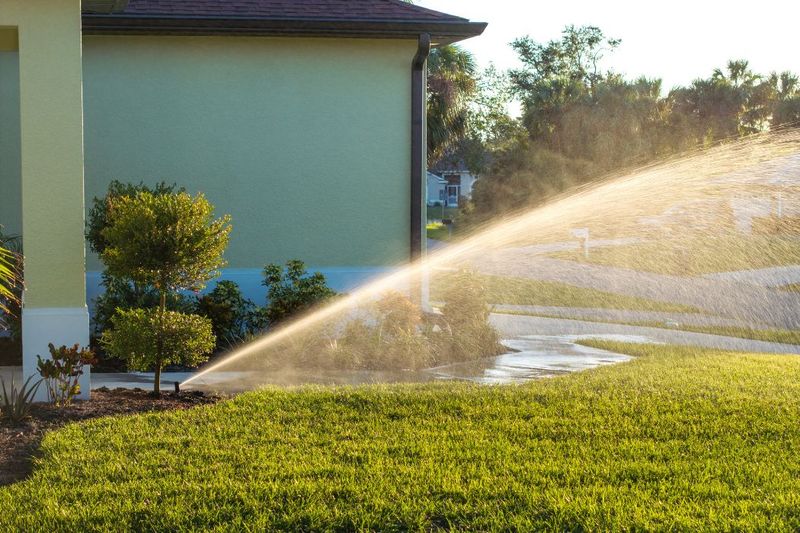
The second is the sprinkler. Running ordinary home irrigation over a tree during a freeze is not a stand-in for covering it.
UF/IFAS explains that freeze irrigation needs continuous, adequate water application, and typical home systems generally cannot deliver enough, so they may do more harm than good.
A practical check: if you cannot keep water flowing on the whole tree all night, skip it. Cover the tree, or move the pot, then watch the temperature the next morning.
Wait for regrowth before deciding what to prune
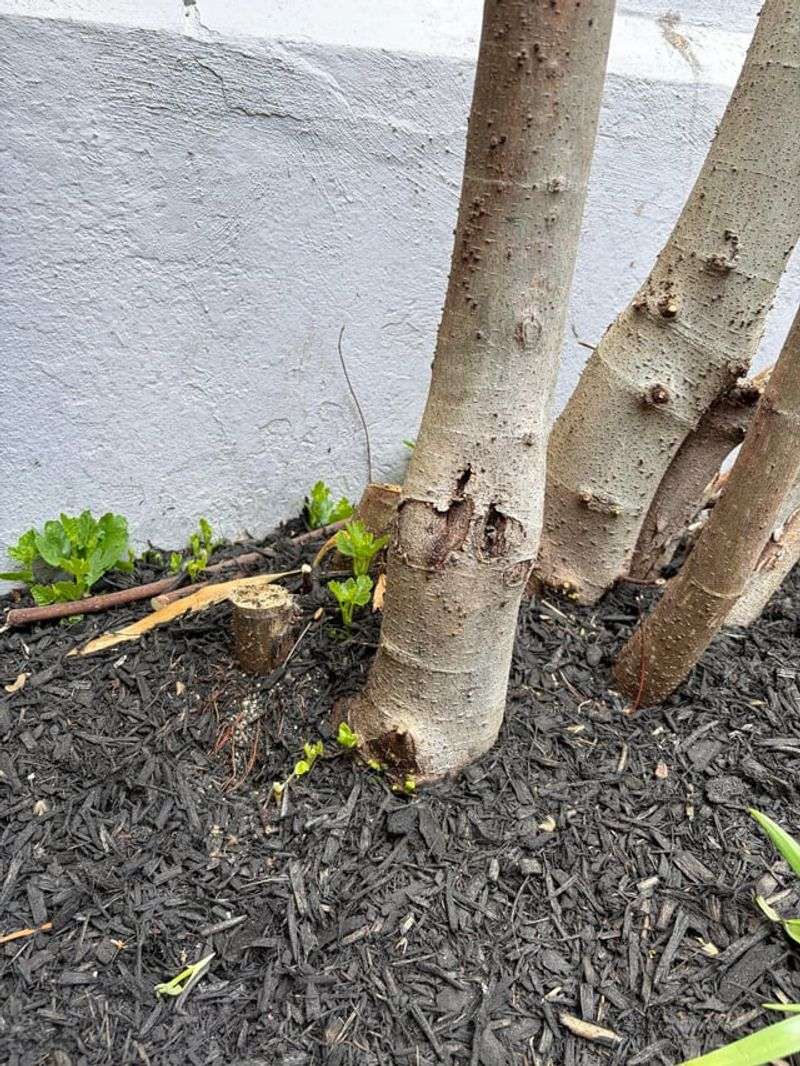
After a freeze, brown leaves and limp shoots look alarming, but resist the pruners. UF/IFAS advises waiting until regrowth begins, then removing the damaged wood.
Early cuts can remove wood that is still alive, and heavy winter pruning can reduce or eliminate the next crop.
Watch the tree over the following weeks. Green buds on lower stems show living wood, and shoots from the base show the roots survived.
UF/IFAS Gardening Solutions and Texas A&M both describe figs that freeze back and then regrow.
Patience may cost you some fruit timing. NC State Extension notes that fruiting may be delayed while the tree rebuilds.
Protect before the cold, judge later, and a fig will often reward the wait.