
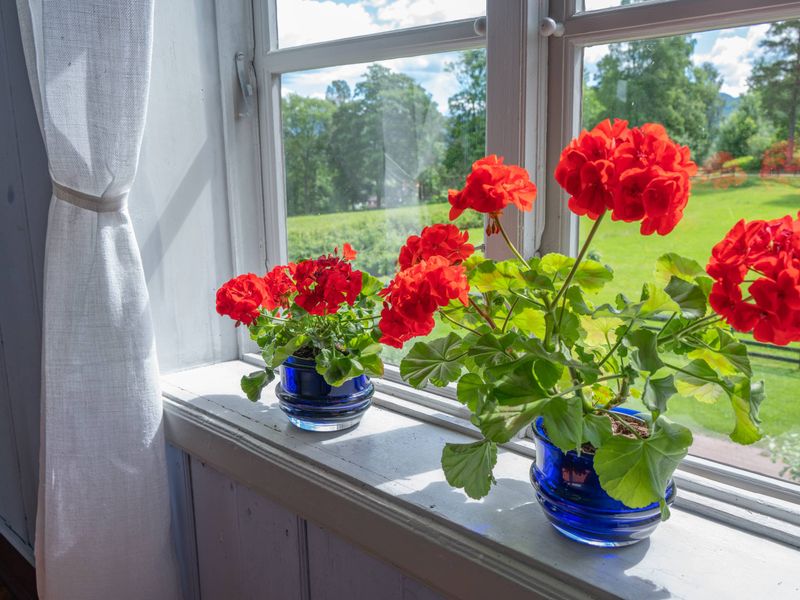
That pot of red or pink geraniums on your porch does not have to be a one-season plant. With a little prep before frost, you can try to carry a healthy one through winter and grow it again next year.
Success is never certain, and the right plan depends on where you garden. Here is a clear path for Southern gardeners, from Texas patios to Florida landscapes.
First, make sure it is a bedding geranium
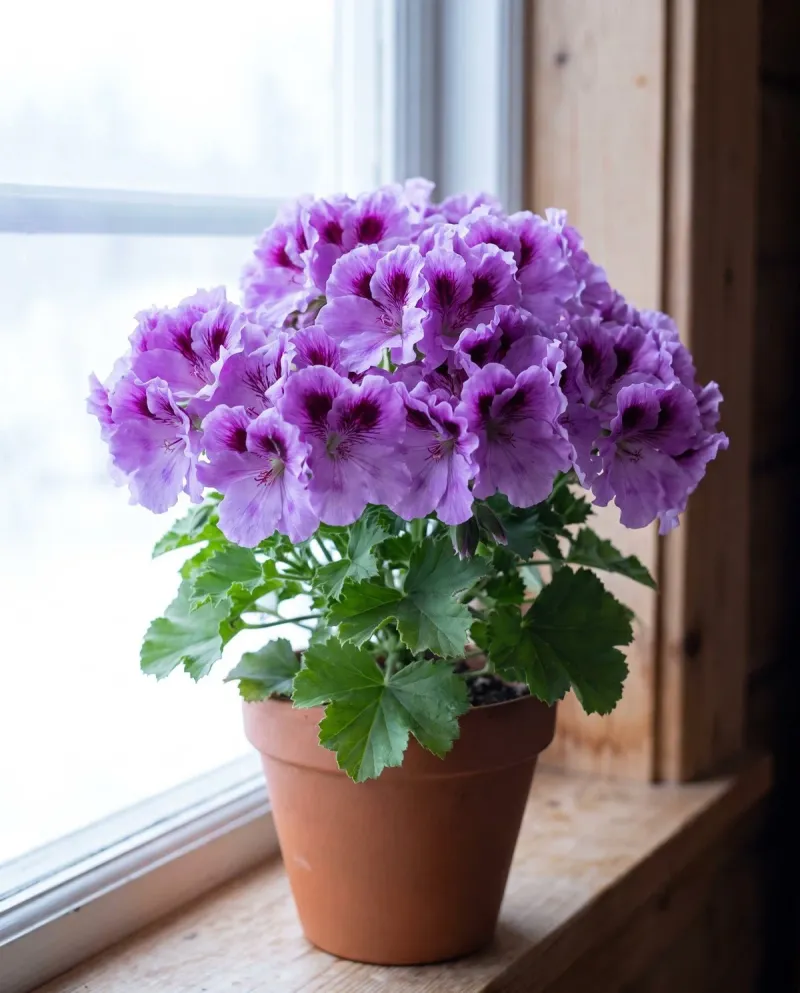
Garden centers sell two very different plants under one name. The familiar bedding geranium with round, slightly scalloped leaves and big flower clusters is usually a Pelargonium.
Hardy Geraniums, often called cranesbills, are perennials with a different growth habit, and the steps below are not meant for them automatically.
Once you know what you have, pick your keepers carefully. Choose plants with firm stems, healthy leaves, and no sticky residue, webbing, or tiny insects.
Illinois Extension advises discarding diseased or insect-infested plants rather than bringing those problems indoors.
That means a sickly plant is better thrown away than kept outside as a backup or carried inside. Put your effort into the strongest pots, since a vigorous plant gives you better odds.
Even then, overwintering is an attempt, not a sure thing.
Prepare the plant before frost
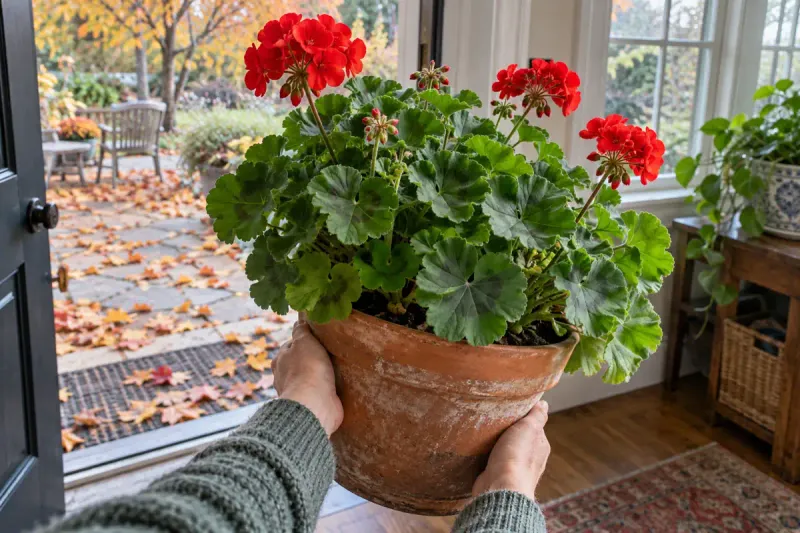
Timing matters here: move plants before the first frost, not after. Container plants can simply be carried inside.
For geraniums growing in the ground, dig carefully, pot them in a container with drainage holes, and use fresh potting mix.
Before anything crosses the doorway, look over the leaves, undersides, and stems for insects or spotting. Rinsing plants outdoors with water, where practical, can knock off hitchhikers, and Iowa State guidance on bringing plants inside covers this kind of check.
After the move, keep the newcomers a little apart from your other houseplants and watch them for a couple of weeks. Pests are a real risk, as University of Minnesota Extension explains.
If a plant is clearly diseased or infested, discard it. Skip automatic spraying, and use a pesticide only if its label covers your plant and an indoor setting.
Choose a bright, suitable indoor spot
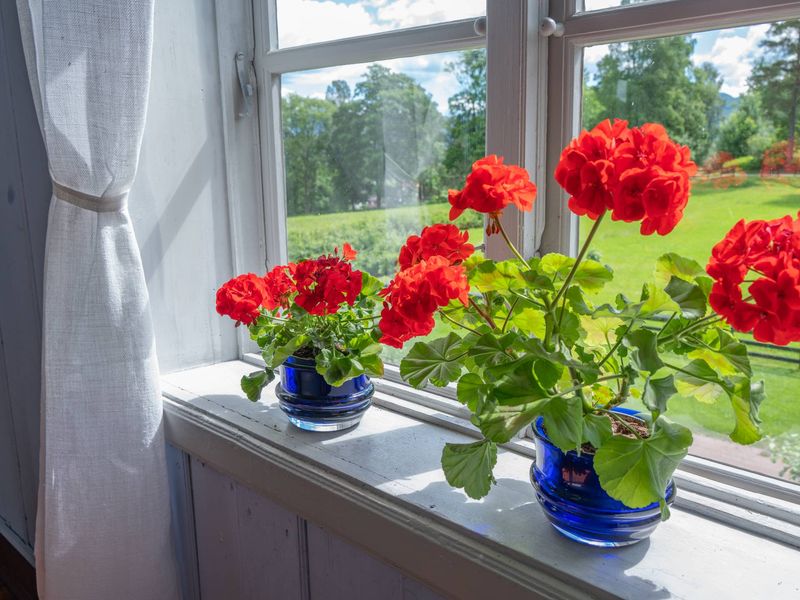
Brightness is the main requirement. A sunny window, such as a south-facing one, is the usual first choice.
If your best window is still dim, a supplemental grow light can fill the gap.
Temperature counts too. Illinois Extension suggests about 65°F during the day with slightly cooler nights.
A cooler room near a window often suits geraniums better than a toasty, dim corner.
Warm and dim is the combination to avoid, because it tends to produce stretched, lanky growth. Light also influences flowering.
University of Minnesota Extension notes that too little light can mean leggy growth or no flower buds. Good light improves the odds of blooms, but it cannot promise them.
Water by soil dryness and allow for adjustment
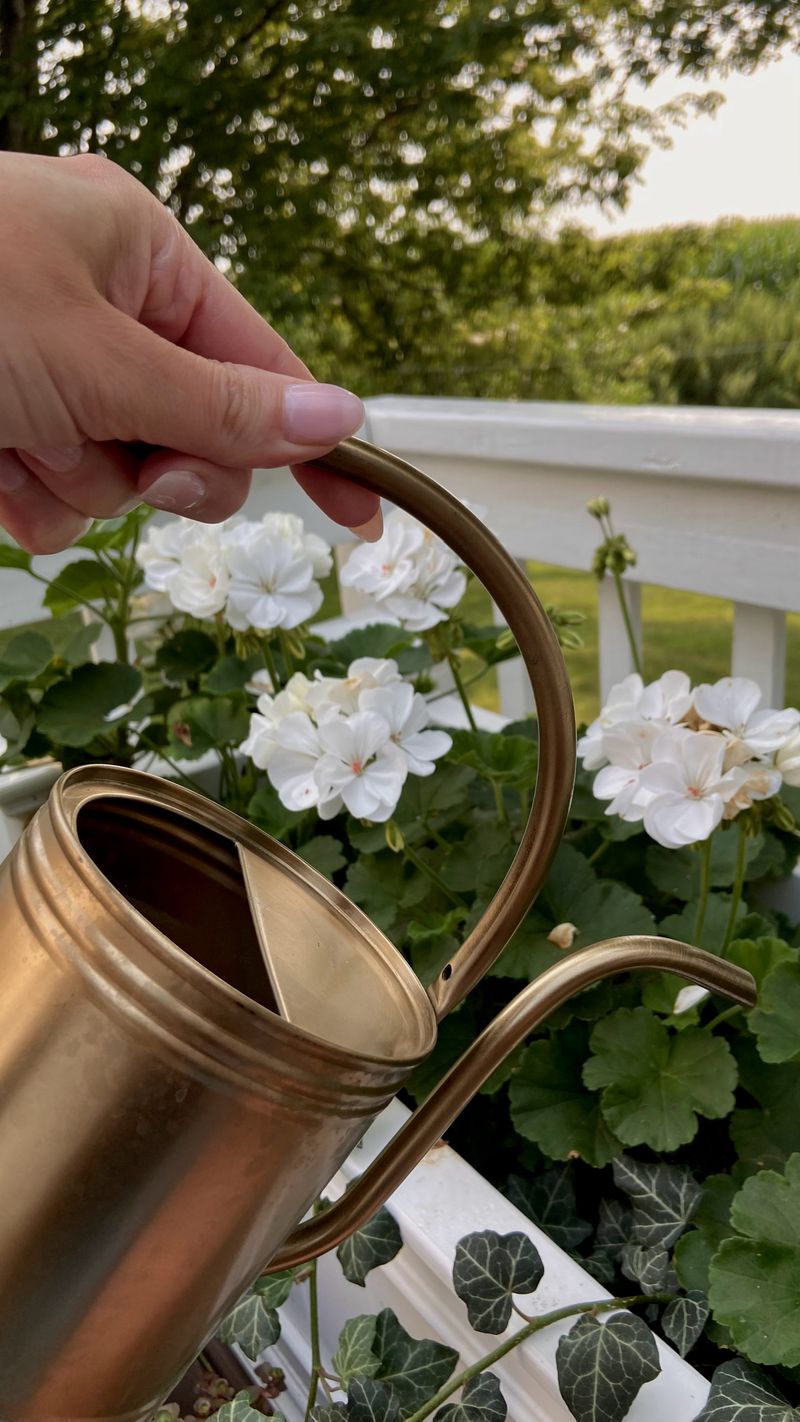
Forget a fixed Tuesday-and-Saturday routine. For an actively growing indoor plant, water when the growing medium becomes dry, as Illinois Extension recommends.
Poke a finger into the mix, and if it feels dry, water thoroughly and let the excess drain away.
Constantly wet soil is the opposite of what these plants want. Cooler, shorter days mean they usually drink less than they did on the patio.
Do not panic if leaves yellow and drop in the first weeks. University of Minnesota Extension says geraniums commonly lose leaves after coming indoors and can leaf out again.
Remove fallen leaves and watch for fresh growth at the stem tips. This routine is for leafy, active plants only, and dormant storage follows different rules.
Prune to manage shape, not to guarantee flowers
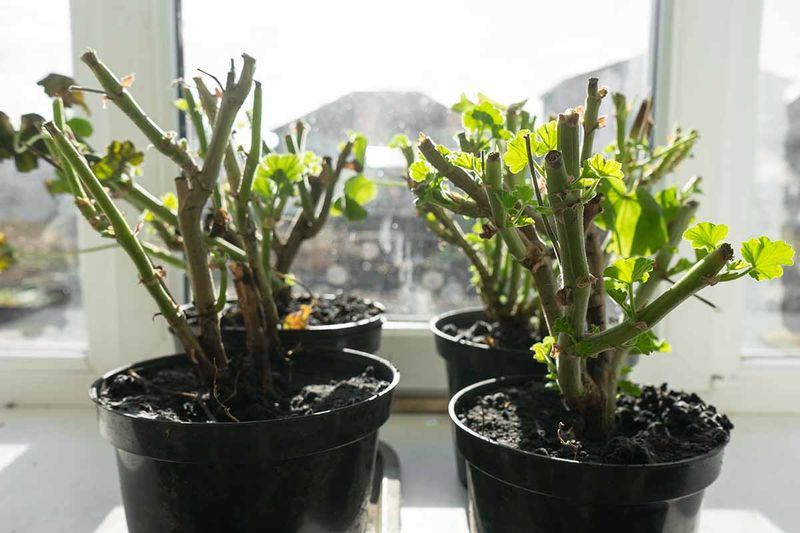
Pruning is optional. Its job is to manage size and encourage branching, which can keep a plant more compact on a windowsill.
It does not guarantee flowers.
Sources differ on timing and amount. Illinois Extension advises cutting potted plants back by one-third to one-half when preparing them for indoor overwintering.
Iowa State describes a later step. In its advice on overwintering geraniums indoors, lanky plants are cut back by one-half to two-thirds in March.
These are two recommendations for two moments, not one formula you must follow. Use clean shears and cut just above a leaf node.
If your plant is compact and healthy, you may choose a lighter trim.
Use cuttings when you have limited space
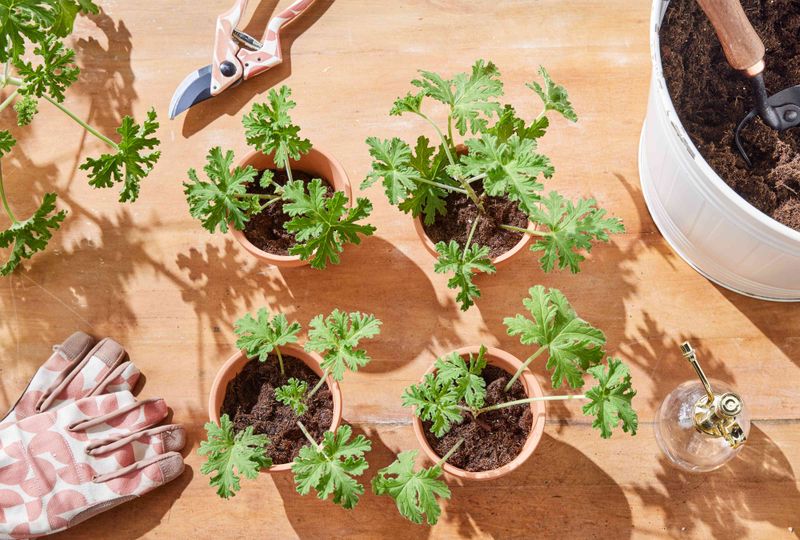
No room for a full-size plant? Cuttings let you save a geranium in a small pot.
Snip a 3 to 4 inch terminal stem, which is the tip of a healthy shoot, and strip the lower leaves.
Stick the cutting into a suitable rooting medium and set it under bright light. Keep the medium moist but not waterlogged, since soggy conditions invite rot.
Illinois Extension reports that rooting can take four to eight weeks, so patience is part of the plan. If you cover cuttings to hold in humidity, check under the cover often for mold and vent it when you see any.
Gentle resistance when you tug a cutting is one sign that roots are forming, and new leaf growth is another. Not every cutting will take, so start a few extra.
Treat dormant storage as a separate option
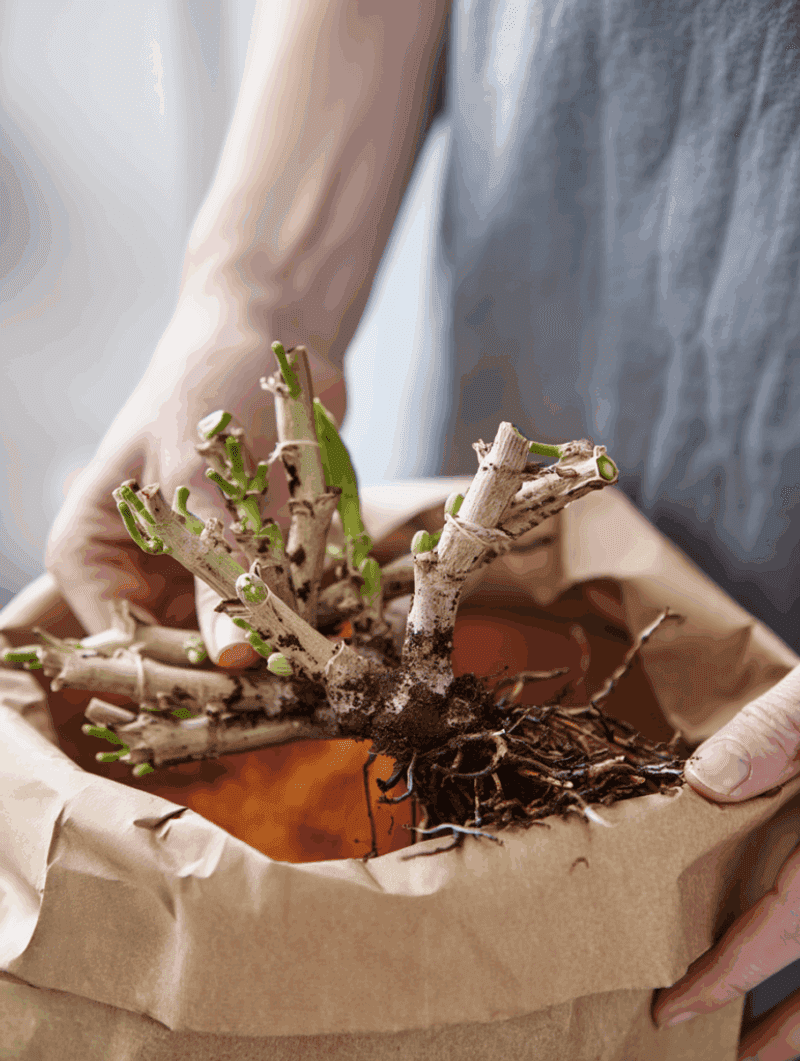
Dormant storage is a different method altogether. Instead of a leafy houseplant, you keep a bare-root plant resting in a cool, dry place.
Illinois Extension recommends about 45 to 50°F for this approach.
In spring, you pot the plant and restart growth. Because the plant is resting, none of the watering advice for active indoor plants applies here.
It is not the best choice for everyone. University of Minnesota Extension notes that bare-root storage can be challenging.
A Florida or Texas home may also lack a space that stays cool and dry.
If you have an unheated but frost-free spot and want to try it, treat it as an experiment. Otherwise, a bright windowsill or a few cuttings may suit you better.
Set outdoor timing by your Southern location
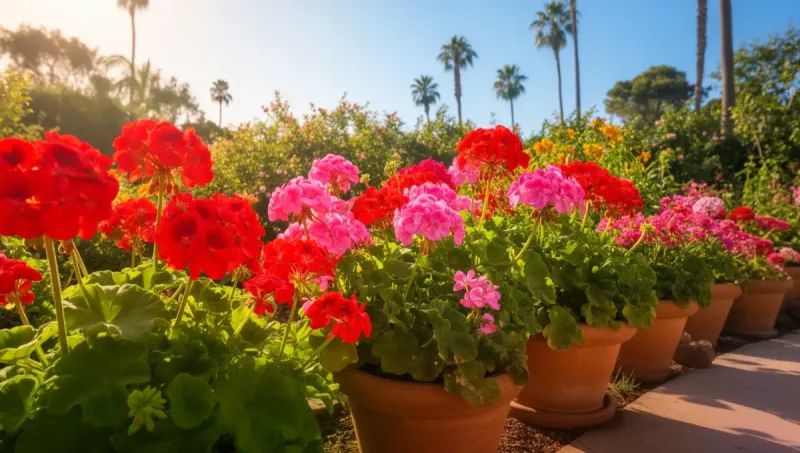
There is no single move-outside date for the South. Use your local frost risk and seasonal conditions to decide.
Illinois Extension’s May guidance is regional, written for its own climate, and should not be copied for Florida or Texas.
Florida itself varies. UF/IFAS describes north Florida geraniums performing through much of winter in full sun if brought indoors on cold nights.
It also describes fall-to-spring landscape planting in central and south Florida, where bringing plants inside for the whole season may not be needed.
For Texas, Texas A&M AgriLife notes that geraniums need shade in summer, but it does not set a statewide overwintering schedule. Check your county’s average last frost and the ten-day forecast, then harden plants off with a few days outdoors before leaving them out.
Separate winter survival from spring flowering
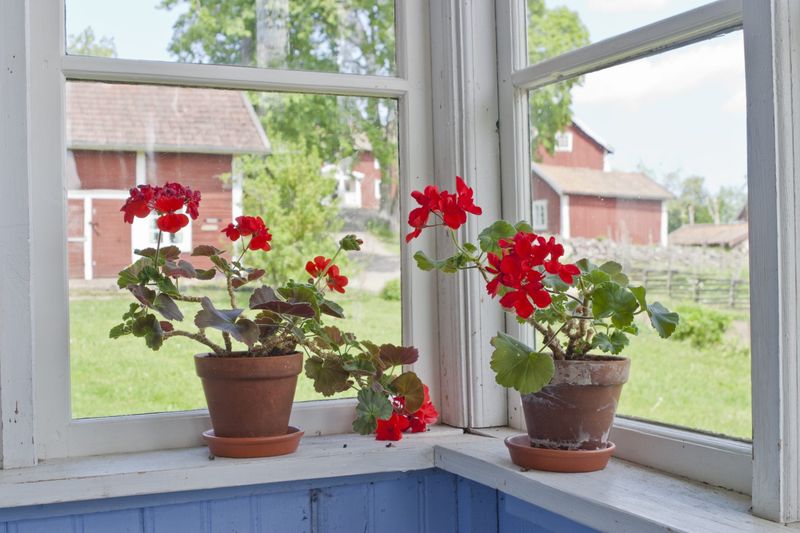
A plant can come through winter alive and still not flower much. Those are two separate outcomes.
Bright light supports flowering, as University of Minnesota Extension explains, yet a windowsill rarely matches full outdoor sun.
Expect some give and take. Illinois Extension notes that house-kept plants may have undersized blooms until longer days arrive in March.
Blooms may be small or delayed, and no date or display can be promised.
If your plant stays green, grows new shoots, and holds its shape, that is a good result on its own. Flowers can follow once light and warmth increase outdoors.
Overwintering is one practical way to try to carry a healthy bedding Pelargonium into another season. Sometimes the best reward is simply a living plant waiting for longer days.