
Fall is the secret planting season in California, and many homeowners miss it by waiting until spring. When you plant natives before November, the winter rains do most of the watering while roots spread deep into cool soil.
By the time summer heat arrives, those plants are ready to handle it on very little water. The ten perennials below also get fuller each year, so a small planting today can become a lush, bee-filled bed in just a few seasons.
1. California Fuchsia (Epilobium canum)
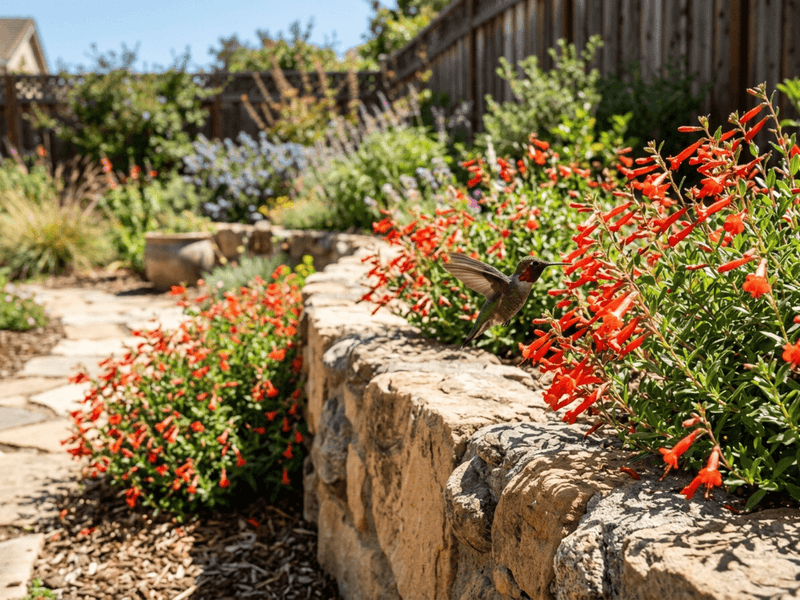
Hummingbirds seem to have a calendar marked for late summer, because that is exactly when California fuchsia bursts into fiery orange-red trumpets. Most gardens look tired by August, yet this plant is just getting started.
It keeps blooming into fall, feeding hummingbirds when few other flowers are open.
The spreading comes from underground runners, so one plant can widen into a patch several feet across within two or three years. Give it full sun and fast-draining soil, and skip the rich compost.
Too much water and fertilizer can make it floppy and short-lived.
Planting in October gives the roots a full rainy season to settle in. After bloom ends, cut it back hard in winter for a tidy, dense comeback.
It works well on slopes, along walkways, and tucked into rock gardens.
2. Douglas Iris (Iris douglasiana)
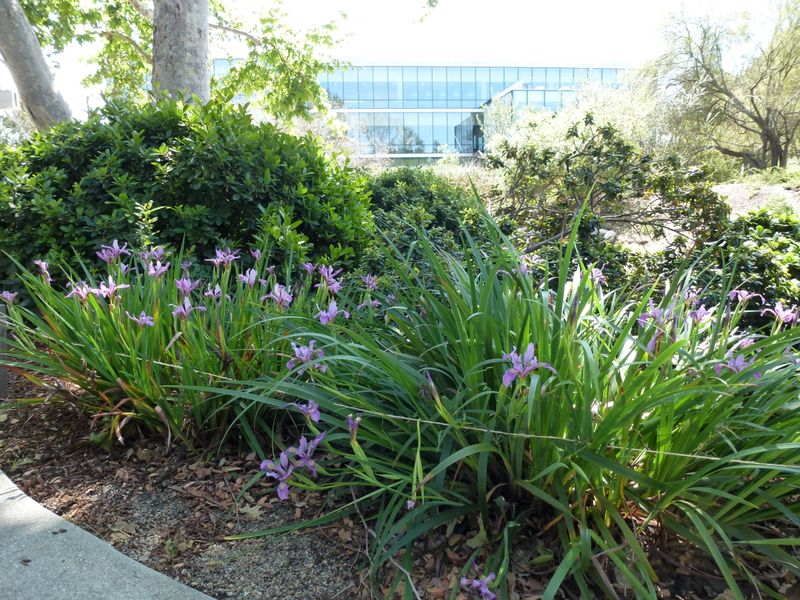
Picture a shady corner under an oak where nothing seems to grow. Douglas iris may be the answer.
Native to the coastal hills from Santa Barbara north, it handles dappled light and dry summer shade better than most flowering plants.
Spring brings blooms in purple, lavender, cream, or even pale yellow, depending on the variety. Each clump grows wider every year through short rhizomes, slowly forming a dense evergreen mat.
Many gardeners divide large clumps in fall and replant the pieces elsewhere for free.
Fall planting matters here, since irises root best in cool, moist soil. Near the coast it may need almost no summer water once established.
Inland gardens can help it along with occasional deep soaks and afternoon shade.
3. Hummingbird Sage (Salvia spathacea)
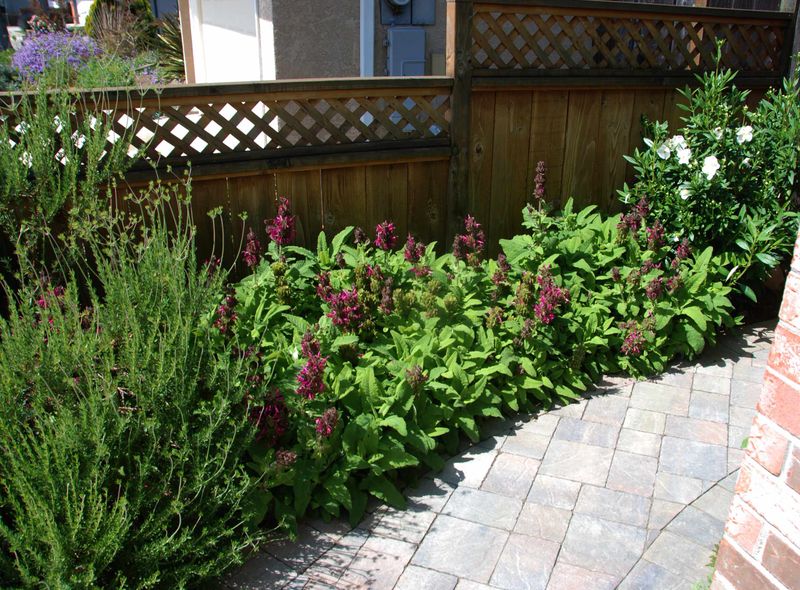
Brush past the leaves and you will catch a fruity, almost pineapple-like scent. Hummingbird sage is one of the few native salvias that actually enjoys shade.
Its tall magenta flower stalks rise in late winter and spring, just as hummingbirds start nesting.
It spreads by creeping roots, so a single gallon pot can turn into a broad groundcover over time. That makes it handy for filling dry spaces beneath trees where lawn struggles.
Bare soil there may also invite weeds, which a thick patch can help crowd out.
Get it planted by late October so winter rain can carry it. Once established, it can go dormant and a bit dusty in summer.
A light trim of spent stalks keeps it looking cared for.
4. Yarrow (Achillea millefolium)
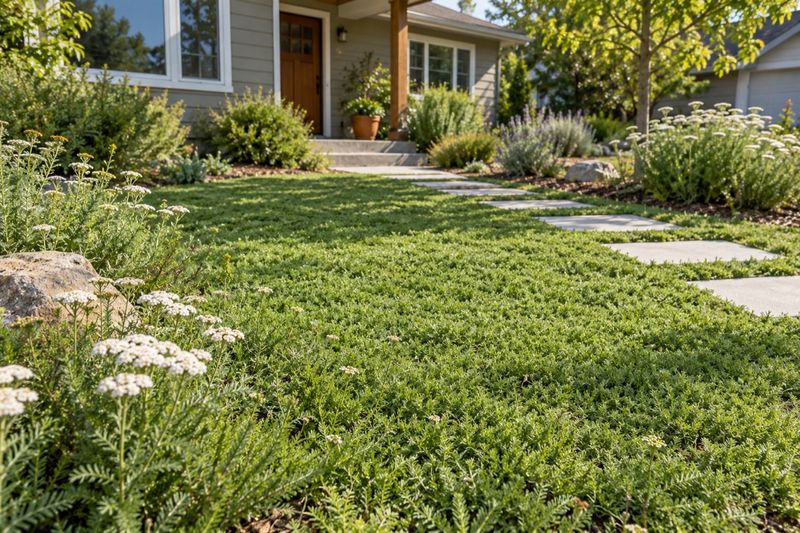
Tired of mowing? Native yarrow is one of the easiest ways to shrink a thirsty lawn.
Its feathery, fern-like leaves knit together into a soft green carpet that handles light foot traffic.
Flat white flower clusters show up from spring into summer and draw in tiny native bees, hoverflies, and other helpful insects. The plant spreads steadily by roots, filling bare gaps a little more each season.
You can mow it a few times a year for a lawn look, or let it bloom for a meadow feel.
Yarrow tolerates sun, clay, sand, and coastal wind. Water it through its first summer, then cut back to occasional deep watering.
It is a forgiving starter plant for anyone new to natives.
5. Seaside Daisy (Erigeron glaucus)
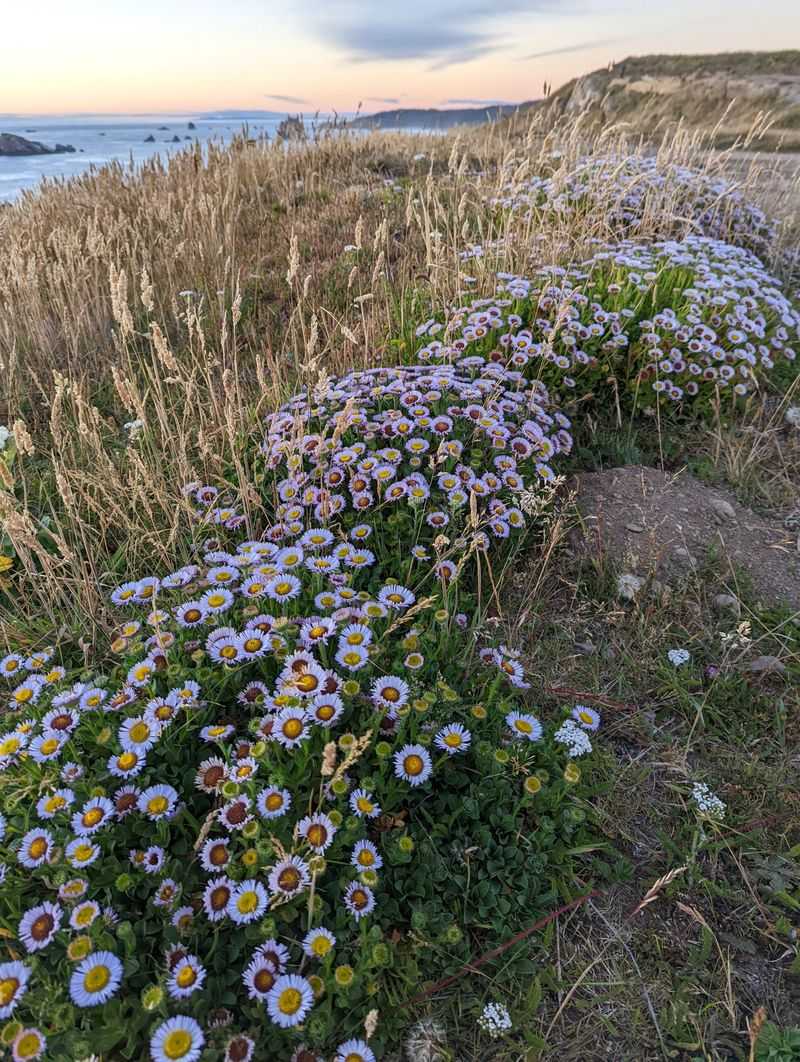
Born on bluffs facing the Pacific, seaside daisy laughs at salty wind and foggy mornings. Cheerful lavender-pink petals with sunny yellow centers cover its low mounds for months.
In mild coastal yards, it can bloom on and off nearly all year.
Each mound slowly widens, and some forms like ‘Wayne Roderick’ trail nicely over edges. It makes a sweet front border, a container spiller, or a small-space groundcover.
Butterflies and small bees visit often.
Inland, it prefers some afternoon shade and a bit more water. Deadhead now and then to keep flowers coming.
A fall start gives it a running head start for spring color.
6. California Aster (Symphyotrichum chilense)
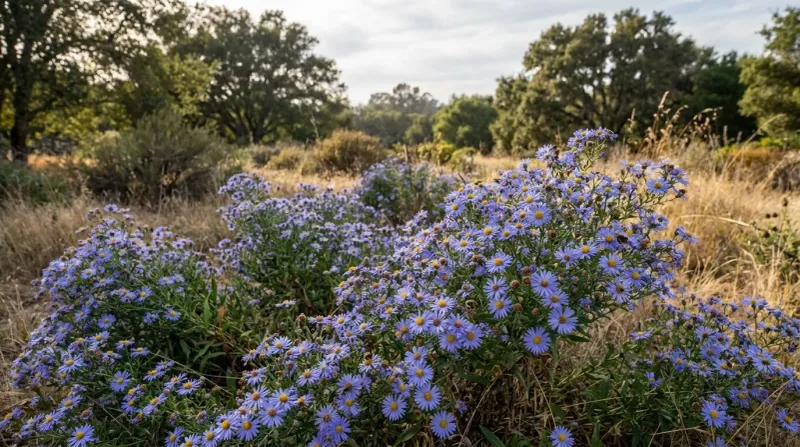
Late-season pollinators have a hard time finding food in California once the hills turn gold. California aster steps in with clouds of pale lavender daisies from late summer through fall.
Butterflies, native bees, and beneficial wasps all crowd in.
Fair warning: this one loves to roam. Its runners can spread enthusiastically in watered beds, so give it room or plant it where it can naturalize.
In a meadow or wild corner, that habit is a big plus.
It handles clay soil and moderate drought well. Cut it to the ground in winter and it returns thicker each spring.
For gardeners worried about leaving pollinators hungry in fall, it is a simple fix.
7. Coyote Mint (Monardella villosa)
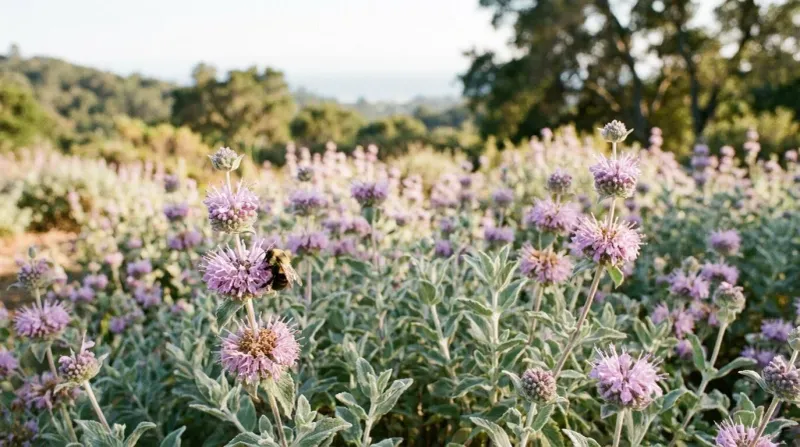
Few plants pull in butterflies quite like coyote mint. Its round, lavender pom-pom flowers act like landing pads in early summer.
Crush a leaf and you get a sharp, minty scent that many people love.
Small and shrubby, it slowly broadens into a fuller mound each year. It thrives in lean, rocky, well-drained soil and full sun.
Heavy clay and frequent watering may shorten its life, so treat it like a tough hillside native.
Plant it before November so winter rain helps it root. A light shearing after bloom keeps it compact.
It pairs nicely with salvias and buckwheats on a dry slope.
8. Sulphur Buckwheat (Eriogonum umbellatum)
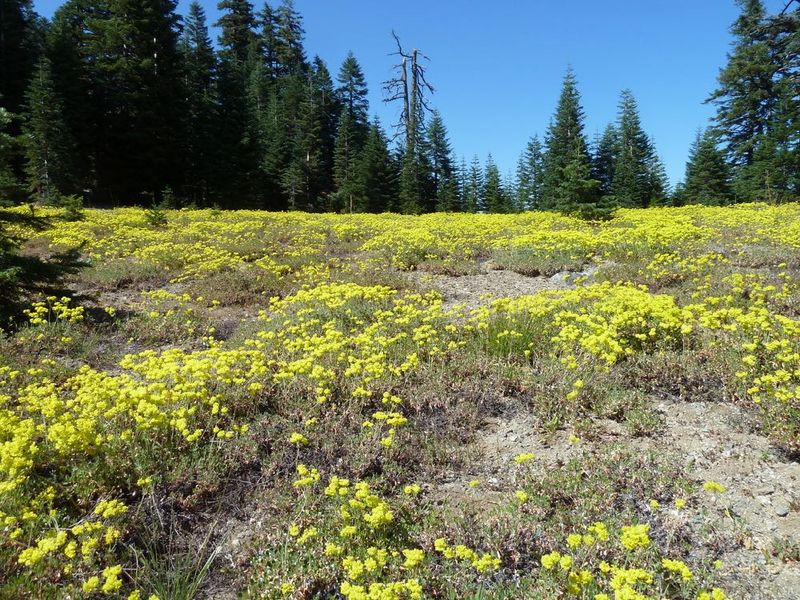
Bright yellow umbrellas of flowers make sulphur buckwheat look like it is throwing a summer party. Native to mountains and foothills across the West, it handles heat and drought with ease.
As the flowers age, they often fade to rusty orange, adding a second season of color.
Low mats spread outward a bit more each year, forming tidy evergreen carpets. Butterflies, including several native blues, rely on buckwheats for nectar and as host plants.
That means planting it can support creatures you may not even notice.
Give it sun, sharp drainage, and very little summer water. It shines in rock gardens, slopes, and gravel paths.
Fall planting gives the best success rate.
9. Deer Grass (Muhlenbergia rigens)
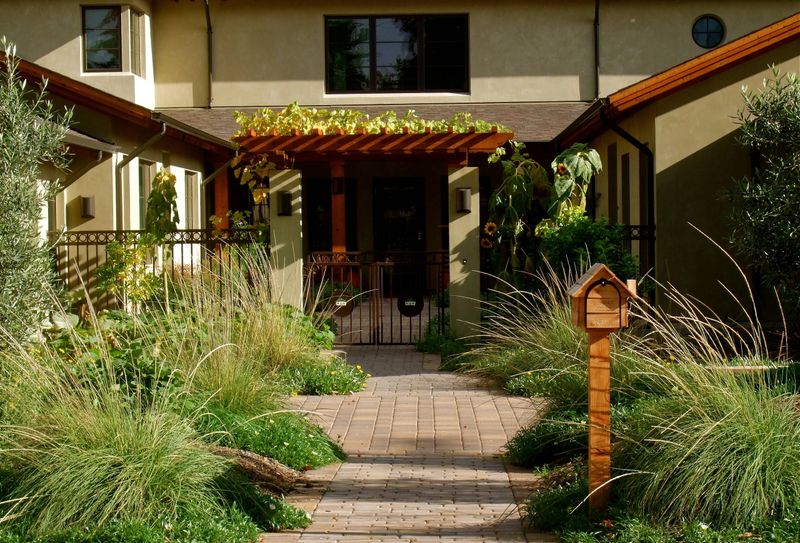
Long before nurseries existed, California tribes harvested deer grass stalks to weave baskets. Today, it is a favorite for homeowners swapping lawn for something bold and water-wise.
Fountain-like clumps can reach four to five feet wide with time.
Each year the clump grows broader and fuller, with slender flower spikes rising in summer. It handles heat, wind, and many soil types.
Birds may use the dense base for cover.
Plant a few in a row as a soft screen or along a dry creek bed. Water deeply during the first year, then taper off.
Cut back old growth every few years in late winter to refresh it. In fire-prone areas, keep it trimmed and well away from structures, since dry grass can carry flames.
10. Cleveland Sage (Salvia clevelandii)
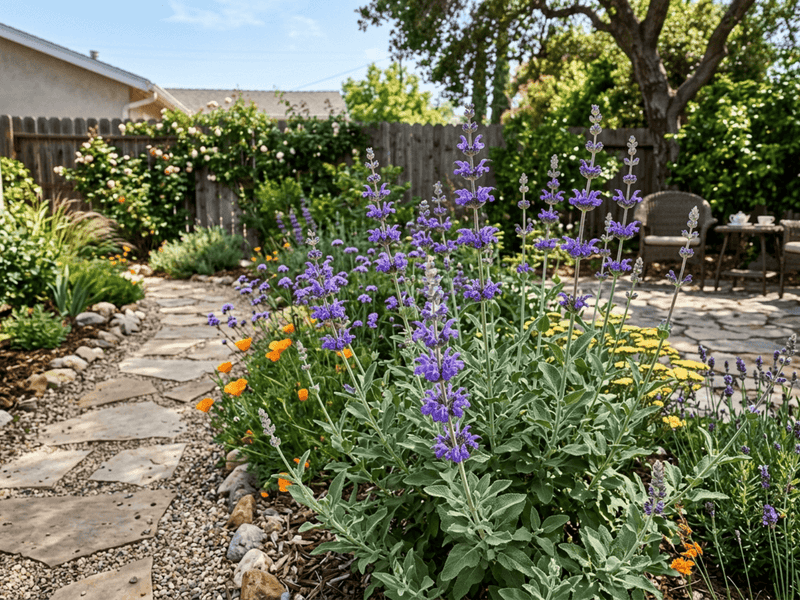
On a hot afternoon, Cleveland sage fills the air with a rich, resinous fragrance you will remember. Native to San Diego County and northern Baja, it is built for long, dry summers.
Blue-violet whorls of flowers stack up its stems from late spring into summer.
Though technically a small shrub, it behaves like a filler perennial, growing wider and denser every season. Bees and hummingbirds visit constantly.
One established plant can cover three to five feet.
Plant it in full sun with good drainage before November. Once settled, it may need water only a few times each summer.
Prune lightly in fall to keep it full and to reduce dead, dry wood near the home.