
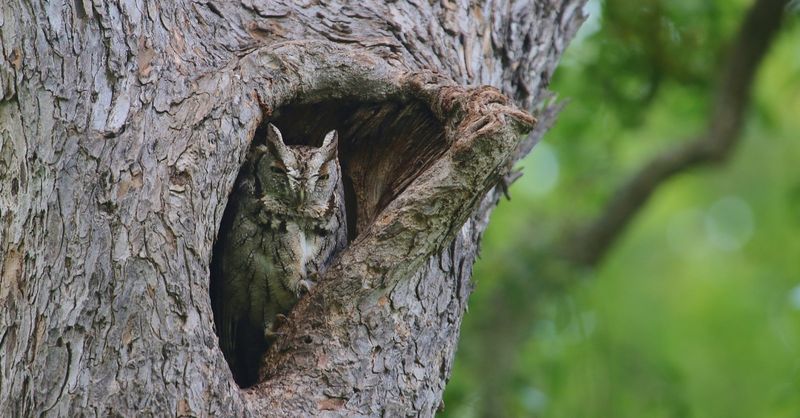
A soft, shaky trill drifts across the yard after dark, and now it is back again tonight. Many North Carolina homeowners hear sounds like this each fall and wonder what the owl is up to.
If the caller is an Eastern Screech-Owl, the sound may tell you more about owl social life than about your garden. Here is what the call can suggest, what it cannot prove, and how to give the bird room.
The familiar trill is a contact call, not a dinner bell
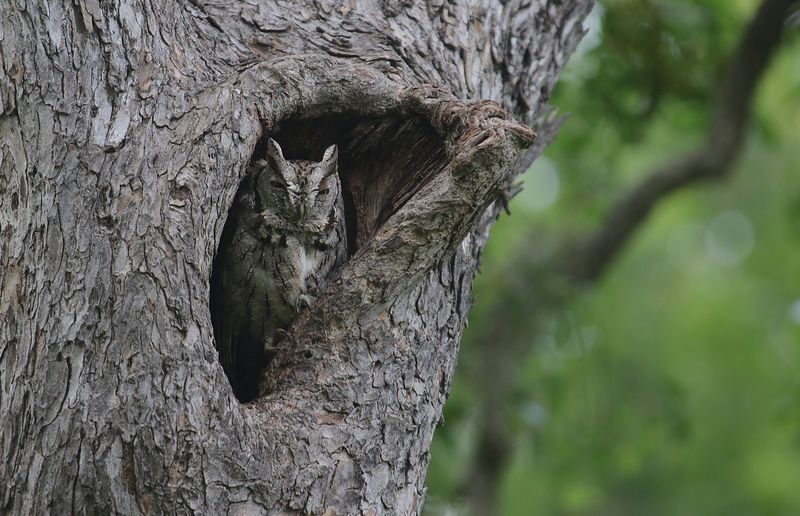
Picture a quiet, shaky whistle that stays on one pitch, rolling along like a horse’s soft nicker turned into a song. That is the even-pitched tremolo, one of the two classic Eastern Screech-Owl sounds.
The other is a descending whinny, a call that slides downward in pitch. Despite the name, neither one is a harsh screech.
According to Cornell Lab sound descriptions, the tremolo helps pairs or families keep in touch with each other. The whinny is used in territorial defense.
Both males and females call, and mated pairs may sing back and forth.
That means the sound is about communication. It is not an announcement that the owl found a meal, and it does not tell you what the bird has been eating.
It also cannot tell you the caller’s age, whether it has a mate, or whether it is nesting nearby.
Species matters here, too. A nighttime owl-like sound alone may not confirm an Eastern Screech-Owl, because North Carolina has other owls with very different voices.
A barred owl, for example, gives a much louder, rhythmic hooting. If you want to be sure, compare recordings with what you hear, and ideally get a look at the bird from a distance in daylight or with a dim light.
Until then, treat the name as a good guess rather than a fact.
Why might the calls become more noticeable in fall?
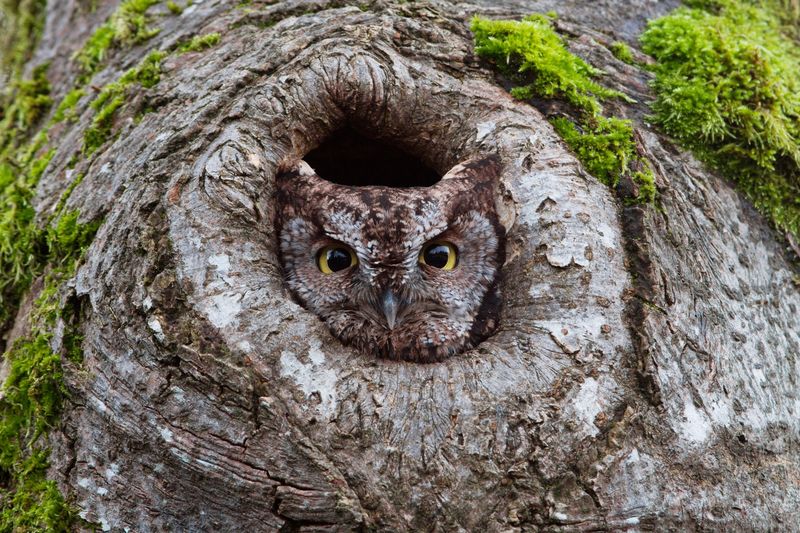
Fall is a time of change for owl families. A U.S.
Forest Service species review reports that family groups begin splitting up by late August and that young owls disperse in early fall. With birds moving around and territories shifting, more calling is a plausible result.
Plausible is the key word. Fall dispersal is one possible backdrop for the sounds you hear, not a diagnosis.
The timing does not prove that your caller is a young bird, a newcomer, or an owl looking for a mate.
Your own observation matters too, but it is one yard’s story. Hearing an owl every night this fall does not mean the species calls nightly everywhere.
Nor does it mean fall is the only time these owls sing. An account hosted by Eastern Kentucky University and the species review both point to vocal behavior across much of the year.
A handy habit is to jot down dates and times in a notebook. Over a few seasons, you may see whether the calls fade in winter or return in late winter.
That log will tell you far more about your local owl than guessing at motives.
What could an Eastern Screech-Owl be eating?
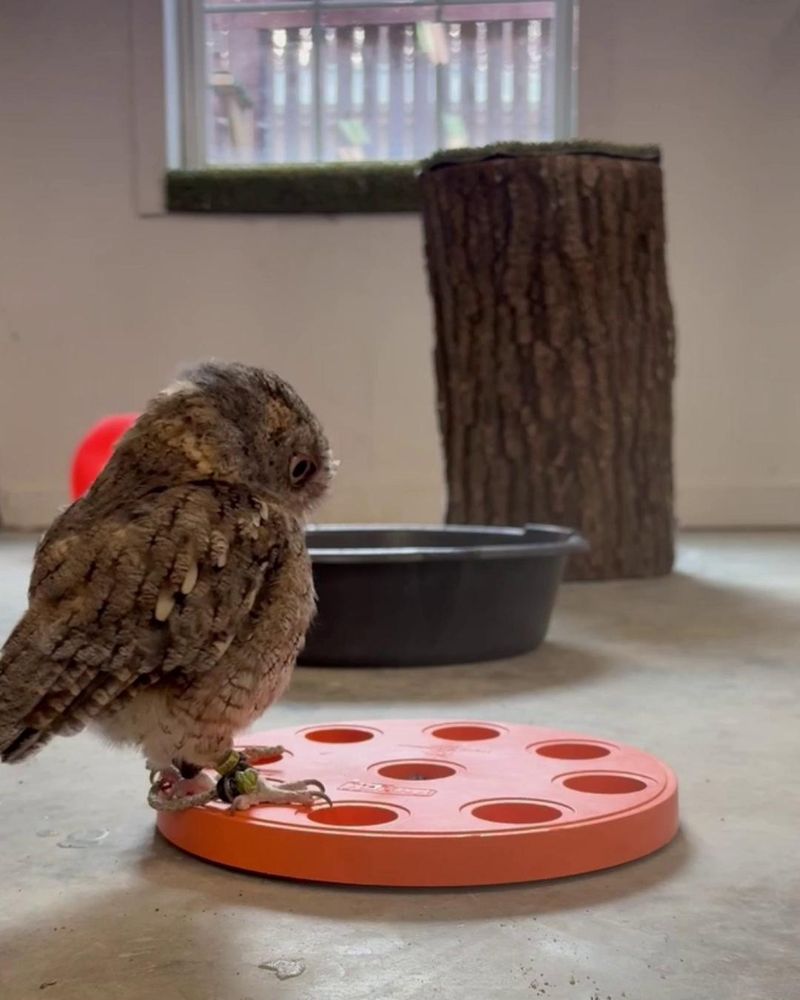
Eastern Screech-Owls are not picky. Cornell Lab life history notes describe a menu that can include small mammals, birds, insects, earthworms, amphibians, reptiles, and other small animals.
That range is wide enough that nearly any yard could offer something on the list.
The menu also changes. The federal species review notes that diet varies with what is available and with the season.
In warm months insects may be easy pickings, while colder weather may shift the balance toward other prey.
So could your owl be finding food in or near your yard? Quite possibly.
Edges, shrubs, leaf litter, and open lawn can all hold small animals after dark.
But a nightly call cannot tell you which animal is on the menu. The calls described by Cornell serve social and territorial purposes, so they are not a prey report.
If you want clues about diet, the only real evidence comes from watching the bird hunt or from the pellets owls leave behind, and even those show only a small slice of what one owl eats over time.
An owl may be part of the yard’s predator community
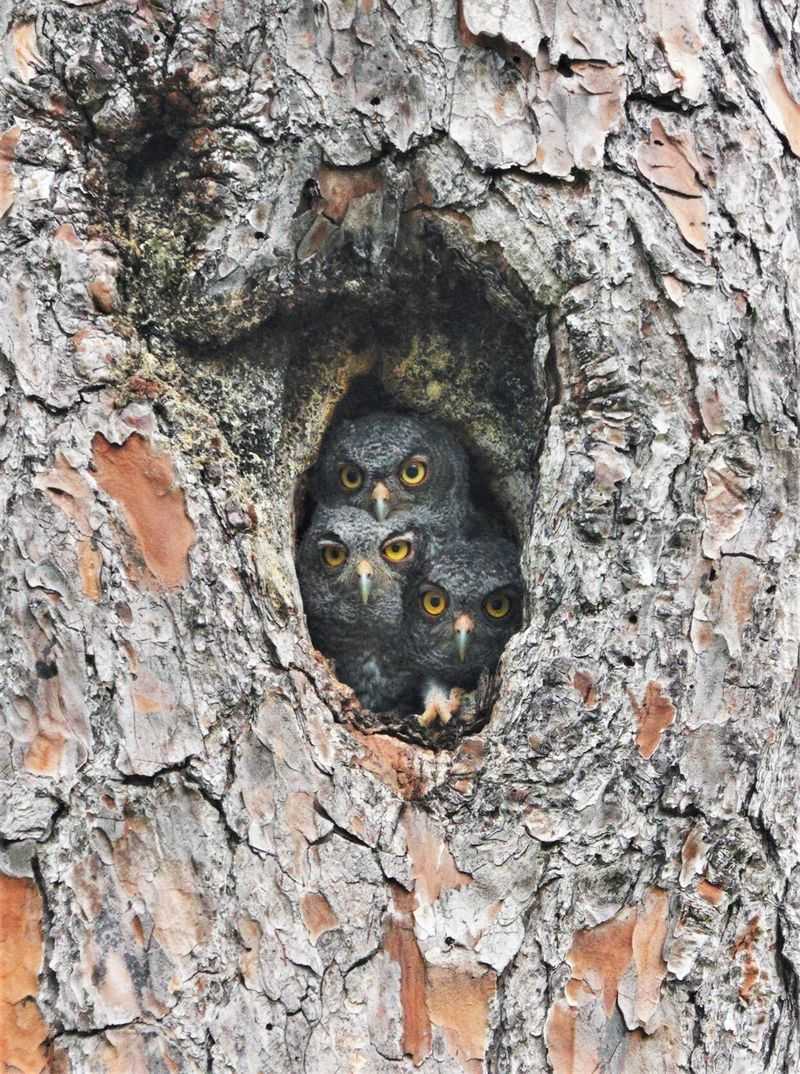
Think of an owl as one member of a crowd. Your yard may already host snakes, hawks, foxes, spiders, and beetles that all eat other animals.
An Eastern Screech-Owl can join that group, and its varied menu may include some creatures gardeners would rather not have around.
That is where the good news stops short of a promise. The same broad diet that lets an owl eat a grasshopper or a mouse also lets it eat a harmless toad or a small songbird.
The sources reviewed describe a flexible predator, not a pest-control service.
Nothing in them shows that one owl will shrink a specific pest population or protect your plants. So treat any benefit as a bonus rather than a plan.
Keep your usual garden decisions in place. Healthy soil, a mix of native plants, and sensible watching for damage still do the heavy lifting.
Having an owl nearby may add a little pressure on small animals, and it certainly adds some night-time magic, but it does not replace the choices you make in the beds.
Give the owl space and reduce avoidable risks
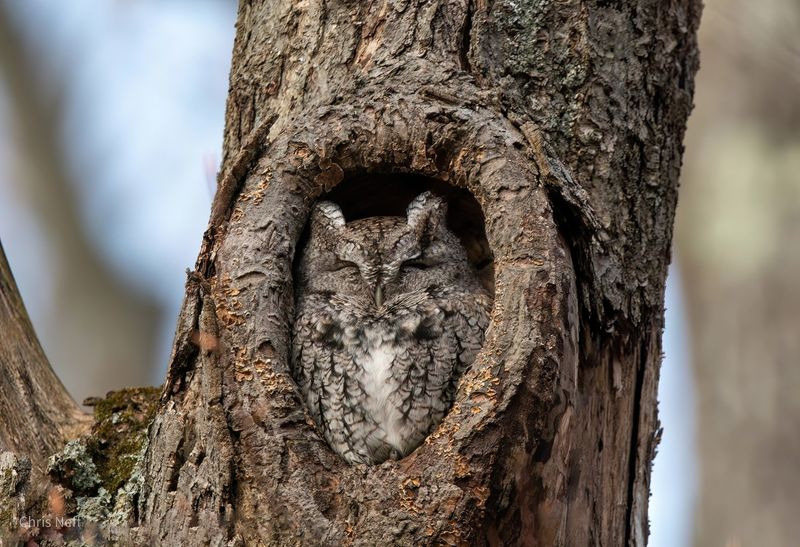
The easiest way to support a screech-owl is to enjoy it from afar. Listen from the porch or the patio, and resist the urge to go searching with a flashlight.
If you suspect a roost in a tree hole or a nest, keep your distance so the bird is not stressed or flushed from cover.
Skip call playback, too. Playing recordings to draw an owl closer can pull a bird away from its normal routine and confuse territory behavior.
NC State Extension’s owl guidance is a good place to read more about living alongside these birds.
Rodent control deserves a careful look as well. The National Pesticide Information Center explains that rodents that have eaten poison can pass it on to predators that eat them, and it specifically names birds such as owls as at risk from this secondary poisoning.
For that reason, avoid rodenticides where you can. Sealing food sources, storing birdseed in tight containers, and using snap traps placed out of reach of pets and wildlife are lower-risk choices.
A box is optional, and a young owl usually needs space
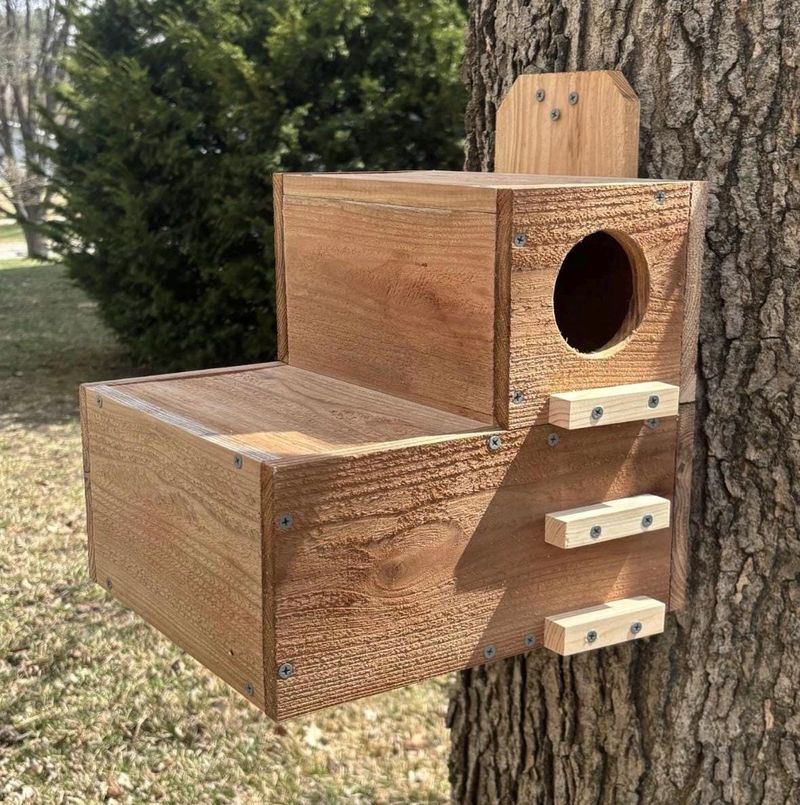
A nest box is a nice extra, not a requirement. Some yards already have natural tree cavities, and even a well-built box may never get a tenant.
If you want to try one, NC State Extension lists screech-owl box dimensions, including a 3-inch entrance hole.
Think of it as an invitation that the owl may or may not accept. Place it with care, keep your distance once it is up, and avoid checking it often.
Fall can also bring a surprise: a young owl sitting on the ground or low in a shrub. It may look lost, but it is often just learning to fly and move about.
North Carolina Wildlife Resources Commission guidance notes that native owls are protected and that a young owl should be left alone unless it is clearly injured, sick, or in immediate danger.
If it does need help, contact a licensed wildlife rehabilitator. Do not pick it up, move it, or try to care for it yourself.
Keep pets indoors and give it room.
Let the call be a clue, not a diagnosis
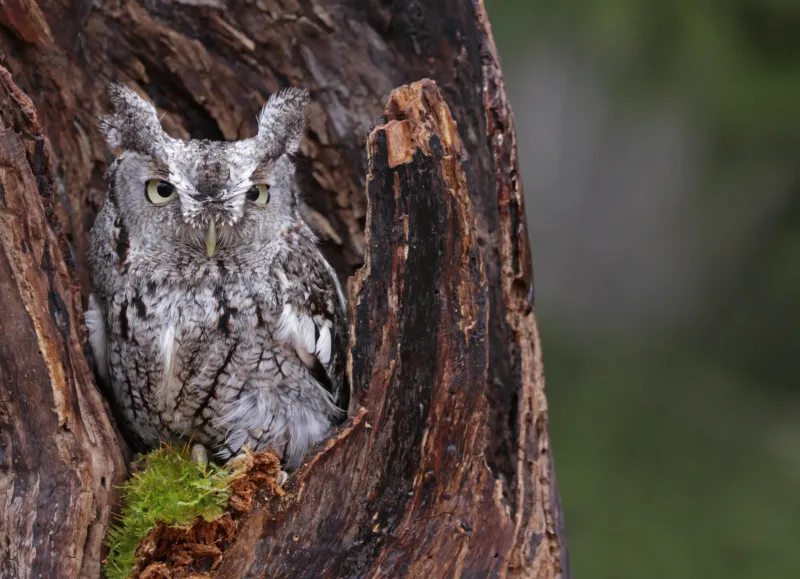
If your caller is an Eastern Screech-Owl, its trill or whinny points to communication or territory, and fall dispersal may be part of the timing. It does not name a meal or promise pest control.
Listen from a distance, cut down on avoidable risks like poison, and keep your conclusions modest.
Some nights, a small voice in the dark is just a neighbor saying hello.