

Those brown, spotted leaves piling up under your tomato plants may look harmless once the season winds down. But the fungus behind early blight can survive on infected plant debris, and that makes fall cleanup a smart job for tomato growers.
A little focused raking now can lower your risk next year. It will not make your garden blight-proof, so here is what cleanup can and cannot do.
Do the spots look like early blight?

Start by looking closely at the older leaves near the soil. Early blight often shows up there first, as brown spots with ring-within-ring patterns that look a bit like a target.
The tissue around a spot may turn yellow as the leaf declines, according to University of Georgia Extension.
Those rings are a helpful clue, but they are not proof. Septoria leaf spot and other problems can leave spots that look similar, as North Carolina State Extension points out.
A yellow leaf with no spots, or a brown edge from dry weather, may have nothing to do with this disease.
Try this check: pick a few affected leaves from the bottom of the plant and look for clear rings in the spots. If you see them, treat the debris as suspect.
If you are unsure, your local extension office can help confirm what you are dealing with.
Infected tomato debris can carry the disease between seasons
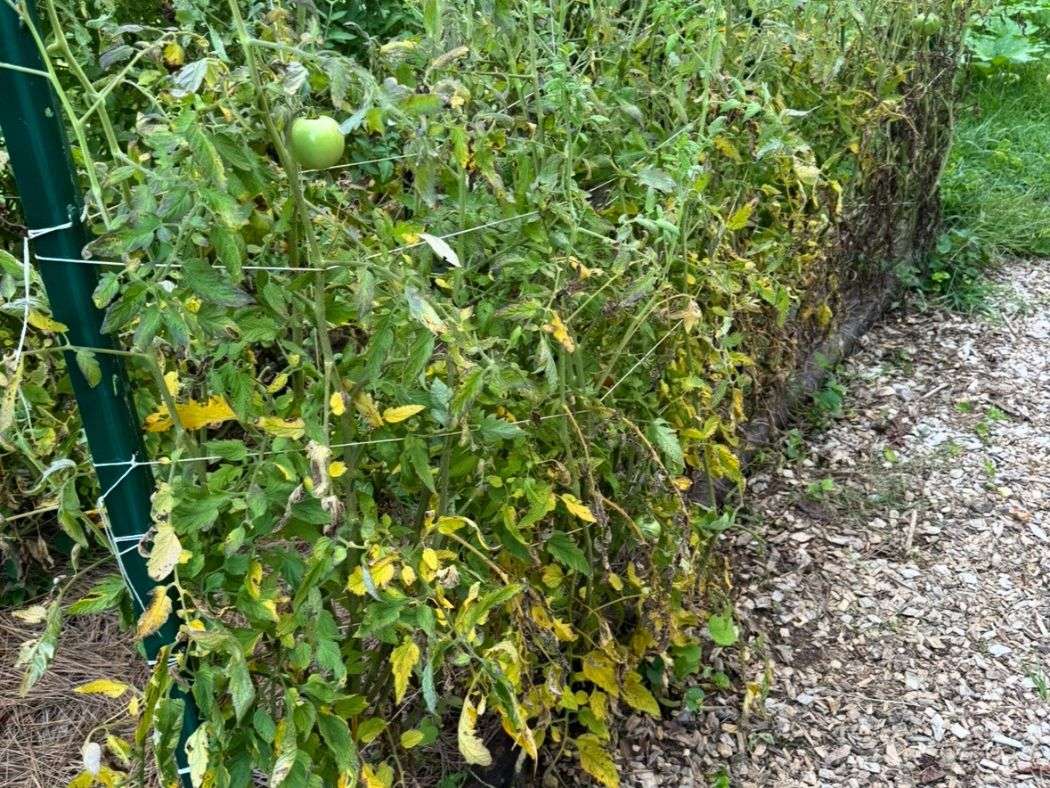
Plant diseases need somewhere to wait out the cold months. The fungus that causes early blight can survive on infected tomato debris, and UF/IFAS also lists volunteer tomato and potato plants as places it can overwinter.
That makes leaves left on the bed one possible local source of spores for a later crop.
Notice the words one possible source. Leftover debris does not automatically cause disease, and nobody can say which month symptoms might show up.
Warm, wet weather and susceptible plants have to line up too, and NC State Extension describes the disease the same way.
Picture a bed with infected leaves on the soil and tomato transplants set right into it next spring. The spores have a short trip to new plants.
Remove the leaves, and you shorten that trip.
Focus fall cleanup on tomato disease reservoirs
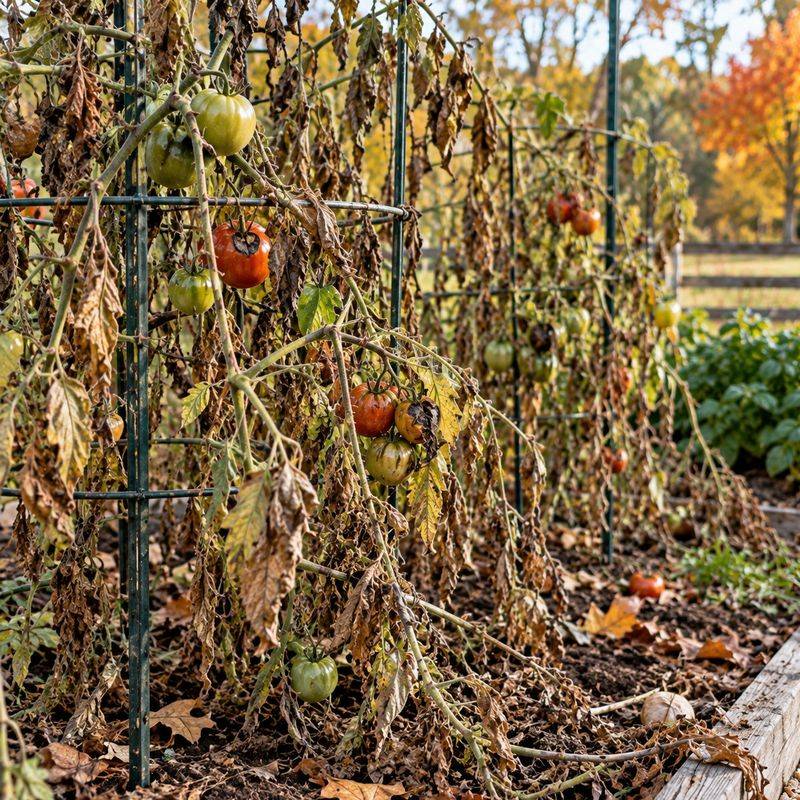
Grab a rake, gloves, and a bucket, and aim at the right target. Pick up fallen tomato leaves, pull spent vines, and gather any other tomato crop debris that may be infected, as advised by UF/IFAS.
Check for small bits of leaf pressed into the soil surface.
Then look for hitchhikers. Volunteer tomato seedlings and weeds such as nightshade can host the fungus, so pull them too.
NC State Extension recommends this sort of sanitation as part of managing the disease.
You do not need to clear every leaf from the yard. Oak and maple leaves are not tomato hosts, so this job is about tomato and related plants only.
Also keep expectations realistic, because cleanup lowers the number of sources but does not sterilize the soil.
Choose a sensible way to dispose of suspect leaves
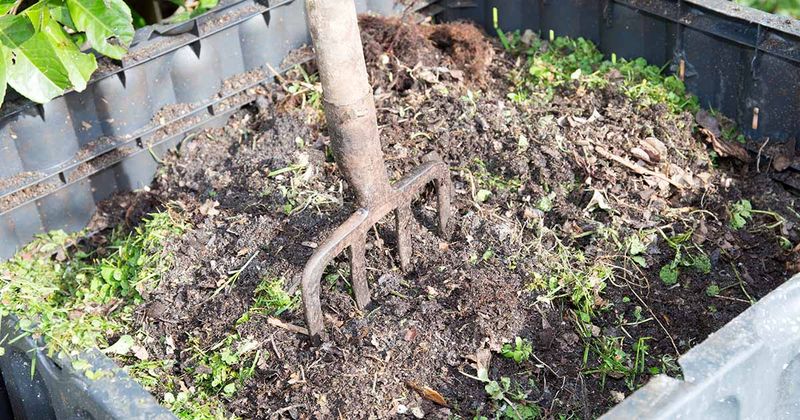
Once the leaves are in the bucket, where do they go? Extension advice is not unanimous.
University of Maryland Extension and Colorado State University Extension give guidance that differs on composting diseased plants. Some allow it in a carefully managed hot pile, while others warn that typical home piles may not get hot enough.
A simple rule works here. If you cannot be sure your pile reaches reliable pathogen-killing conditions, keep suspect tomato debris out of your ordinary home compost.
Bag it and follow your local disposal rules instead. Many towns accept yard waste through municipal pickup or a drop-off site, though rules vary.
Burning is not a routine answer, and local regulations may restrict it, so bagging is the safer choice.
Reduce splash and keep next season’s foliage drier
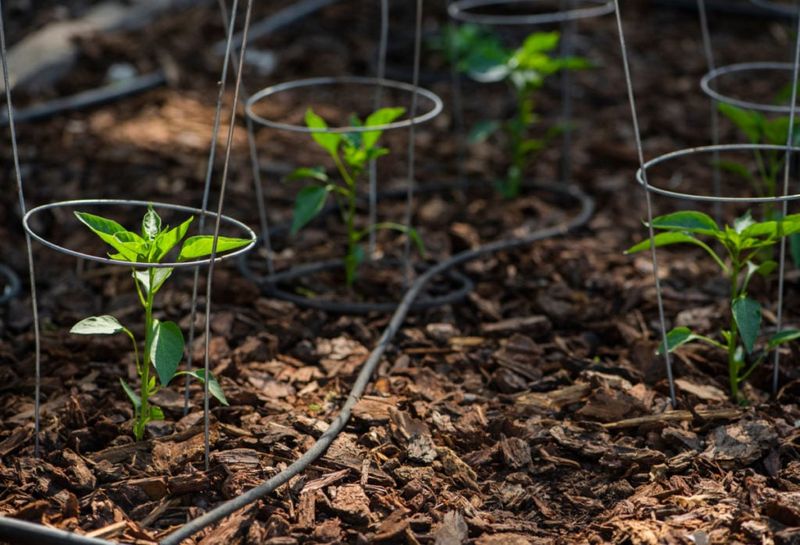
Next year’s setup can work alongside your fall cleanup. Early blight spreads by wind and water splash, so a layer of mulch can keep soil from bouncing onto lower leaves, as University of Maryland Extension notes.
Water at the base of each plant rather than over the foliage, and leave enough room between plants for air to move.
Rotation helps as well. Plant tomatoes away from the spot where tomatoes, potatoes, peppers, or eggplants grew, since they are related.
Extension sources do not agree on how long to wait, with advice ranging from at least two years to three or four years, as seen in guidance from NC State and Iowa State.
In a small garden, a longer gap may be hard to manage, so rotate as far as your space allows. None of these steps eliminates the disease, but together they can make conditions less friendly to it.
Cleanup lowers risk, but cannot promise a blight-free crop
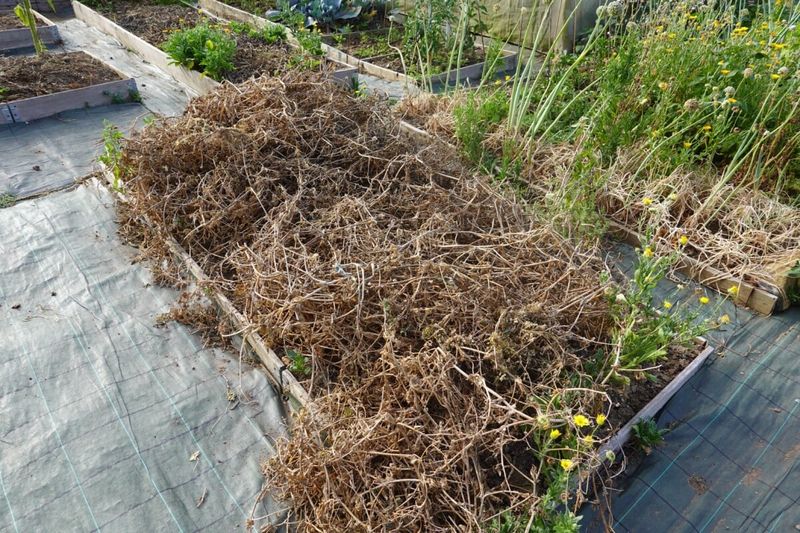
Clearing suspect tomato debris is worth the half hour it takes. Still, it only removes one source.
Early blight can also arrive on seed or transplants, and spores can drift in on the wind, as described by University of Minnesota Extension.
Volunteer tomatoes and other susceptible hosts nearby can keep the fungus going too, and UF/IFAS notes that favorable weather plays a big part. So spots may appear next year despite your effort, or they may not, and no one can say when.
Spotting a few leaf marks later is not a failure of your cleanup. It is a sign to check the leaves, remove the worst ones, and keep going.
Rake out the tomato debris, and let the rest of the leaves be.