
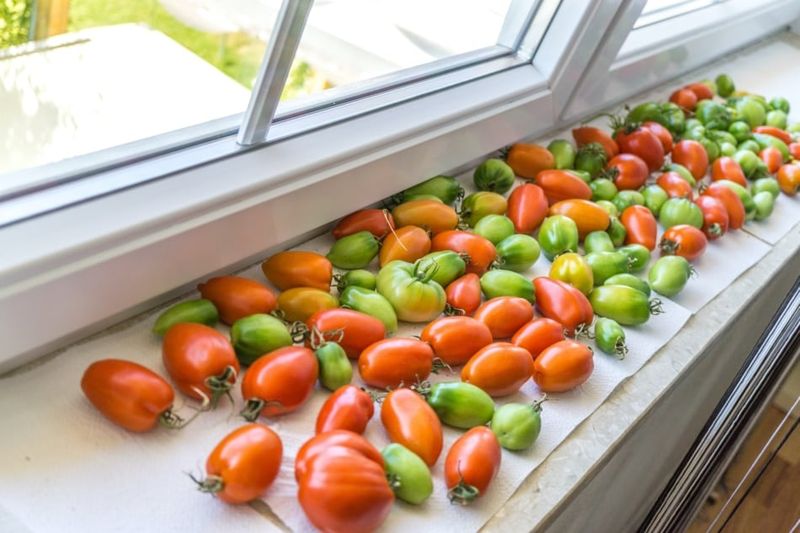
A cold night can end your tomato season in a hurry, and plenty of green fruit may still be hanging on the vines. Some of those tomatoes are far enough along to finish ripening inside, while others are not.
Knowing which is which can help you save part of your last crop. Here is a clear way to pick, prepare, store, and check the fruit.
Not every green tomato is ready to ripen
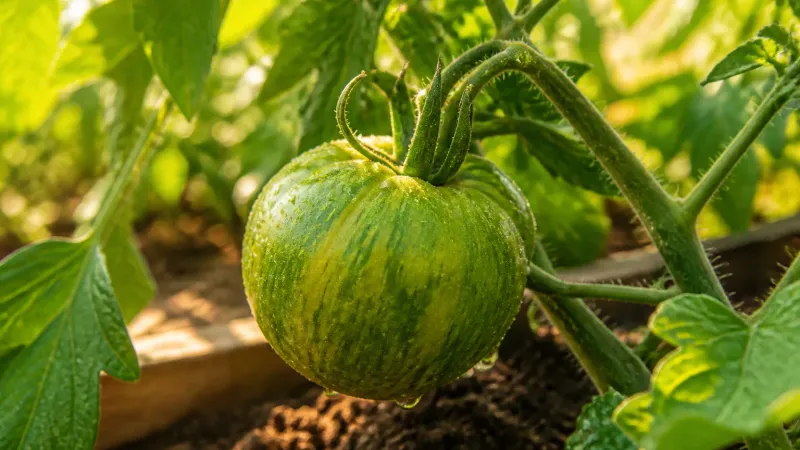
Green is not one stage of ripeness. A glossy, full-sized tomato that has started to lighten from deep green is a much better candidate than a small, hard, dark green one.
Colorado State Extension guidance points to mature fruit as the best bet, while immature fruit may never ripen satisfactorily.
Look for helpful signs. A pale, whitish star shape at the blossom end, a lighter green overall tone, or a faint blush of pink or yellow can all suggest the fruit is far enough along.
Size matters too, so compare each tomato with the full size that variety usually reaches.
Treat these as clues, not rules. Varieties differ in color and appearance, and University of Minnesota Extension also stresses maturity when saving fruit.
No single cue guarantees a tomato will ripen, so expect that a few may stay green.
Let your local frost forecast set the harvest day
Your own forecast, not a calendar date, should decide when to pick. Frost arrives at very different times across the South.
Parts of north Texas or north Georgia may see cold nights well before the Gulf Coast or Florida, and some years bring no frost at all to southern spots.
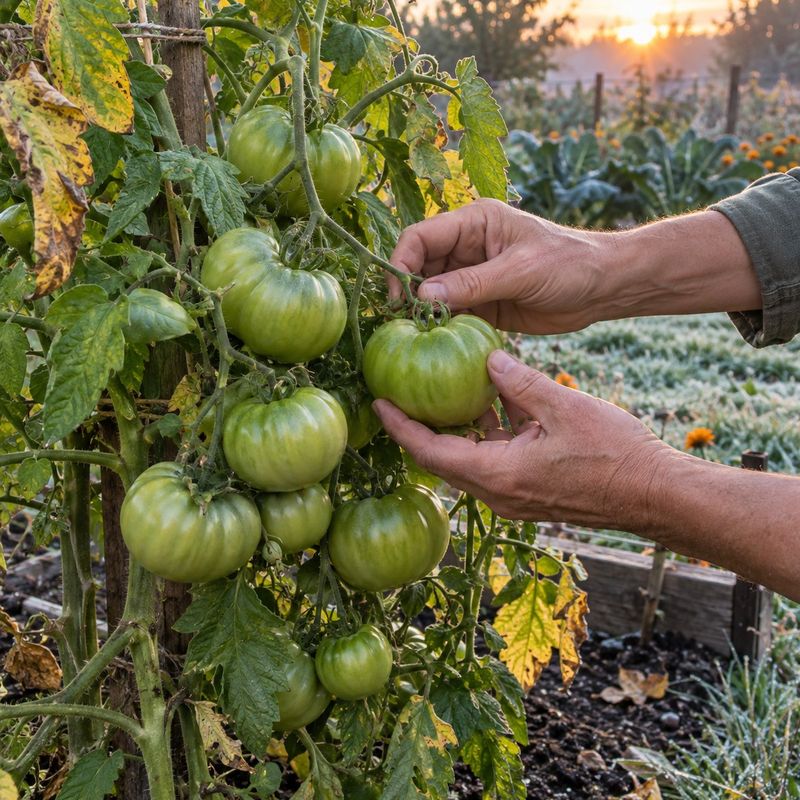
When your local forecast calls for frost or a killing freeze, harvest the tomatoes you want to save before that night. Iowa State Extension recommends bringing in sound fruit ahead of the cold, and Colorado State Extension gives similar advice for the end of the season.
Choose firm, blemish-free tomatoes and snap or cut them with a short bit of stem. Picking mature fruit keeps it from being lost to the cold.
It does not promise that every tomato will ripen, or that it will ripen on any set schedule.
Prepare the fruit before bringing it indoors
Once the tomatoes are in your hands, a few quick steps can cut down on problems later. Remove any stems, since they can poke neighboring fruit and cause bruises or rot.
Then give each tomato a gentle wash to clear off dirt and garden residue.
Drying matters as much as washing. Iowa State Extension advises letting the fruit dry completely before storing it.
Spread the tomatoes on a clean towel or rack and leave them until no moisture remains.
Sort as you go. Keep firm, unblemished fruit for ripening, and set aside any with cracks, soft spots, or damage, since those are more likely to decay.
Colorado State Extension notes that sound fruit gives you the best odds. Damaged tomatoes can be used soon or composted.
Choose a cool, ventilated spot instead of a sunny windowsill
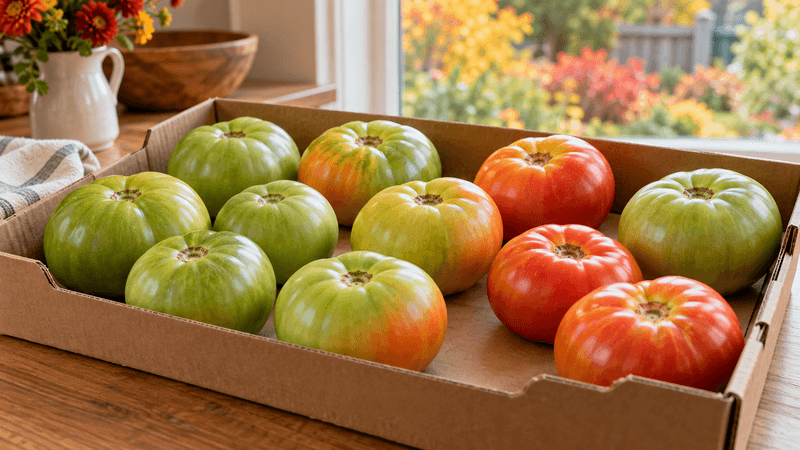
Skip the sunny windowsill. Light is not needed for ripening, and direct sun can warm the fruit unevenly.
A shaded shelf, pantry, or cabinet works better.
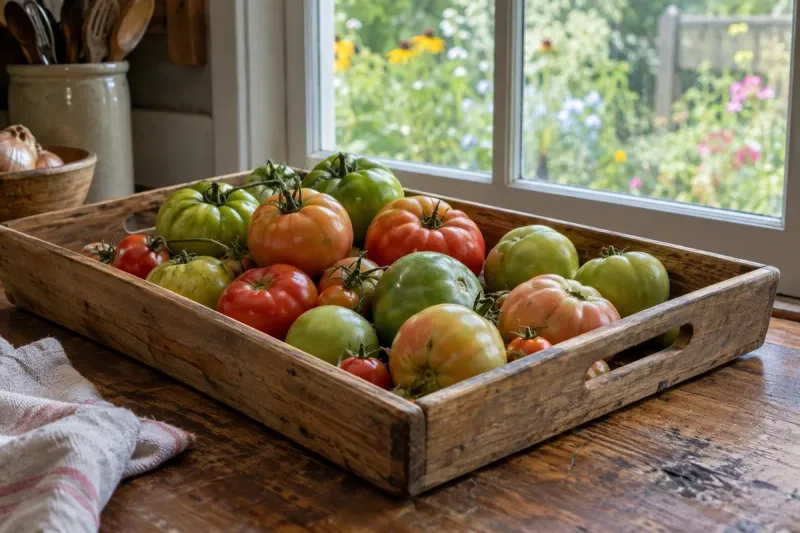
Arrange the tomatoes in a single layer if you can, with a little space between them, in a place with good air movement. A shallow box or tray makes this easy.
Crowding traps moisture and makes it harder to spot trouble.
Aim for a temperature in the range of about 60 to 70°F. Advice varies a bit: Iowa State Extension suggests 60 to 65°F, while UGA Extension mentions about 70°F.
Cooler spots usually slow things down, and warmer ones speed them up.
Keep unripe whole tomatoes out of the refrigerator, since Clemson Extension and Colorado State Extension both caution that chilling can interfere with ripening.
Paper and a ripe tomato may encourage ripening
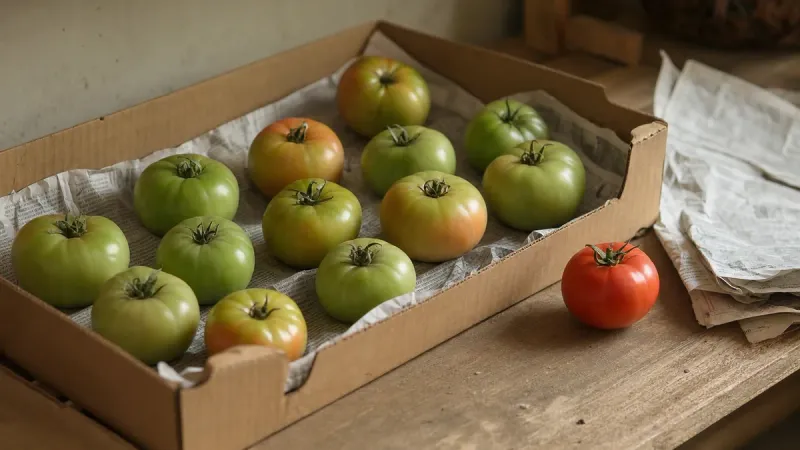
If you want to nudge things along, there are two optional tricks. Wrapping each tomato in newspaper, or placing several in a paper bag, can hold in a bit of the ripening gas the fruit gives off.
Neither is required, and plain single-layer storage works too.
A ripe tomato tucked into the bag or box can help as well. Ripe fruit releases ethylene, a natural gas that can speed ripening in nearby tomatoes, as Illinois Extension explains.
Keep expectations modest. These methods may speed things up, but they do not guarantee fast results, and they will not make immature fruit ripen.
Because wrapped tomatoes are harder to see, unwrap and look them over often, a habit Iowa State Extension also recommends. Go by how the fruit looks and feels rather than a fixed schedule.
Check the tomatoes regularly as they ripen
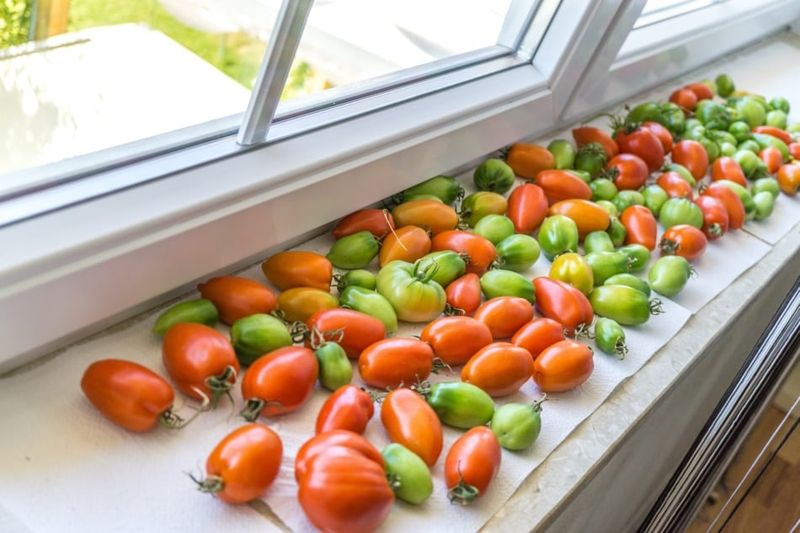
Plan on a look every day or two. Ripening can take anywhere from several days to a few weeks, depending on how mature each tomato was when picked and how warm your storage spot is.
Some fruit will lag behind the rest.
During each check, remove any tomato that has gone soft, shriveled, moldy, or leaky. One decaying fruit can spoil its neighbors, so pull it right away.
Iowa State Extension advises inspecting stored fruit and discarding any that deteriorate.
Move tomatoes to the kitchen as they color up and use them soon. Fruit that stays hard and deep green after a few weeks may simply have been too immature, a limit Colorado State Extension describes.
Those can be composted, and no specific timeline is promised.
Aim to save usable fruit, not recreate vine ripening
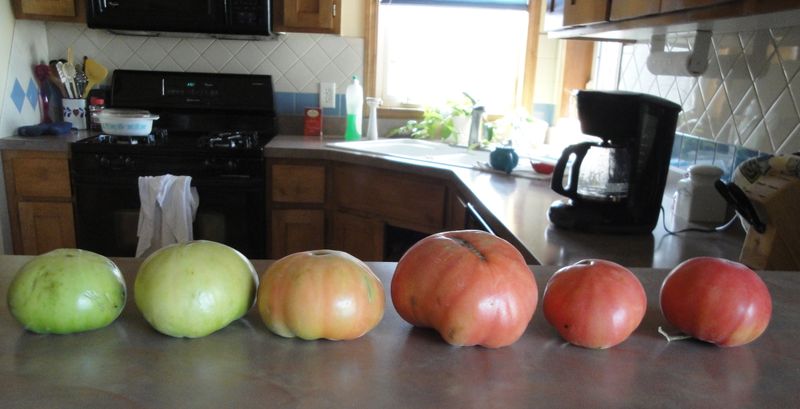
Think of indoor ripening as a rescue, not a replacement for a long, warm season on a healthy vine. Picking mature fruit before a frost gives it a chance to finish indoors, and you may save part of your crop.
Some tomatoes may stay green, and some may not ripen before cold arrives or at all.
Flavor is the other trade-off. UGA Extension notes that the best taste comes from fruit ripened on the vine, and Colorado State Extension says mature-green fruit may not develop that same quality.
Indoor-ripened tomatoes often work well in sauces, sandwiches, and cooked dishes.
A handful of decent tomatoes in November is still a nice reward for a few minutes of work. Vine-ripened summer flavor will have to wait until next year.