
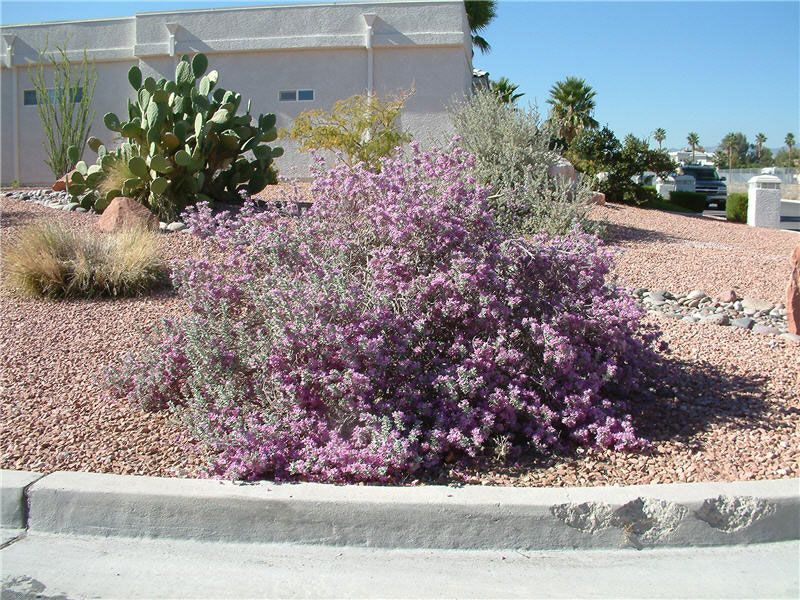
Picture a silvery shrub that stays leafy all year and sometimes covers itself in purple flowers. That plant is cenizo, a tough Texas native that fits sunny, hot yards.
Its blooms can be showy, but they come and go on their own schedule. Here is how to grow it well, and what to plant if you want purple color in a set fall window.
Cenizo is an evergreen shrub, not a fall-bloom guarantee
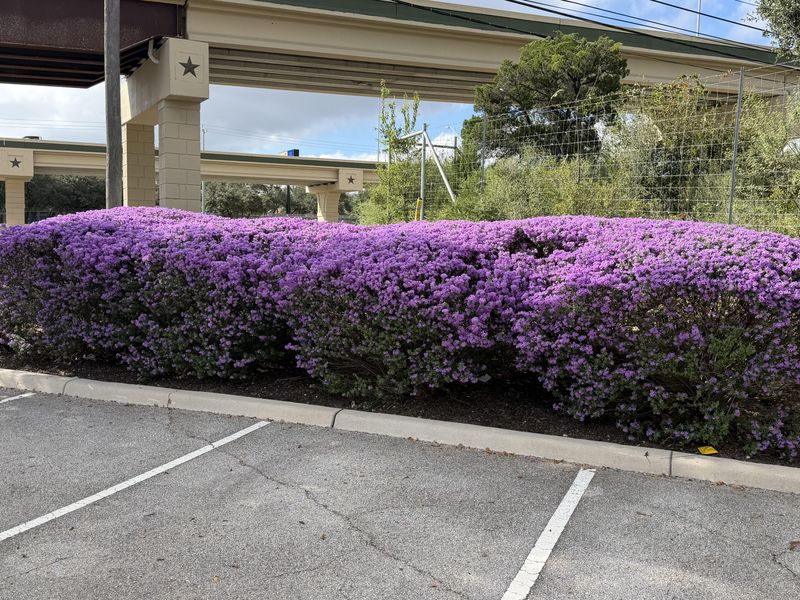
Cenizo, also called Texas sage, is the shrub Leucophyllum frutescens. The name matters because this plant has nothing to do with culinary sage.
It is a Texas native with soft, gray-green to silvery leaves that look pale and almost frosted against darker plants.
Texas Tech plant resources describe it as an evergreen shrub with purple or white flowers and list a summer bloom period. That silvery foliage is the reason many Texans plant it, since it holds its color through the year, including the months when no flowers are showing.
Fall flowers are possible, but they are not promised. Texas SmartScape lists spring, summer, and fall as bloom seasons, so timing varies.
Some years you may get a purple flush in October, and other years the show may land in a different month or skip you altogether.
Think of cenizo as a reliable foundation shrub with a flowering bonus. If you plant it for the leaves and treat the flowers as a pleasant surprise, you will rarely be disappointed.
What is known about cenizo’s brief, variable blooms
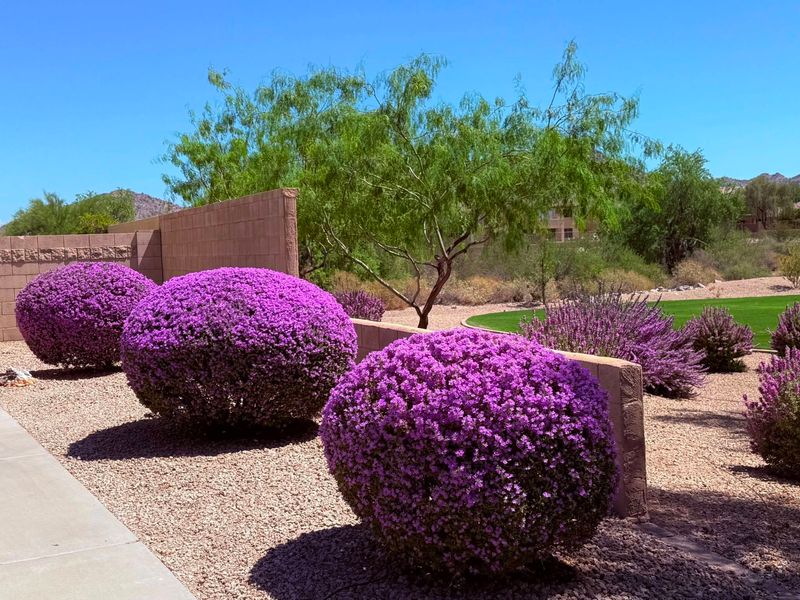
The documented pattern is simple. Cenizo flowers show up in more than one season, and each display can be short.
Texas SmartScape notes that blooms may drop after a week or two, and some reports describe flowers lasting only a few days.
The leaves behave very differently. They stay on the shrub and keep their silvery look, while the flowers act more like a quick visit.
If you walk past your plant on a Tuesday and see purple, take a photo, because the color may look different by the weekend.
You may have heard that cenizo predicts rain, which is why some people call it the barometer bush. Texas Standard reports there are no definitive studies showing that link.
Experts it interviewed suggested humidity or low pressure might be associated with flowering, but those conditions do not guarantee rain.
So treat the folklore as a fun story, not a forecast. Nobody has pinned down a firm cause for the flushes, and you should not plan your weekend around a blooming shrub.
Choose a sunny, well-drained place for cenizo
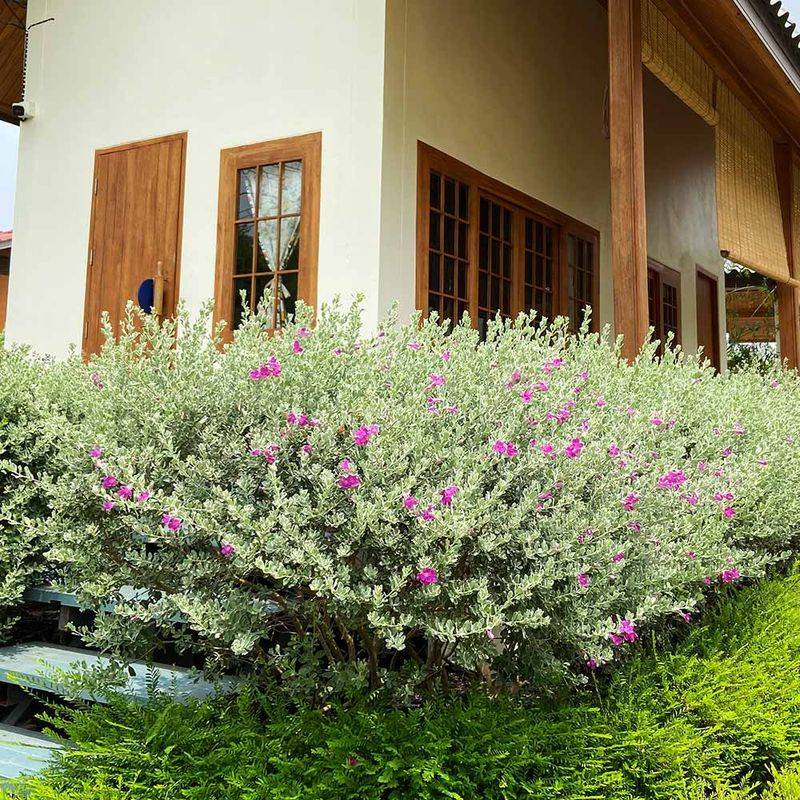
Drainage decides whether cenizo thrives. Full sun to partial shade works, and Texas Tech warns that it does not tolerate wet feet.
A spot where water puddles after a storm is a poor match, even if the sun is perfect.
Look at your yard after a hard rain. Slopes, raised beds, and mounded planting areas drain faster than low corners or heavy clay bowls.
If your soil stays soggy for a day or two, raise the planting area or pick a different location.
Leave room for growth. Texas Tech lists a size of about 3 to 5 feet tall and wide, while Texas SmartScape says it can eventually reach around 6 feet.
Treat those numbers as estimates, since cultivar and growing conditions change the result.
Also keep in mind that the SmartScape recommendation is tied to North Central Texas. Texas has very different soils and climates, so check how cenizo performs in yards near you before assuming it will behave the same way everywhere.
Fall planting can give cenizo time to establish
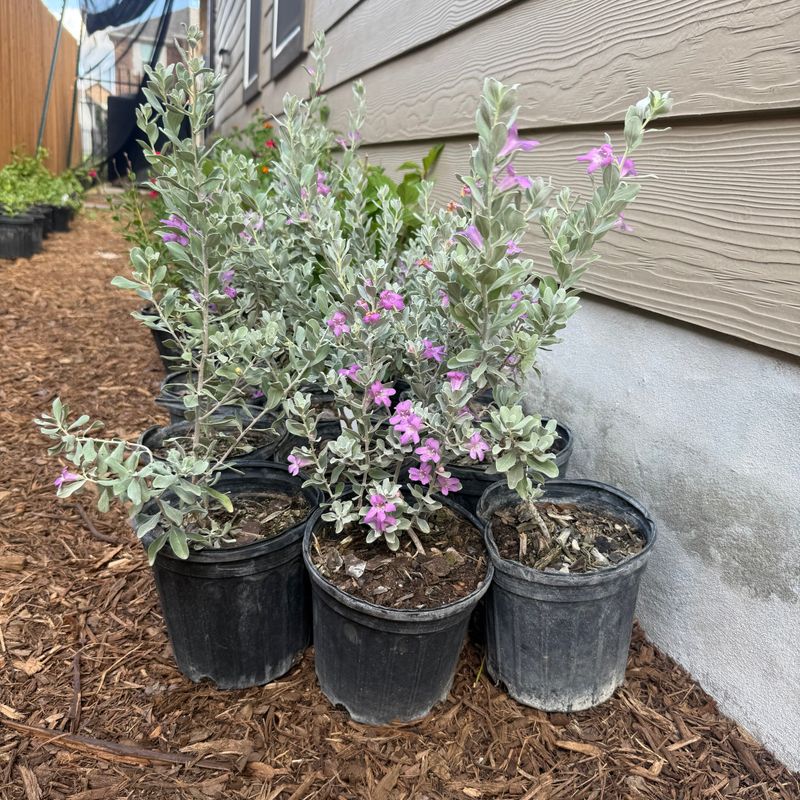
Autumn can be a smart time to plant in Texas. Texas A&M AgriLife notes that cooler temperatures and occasional rainfall can favor establishment of trees, shrubs, and perennials.
Roots get a gentler start than they would in July heat.
Drought tolerant does not mean a new transplant never needs water. Texas A&M says transplanted native plants often need watering for about the first year while they settle in.
Skip the rigid schedule. Check the soil a few inches down, look at the leaves, and consider recent rain.
Water when the root zone has dried and the plant looks stressed, and hold off when the soil is still damp.
Sources differ on timing. Texas SmartScape says cenizo may take up to two years to establish and bloom reliably.
Treat the one-year and two-year figures as estimates, and expect your own plant to follow its own pace.
Resist the urge to force a bloom
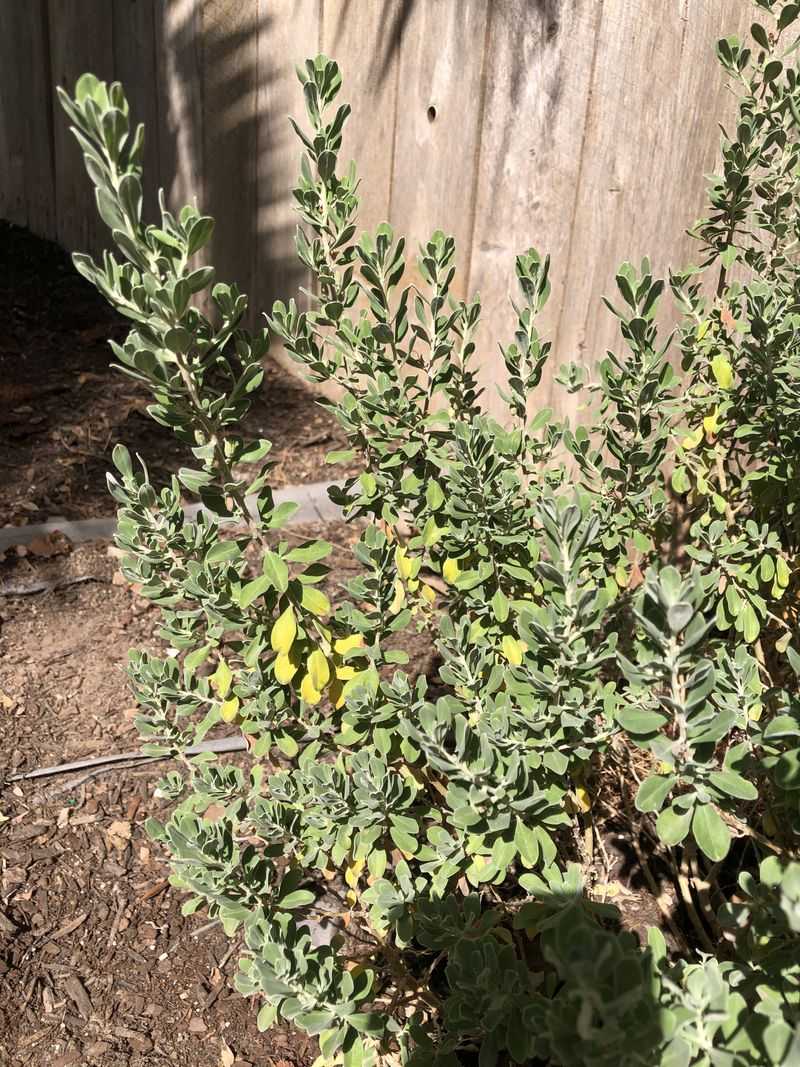
When flowers do not appear, it is tempting to grab the hose. That backfires.
Texas SmartScape says heavy watering will not trick the shrub into flowering, and too much moisture or poor drainage can harm it.
Wet roots are the biggest risk. A yellowing, drooping shrub in damp soil may be getting too much water, not too little.
The Woodlands Township also stresses tough, low-water care for this plant.
Fertilizer is another trap. Texas Tech notes that cenizo does not tolerate overfertilization, so a bloom booster is more likely to cause trouble than color.
Low water needs apply to established plants. A new transplant still needs attention while it builds roots.
After that, the best move is patience and good drainage, since no routine can guarantee flowers on demand.
For a more season-specific fall display, consider fall aster

If your top goal is purple flowers in a defined fall window, look at fall aster. It is a different plant from cenizo, and it is a perennial, not a shrub.
Its scientific name is Symphyotrichum oblongifoliumAster oblongifolius, also listed as .
Central Texas Gardener lists it as a root-hardy perennial with purple flowers from September through November. It also notes value to bees and migrating monarchs, which adds life to a fall yard.
Texas Wildbuds likewise reports a September to November bloom period. That season-specific timing is what cenizo cannot promise.
The trade is clear. Cenizo gives you evergreen silver structure all year, while fall aster gives a more predictable autumn flower display on a perennial that comes back.
Some yards have room for both.
Choose cenizo for its foliage, and welcome flowers when they come
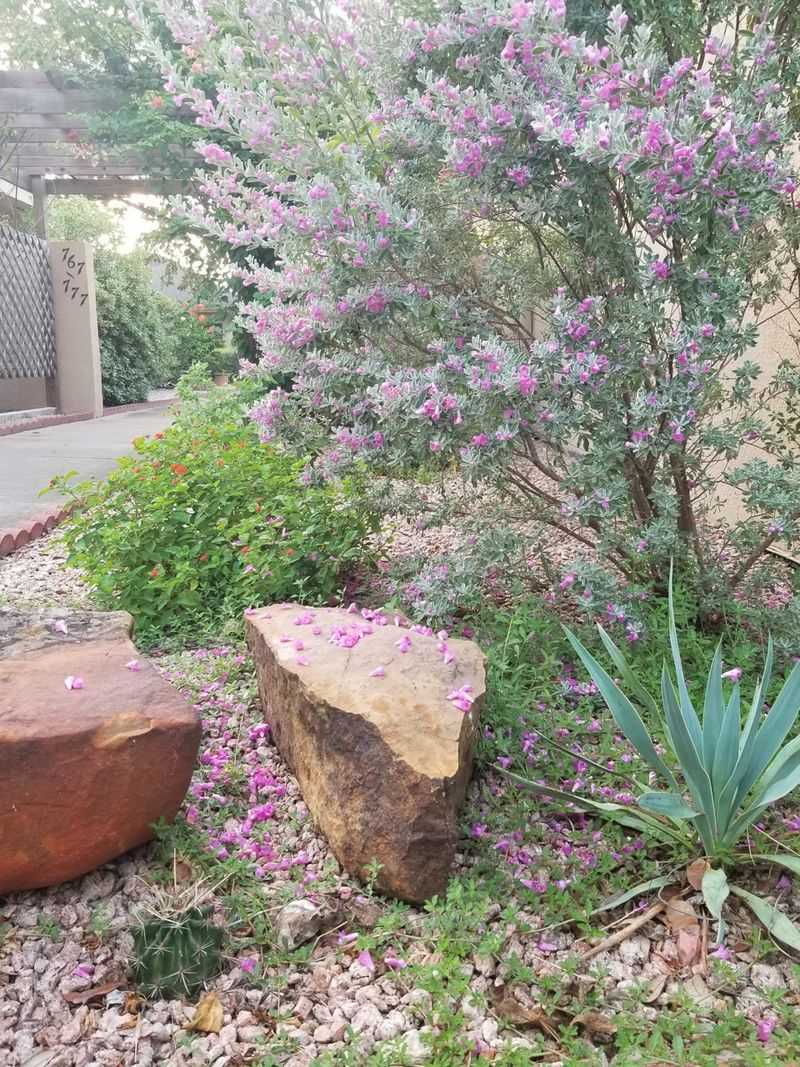
Pick cenizo for the silvery, evergreen presence it gives a sunny, well-drained spot. Texas SmartScape shows that purple flushes may arrive in several seasons, so keep fall hopes flexible.
If you need a set autumn show, add fall aster, and remember neither plant will act the same in every yard.
Plant the shrub for the leaves, and let the flowers be the bonus.