
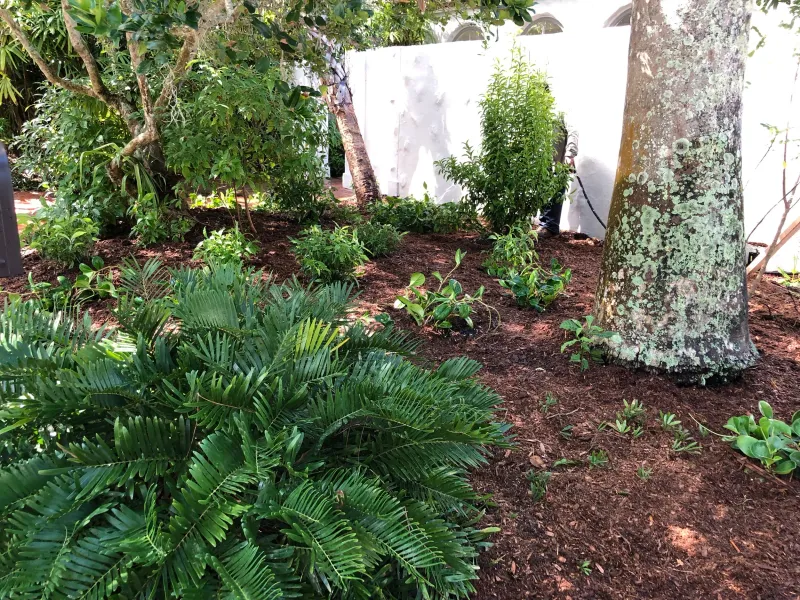
That bare patch under your oak may need a different plant, not another bag of grass seed. Oak roots take up water, while the canopy blocks light that most lawn grasses need.
Several Florida natives can turn those thin spots into leafy beds, flowering patches, or small wildlife shelters. Match each choice to your shade and soil moisture, and you can stop fighting for a lawn where it never looked happy.
1. Twinflower
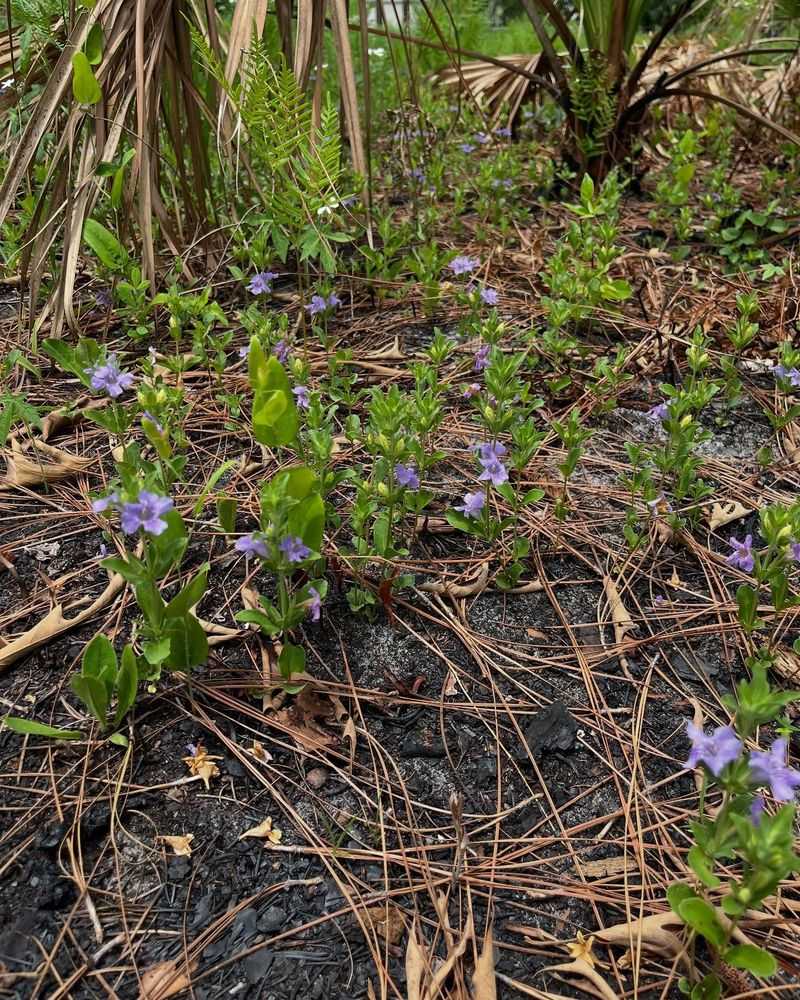
A little lavender goes a long way when the ground beneath an oak looks tired. Twinflower, Dyschoriste oblongifolia, brings small tubular blooms and low green growth to places with filtered light or a few hours of sun.
Its spreading habit makes it useful for connecting scattered bare spots into a more settled-looking bed. Most plants stay roughly 6 to 12 inches tall, so they will not hide the oak’s trunk or turn the area into a wall of foliage.
Choose a well-drained site, especially where sandy soil dries between rains. Flowering is usually better near the canopy’s brighter edge than in its darkest center, and new plugs need regular watering until their roots take hold.
Twinflower also serves as a host plant for common buckeye butterflies. Expect some chewed leaves if caterpillars arrive, and avoid treating that normal feeding as a garden emergency.
Set small plants into gaps between oak roots rather than digging a continuous trench. Leave fallen leaves in a light, loose layer, but uncover tiny plants if heavy leaf piles bury their stems.
2. Coontie
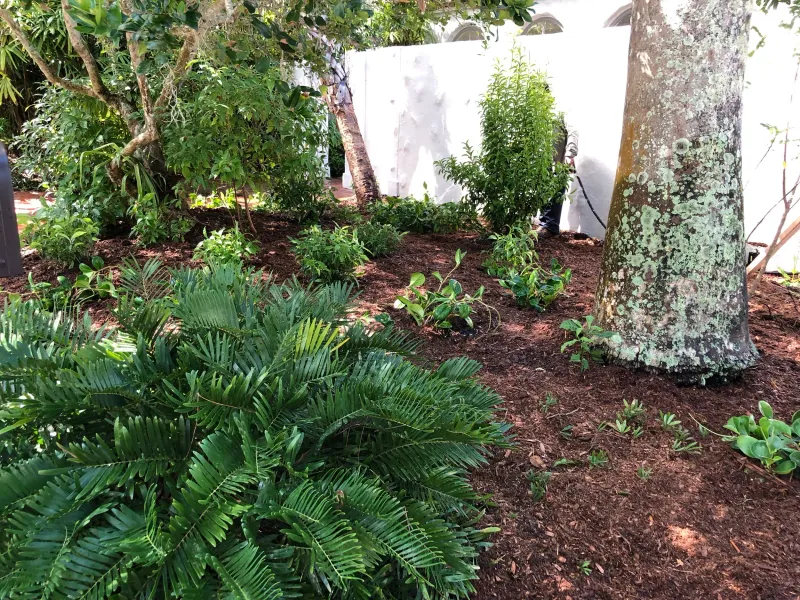
For a bare patch that needs structure rather than a carpet, coontie earns its space. Its stiff, arching leaves give an oak bed a tidy, evergreen look without the clipping that many small shrubs demand.
Zamia integrifolia is a Florida-native cycad, not a palm or fern. It usually forms a slow-growing clump about 2 to 3 feet tall, with enough width that plants should be spaced for their mature size rather than packed tightly together.
Good drainage matters more than rich soil. Once established, coontie handles dry periods well, making it a useful choice for sandy ground beneath an oak where irrigation is limited.
Use it as a series of leafy islands, leaving a thin layer of oak leaves between plants. Deep shade can produce a looser appearance, while filtered light generally gives a fuller clump.
Coontie supports the rare atala butterfly where that butterfly occurs, especially in South Florida. However, all parts are poisonous if eaten, particularly the seeds, so choose another plant where pets or children might chew them.
3. River Oats
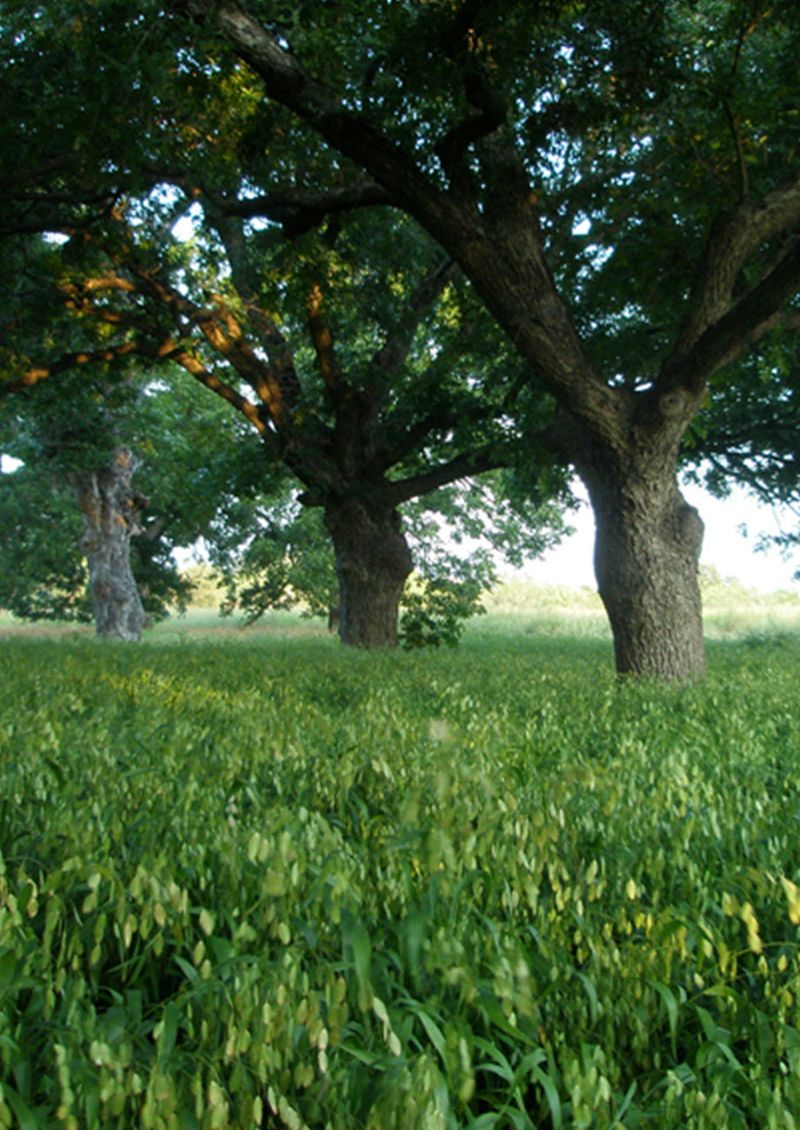
Flat, dangling seedheads give a shaded bed something lawn grass never offered: movement. River oats, Chasmanthium latifolium, catches small breezes beneath trees and brings a relaxed woodland feel to larger bare areas.
This native grass is especially useful in North and Central Florida gardens with part shade and soil that holds some moisture. It tolerates established dry spells, but a bone-dry patch crowded with oak roots is not its easiest assignment.
Allow room for plants that can reach roughly 2 to 4 feet tall when flowering. Their height suits the back of an oak bed or a broad sweep away from walkways, rather than a tiny gap beside a steppingstone.
The main trade-off is enthusiasm: river oats can reseed heavily in favorable conditions. Remove seedheads before they drop if you want a controlled planting, or keep a defined edge where seedlings are easy to spot.
Leave some stems standing when space allows, then cut back tired foliage before fresh spring growth. Start with a small group and watch its spread before filling the entire bed.
4. Wild Coffee
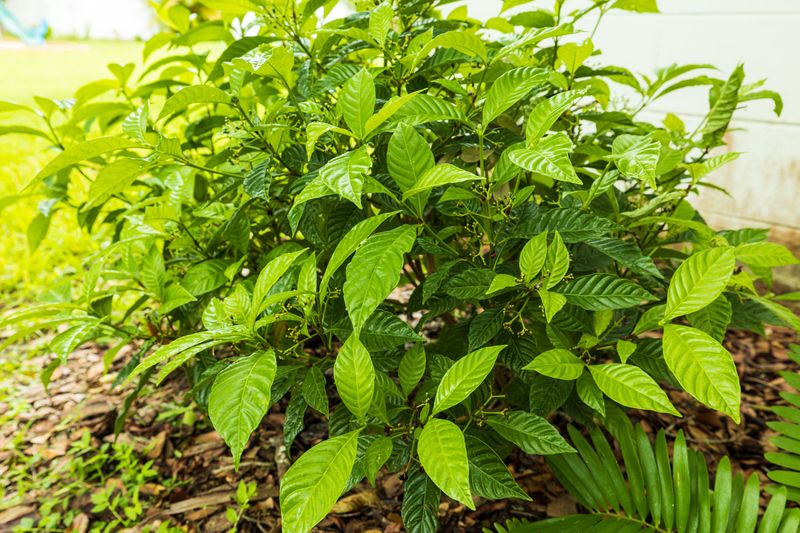
Glossy leaves can make an empty corner look planted long before flowers appear. Wild coffee, Psychotria nervosa, supplies that polished look beneath oaks in warm, sheltered parts of Central and South Florida.
Unlike the low growers on this list, wild coffee fills vertical space. It commonly reaches about 4 to 6 feet tall, sometimes more, so reserve it for a broad bed rather than treating it as a lawn-height groundcover.
Small white flowers attract visiting insects, and red fruits provide food for birds. Planting a few shrubs near the outer part of an oak canopy can create a leafy backdrop without crowding the trunk.
Choose partial to full shade and a well-drained site with some moisture available during establishment. Although established shrubs handle some drought, severely dry root competition may leave them struggling without occasional deep watering.
Cold limits its usefulness in northern Florida, where freezes can damage it. Buy nursery-grown plants suited to your county, and use selective pruning instead of shearing them into tight boxes; their natural branching is part of the appeal.
5. Partridgeberry
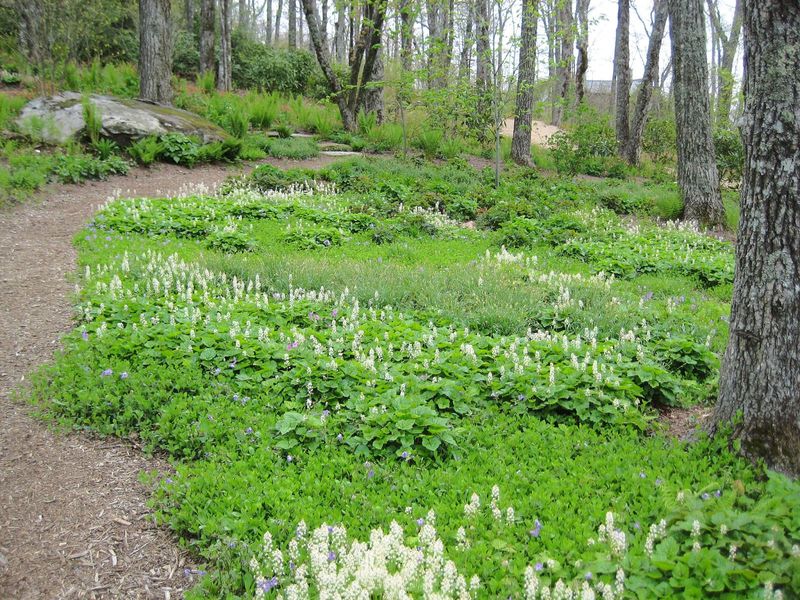
Not every empty spot needs a bold plant. Partridgeberry, Mitchella repens, offers a quiet cover of tiny evergreen leaves, with white flowers and red berries that reward a closer look.
Only a few inches tall, it works best beside a shaded path or in a small woodland pocket. Its creeping stems gradually root as they spread, but this is a patient gardener’s choice rather than a quick fix for a large sandy yard.
In Florida, think primarily of suitable northern woodland conditions. It prefers acidic, humus-rich soil that stays reasonably moist while draining well, so hot, dry sand beneath a thirsty oak is a poor match.
A naturally leafy, sheltered spot is better than one that needs constant soil rebuilding. Do not add deep layers of compost or soil over oak roots just to make the site suit this plant.
Start with a few nursery-grown plants and water during dry weather while they establish. Keep foot traffic out, and gently shift thick leaf piles aside if they completely cover the foliage.
Its particular strength is close-up detail, not heavy coverage.
6. Lyreleaf Sage
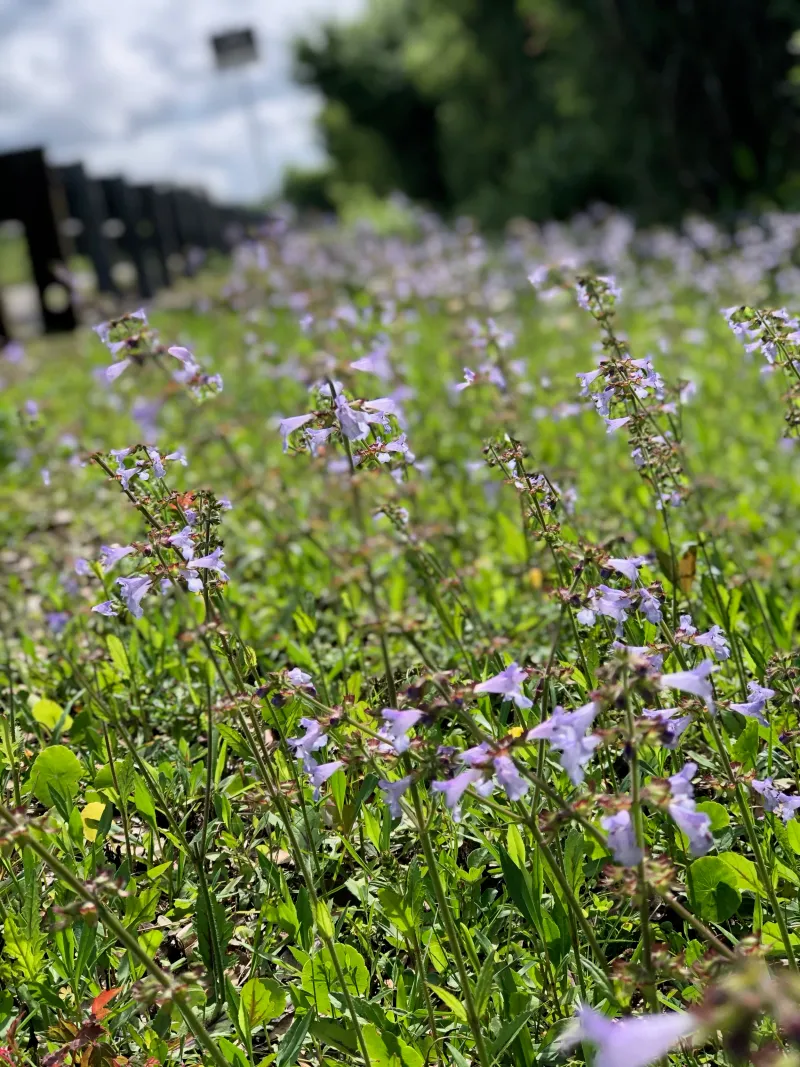
Where morning sun slips under the branches, flower spikes can replace the last scraps of struggling turf. Lyreleaf sage, Salvia lyrata, suits those brighter oak edges better than the deepest shade near the trunk.
Its leaves form low rosettes, often with purple markings, while pale blue to lavender flowers rise above them in spring. The contrast gives a patch some seasonal color without requiring a tall shrub.
Use it in a loose drift where sandy soil drains well but does not remain extremely dry. Young plants need watering as they settle in, and flowering generally improves with more light.
Pollinators visit the blooms, and seed can produce new plants nearby. Let a few flower stalks mature if you want the patch to thicken, or trim them after flowering when a neater edge matters more.
Do not expect a dense, year-round substitute for a walking lawn. Lyreleaf sage is better treated as a flowering ground-layer plant, mixed with other compatible natives and viewed from a path.
Keep mower wheels and string trimmers outside the planting so young rosettes can spread without repeated damage.
7. Blue Wood Sedge
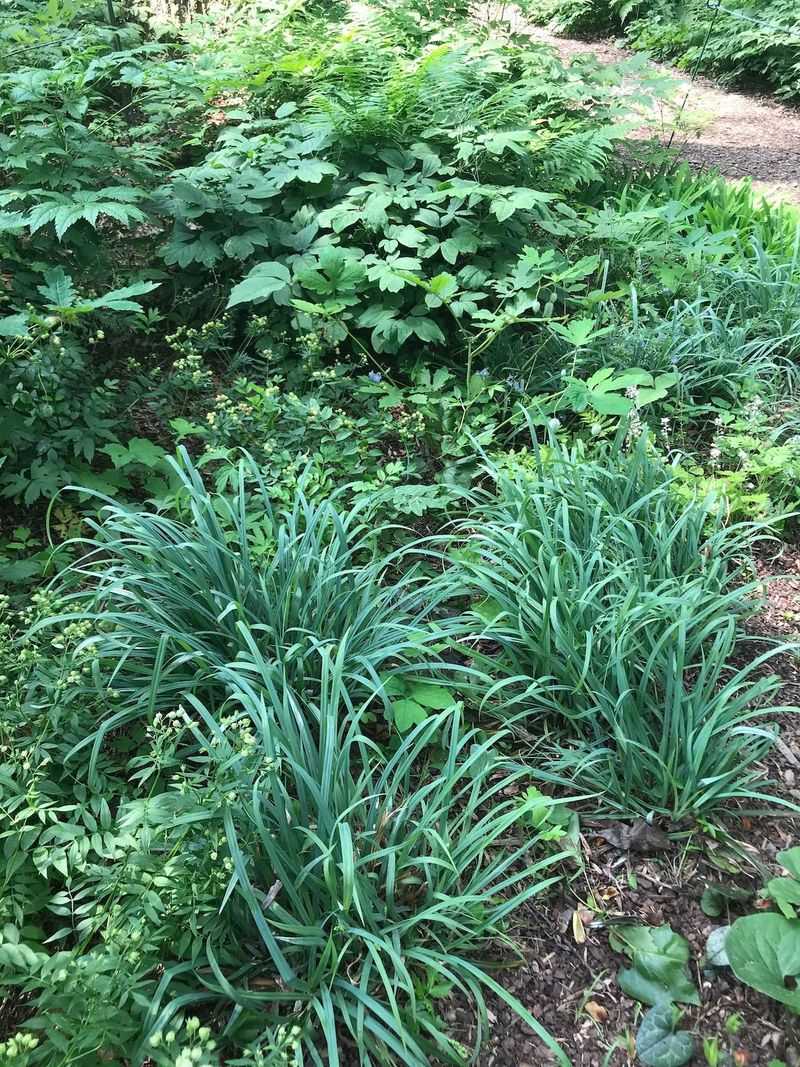
Miss the soft look of grass, but not the mowing? Blue wood sedge, Carex flaccosperma, offers grassy texture in a shade-friendly form, making it a useful choice for suitable North Florida woodland gardens.
The broad, blue-green blades form low clumps rather than a tough recreational lawn. Repeating those clumps across a bed can make scattered bare soil look intentional while keeping sightlines open beneath the oak.
Give it shade or filtered light and soil with dependable moisture and good drainage. It is a better candidate for a naturally mesic woodland spot than an exposed mound of dry sugar sand.
Ask a native nursery for the botanical name, because sedges vary widely in size, moisture needs, and Florida range. A plant labeled only as shade sedge may not be this species or even a Florida native.
Keep oak leaves as a loose surface layer and remove heavy piles that flatten the crowns. Occasional cleanup of damaged blades is usually more useful than routine mowing.
For access, add steppingstones between planted groups rather than expecting the foliage to withstand regular foot traffic.
8. Southern Shield Fern
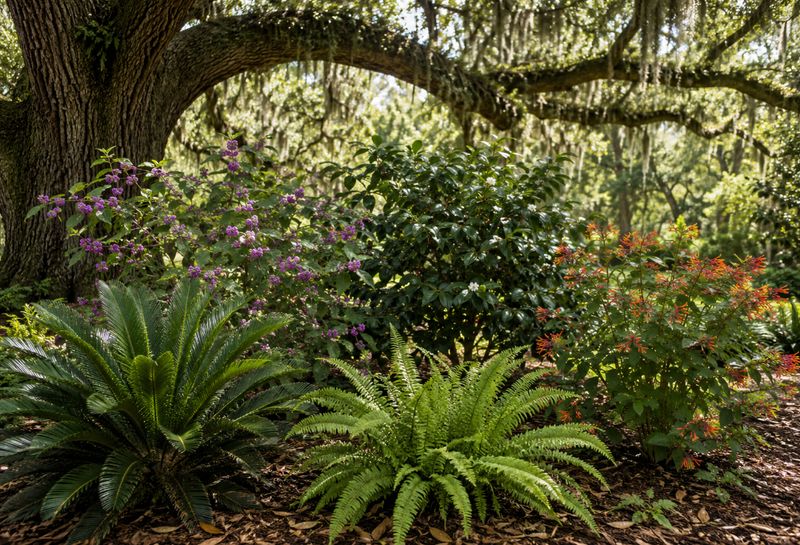
A sweep of feathery fronds can turn an awkward side yard into a woodland bed. Southern shield fern, Thelypteris kunthii, brings that fuller look to shaded spaces where short groundcovers would barely register.
Expect arching foliage roughly 2 to 4 feet tall in favorable conditions. Underground rhizomes allow it to form colonies, making it especially useful for a generous patch with room to spread.
Moist, well-drained soil is its easiest setting, though established plants can tolerate some dry periods. Beneath an oak, check the soil during rainless stretches rather than assuming shade means the ground stays damp.
Fronds may brown after cold weather or during drought. Trim damaged growth when needed and watch for fresh shoots as conditions improve; seasonal browning does not always mean the planting has failed.
Use small nursery plants and dig only where roots allow. Across the entire oak bed, avoid tilling, cutting major roots, piling soil over the root zone, or burying the trunk flare.
If every planting hole hits a large root, move the plant. Protecting the oak matters more than keeping a perfectly even planting pattern.