
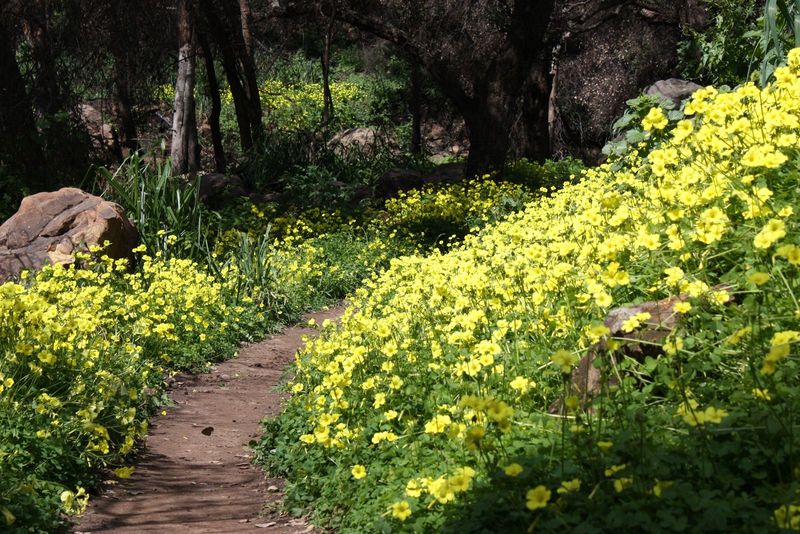
Every fall, some California yards suddenly sprout bright green clover-shaped leaves, and by winter they are dotted with yellow flowers. That plant is sourgrass, and it has been hiding underground the whole time.
The growth cycle is predictable once you know what is happening beneath the soil. Understanding it can help you decide what to dig, cut, or leave alone.
First make sure the yellow-flowered weed is sourgrass
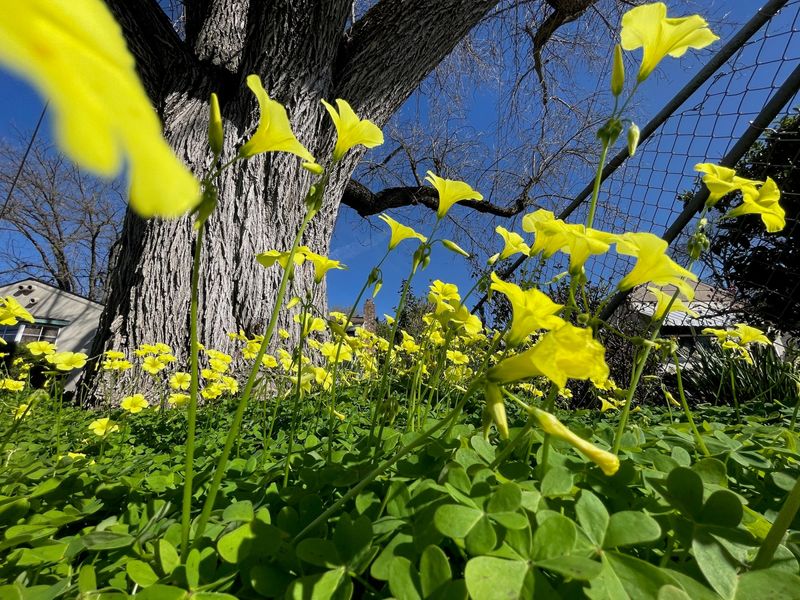
Plenty of yellow-flowered weeds show up in California yards, so a quick identification check saves effort. Sourgrass is usually Bermuda buttercup, also called buttercup oxalis (Oxalis pes-caprae).
It grows upright, has cloverlike leaves, and produces showy yellow flowers on stalks above the foliage.
A lookalike is creeping woodsorrel (Oxalis corniculata). It hugs the ground, spreads by stems and seed, and often has smaller flowers and leaves that may look reddish or purplish.
UC IPM guidance on both weeds treats them separately because they grow and reproduce differently.
The difference matters for your plan. Bermuda buttercup grows from underground bulbs, so control is about the bulbs below the surface.
Creeping woodsorrel needs different advice, since stems and seed drive its spread.
To check which one you have, gently dig up a plant with a hand trowel. Bulbs and small bulblets at the base point to Bermuda buttercup.
A thin, trailing, rooting stem points to creeping woodsorrel. The UC IPM identification gallery has photos of each stage that make side-by-side comparison easier.
Not every California yard has either plant. If you are unsure, take a clear photo and a sample to your local UC Cooperative Extension office or Master Gardener program before choosing a method.
Fall rains reveal a seasonal flush, not an instant takeover
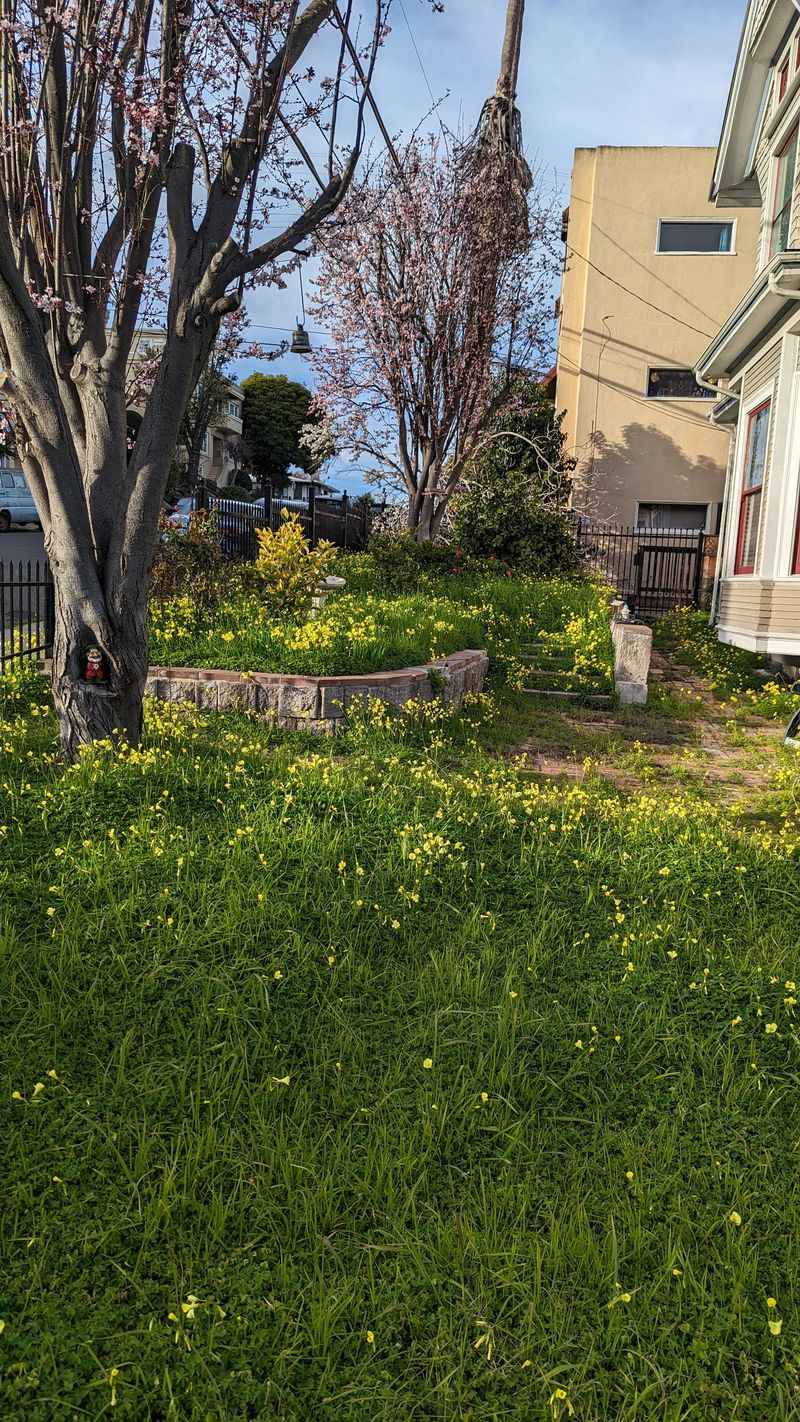
Sourgrass follows a seasonal calendar. The bulbs sprout in fall, typically after the first rain, and the plants flower from about November through April.
As temperatures rise in late spring or summer, the foliage dies back and the bulbs go dormant.
That means rain does not trigger an overnight takeover. It wakes up bulbs that were already in the soil, so a sudden green carpet usually reveals a population that was there all along.
Rain timing varies from year to year, and so does when your patch emerges.
Where and how thickly sourgrass grows also varies. Cal-IPC’s plant profile describes it in particular California regions and habitats, including coastal areas, and rates it Moderate.
Inland landscapes can have it too, but plenty of yards have none.
A practical clue: if cloverlike leaves appear in the same spot each autumn, you likely have bulbs there. Mark the area with a stake or a note on your calendar so you can watch it closely next season.
The UC IPM pest note lays out this yearly cycle, which is the key to timing any control effort.
Underground bulbs build the patch
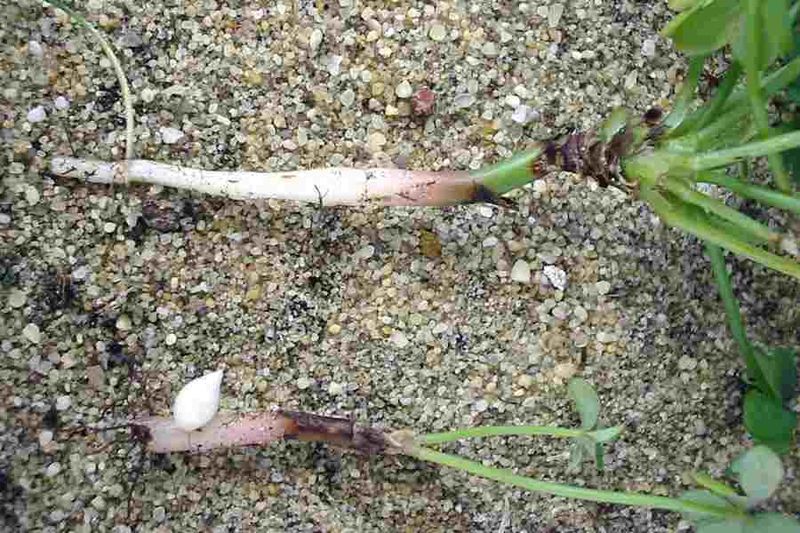
Below the surface, sourgrass relies on bulbs and bulblets. UC sources report no documented viable seed production for Bermuda buttercup in California, so its spread comes from these underground parts rather than from seeds blowing around the yard.
Each season, the plant forms new bulblets while the foliage is growing. When leaves die back in summer, the bulbs stay in the soil and can send up leaves again the next fall.
The UC IPM identification gallery describes this bulb-and-bulblet reproduction.
This is why a patch can seem to grow bigger over a few years. The same area keeps producing leaves, and new bulblets add to the count underground.
Bulbs also travel. Shovelfuls of infested soil, bulb-laden garden waste, or soil from a contaminated source can drop bulbs into clean areas.
The UC IPM pest note points to moving soil as a way the weed gets around.
Dormant does not mean immortal. Bulbs do not necessarily last forever, but you cannot count on them vanishing on their own, so a plan is still needed.
Dig small patches carefully and plan to follow up
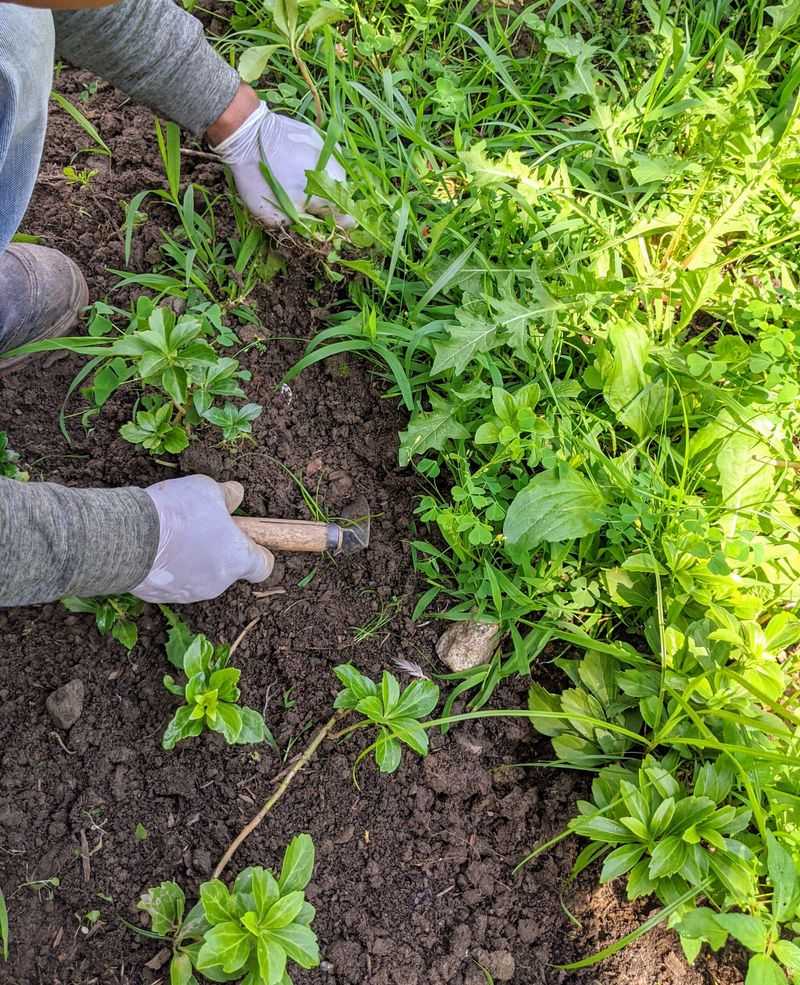
For a small patch, careful digging is the most direct option. Loosen the soil with a trowel or fork, lift the whole plant, and keep going until you have found the bulbs and bulblets underneath.
Doing it when soil is moist makes it easier to keep roots and bulbs together.
Go through the soil by hand or with a sieve. Bulblets are small and easy to miss, and any left behind can sprout next fall.
UC Master Gardener guidance from Contra Costa County also discusses when to pull plants, noting that removal near the start of flowering catches them when the parent bulb is depleted.
Expect a return visit. Complete bulb removal can be difficult, so one pass is not an eradication promise.
Check the spot throughout the next season and dig out anything that reappears.
If digging is not practical, pulling the tops repeatedly is another approach. According to UC IPM, this can deplete bulb reserves, but it may take years.
Cutting before flowering and new-bulb formation helps limit new bulbs.
Consistency matters more than any single date. Timing that works in a coastal garden may not match an inland one.
Match longer-term control to the space
Bigger infestations call for a method that fits the space. In a lawn, repeated mowing or cutting can wear down bulb reserves over time, because the plant keeps spending energy on new leaves.
It is a slow process rather than a quick fix, and results vary by site.
Cutting before flowering and new-bulb formation is the stage UC IPM highlights for the best chance of limiting new bulbs. There is no single best date for every yard, so base your schedule on when growth appears where you live.
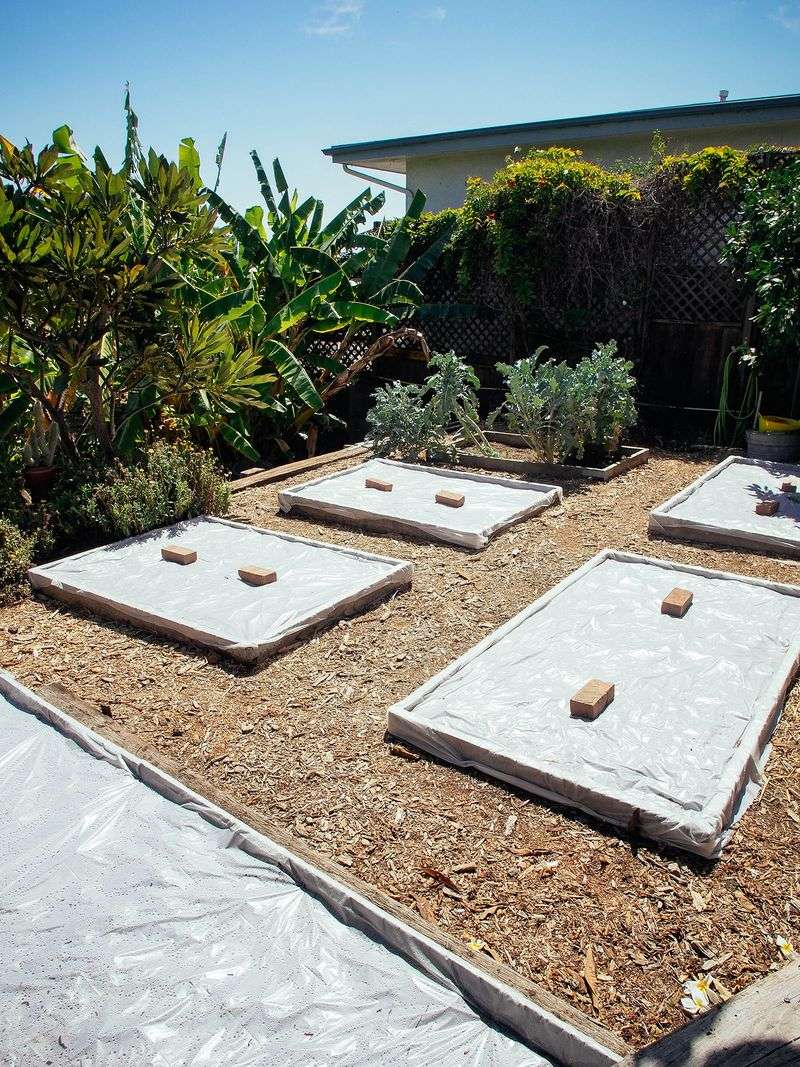
For an unplanted bed, summer solarization may help. UC IPM recommends clear plastic left in place for at least four consecutive weeks during June, July, or August.
Wet the soil, tuck the edges in, and keep the plastic tight against the surface.
Solarization is meant to reduce bulbs, not guarantee eradication. It is not suited to beds with plants you want to keep, since the heat can harm them.
These methods are not interchangeable. Mowing suits lawns, solarization suits empty beds, and digging suits small patches.
Herbicides are another topic, and any product use should follow its label, including cautions about injury to desirable plants.
Keep infested soil from carrying bulbs elsewhere
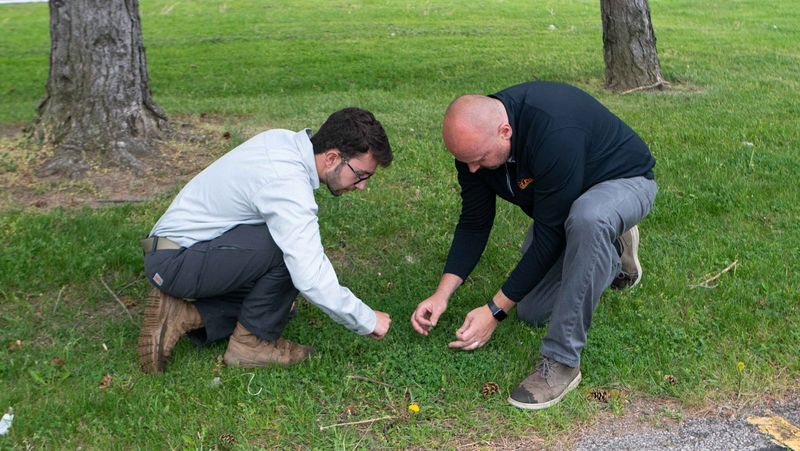
Bulbs are small, so prevention happens at the shovel. Avoid moving soil from an infested area to a clean one.
Even a bit of dirt on a tool, a boot, or in a wheelbarrow can carry bulblets.
When you dig, work over a tarp and sift or inspect the soil you remove. UC Master Gardeners in Contra Costa County describe the plant’s bulb-based spread, which is why careful handling counts.
Garden waste deserves thought too. Plants pulled with bulbs attached should be bagged and kept out of compost piles that you later spread across your beds.
Check your local green waste rules for how to dispose of them.
Nursery soil and potted plants can occasionally bring in unwanted bulbs. Look through the top of the pot and the root ball before planting.
Not every route moves the plant equally well, but it costs little to check.
Mulch and landscape fabric are not a dependable barrier. The UC IPM pest note says they have little effect on bulb germination, so keep your focus on soil handling.
Plan for repeat checks, not a one-day cure
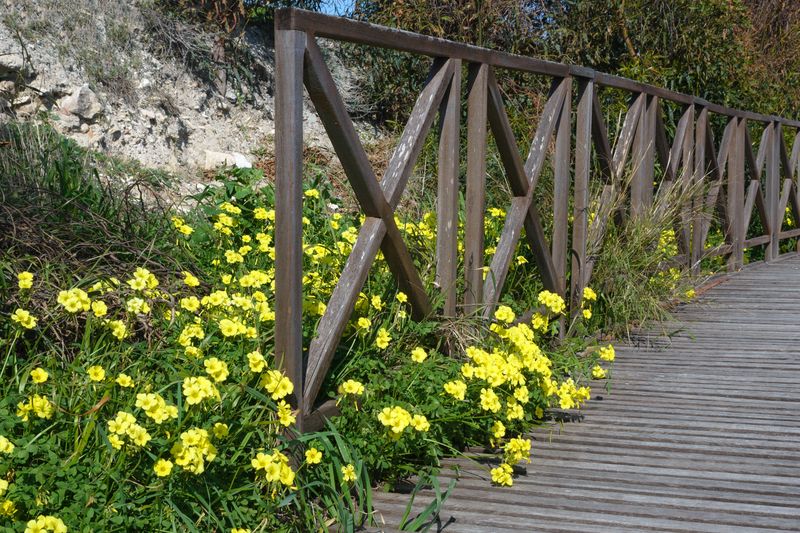
Start by confirming the plant is Bermuda buttercup, then pick a method that fits the patch: digging for small areas, mowing or cutting for lawns, or solarization for an empty bed. Keep soil from traveling, and look again when new leaves appear each fall.
Steady follow-up can shrink the problem, though UC IPM notes it may take years. Results differ from yard to yard.
Sourgrass rewards patience: the yards that win are the ones that keep checking.