
A volunteer tree popping up near your fence line can be hard to name, especially when late fall changes how it looks. Two invasive trees often get mixed up in Texas yards, and they need to be told apart before you decide what to do.
Leaves and fruit give you quick clues this time of year. Here is how to spot each one and handle it safely.
Two invasive trees, not one local surge
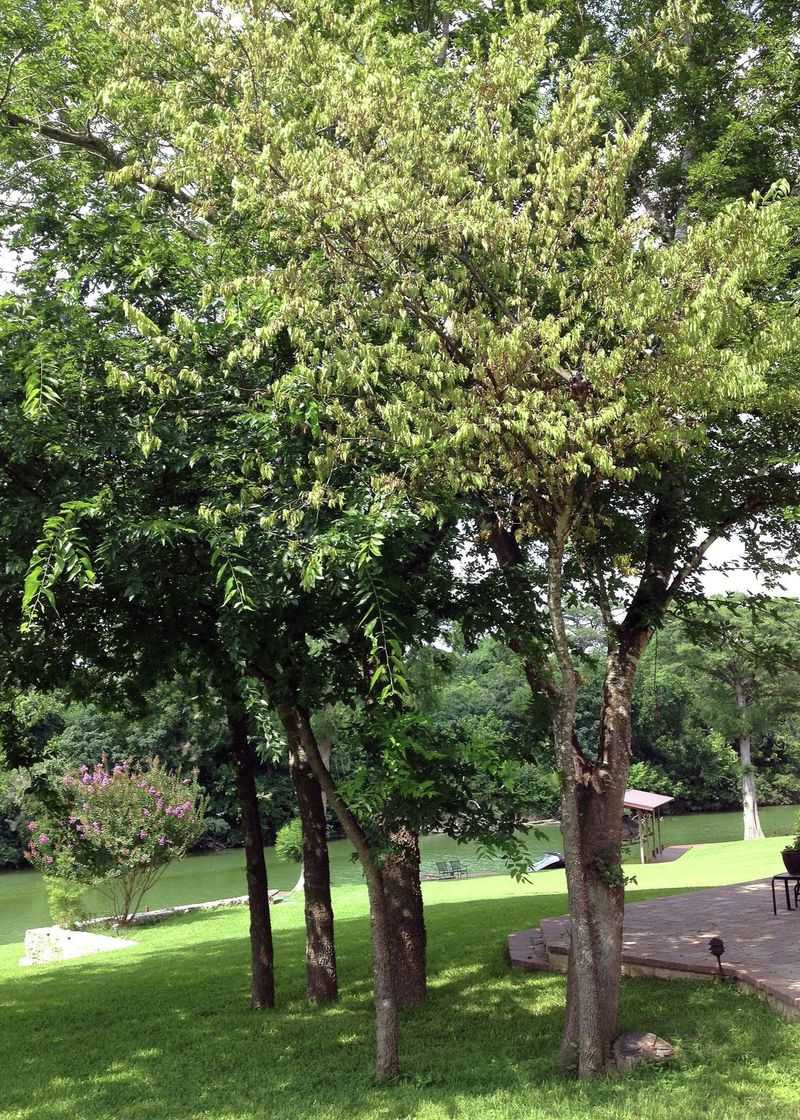
Chinese tallow and chinaberry get lumped together, but they are two separate trees. They are different species with different leaves and different fruit.
Austin lists both among the invasive and problem plants to avoid, so a volunteer of either kind is worth identifying early.
Where each tree grows matters too. Texas A&M Forest Service reports that Chinese tallow is found mainly in Southeast Texas.
Its numbers there are much higher than anything documented around Austin. Chinaberry has a wider footprint, and Texas A&M AgriLife describes it across Texas ecological regions.
You may have seen claims that one of these trees is racing through Central Texas yards. The sources behind this guide do not show a fast-spreading trend in local yards, so there is no proof of a surge here.
What they do show is that both trees are invasive, both spread by seed, and both are easier to deal with when they are small.
Think of this article as a field guide rather than an alarm. You will learn how to tell the trees apart by their late-fall leaves and fruit, how to pull young seedlings, and how to approach bigger trees with care.
A little attention now, while color and fruit make identification easy, saves work later.
What the leaves and fruit can tell you
Late fall is the easiest time to sort these trees. Start with the leaves.
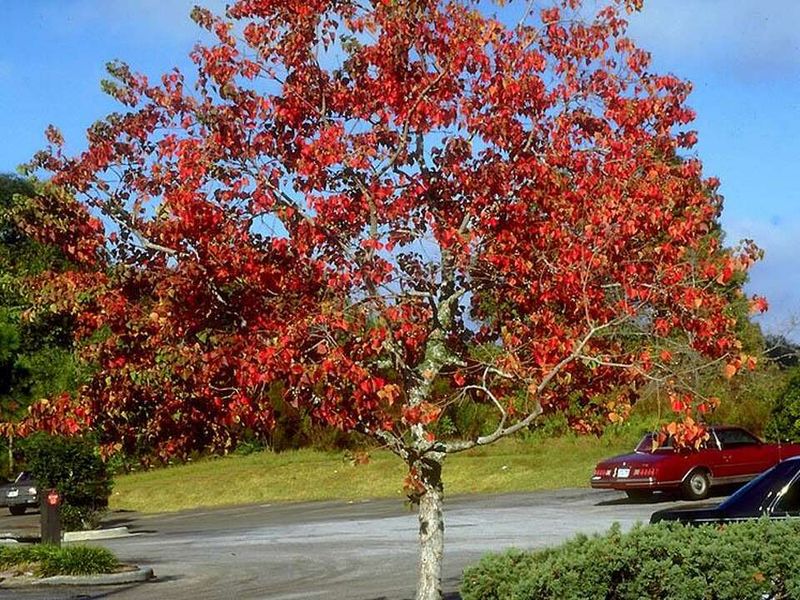
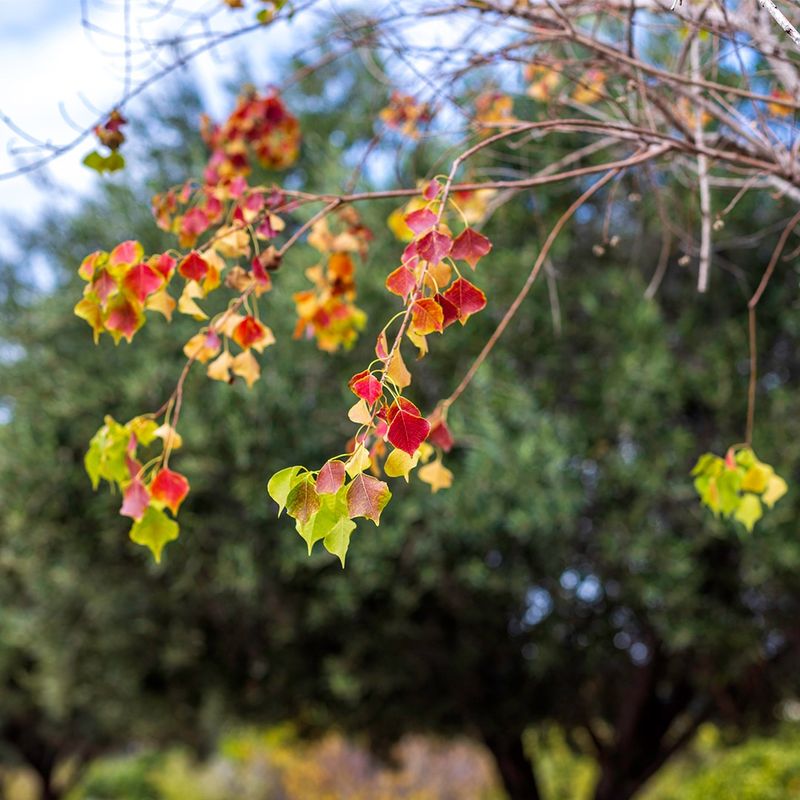
Texas A&M’s tree guide describes Chinese tallow leaves as simple, pointed, and roughly heart-shaped. They can turn yellow, orange, red, or purple before dropping.
Now check the fruit. Tallow produces a three-parted capsule that splits open to show white seeds that look like tiny popcorn.
If you see those white seeds clinging to bare twigs, you are looking at tallow.
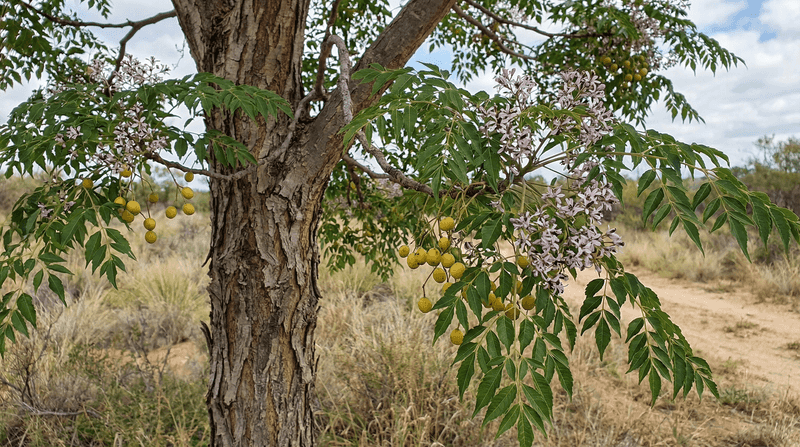
Chinaberry tells a different story. Its leaves are lacy and twice compound, meaning each leaf is divided into leaflets that are divided again.
The AgriLife profile notes that its yellow fruits can hang on through winter.
Keep the clues separate. Yellow berries mean chinaberry, not tallow, and white popcorn-like seeds mean tallow, not chinaberry.
Chinaberry also should not be expected to show the same range of fall leaf colors.
If a seedling is too small to show fruit, compare leaf shape. A simple heart-shaped leaf points toward tallow, while a feathery, divided leaf points toward chinaberry.
When you are unsure, take a clear photo and ask a local extension office or arborist.
Why new seedlings may appear
Seeds can arrive in more than one way, which is why a cleared spot sometimes needs a second look. Texas A&M Forest Service notes that birds and water spread Chinese tallow seeds.
A bird can drop seeds along a fence, and runoff can carry them into a low corner of the yard.
Chinaberry works a bit differently. Its yellow fruit can persist on the tree through winter, so seeds stay available for a long stretch.
The City of Austin’s chinaberry field sheet supports monitoring after removal for that reason.
These are ways new seedlings can show up. They are not a measured spread rate for Central Texas yards, and they do not mean the problem is out of your control.
Most of the time it simply means a quick walk through the area now and then.
Look in the places seeds tend to land: under perches, along fences, near gutters, and where water collects after a storm. Spotting a few sprouts early keeps them in the easy-to-pull stage.
Remove small seedlings while they are manageable
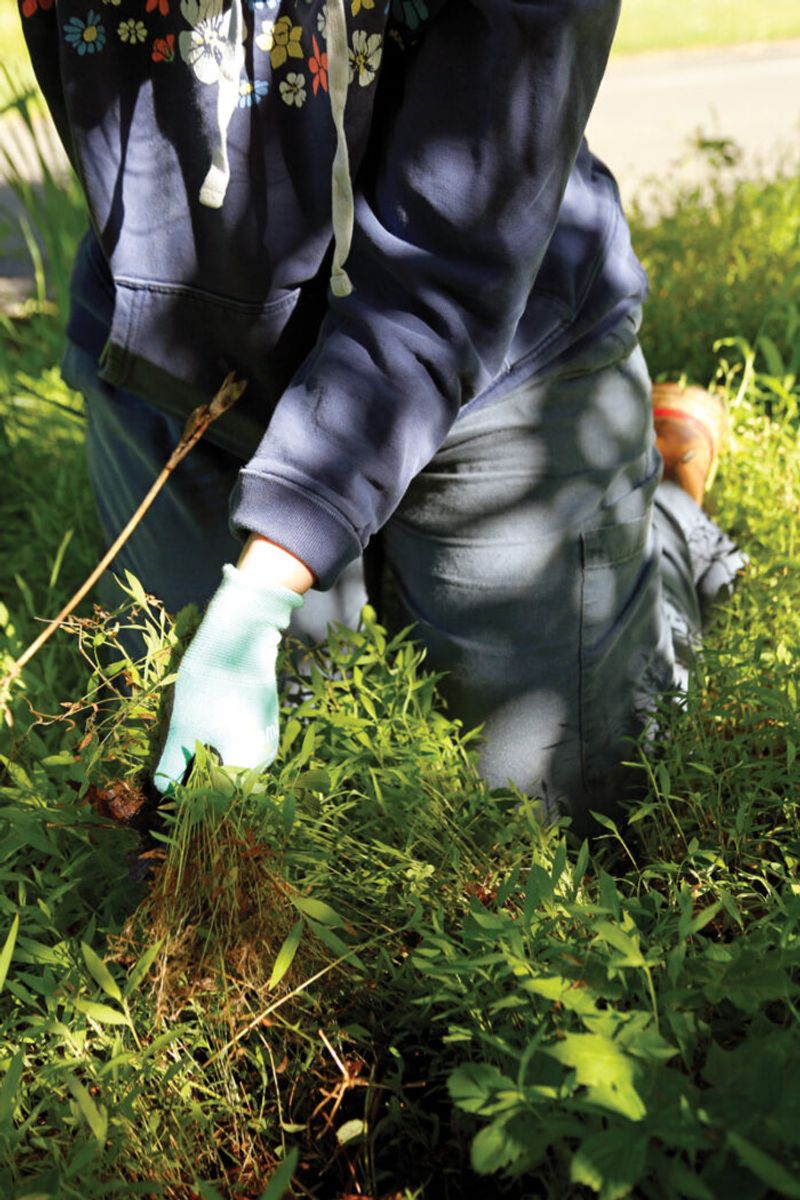
Small plants are the good news in this story. Pulling is a recommended option, and young seedlings can come out by hand or with a shovel.
The goal is to take as much root as you can.
For chinaberry, the Austin field sheet suggests working when the soil is moist. A weed wrench can help grip slightly larger stems and lift more root.
Try after a good soaking rain, when the ground lets go easily.
For Chinese tallow, Texas A&M Forest Service guidance says to pull or dig small seedlings and then watch the disturbed spot for new growth. Fresh sprouts from leftover root or nearby seed are your cue to repeat the job.
Wear gloves and sleeves while you work. Bag the seedlings rather than leaving them on bare soil, and shake off any seeds or fruit into the bag as well.
A ten-minute pull in November can spare you a much bigger project in a few years. Treat it like any other bed cleanup task.
Established trees need a different plan
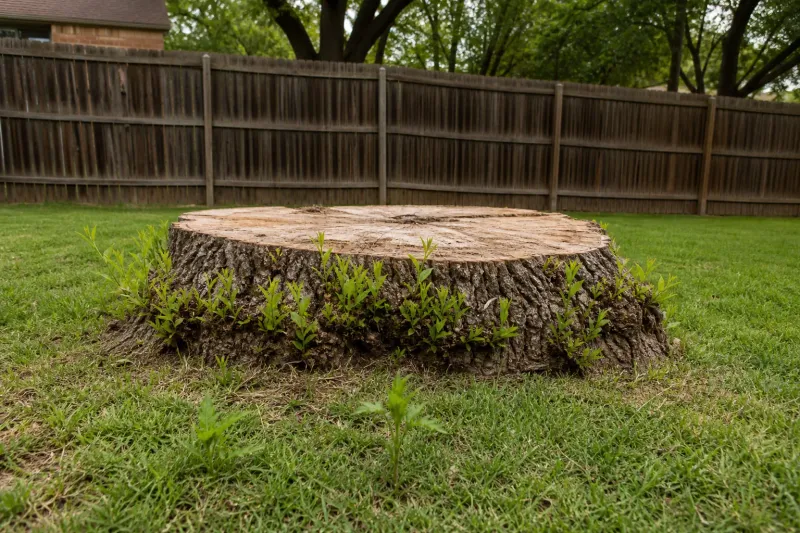
A mature tree is a different job from a seedling. Cutting it down and walking away often does not finish it, because established trees can resprout from the stump and roots.
Texas A&M AgriLife explains this in its guide on how to take out tallow trees, and it describes herbicide treatment for larger trees.
Identify the tree first. If you are not sure whether it is tallow, chinaberry, or something native, get confirmation before any saw or chemical comes out.
Removing the wrong tree cannot be undone.
Treatment details vary by species, product, and time of year, so this article does not give a recipe. If you decide to use an herbicide, follow the product label exactly, including the plant types and methods it lists.
Chinaberry guidance, such as the Austin field sheet, also stresses species-specific methods.
For a large tree near a house, power line, or fence, consider a qualified arborist or licensed applicator. They can confirm the species, handle the cutting safely, and plan follow-up for stump sprouts.
Check safety and local rules before removal
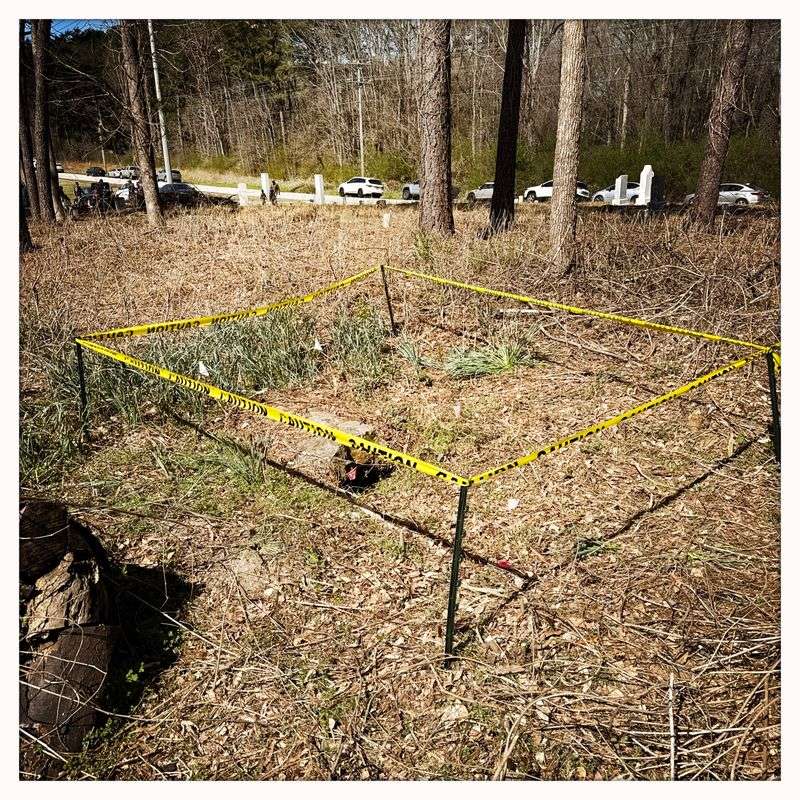
Before handling fruit or taking on a larger tree, plan for safety. Chinaberry can poison people and animals if eaten, and the berries are the most toxic part.
Poison Control advises that anyone in the United States with a suspected ingestion use webPOISONCONTROL or call 1-800-222-1222.
Keep kids and pets away from fallen berries while you work, and rake them up promptly. Serious human cases are rare, but severe effects have been reported, particularly after larger amounts.
Chinese tallow has its own hazard. The sap is reported to irritate skin, according to Texas A&M Forest Service guidance.
Wear gloves, long sleeves, and eye protection, and avoid bare-handed removal.
Austin readers have one more step. The City Arborist says trees 19 inches or larger are protected and require a permit for removal or impacts.
That rule is specific to Austin, so homeowners in other cities or counties should check with their own local government.
Recheck the area after the first pass
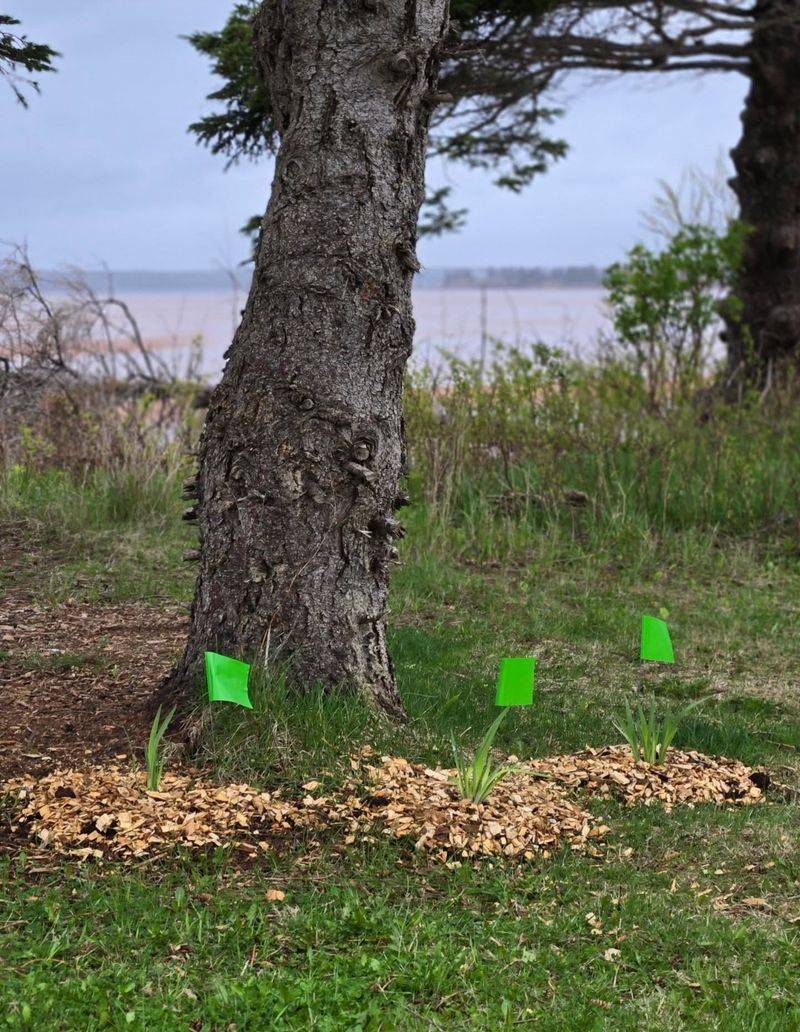
Your plan comes down to three steps: confirm the species, pull the small seedlings, and come back for a second look. Seeds can arrive by bird or water, and larger trees can resprout, so follow-up is part of the job, as both Texas tallow guidance and the chinaberry field sheet suggest.
It is not proof that Central Texas yards are being overwhelmed.
A cleared corner is only finished once nothing new has sprouted there.