
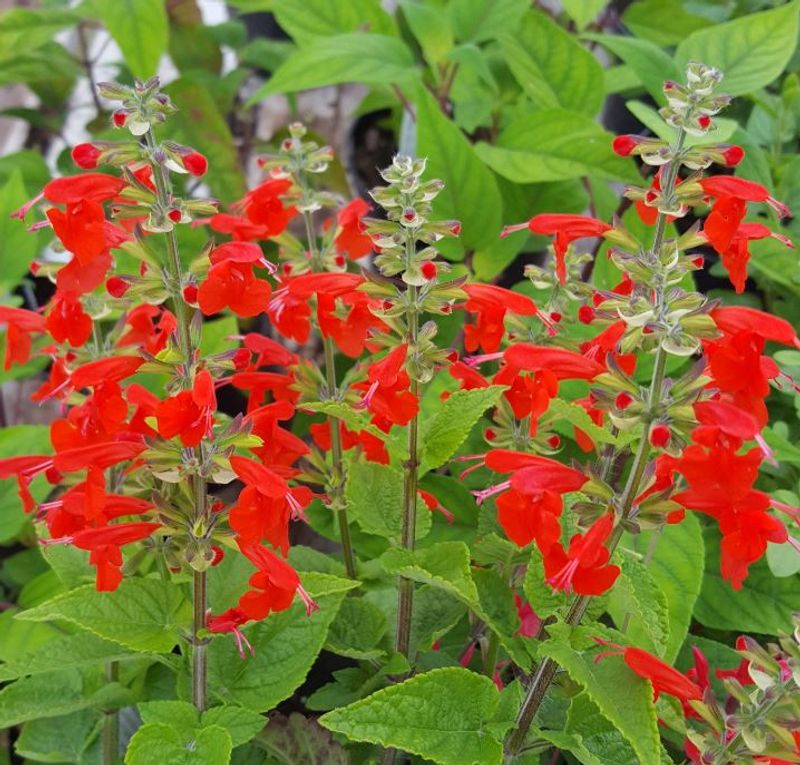
A flash of wings beside a January flower can make a Florida yard feel full of life. Some hummingbirds spend the winter here, including ruby-throated hummingbirds and occasional visitors such as rufous hummingbirds.
Native flowers can help feed them, but winter blooms depend on your part of Florida and how cold it gets. These seven plants offer a mix of cool-season flowers and late-winter blooms to help carry your garden toward spring.
1. Coral Honeysuckle
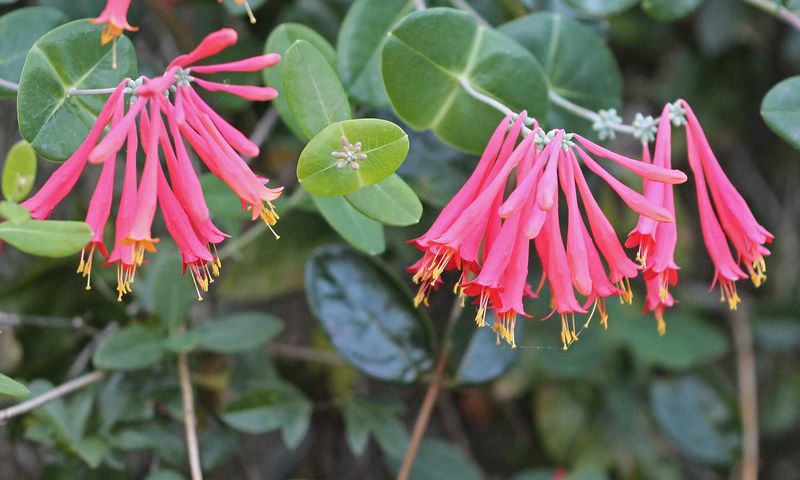
A fence can become a feeding stop when red flower tubes hang at hummingbird height. Coral honeysuckle, Lonicera sempervirens, is a native vine that brings nectar to a small footprint without taking over a whole planting bed.
Its strongest flower show usually comes in spring, but scattered blooms may appear during mild winters, especially in warmer Florida locations. Treat it as part of a seasonal mix rather than a promise of flowers every January.
Give it a trellis, arbor, or wire support in sun to partial shade. More sun generally means more flowers, while well-drained soil helps keep the roots healthy during wet spells.
Water regularly while it settles in, then adjust watering to rainfall and soil moisture. Guide young stems onto their support, and save major pruning until after the main bloom instead of cutting off developing buds.
Choose the native species rather than invasive Japanese honeysuckle. Near a porch or window, coral honeysuckle creates a useful viewing spot while leaving plenty of open space for birds to approach and retreat.
2. Firebush
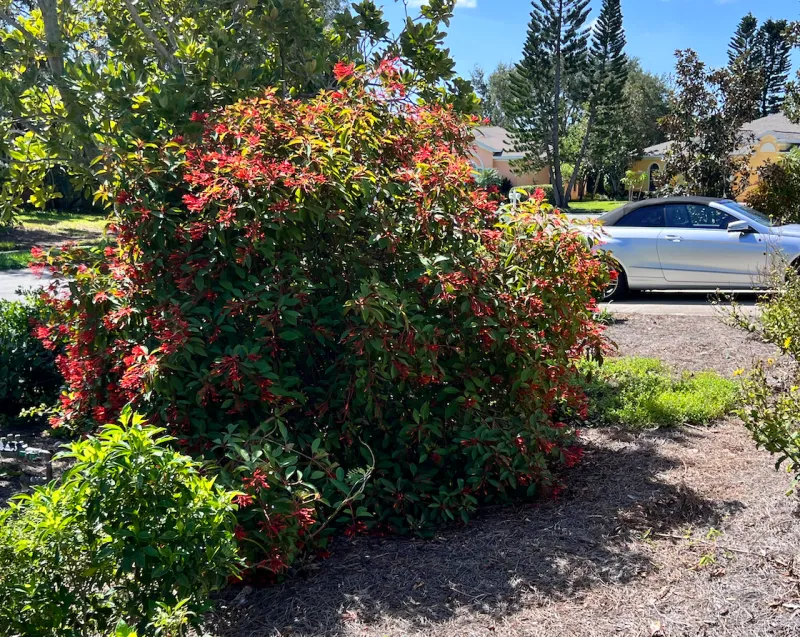
For a roomy South Florida yard, a flowering shrub can offer more feeding stations than a small pot ever could. Firebush, Hamelia patens, produces clusters of narrow orange-red flowers that hummingbirds can easily visit.
Winter performance is the key detail. In frost-free South Florida, it may keep flowering through the cool season; farther north, cold can stop blooms and damage or kill the top growth.
Plant it in full sun for the best flower production, or give it light shade if that is what your yard offers. Allow room for a substantial shrub, often 5 to 10 feet tall or larger in warm locations, rather than squeezing it beneath a low window.
Once established, firebush handles dry spells reasonably well, though young plants need dependable watering. Avoid frequent shearing, which removes flowering tips and turns a loose wildlife shrub into a high-maintenance hedge.
Ask a native nursery for Florida-native Hamelia patens var. patens, since nursery labels can be confusing. Its main advantage on this list is volume: one mature plant can hold many flower clusters at once.
3. Tropical Sage
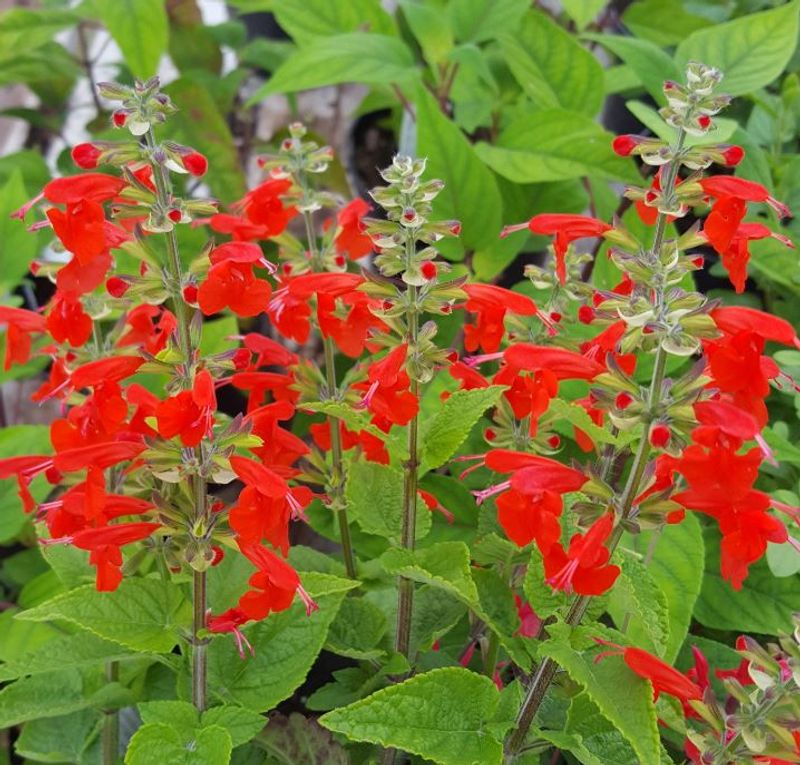
Little gaps between larger shrubs are valuable space, especially when they can hold a patch of red flowers. Tropical sage, Salvia coccinea, fits those openings with airy stems and nectar-bearing blooms.
In warmer parts of Florida, flowering can continue through much of the year, including mild winter weather. A freeze may end the display in northern areas, so do not count on it as your only cold-season food source.
Choose a sunny or partly shaded spot with good drainage. Plants commonly reach about 2 to 4 feet tall, making them useful near the middle of a border where their loose shape can mingle with other natives.
Water new plants until their roots establish, then avoid keeping the bed constantly wet. Snipping some spent flower stalks can encourage fresh growth, while leaving others allows seeds to mature.
That self-seeding habit is part of the appeal, though seedlings may need thinning near walkways. For a simple starter planting, group several red-flowered plants together so passing hummingbirds have a noticeable patch to investigate rather than one isolated stem.
4. Necklacepod
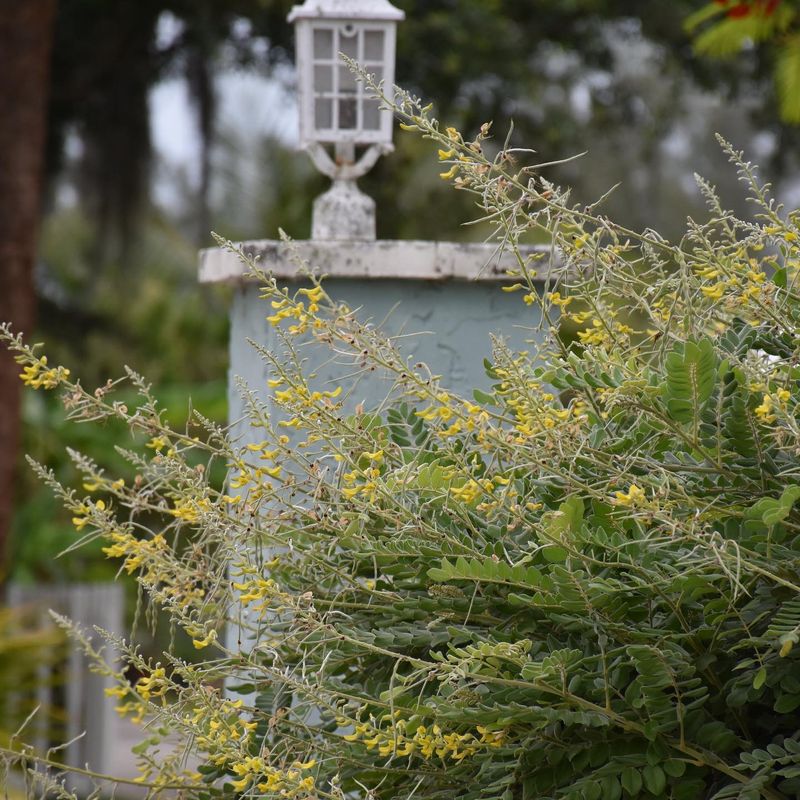
Not every hummingbird flower needs to be red. Necklacepod offers yellow blooms on an open, arching shrub, giving warm coastal gardens a different look while adding another nectar source.
The Florida-native form, Sophora tomentosa var. truncata, is best suited to warm parts of the peninsula, especially coastal settings. Flowering can occur throughout the year under favorable conditions, but cold weather and local growing conditions affect how much nectar-bearing bloom is available.
Give it full sun and sandy, well-drained soil. Its tolerance of salt spray makes it useful where an exposed coastal yard limits other planting choices, though salt tolerance does not mean it belongs in a regularly flooded spot.
Leave enough room for its loose shape, often roughly 6 to 10 feet tall and wide. Light, selective pruning works better than repeatedly clipping it into a tight ball.
Buy from a nursery that can confirm the native variety, since nonnative forms also appear in cultivation. The beadlike seedpods explain its common name, but the seeds are poisonous if eaten, so consider placement carefully around children and pets.
5. Crossvine
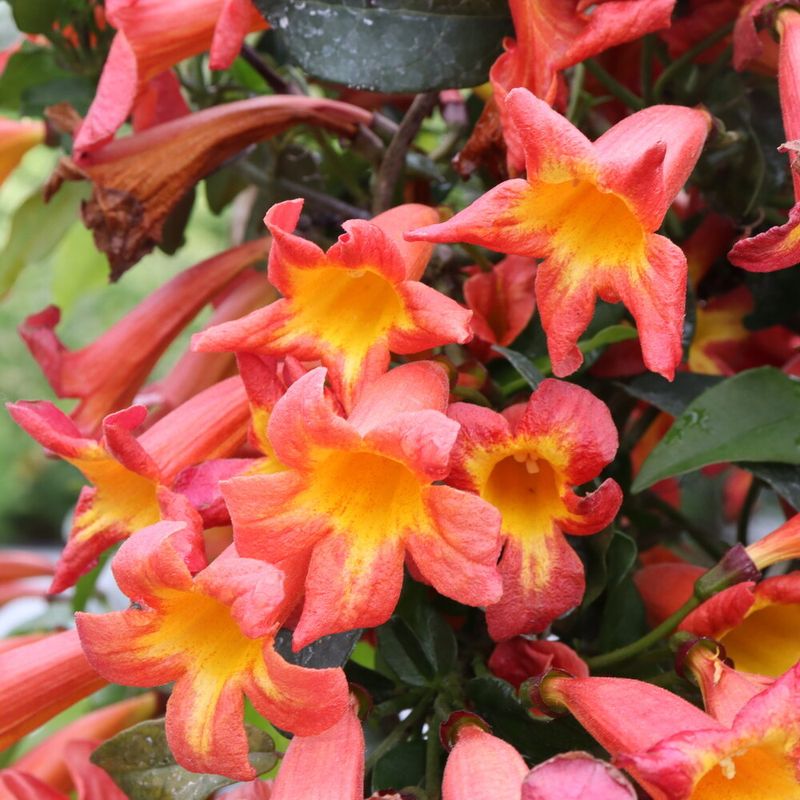
By late winter, an arbor covered in orange-and-yellow trumpets can help bridge the gap to spring. Crossvine, Bignonia capreolata, earns its place here as a seasonal handoff plant, not as a dependable December bloomer.
Flowering generally arrives in late winter or spring, with timing shaped by location and weather. That makes it especially useful alongside plants that provide flowers earlier in a mild Florida winter.
Plan for its size before planting. A mature vine can climb 30 feet or more, so a sturdy arbor or substantial trellis makes more sense than a small decorative support beside the mailbox.
Full sun usually produces the heaviest bloom, although crossvine tolerates some shade. Give young plants regular water and a well-drained planting site, then monitor them through long dry periods as they establish.
Keep it away from gutters and places where climbing stems would be difficult to manage. Prune after its main flower show if needed, and use its vertical growth to add feeding space without giving up another large section of lawn.
6. Coral Bean
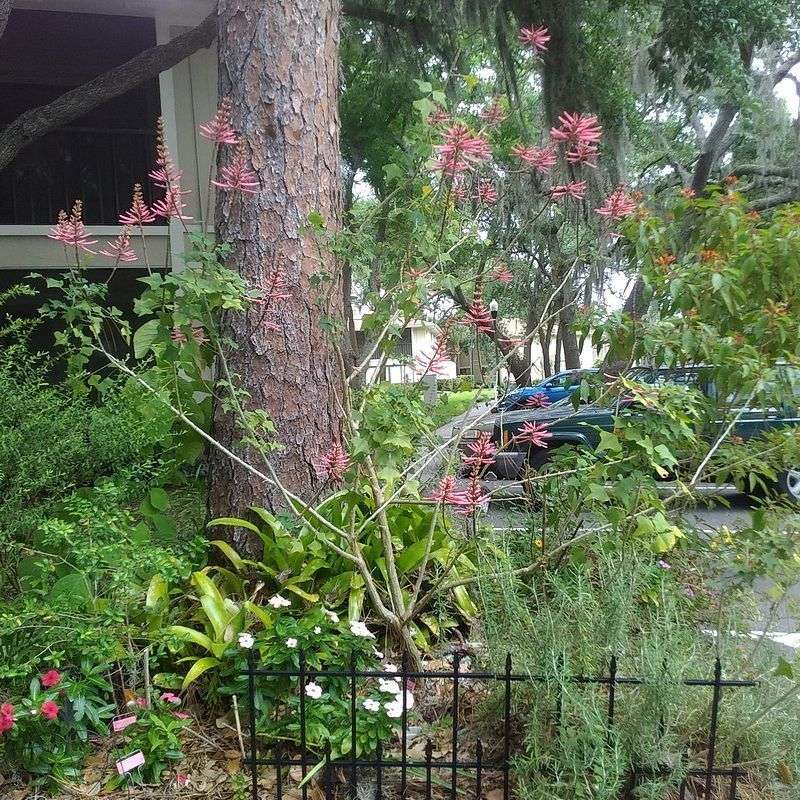
Bare stems suddenly tipped with scarlet flowers make an easy target for a passing hummingbird. Coral bean, Erythrina herbacea, often puts on its flower show before much of its new foliage appears.
Its role in a winter feeding plan depends strongly on location. Flowers may begin in late winter in warmer areas, while northern Florida gardeners should expect more of a spring display.
Use it in a sunny, well-drained bed where its seasonal changes will not look out of place. It may behave like a dieback perennial in colder areas and become a much larger, woody shrub where winters stay warm.
Once established, coral bean handles drought and sandy soil well. Let the plant’s natural shape guide placement rather than expecting a tidy evergreen foundation shrub.
There are two practical cautions: stems can have prickles, and the bright red seeds are poisonous if eaten. Keep it away from play areas and narrow paths, and remove pods where accidental handling is a concern.
For suitable yards, its standout benefit is a bold late-winter-to-spring nectar display that complements smaller, longer-flowering plants.
7. Lyreleaf Sage
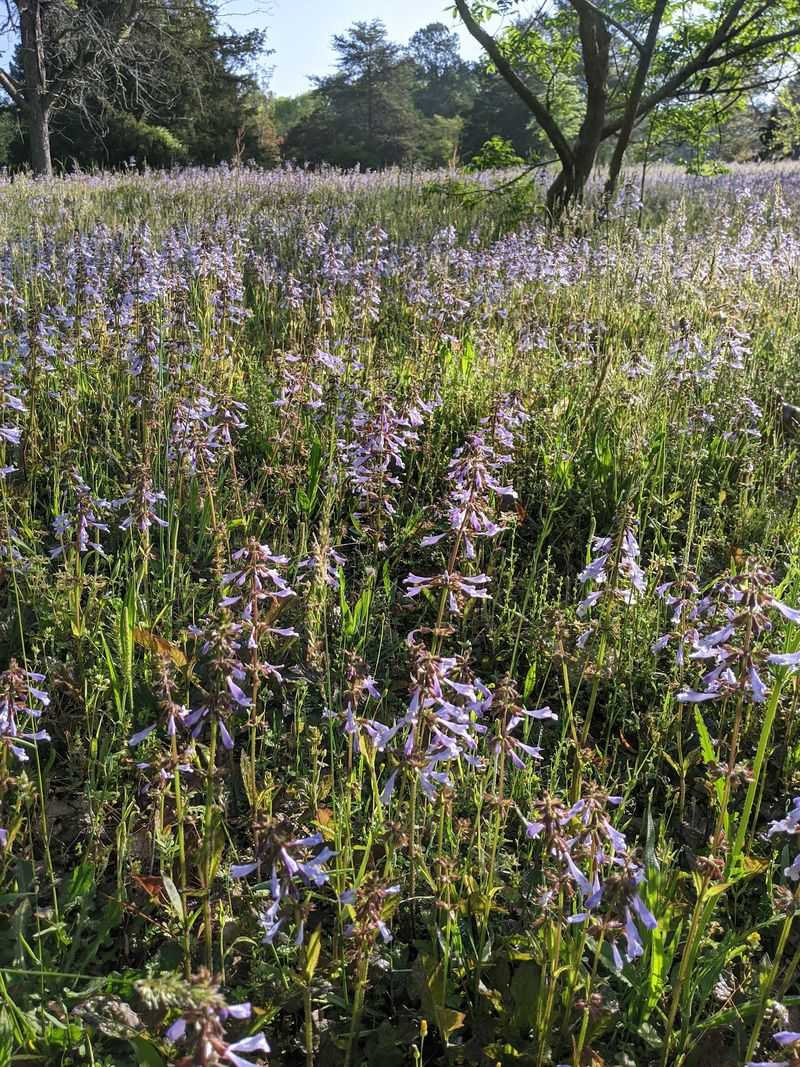
Down near the ground, a quieter native can help round out the feeding season. Lyreleaf sage, Salvia lyrata, sends up slender stems of pale lavender flowers above a low rosette of leaves.
Expect its main contribution in late winter and spring rather than throughout the coldest months. Hummingbirds may visit the small tubular flowers, though bees are often more noticeable visitors, so use it as a supporting plant rather than the backbone of your nectar garden.
Its low foliage suits the front of a border, an open woodland edge, or a lightly managed natural area. Choose sun to partial shade and soil that drains well but does not stay extremely dry for long stretches.
Allow flower stalks to finish setting seed if you want the patch to spread. Avoid mowing during flowering, since that removes both the nectar and the next generation of plants.
Together, these seven natives offer different heights and bloom windows, not a guaranteed statewide winter buffet. During flower gaps, a clean feeder with one part plain white sugar to four parts water can supplement the garden; skip dye and honey, and replace the solution frequently.