
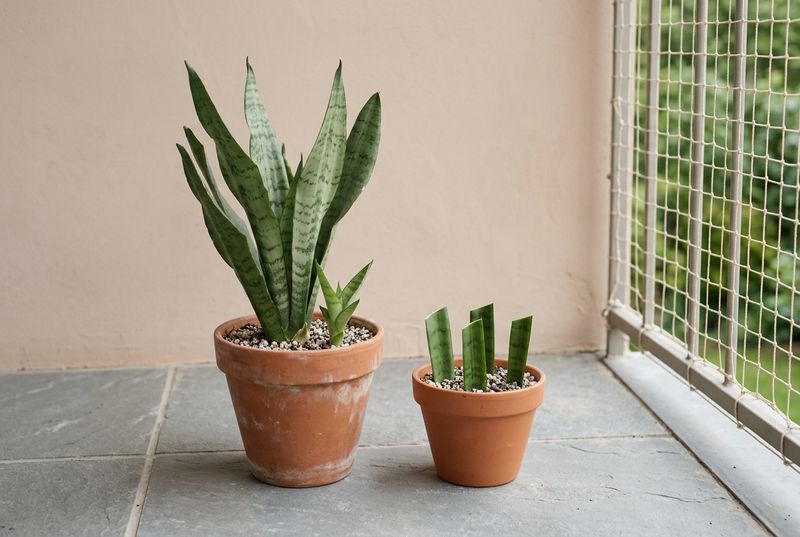
Everyone loves a free plant, and snake plants can give you one. But the popular claim that a simple pot change makes pups appear does not hold up.
What does work is dividing a baby shoot that is already growing next to the parent. Here is how to do it safely, and when repotting actually makes sense.
A pot change is not a pup button
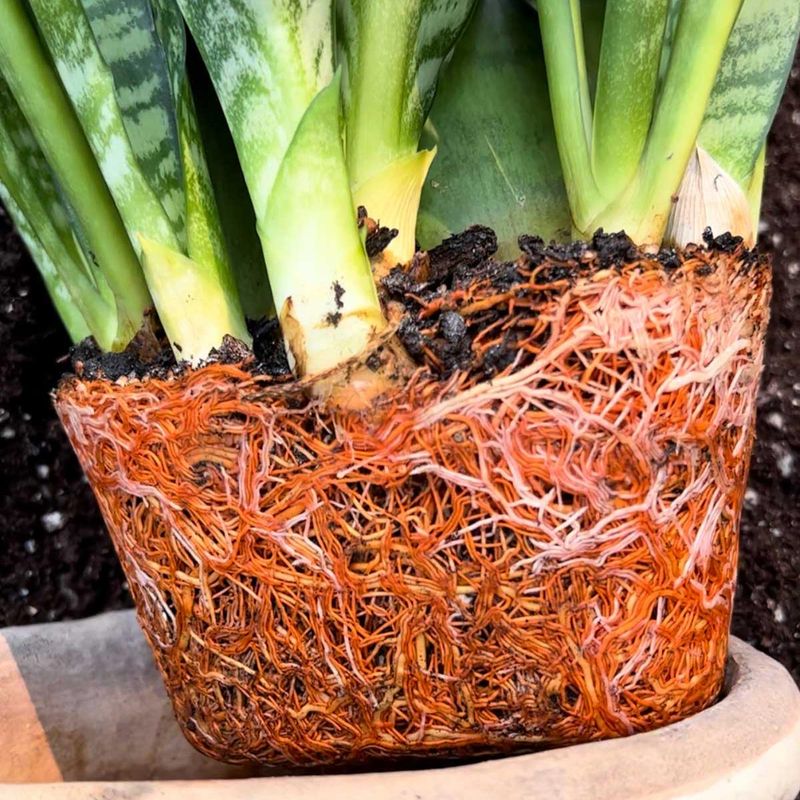
Plenty of posts claim that squeezing a snake plant into a tight pot, or switching its container, will make baby plants pop up. It is a tempting idea, since who would not want a free plant?
The trouble is that the sources reviewed do not show that crowded roots or a new pot trigger pups.
What they do show is narrower. UGA Extension describes the snake plant as a tough houseplant that can be propagated by division during repotting.
Being able to put up with a snug pot is not the same as being made to produce pups by one.
Penn State says offspring may develop after a few years, and that division is the easiest way to propagate. So the dependable route to a new plant is to divide an offset your plant has already grown, not to tweak its pot and wait.
The rest of this guide walks through spotting an offset, separating it, and replanting it, plus the practical reasons you might repot anyway.
Offsets grow naturally in a clump
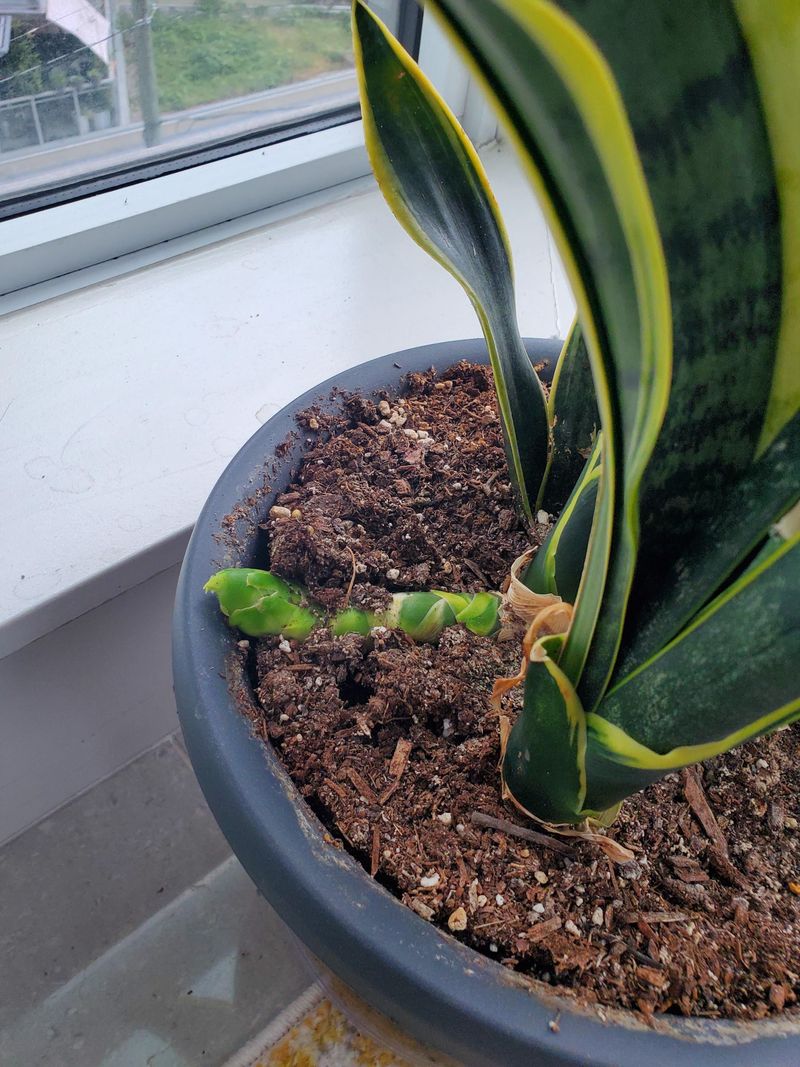
Snake plants are clumping plants. As they mature, they send up extra shoots beside the original leaves, and gardeners call these offsets or pups.
NC State Extension lists the plant, Dracaena trifasciata, as a clumping type that can be propagated by division. You may still see it sold under its older name, Sansevieria trifasciata.
Those shoots are the raw material for a new plant. A pot adjustment has not been shown to make them appear, so there is nothing to force.
Your job is simply to notice them when they show up.
Timing is the part nobody can promise. Penn State notes that offspring may develop after a few years, and not every plant will follow the same schedule.
If yours has not produced a pup yet, that is not a sign something is wrong. Keep its light and watering steady and check the base of the plant now and then.
Look for an offset you can separate
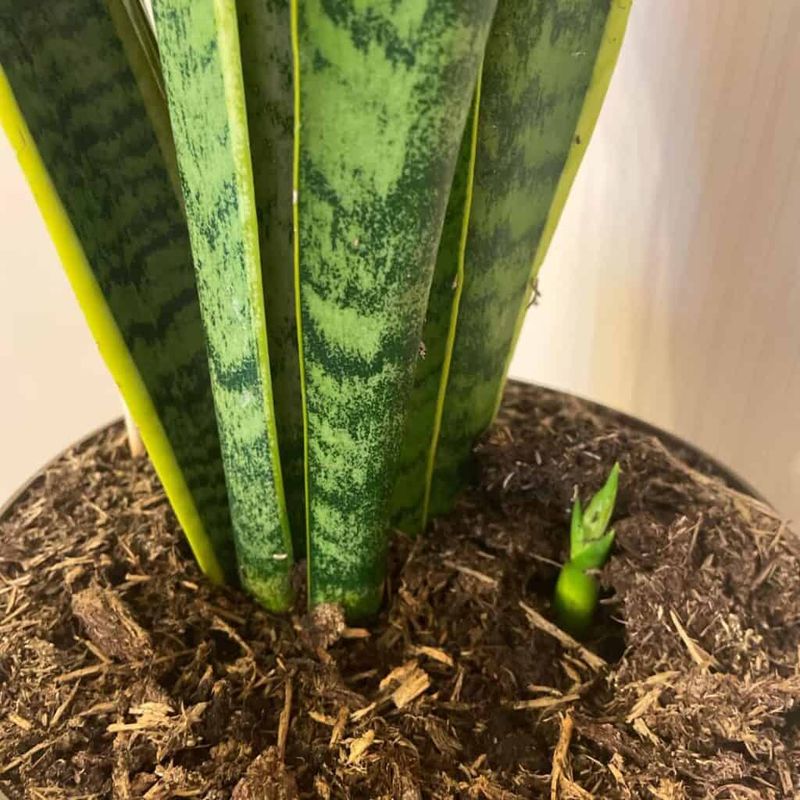
Before you grab a knife, check that you actually have something to divide. Look at the soil line for a distinct shoot standing apart from the main leaves, with its own leaves coming up from the soil.
If the plant has not produced one, there is nothing to separate, and repotting will not change that.
A good division needs two things. Iowa State Extension says each division should have healthy leaves and roots.
No firm minimum size exists in the guidance, so judge by health, not by inches.
Leaves that are firm and upright are a good sign. Soft, mushy, or shriveled growth is a reason to wait or to look closer at your watering.
Remember that patience is part of this. Since Penn State describes offspring developing after a few years, a young plant may simply not be ready yet.
Separate the offset carefully
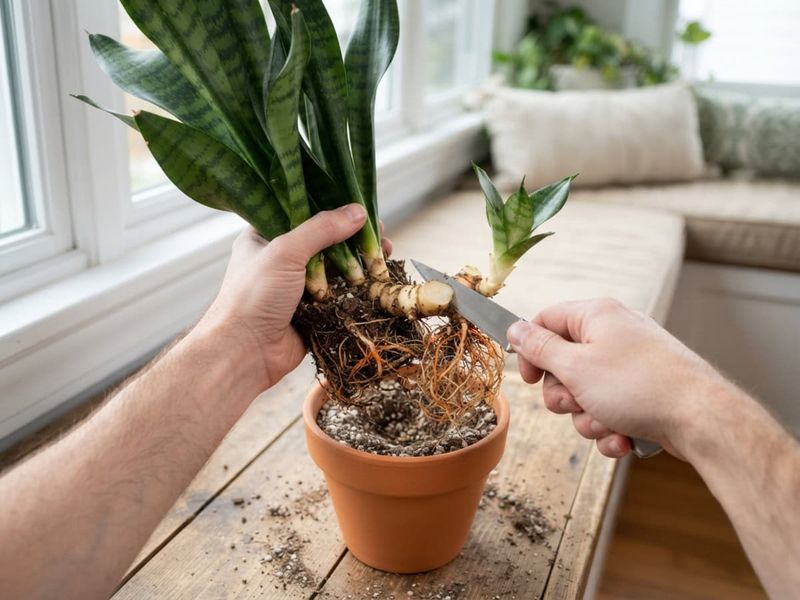
Start by sliding the whole plant out of its pot. Tip it on its side and tap the container if the roots hold on tight.
Next, Iowa State Extension recommends gently separating the root ball. Work the soil loose with your fingers and tease the offset away from the parent.
If roots are tangled and will not part by hand, use a clean, sharp knife or shears.
Wiping your tool with rubbing alcohol first helps keep germs out of the cut. Make as few cuts as you can, since you are separating growth that already exists, not trimming the plant to coax out more.
Once the pieces are apart, check each one. Every division should have healthy leaves and roots before it goes back into soil.
If a piece has leaves but no roots, it is a weaker candidate, so be ready for a slower or less certain result.
Put the parent plant back in its pot too, with fresh mix filling any gaps.
Replant in a pot that drains
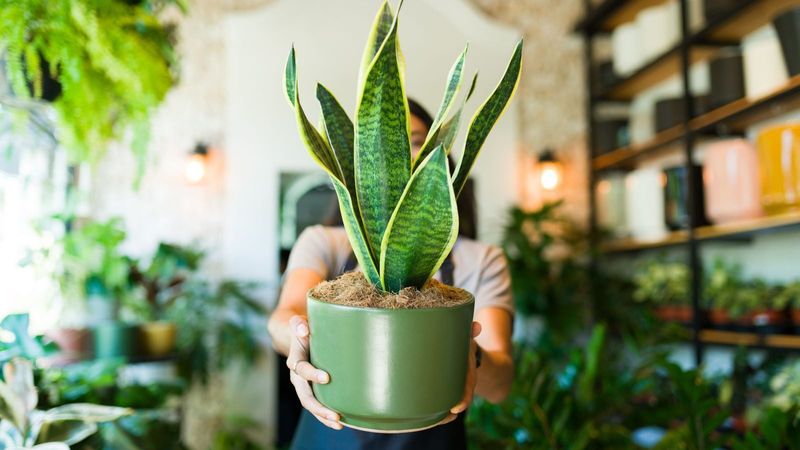
Give each division fresh potting soil and a pot with a drainage hole. A gritty, well-drained mix suits the plant, because UGA Extension flags overwatering and root rot as the main troubles.
NC State also points to well-drained conditions.
Choose a container that fits the roots without much extra room. University of Minnesota Extension advises against an oversized pot, since a big mass of soil holds water longer.
After planting, water lightly and let the soil dry well before the next drink. Soggy soil is the quickest way to lose a fresh division.
These choices protect the new plant while it settles in. They are not a trick to make more offsets appear, so do not expect extra pups from them.
Repot for practical reasons, not to force pups
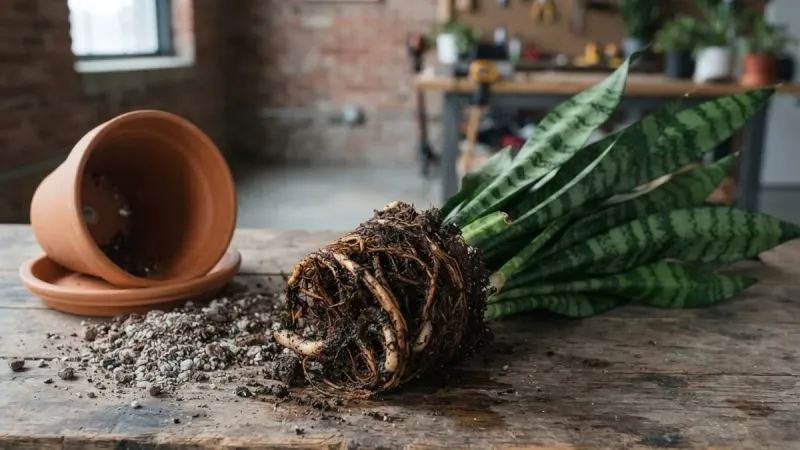
Some signs say a snake plant truly needs a new container. University of Minnesota Extension lists roots growing out of the pot, water draining through very quickly, a plant that tips over because it is top-heavy, and a pot being pushed apart.
If you see those, repot and use the chance to divide any offsets. That is a practical fix, not a pup-making method.
Repotting just to cause pups is not supported by the sources reviewed.
When you do move up, go only one size larger. A much bigger pot holds extra soil that can stay wet, which raises the risk of root rot.
Ask Extension discusses snake plant root problems that show up when roots are fused or crowded.
If none of those signs appear, leave the plant alone. A snake plant that is a little snug and healthy is not in trouble.
Keep snake plants away from pets
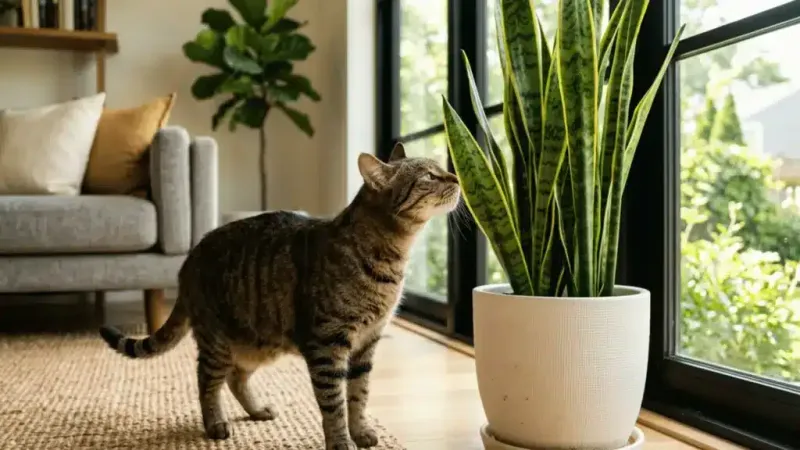
Snake plants are toxic to cats and dogs, according to the ASPCA entry for Dracaena. NC State also calls the plant poisonous and lists saponins among its toxic compounds.
Keep the parent plant and every new division where pets cannot reach them. Dividing day is the risky moment, since loose leaves and cut pieces are easy to nibble.
Clean up scraps right away.
If you think a pet has chewed on a plant, call your veterinarian or a poison-control service promptly.
A new plant is only a win if everyone in the house stays safe around it.