
You have mixed in compost for years, yet that corner of the yard still squishes underfoot after every rain. Many North Carolina gardeners hit this wall, and the reason is often not the soil in the bed at all.
Water can get stuck for several different reasons, and each one calls for a different fix. Learning to tell them apart can save you time, money, and a lot of wheelbarrow loads.
Compost can improve clay, but it cannot fix every drainage problem
Compost is not useless in clay, and it is not a guaranteed cure for a soggy yard either. The truth sits between those two ideas.
According to NC State Extension’s soil guidance, composted organic matter mixed into existing soil can improve structure and porosity over time. Better structure means more small channels and pockets where air and water can move.
Plant roots usually respond well to that kind of change.
Still, improving the soil you amended is a different job from giving water a place to go. Compost is not an outlet.
If rain runs downhill and collects in a low spot, a richer bed will simply hold a richer puddle. The same goes for a compacted layer or a tight clay layer under the amended zone, because water can still stall when it reaches that deeper barrier.
Think of it like adding a better sponge to a sink with a clogged drain. The sponge helps, but the water still has nowhere to leave.
That is why NC State’s landscape design guide lists options such as grading and drainage systems for low areas, not just soil amendments.
So the useful question is not how much more compost to add. It is why the water is staying put in the first place.
The next sections walk through how to find that out.
Why water may persist in some North Carolina yards

Not every North Carolina yard is a clay yard. High-clay subsoils are common in the Piedmont and mountains, while coastal plain soils tend to be sandier.
Even within one neighborhood, yards can differ because of grading, construction, and imported fill.
When water lingers, one of several things may be going on. Water may simply move slowly through fine clay soil.
That is different from water that has nowhere to go at all.
Compaction is another cause. Construction crews often strip topsoil and leave hard subsoil near the surface, and heavy traffic from mowers, vehicles, or foot paths can squeeze soil pores shut.
NC State Extension notes that compacted soil slows water movement.
A restrictive layer below the surface can also stop water from draining downward, so the topsoil fills up like a bathtub. Then there is simple geography.
Runoff from a roof, driveway, or slope can gather in a low spot, and some sites are naturally wet because of their position in the landscape.
These causes are not interchangeable. According to NC State’s water quality guide for gardeners, soil texture, structure, slope, and surface and subsurface layers all influence drainage.
A fix that suits one cause may do little for another, which is why guessing can be costly.
Read the wet pattern across the whole yard
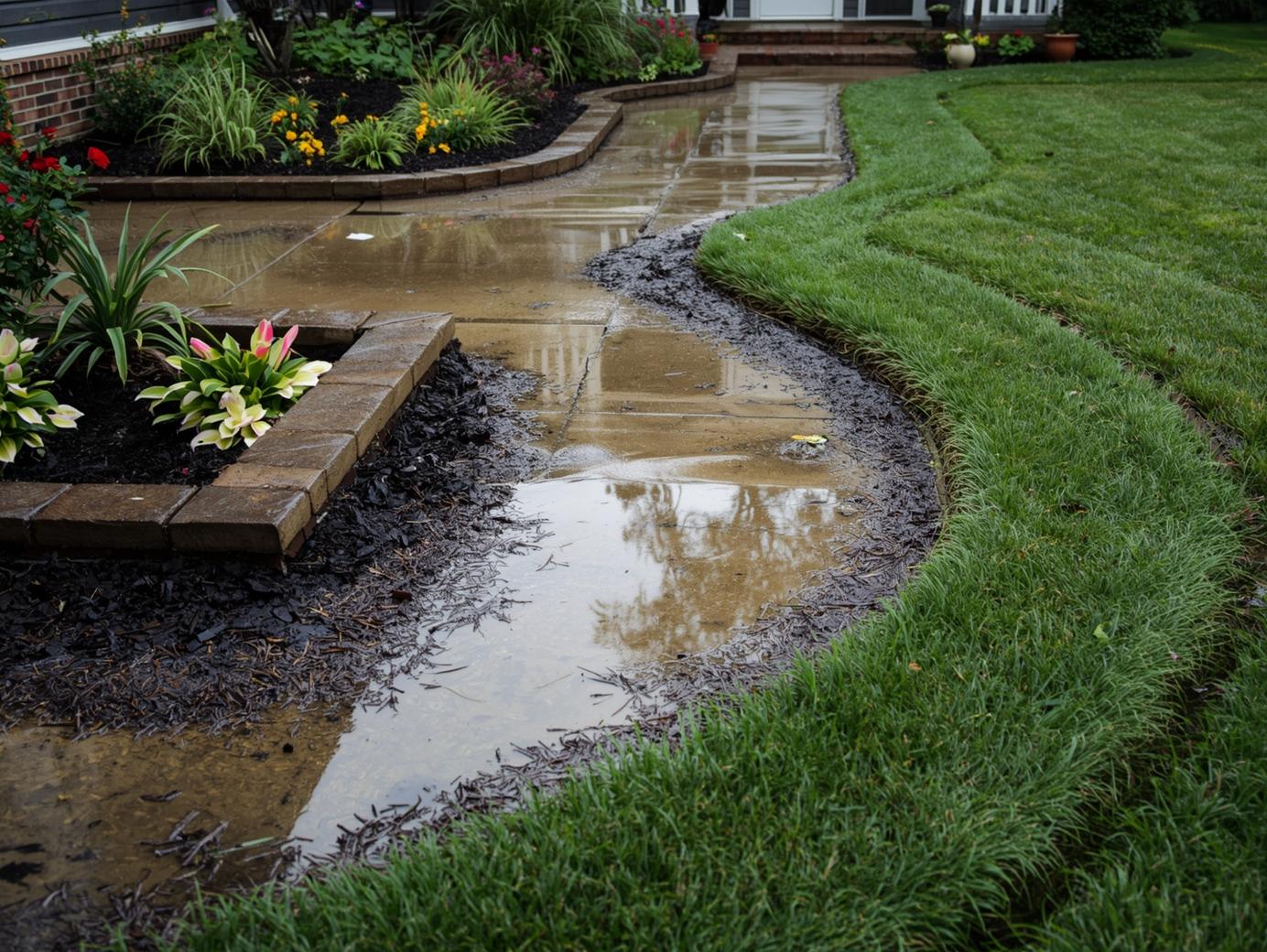
Your best first tool costs nothing: a pair of boots. Walk the property after a good rain and watch where the water goes.
NC State’s landscape design guidance recommends noting low areas that stay wet for days and observing stormwater patterns. Look at downspouts, driveway edges, and slopes.
Notice whether water arrives from uphill or seems to rise from the ground itself.
Try not to stop at the bed you have been amending. Soil can change from one part of a yard to another, so check more than one spot.
A spot that dries in a day may sit only a few steps from one that stays soggy for a week.
The pattern can offer clues. A single low area where runoff pools hints at a grading or collection issue.
A wide, flat area that stays wet everywhere may point to slow soil movement, compaction, or a layer below the surface. Wetness that shows up even when no runoff arrives may suggest a naturally wet site.
Observation alone will not name every cause. Still, a few notes or phone photos taken during and after rain give you something concrete.
They also help if you later call a landscape professional or your county Extension office.
Match the response to the site
Once you know what the wet spot is doing, you can choose a response that fits. There is no single prescription.
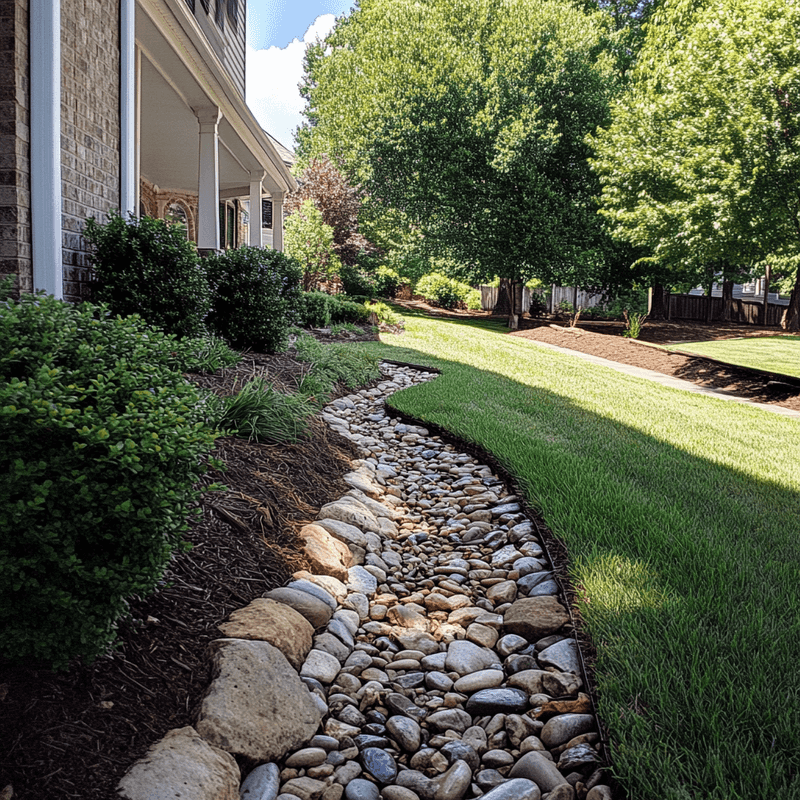
NC State lists grading, an underground drainage system, raised beds, and a rain garden among approaches for low-lying areas in its landscape design guide.
Grading reshapes the surface so water moves away rather than settling. A rain garden gives collected runoff a planted place to soak in.
Raised beds lift plants above the wet ground. Each one suits a different situation.
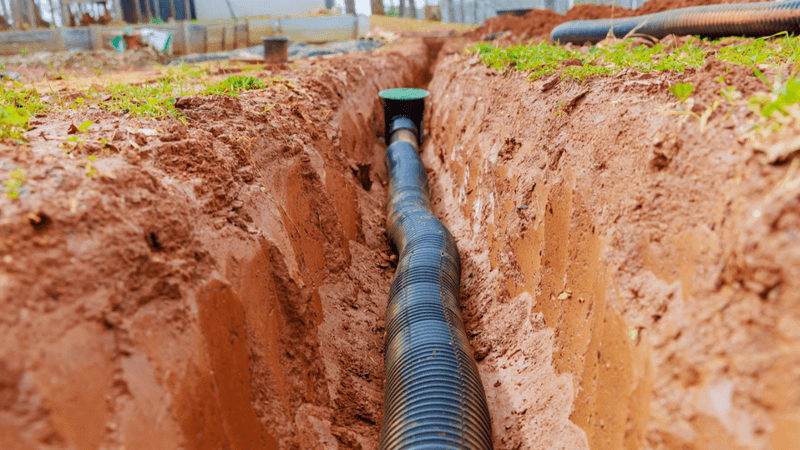
Underground drainage deserves extra care. A drain needs a suitable outlet, meaning somewhere lower where the water can actually leave.
It also needs thoughtful placement. NC State drainage research stresses assessing the soil profile, and warns that a pipe placed in a restrictive clay layer can fail.
That is why a French drain or tile drain is not a guaranteed fix. A pipe with no outlet, or one buried in the wrong layer, may sit full of water and do little.
For a small flower bed, regrading a few inches may be enough. For a large, stubborn area, getting a site-specific assessment before spending money on pipe makes more sense.
Match the effort to the evidence you gathered on your walk.
Amend clay carefully, without expecting compost to solve everything
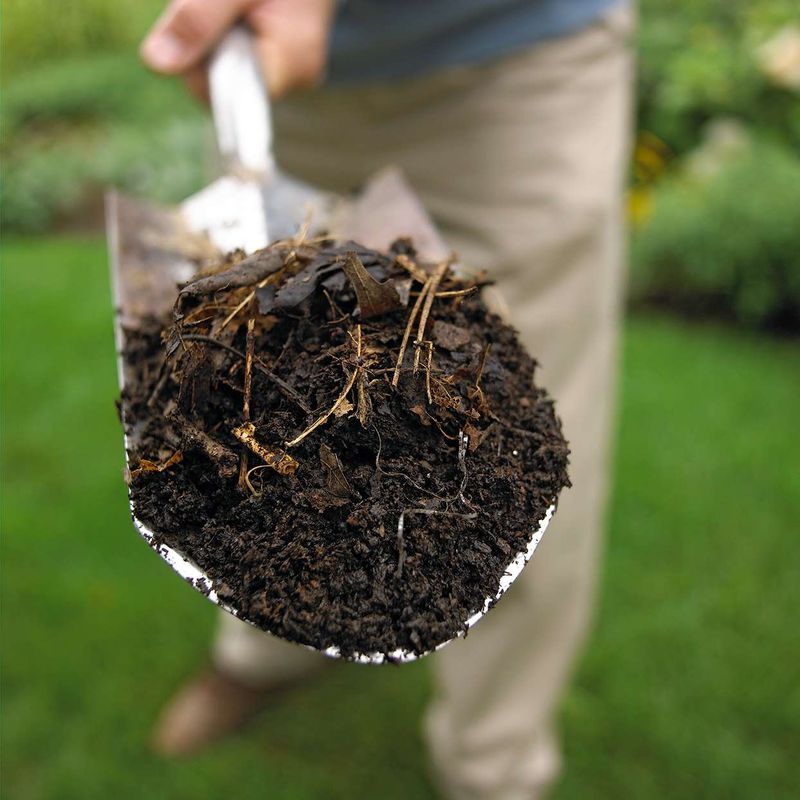
Compost still earns its place once you know its limits. For in-ground beds, mix composted organic matter into the existing soil.
Over time that can improve structure and porosity, as described in NC State’s soil modification guide.
Choose material that is truly composted. Fresh organic matter can settle as it decomposes, leaving beds sunken and uneven.
Finished compost looks dark and crumbly and smells earthy.
For larger areas such as lawns, NC State advises incorporating amendments in applications no deeper than about half the tiller-tine depth, usually 3 to 4 inches at a time. Working in thin layers lets you build change gradually rather than creating one deep, mismatched pocket.
Skip the sand shortcut. A few shovelfuls will not help, and the same source says a measurable change takes a very large amount, roughly four to five times the clay volume.
Smaller additions can turn clay into a concrete-like material.
Core aeration is another tool people hope will drain a wet yard. NC State says that in compacted soil it does not directly increase water movement through the soil.
Treat amending as steady soil care, and pair it with other fixes when water is collecting or stalling.
Raise the root zone with beds when soil stays very wet
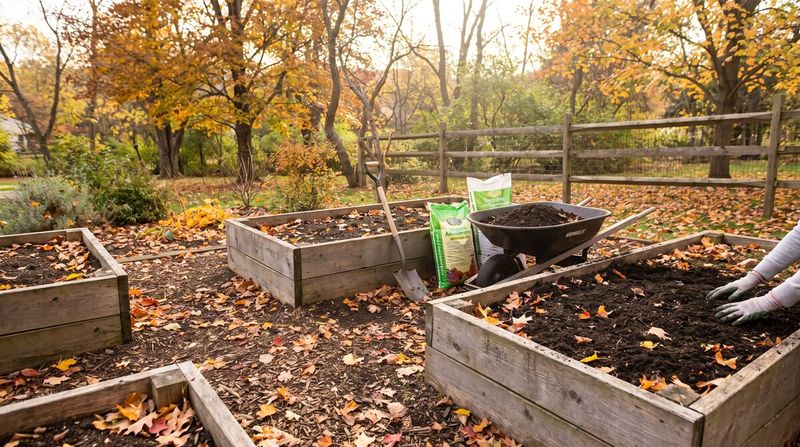
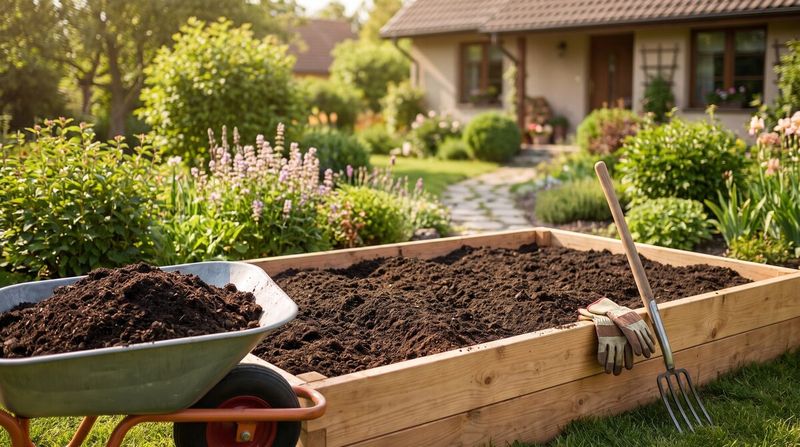
Sometimes the practical move is to work around the wet ground instead of fighting it. Raised beds suit growing areas that are very poorly drained or frequently flooded, a point covered in NC State’s community food gardening handbook.
The key idea is simple. A raised bed lifts the root zone above the problem soil.
It does not necessarily drain the ground underneath or fix whatever is causing the wetness there. If water still collects at the base, the bed sits above it rather than curing it.
For vegetables, herbs, and many perennials, that extra height can keep roots out of saturated soil during wet stretches. Fill beds with a good growing mix rather than the clay beneath.
There is a tradeoff. NC State’s organic gardening chapter notes that raised planters tend to drain faster, which can mean more frequent watering.
During a hot Piedmont August, that adds up.
Mulch the surface and check moisture with your finger before watering. Raised beds can be a smart fit for a small, wet food garden, while a large soggy lawn may call for another approach.
Choose your next step from the wet spot’s pattern
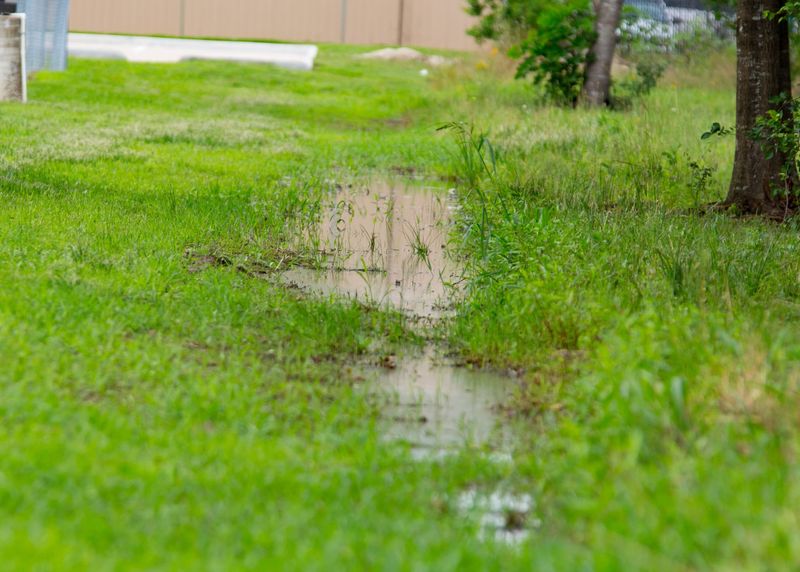
Use compost to build better soil, but let the wet spot’s behavior guide everything else. Note where water collects, how long it stays, and what might block its path.
Then pick a response that fits, such as grading, a rain garden, or raised beds.
Before installing any subsurface pipe, get a site-specific assessment, since landscape and drainage guidance both depend on layers and outlets.
A soggy yard is usually telling you something specific, and listening first is cheaper than another truckload.