
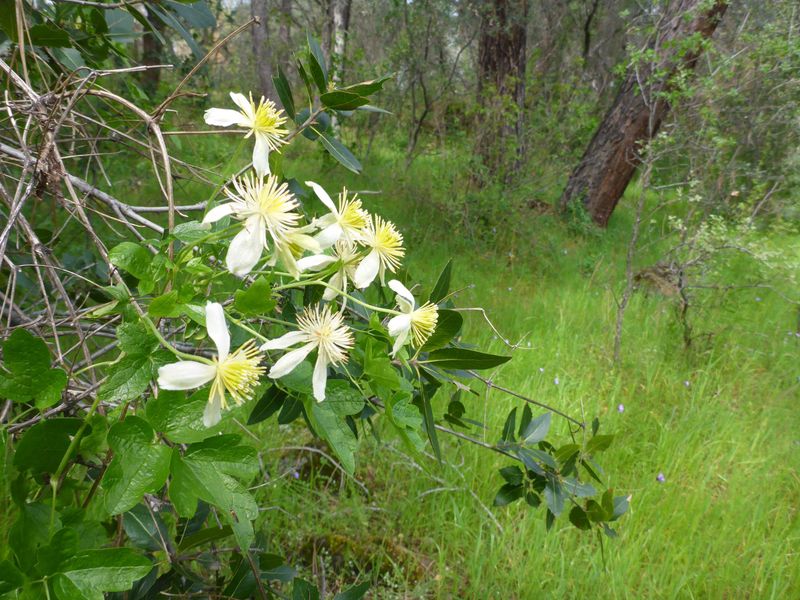
Some vines look sweet at first and then pry apart fence boards or rip chunks out of stucco when you try to pull them down. Ivy and creeping fig are famous for that kind of damage in California yards.
The good news is that plenty of vines twine, scramble, or lean instead of gluing themselves to walls, so they stay easy to manage. Many of the picks below also sip little water and feed bees, hummingbirds, and butterflies.
1. California Wild Grape (Vitis californica)
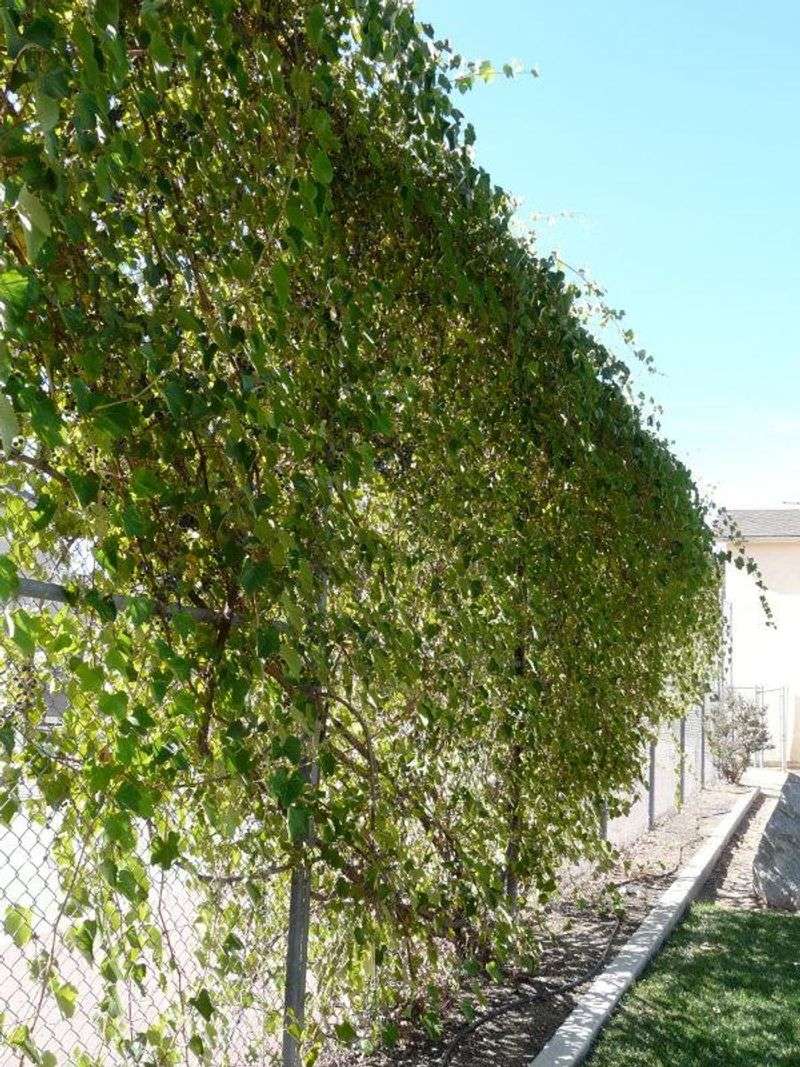
Picture a wooden fence that turns flaming red and gold every fall, with zero paint required. California wild grape climbs with tendrils that curl around wire or lattice, so it never drills into boards or glues itself to stucco.
It is a true native, which means local birds and native bees already know what to do with it. Songbirds eat the small grapes, and the leafy canopy offers cover for nesting.
Once established, it can get by on occasional deep summer watering in many inland and coastal yards.
Give it room, because it grows fast and wide. ‘Roger’s Red’ is a popular selection with especially bright fall color. Run a few horizontal wires along your fence for the tendrils to grab, and prune hard in winter to keep it in bounds.
2. Western Virgin’s Bower (Clematis ligusticifolia)
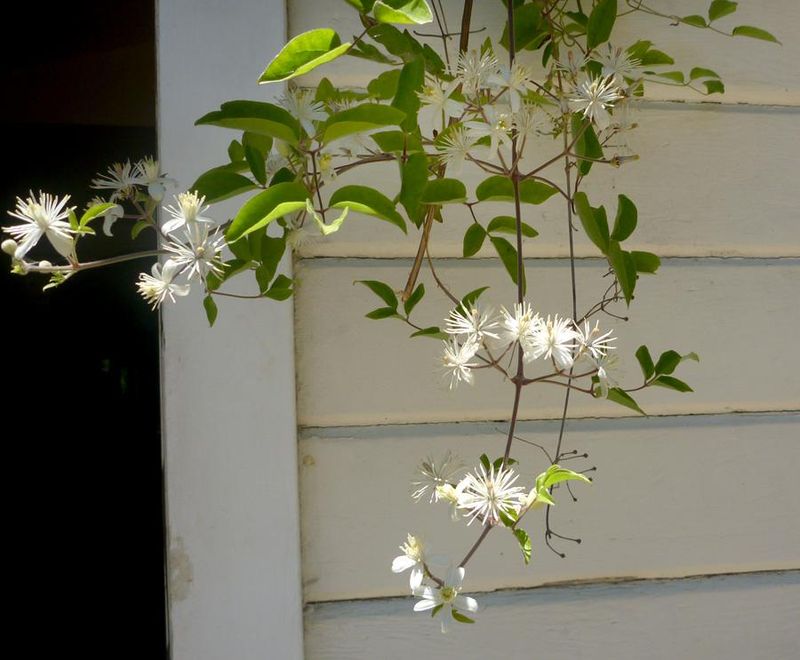
Clouds of tiny white flowers in summer, then fluffy silver seed heads that look like puffs of smoke. Western virgin’s bower is a native clematis that climbs by wrapping its leaf stalks around whatever it touches.
That gentle grip is exactly why it suits fences. There are no aerial roots and no sticky pads, so a stucco wall stays intact as long as you give the vine a trellis or wire to hold.
Pollinators flock to the blooms, and the seed fluff often gets tucked into bird nests. It handles heat and poor soil, though a little afternoon shade inland may keep it looking fresher.
3. Pink Honeysuckle (Lonicera hispidula)
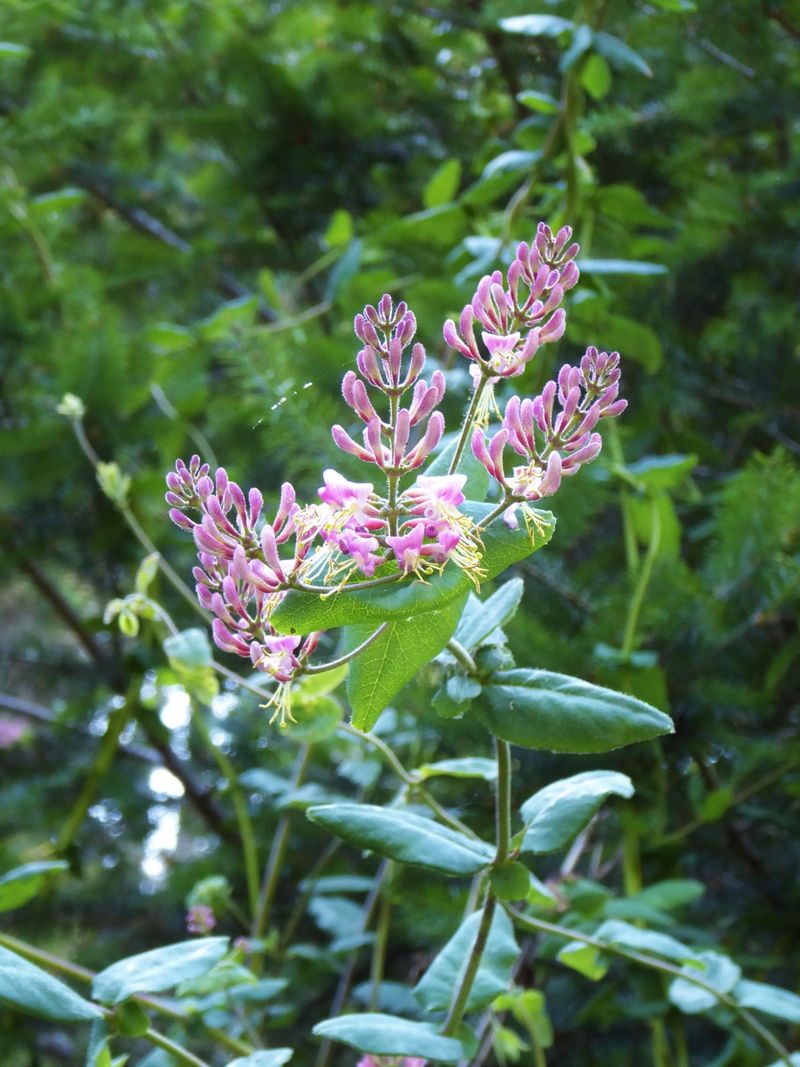
Hummingbird traffic jams are a real thing when this honeysuckle blooms. Pink honeysuckle is a California native that twines loosely, producing soft pink flower clusters followed by translucent red berries.
Unlike Japanese honeysuckle, which can smother shrubs and spread aggressively, this one stays polite. It weaves through a fence without strangling posts or lifting boards.
It thrives in partial shade, making it a smart pick for the side yard that bakes in the morning and cools in the afternoon. Water it now and then during dry summers, and it should keep coming back year after year.
4. Chaparral Clematis (Clematis lasiantha)
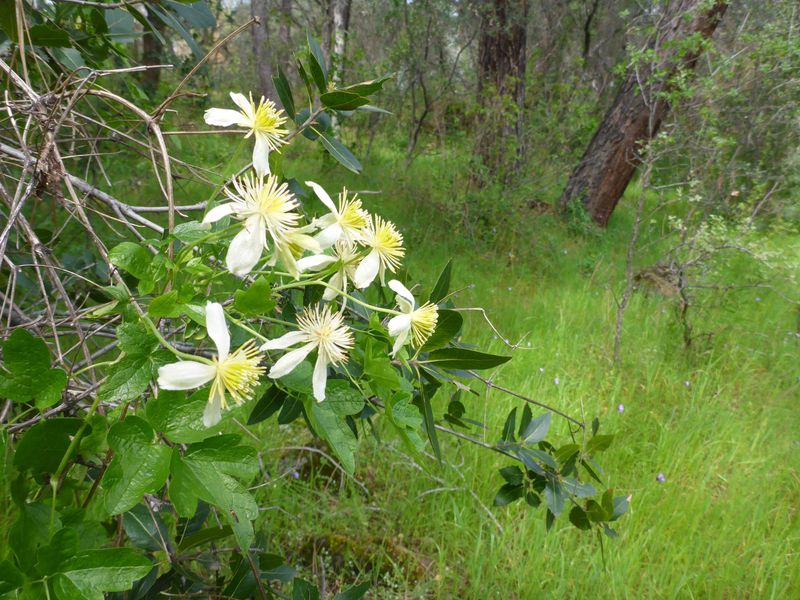
Spring arrives early on fences wrapped in chaparral clematis. Its creamy white flowers are larger than those of its cousin, virgin’s bower, and they show up from late winter into spring.
Native to dry hillsides from Northern California into Baja, it handles summer drought better than most flowering vines. In fact, it often goes semi-dormant in the heat, which suits water-restricted yards nicely.
Like other clematis, it holds on with twisting leaf stalks, never roots. Plant it at the base of a fence with some mulch to keep its feet cool, and give it a wire or netting to climb.
5. Desert Wild Grape (Vitis girdiana)
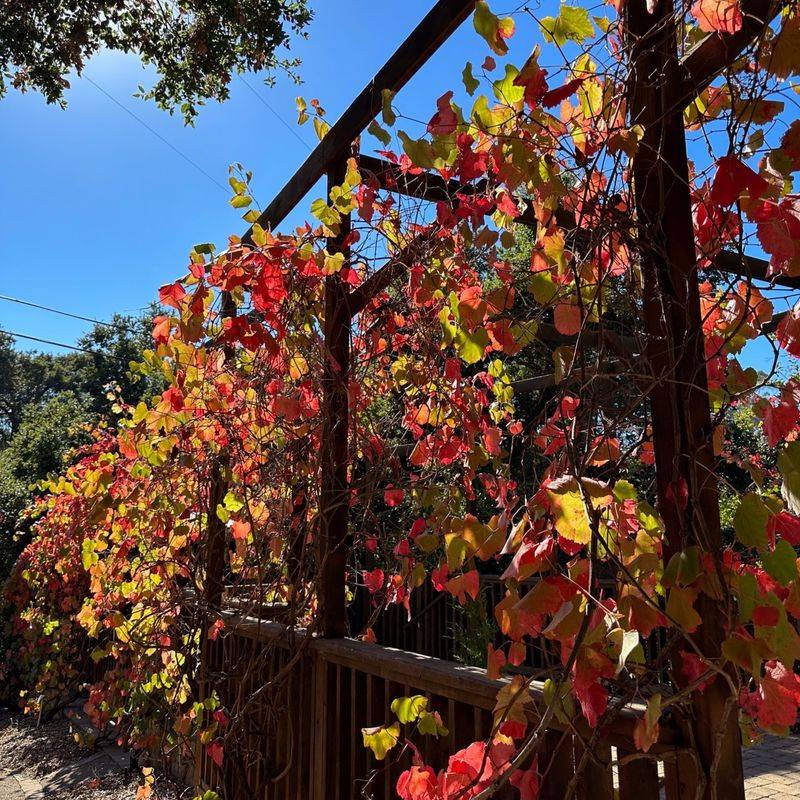
Got a hot, inland fence in Riverside or San Bernardino? Desert wild grape grew up in Southern California canyons and handles the heat that makes other vines sulk.
Its leaves are slightly fuzzy and grayish, giving a softer look than California wild grape. Tendrils do the climbing, so it can drape over block walls and wood fences without damaging the surface underneath.
Birds eat the small dark fruit, and the dense leaves create a cooler microclimate along the fence line. Keep it lightly watered the first summer or two, then cut back as it settles in.
6. Bougainvillea
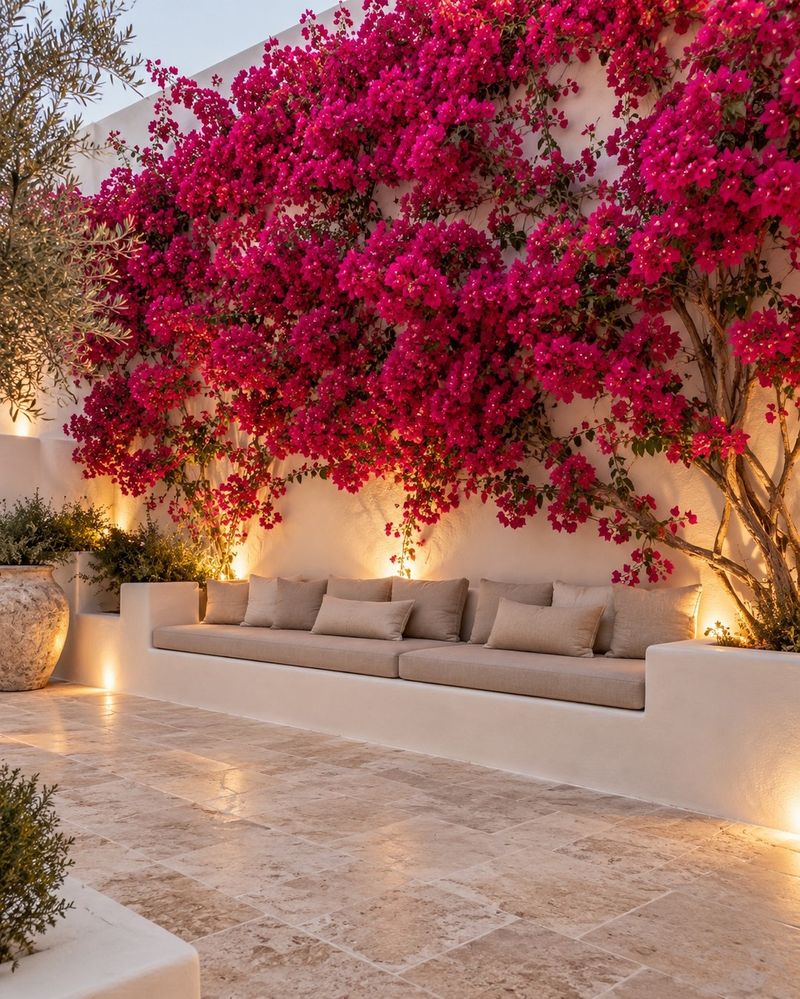
Nothing says Southern California quite like a wall of magenta bougainvillea. Here is a secret, though: it is not really a vine at all, but a sprawling shrub that leans and hooks its thorns over supports.
That means it will not attach to stucco on its own. You tie it to a trellis or sturdy wires, and the plaster behind stays clean and intact.
It loves heat, sun, and dry soil once established, which fits water-wise coastal and inland yards. Wear gloves when pruning, keep it away from walkways, and skip heavy fertilizer if you want more color and less leafy growth.
7. Passion Vine (Passiflora caerulea)
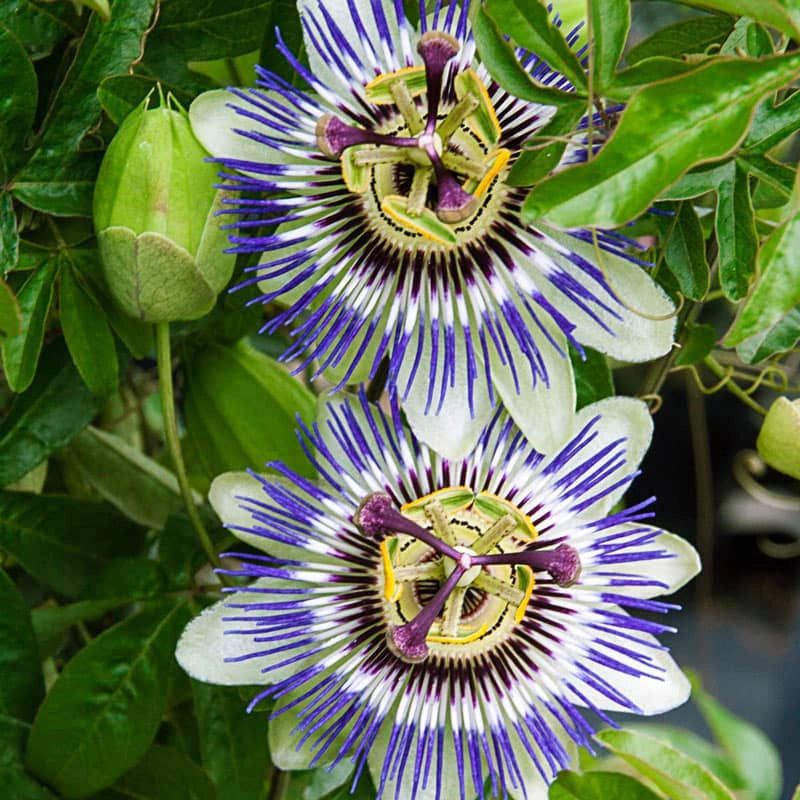
Kids tend to stop in their tracks at a passion flower, with its fringe of purple filaments that look almost alien. Blue passion vine climbs by tendrils, not sticky roots, so it stays easy to pull away from a fence for repairs.
Bonus: it is a host plant for the orange gulf fritillary butterfly, common across much of California. Do not panic when caterpillars nibble leaves, because the vine usually bounces back fast.
It can spread through suckers, so pull stray shoots as they appear. Moderate water keeps it happy, and it shrugs off coastal fog and inland heat alike.
8. Cape Honeysuckle (Tecomaria capensis)
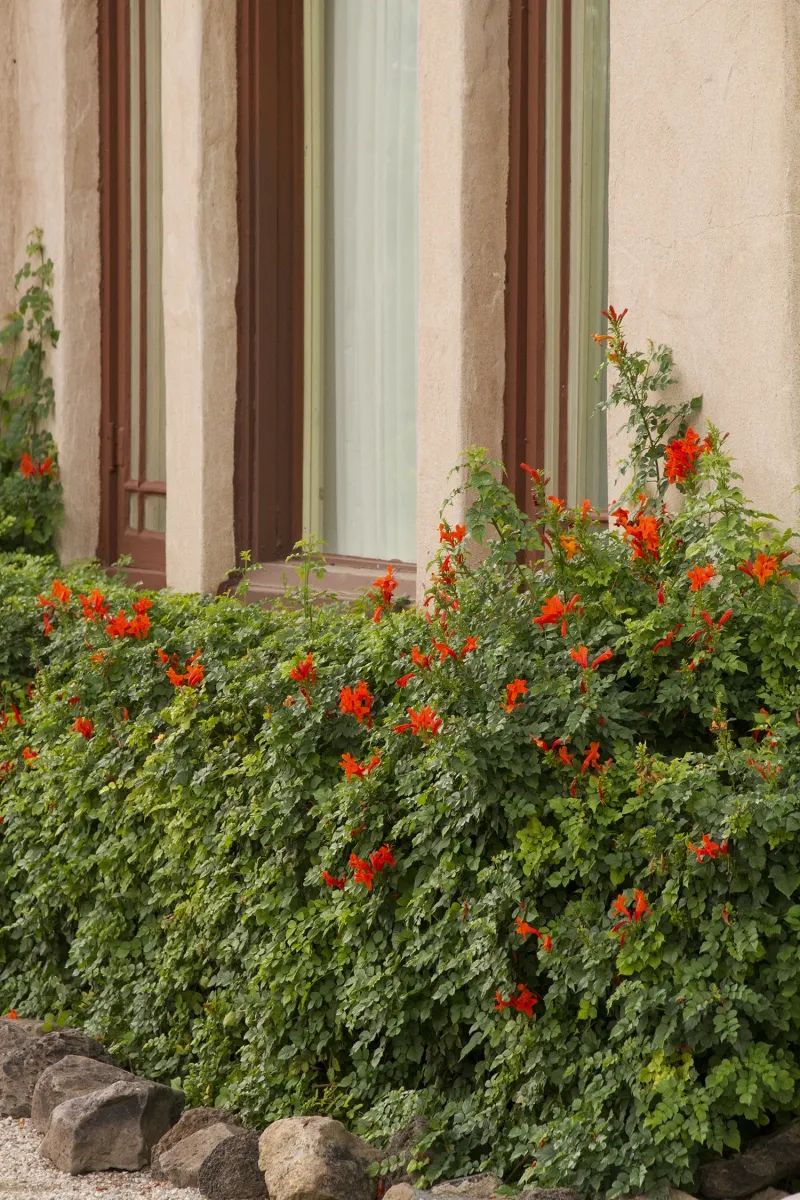
Orange trumpets in fall and winter, right when most gardens fade. Cape honeysuckle comes from South Africa, another Mediterranean-style climate, which helps explain why it handles California summers so well.
It is a scrambler that drapes and leans rather than gripping walls, so you can train it along a fence or let it mound over a slope. Hummingbirds work the flowers for months.
Plan on shearing a couple of times a year, since it grows vigorously. In frost-free coastal zones it stays evergreen and can form a thick green screen with modest summer water.
9. Star Jasmine (Trachelospermum jasminoides)
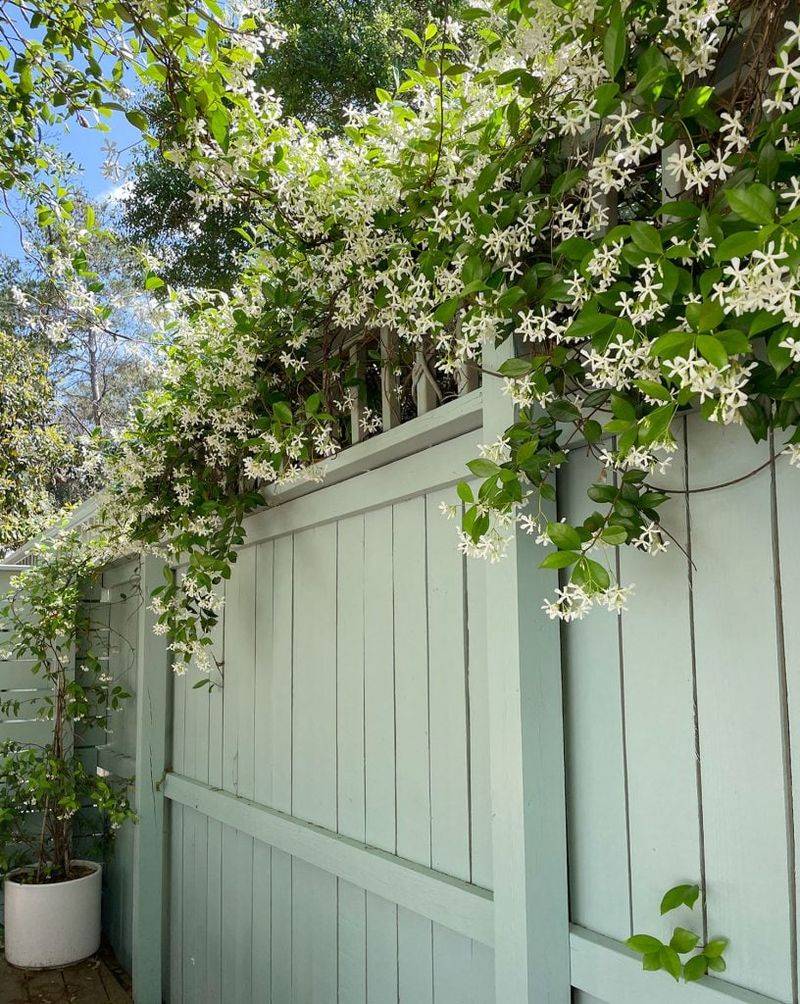
Walk past a fence of star jasmine on a warm May evening and the scent stops you cold. Glossy evergreen leaves and white pinwheel flowers make it one of the most planted fence covers in the state.
It twines around supports instead of rooting into them. Give it lattice or wire mesh, and you can still unwind it if a board needs replacing.
It is not native, so pair it with natives nearby for pollinator variety, though bees do visit the blooms. Partial shade and moderate water suit it best, especially in hot inland valleys.
10. Hardenbergia (Lilac Vine)
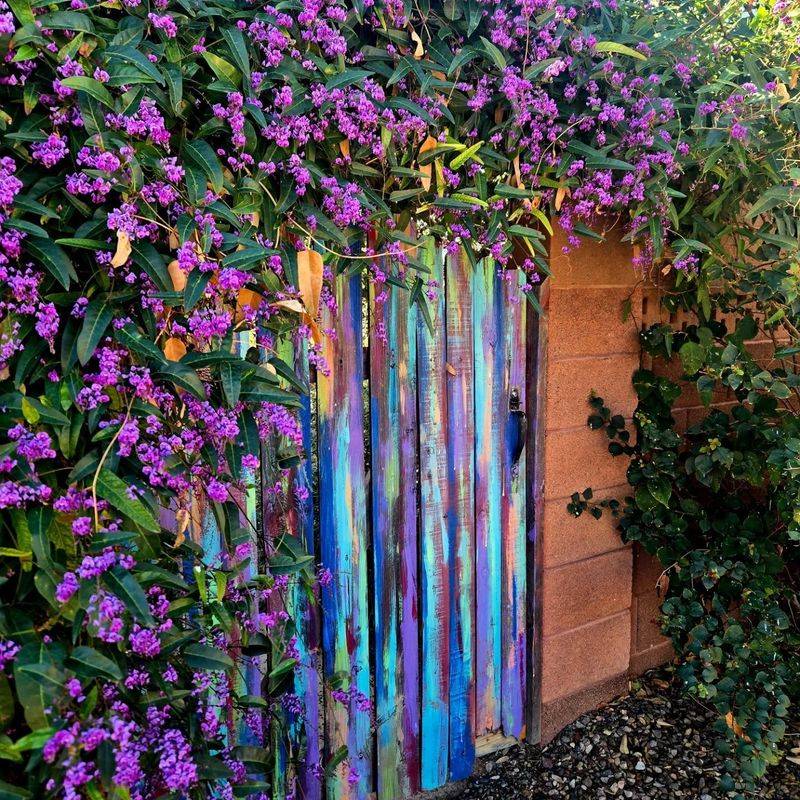
When February looks gray, hardenbergia lights up fences with sprays of purple pea flowers. This Australian twiner is a favorite of water-wise gardeners because it asks for little once rooted.
It wraps lightly around wires and stays lighter in weight than many vines, so older fences are not strained. No pads, no roots, and no peeled paint.
Early bees appreciate the winter bloom. Trim right after flowering to keep it full, and plant in decent drainage, since soggy soil may cause trouble.
Combined with the natives above, it helps keep something blooming on your fence nearly all year.