
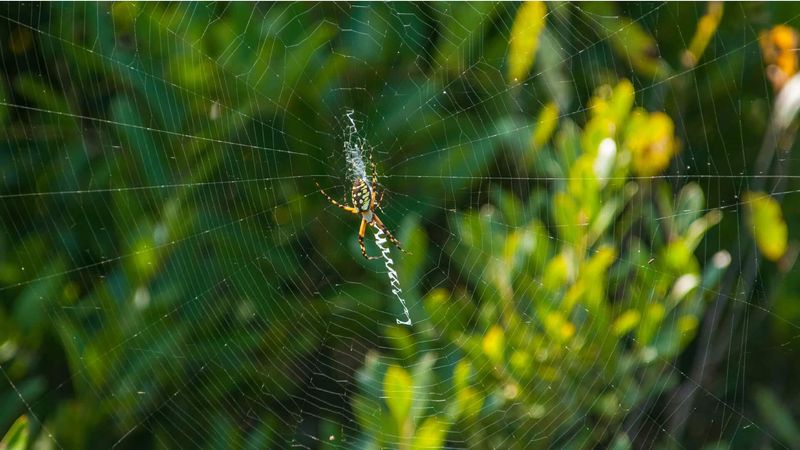
Every fall, big round webs show up between fence posts, porch rails, and garden stakes across California. Many homeowners sweep them away without a second thought, while others wonder if the spider is guarding the new kale and cabbage.
The truth sits somewhere in the middle. Here is what a web can do, what it cannot, and how to care for both your wildlife and your greens.
A web is not a guarantee of protected greens
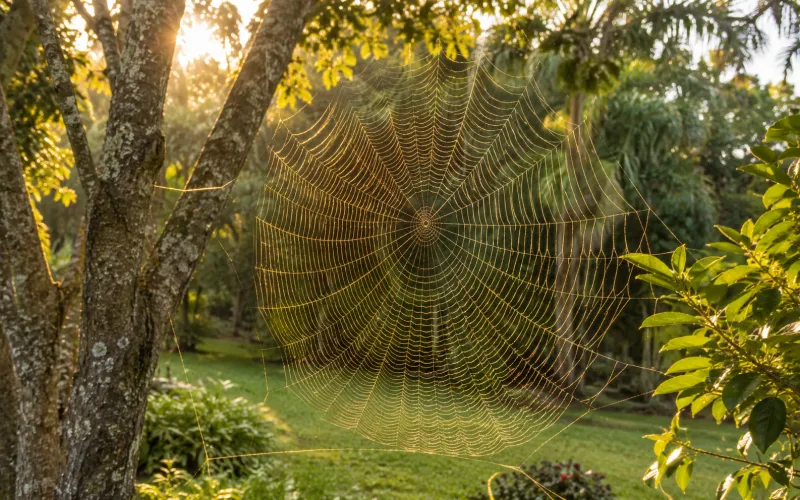
Here is the honest version of the headline: spiders are useful predators, but one web in your yard has not been shown to protect the greens growing nearby. Nobody can look at a web by your kale and say it is catching the pests that are chewing the leaves.
The bigger picture is encouraging, though. A meta-analysis of 58 agricultural studies found that spiders suppressed pest insects in 79% of cases.
That is a strong showing for spiders as a group working in farm settings.
Still, results varied from crop to crop, and those studies do not prove that a single backyard orb web will cut damage in a nearby vegetable bed. Think of the research as a reason to respect spiders, not a promise about your harvest.
UC IPM lists spiders among the beneficial predators in home landscapes. They eat insects, and that is a good thing to have in a yard.
You can appreciate that without counting on the spider to do your pest control.
So if you have been feeling guilty about knocking down webs, you can relax. Leaving one in a quiet corner is a kind gesture toward wildlife.
It is just not a substitute for looking at your plants.
Orb-weavers catch prey that meets the web
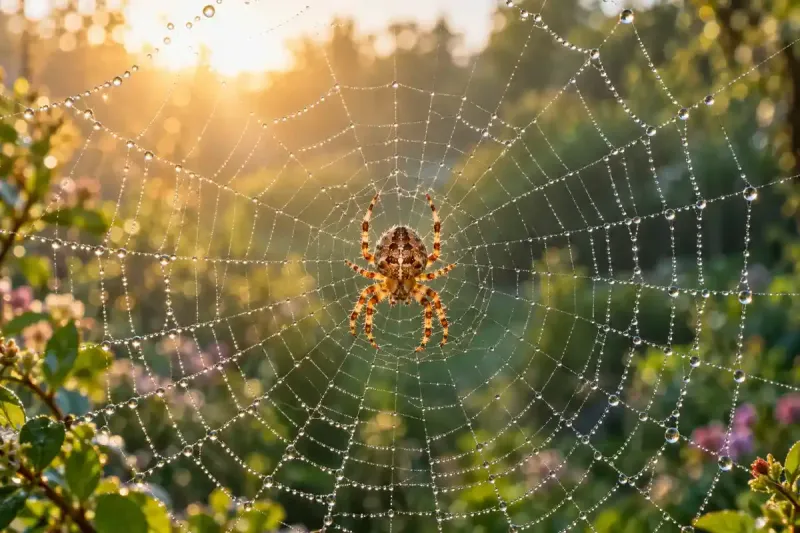
An orb-weaver does its hunting from one spot. It spins a sticky wheel of silk, then waits for something to fly, fall, or get blown into it.
UC IPM describes these spiders as predators that feed on insects caught in their webs.
That means location matters a lot. A web strung across a gap between a fence and a shrub sits in a flight path.
A web a few feet from the bed may never see the insects that are busy on your lettuce.
The spider also does not pick and choose. University of Wisconsin Extension notes that spiders are generalist predators, so they take whatever suits their web and setting.
That could be a gnat, a moth, a beetle, or a harmless bee.
Nor does an orb-weaver walk the rows checking leaves. Once the web is built, the spider mostly stays put on or near it.
It is not a patrol officer for your garden.
Knowing this helps you set fair expectations. The spider is a real predator, and it works with what the web catches.
Your crop pests may or may not be on that menu.
Leaf-feeding caterpillars can stay out of reach
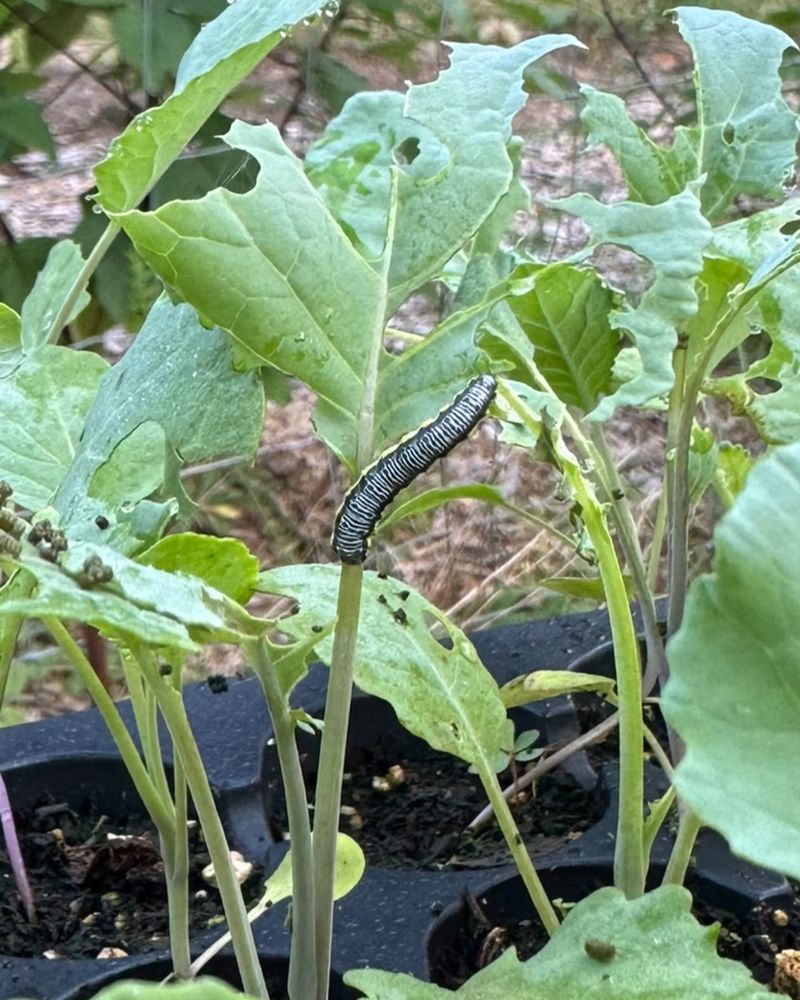
Picture the chewed leaves in your cabbage or lettuce. The culprit is often a caterpillar, and caterpillars spend their lives on the plant, not in the air.
A web strung nearby has little chance to touch them.
UC IPM explains that cabbage looper larvae feed on leaves and can damage cabbage and lettuce heads. The adult moths fly, and a moth might bump into a web.
But the damage comes from the larvae munching away on the greens, and that stage is out of the web’s reach.
Timing makes this more relevant in fall. UC IPM says cabbage in California grows from late fall into early spring.
According to its cole crop guidelines, cabbage looper numbers commonly peak in fall in California cole crops. Those details apply to cole crops, so do not assume they fit every green or every part of the state.
Here is a useful clue. If you see ragged holes and green droppings on a leaf, the pest is on the plant right now.
A web is not controlling that problem, even if it is full of other insects.
Webs may snag some flying insects, and UC IPM’s spider page backs up that general role. Active caterpillars call for a different plan, which comes next.
Leave quiet webs, but keep paths clear
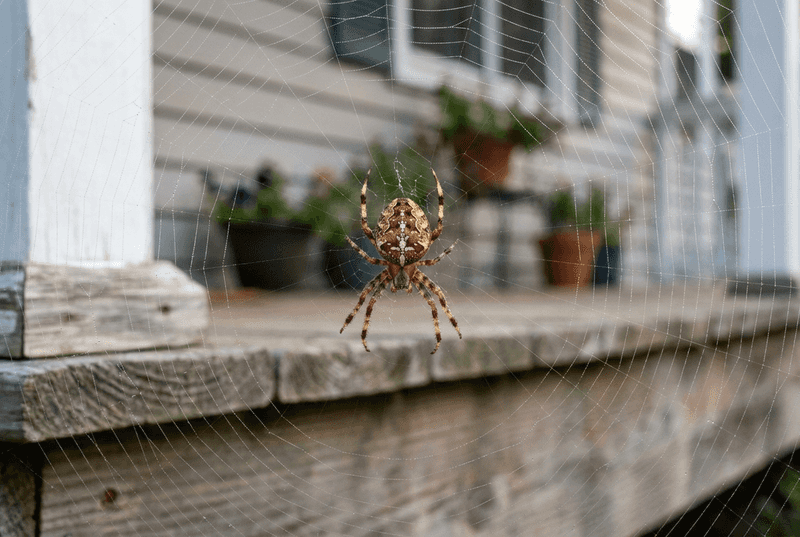
Where the web sits decides what to do with it. A web in a quiet corner, between shrubs or along a back fence, can simply stay.
Spiders there are not bothering anyone, and you are giving a bit of wildlife a place to live.
Doorways and walkways are another story. Utah State University Extension notes that orb weavers are often found around porches and entryways.
If a web hangs where you walk, it is perfectly reasonable to clear it with a broom or a long stick and keep the route open.
Treat leaving a web as a kindness, not a pest control tactic. It may not change anything about your greens.
A web does not tell you what kind of spider made it. UC IPM identifies the western black widow as California’s most common harmful spider, and it is a different animal from the showy orb-weaver with its classic round web.
So keep your hands off any spider you cannot identify. Wear gloves when you reach into woodpiles, sheds, or dense plantings, and use a tool to move a web rather than your fingers.
Check the leaves for pests the web may miss
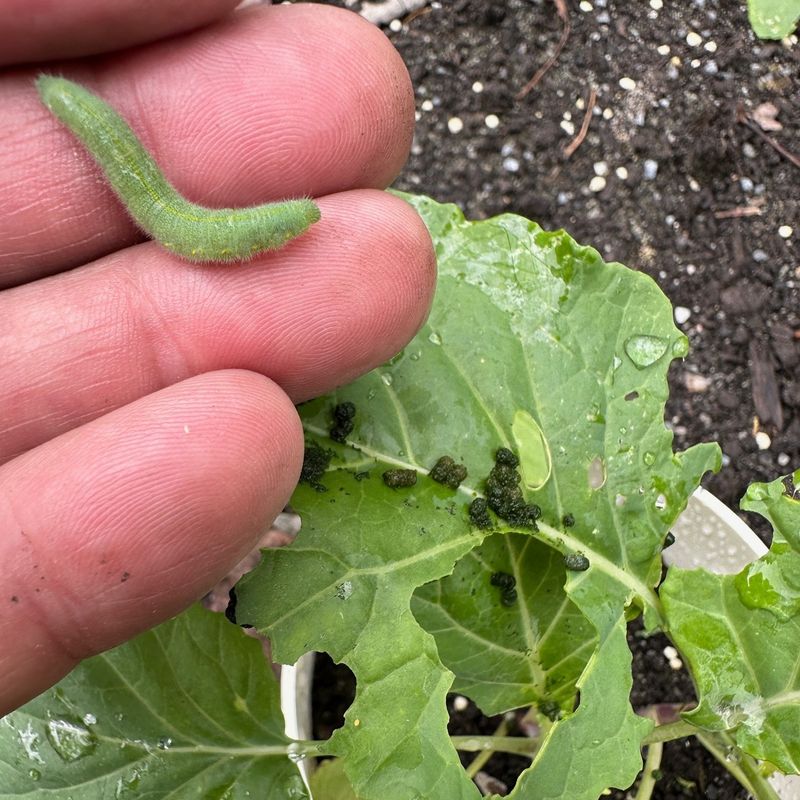
The most reliable pest tool you own is your own eyes. Walk the bed every few days, and flip the leaves over.
Eggs and young caterpillars often hide on the undersides, where they are easy to miss.
When you find caterpillars, handpick them and drop them in a bucket of soapy water. UC IPM’s looper page lists this as a practical step for home gardens.
Check the center of cabbage and lettuce heads too, because loopers can tuck themselves inside.
Prevention is also an option. UC IPM says floating row covers can prevent looper egg-laying.
The idea is to set the cover over the bed early, before moths show up, and seal the edges so nothing can slip in.
Handpicking and row covers do not solve every pest, though. Aphids, flea beetles, and other problems can show up in the same bed.
UC IPM’s cole crop guidelines cover pest-by-pest options if you need more control.
Start by identifying what you are actually seeing. The right fix depends on the pest and the crop.
A web nearby is not a stand-in for that check.
Use pesticides carefully around natural enemies
Spiders share your yard with ladybugs, lacewings, and other predators. A broad-spectrum spray can knock back many of them along with the pest you were aiming at.
That is why a routine spray schedule is a poor fit for a wildlife-friendly yard.
UC IPM recommends protecting natural enemies through the judicious use of pesticides. In plain terms, spray only when you have a confirmed problem, and choose the least disruptive option that fits.
Not every product affects beneficial insects the same way. Read labels, and ask your local UC Master Gardener program or county extension office if you are unsure which choice suits your crop.
UC IPM also describes spiders as beneficial predators that can help in home gardens. Keeping them around is a good habit, though it works best as one part of a plan.
Going spray-free will not stop crop damage by itself. You may still need to inspect, handpick, or use covers.
Cutting back on routine spraying simply gives helpful predators a better chance to stay.
Let the web stay when it works for your yard
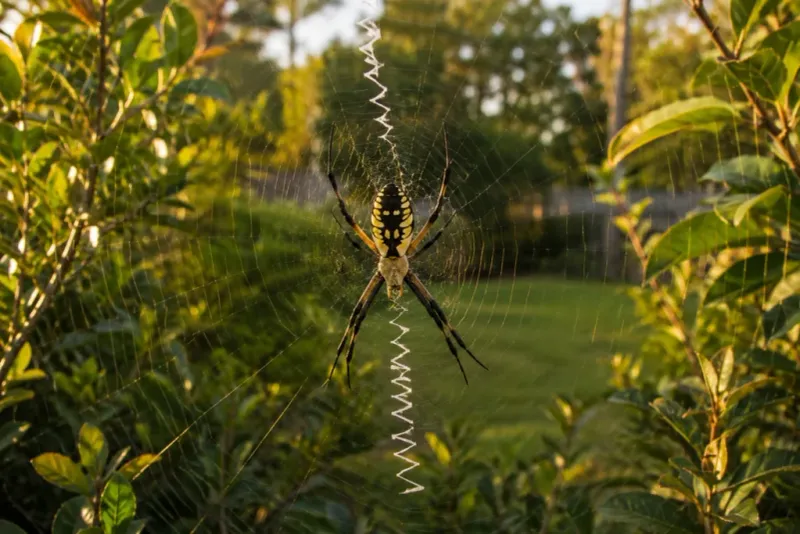
Here is the simple decision. If a web sits in a quiet spot, leave it if you like.
If it blocks a doorway or path, clear it and keep moving.
For your greens, rely on your own checks, as UC IPM’s looper guidance suggests. Keep your hands off spiders you cannot name, since UC IPM warns that some California spiders are harmful.
A spider’s web is a nice sign of a living yard. Your cabbage still needs you to look under the leaves.