
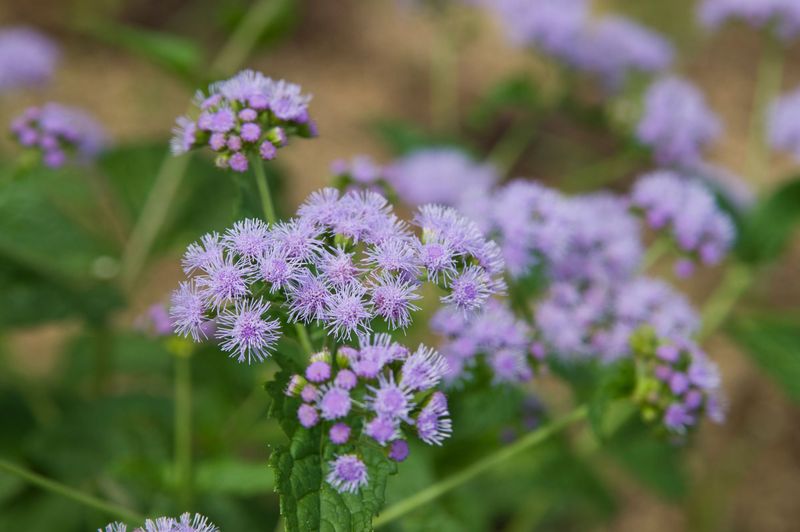
Picture a garden bed in October with fluffy, blue-violet flowers glowing among fading green leaves. That is blue mistflower, a North Carolina native perennial that can add cool color when many beds look tired.
It does not suit every yard, though, and it needs the right spot to shine. Here is how to tell whether it belongs in yours.
Blue mistflower adds late-season color
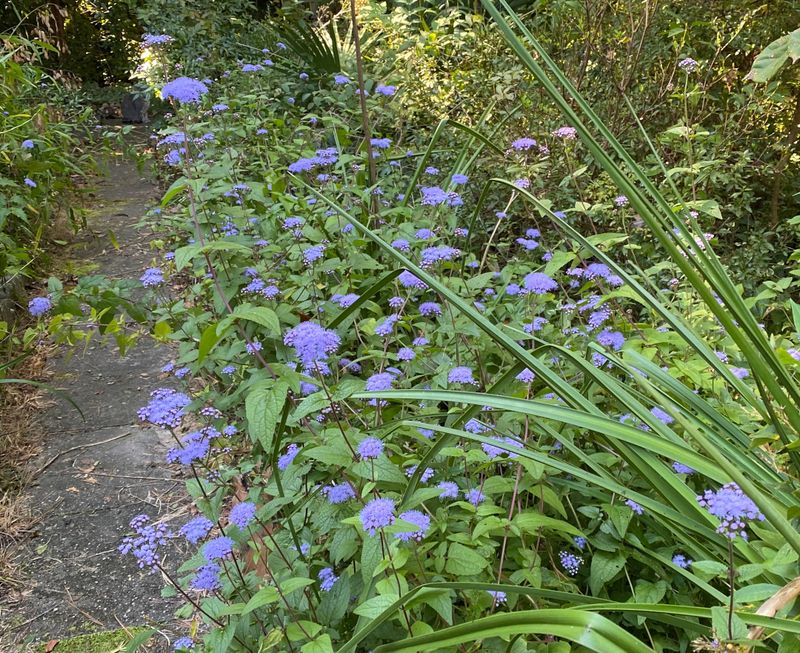
Gardeners who want blue in autumn have fewer choices than they have for pink or yellow, and that is where blue mistflower (Conoclinium coelestinum) comes in. Its flower heads look like soft, fuzzy puffs in a blue-violet shade that stands out beside gold and rust tones.
Think of it as one good candidate for late-season color, not the only one.
According to NC State Extension, the plant grows roughly 1.5 to 3 feet tall. That makes it a mid-height perennial, tall enough to fill the middle of a bed but not so tall that it towers over its neighbors.
The leaves are heart-shaped to triangular and stay green through the growing season, so the flowers arrive against a leafy backdrop.
Timing matters when you plan a bed. The Vascular Plants of North Carolina records flowering from late July through October.
Exact bloom dates shift with location and weather, so a bed in the coastal plain may not match one in the foothills. Do not count on flowers right up to the first frost everywhere in the state.
Many other native perennials are also blooming in late summer and fall, so blue mistflower is best treated as a colorful addition rather than a rescue for an empty bed. Its cool blue pairs well with yellow and white flowers.
The next sections cover where it grows well, and where it can cause trouble.
Check regional and site conditions
Before you buy a plant, look at your soil. Blue mistflower is native to North Carolina, but not evenly so.
The state flora describes it as common in parts of the Coastal Plain, infrequent in the Piedmont, and very rare in the Mountains. In some counties, whether it is truly native is uncertain.
That uneven pattern does not mean you cannot grow it outside the coast. It does mean a Piedmont or mountain gardener should think of it as a garden plant that needs the right spot, not a species that belongs everywhere in the landscape.
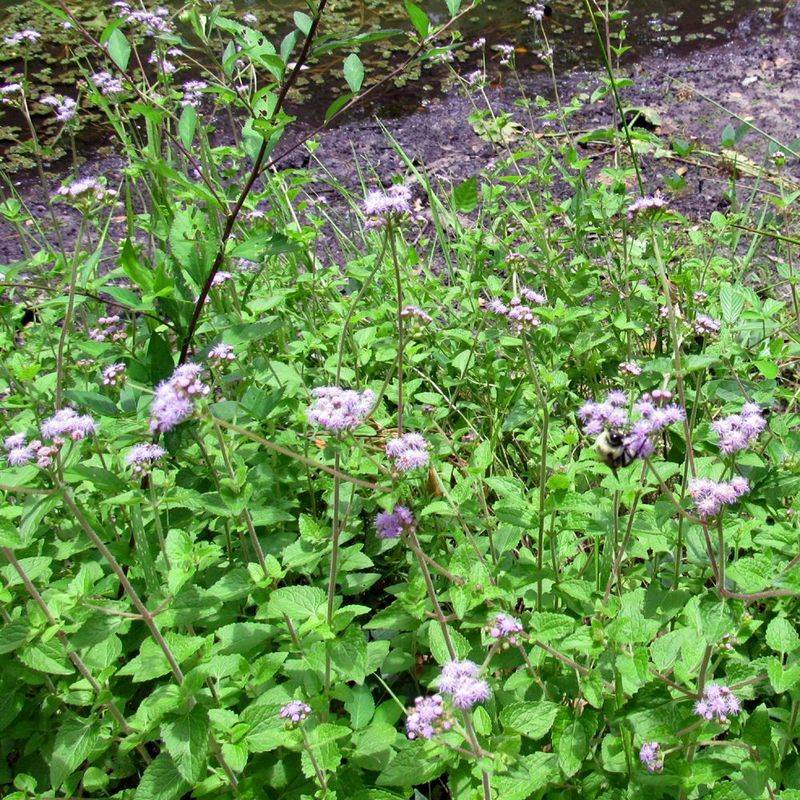
The same source lists wet-to-moist meadows, floodplain openings, streamsides, and roadside ditches as habitats. Those places share one trait: the soil stays damp.
NC State Extension says the plant prefers full sun to partial shade and moist soil that does not dry out.
A practical test: after a few days without rain, push a finger into the bed. If it is dry a couple of inches down, that spot is probably a poor match.
Sandy, fast-draining beds and baked slopes are common examples. Low corners, spots near downspouts, pond edges, and rain garden margins are better bets.
Partial shade can help a bed hold moisture longer, as long as the plant still gets decent light.
Its flowers attract pollinators and songbirds
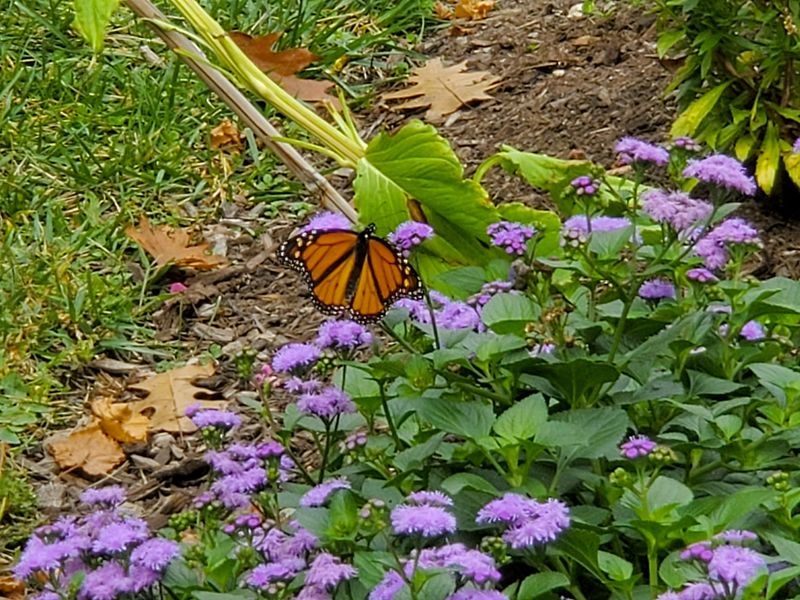
Flowers that bloom late can matter to insects looking for nectar. NC State Extension notes that blue mistflower attracts pollinators and songbirds.
That is a simple, specific claim, and it is worth treating as a bonus, not the main reason to plant.
In the garden, you may notice bees, butterflies, and other small insects working the fuzzy flower heads on a warm afternoon. Songbirds may visit the planting too.
Sit nearby for ten minutes on a sunny day in early fall and you will see what shows up in your yard.
Attraction is not the same as a guaranteed result. One patch will not reliably raise the number of any particular species, and it will not reverse wider pollinator declines.
What it can do is add one more flowering plant to a yard, especially if you combine it with other natives that bloom at different times.
If wildlife is your goal, think in layers. Spring, summer, and fall bloomers all matter, and so do leaf litter, seed heads, and a spot of untidy cover.
Blue mistflower can fill part of the fall slot, as long as the site suits it and you are comfortable with how it grows.
Plan for its spreading habit
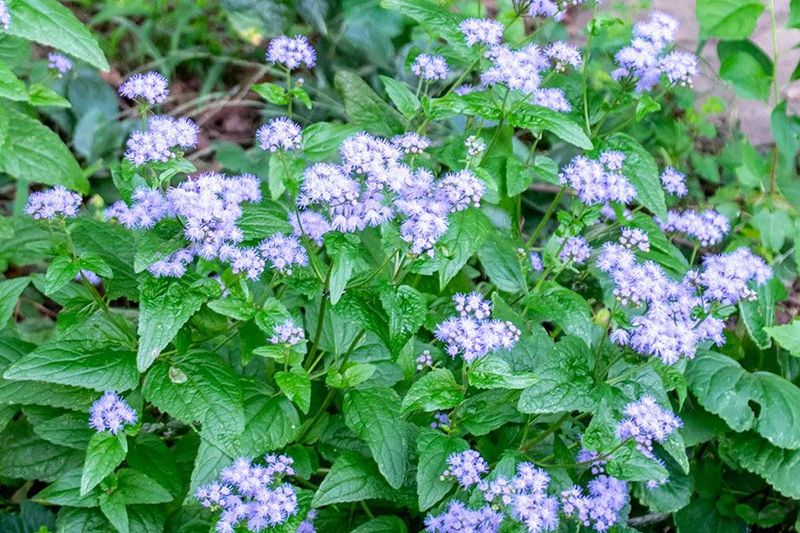
Here is the tradeoff to settle before you plant. Blue mistflower spreads by rhizomes, which are underground stems, and by seed.
In a spot it likes, a few plants can become a broad colony within a few seasons.
NC State Extension flags the aggressive spreading and rates the plant’s maintenance as high, so skip any claim that it is a plant-and-forget choice. The USDA NRCS fact sheet adds that it may become weedy or invasive in some regions or habitats and could crowd out desirable plants if left unmanaged.
The fix is placement. Extension recommends it for pollinator or water gardens, naturalized areas, and pond borders, where spreading roots will not crowd other plants.
A wild corner, a ditch edge, or the margin of a rain garden gives it room to roam.
A small, tidy perennial bed with delicate neighbors is a risky home. If you try it there anyway, plan on regular work: dig out runners each spring, pull seedlings, and cut spent flowers before seed forms.
Edging buried deep may slow the roots, though you should still check the border often. If that sounds like too much, choose another plant.
Fall planting depends on local conditions

Today is early November, so the timing question is real. Fall planting can give roots time to settle in before summer heat arrives.
Still, the right window depends on where you live in North Carolina, and a mountain yard faces cold much sooner than a coastal one.
A Beaufort County Extension article recommends October through early December for fall planting. That advice comes from coastal conditions.
It is not a statewide planting window, so check local frost dates and your own soil before you dig.
Planting also does not guarantee a full display next fall. Flowering depends on weather, site, and how well the plant establishes.
Expect a modest first year and judge the results after a full season.
For container plants, the NC State Extension Gardener Handbook says to plant at the same depth as, or slightly higher than, the original container. Water at the base of the plant while it establishes, which keeps the soil moist without soaking the leaves.
Keep watching the weather after planting. New plants need extra water when rainfall is scarce, even in cooler months.
If your window has closed or your soil is cold and soggy, waiting for spring is a reasonable choice.
Consider other choices for a different fit
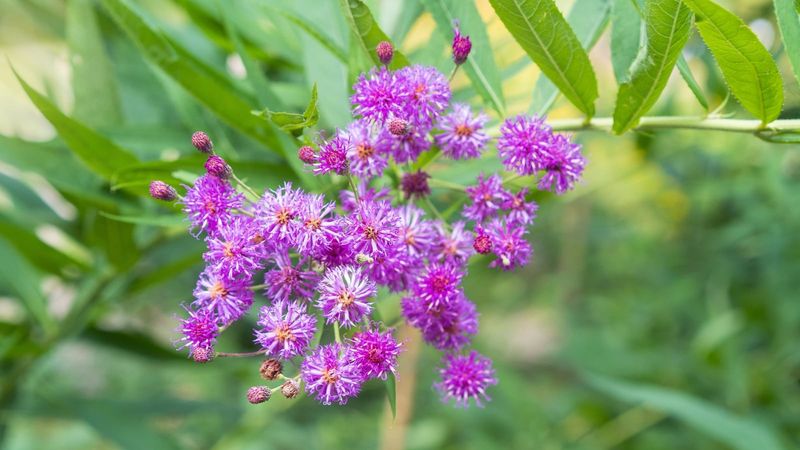
If blue mistflower does not match your site, other natives can fill fall beds. Each one behaves differently, so compare bloom time, spread, and size before choosing.
NC State Extension lists white wood aster as blooming from August through October. It carries small white flowers and, like mistflower, can spread vigorously.
Give it room, and do not assume it is a swap that behaves the same way in your bed.
New York ironweed is a very different plant. NC State Extension describes it as native across North Carolina, blooming from mid-summer to mid-fall, and reaching 5 to 8 feet.
That height suits the back of a large border or a meadow edge, not a small front bed.
Neither source says either plant is suited to dry soil, so check moisture and light for each one before planting. The practical comparison comes down to three questions.
How late do you want flowers? How much will the plant spread?
How tall can your space handle?
Whichever you choose, a bed that blooms from several plants over several months usually looks better than one star performer.