
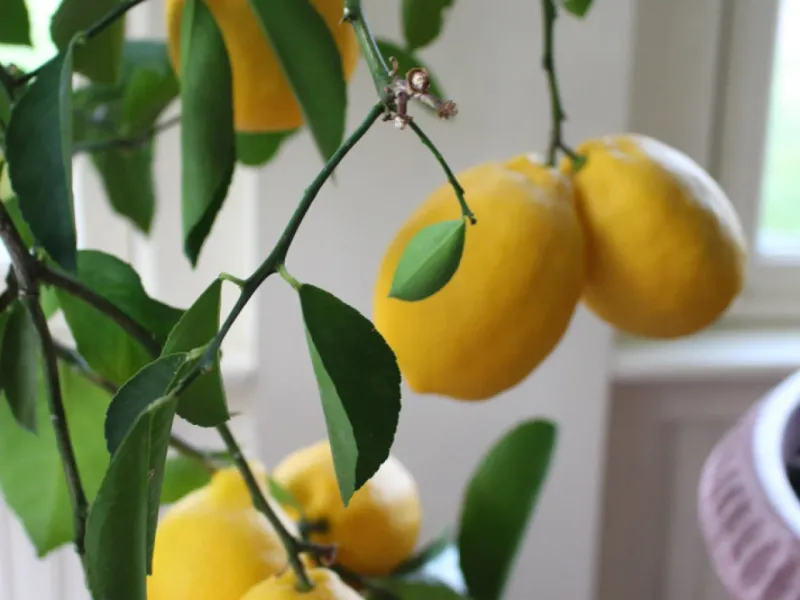
You walk past your potted Meyer lemon and spot tiny green fruit on the floor. The heater just came on for the season, so it feels like the obvious culprit.
Timing can be a useful clue, but it is not proof, and several other things can make small lemons fall. Here is how to sort normal shedding from problems worth fixing, and what to check first.
Treat the heater timing as a clue, not a diagnosis
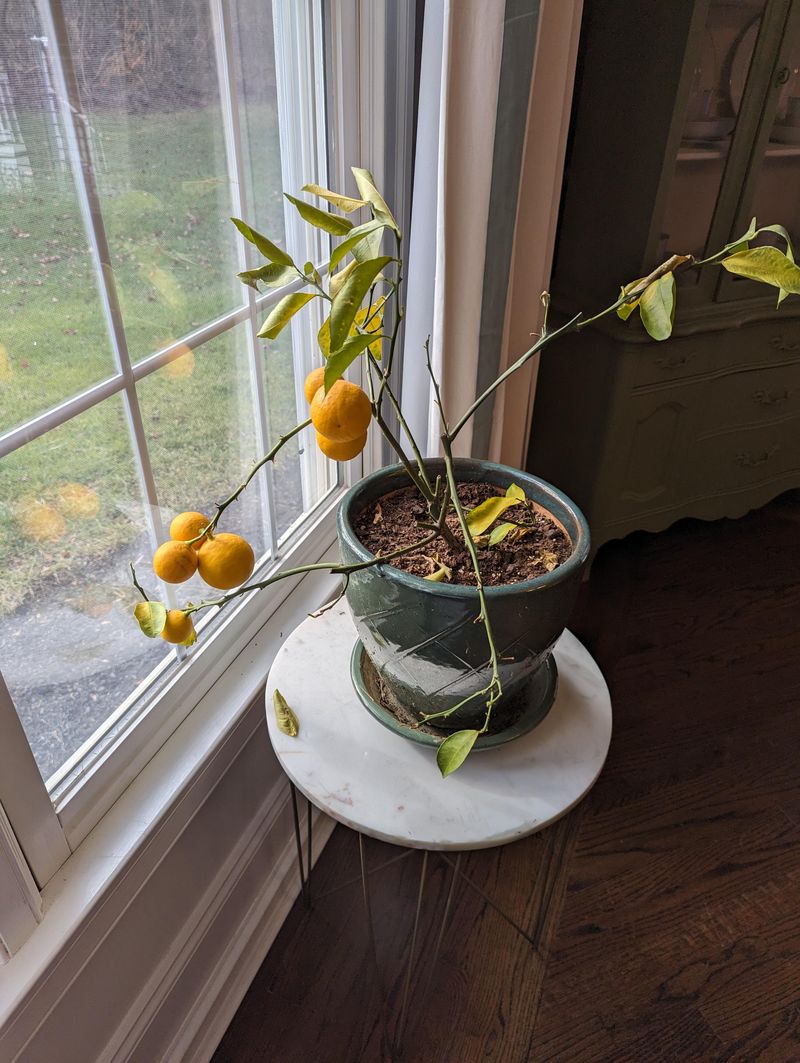
Fruit on the floor right after the furnace starts is a good reason to look around, but it does not tell you what happened. Think of it as a nudge to inspect the tree’s surroundings, much like noticing a cough after a cold snap does not prove the weather made you sick.
Citrus guidance does give you a few things to check. Oregon State Extension advice for Meyer lemons says to keep them away from heater vents and blasts of hot air.
Sudden temperature swings are also worth ruling out, since they can show up around the time heating begins.
Other explanations stay on the table. UC IPM describes natural shedding of small citrus fruit, and stress from light or watering problems can also play a part.
To be plain about it, nothing in the sources we reviewed shows that dry household air caused your tree’s fruit to fall. Treat the heater as one suspect on a short list, and work through that list one item at a time.
Some tiny-fruit shedding is normal
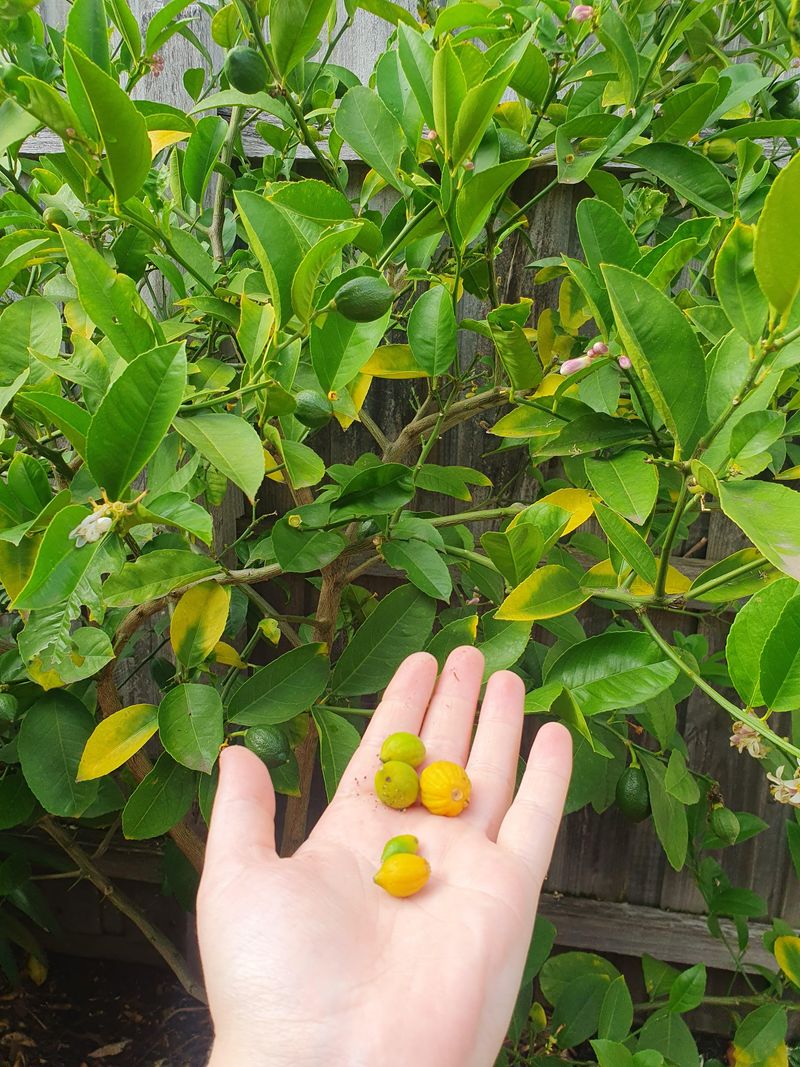
A handful of fallen fruitlets does not mean your tree is failing. Citrus often sets more fruit than it can carry, so it lets some go.
Cornell Cooperative Extension notes that potted citrus may shed excess fruit, sometimes quite a lot, and that sudden temperature changes can also trigger drop.
Size matters when you read the clues. UC IPM separates normal shedding of small fruit from the loss of older, established fruit.
Older fruit that falls can be linked to drought, poor nutrition, wind, freezing, or high or rapidly changing temperatures.
So look at the pattern before you worry. Are the fallen fruits pea-sized or closer to marble-sized and larger?
Did a few drop, or did most of the crop go in a week? Are the leaves still green and firm?
A small, one-time drop with healthy leaves usually points to ordinary thinning. Heavy or repeated loss, especially of bigger fruit, is your signal to start checking conditions.
Move the tree out of direct heater airflow
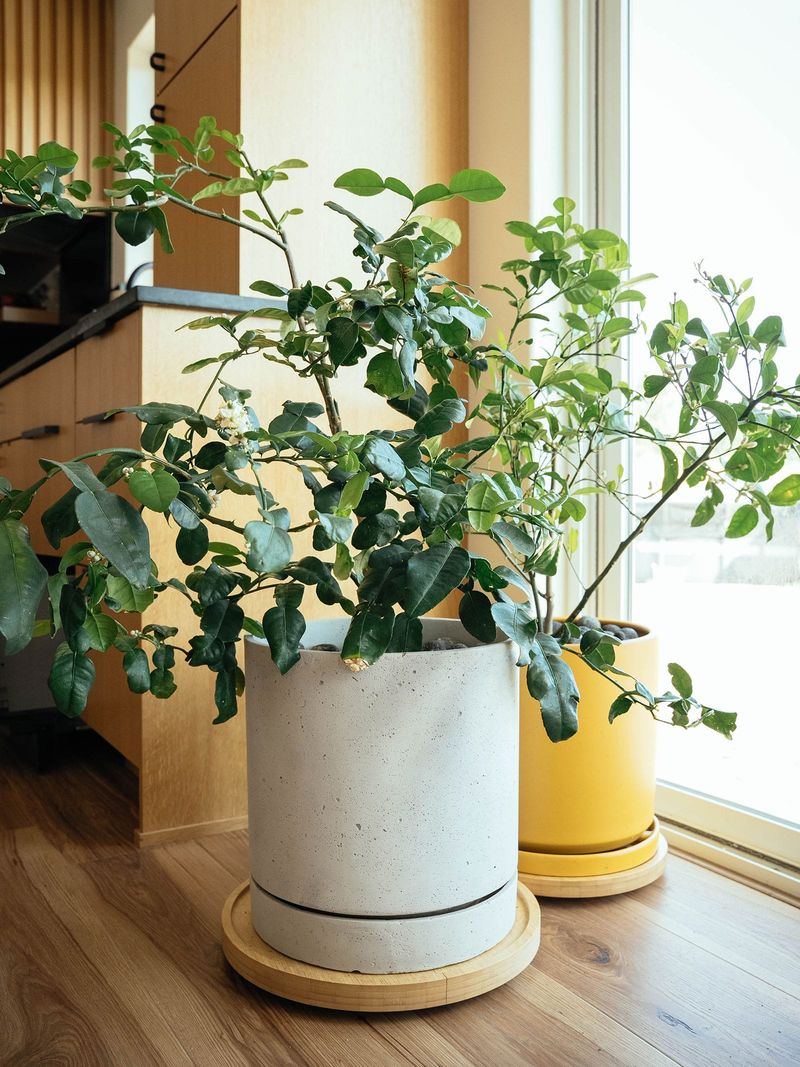
Start with the easiest check: where is the pot sitting? If it is parked over a floor vent or in the path of a warm draft, slide it a few feet aside.
Oregon State Extension specifically advises keeping Meyer lemons away from heater vents and blasts of hot air.
Also think about abrupt changes. A spot that swings from cool to warm each time the heat cycles, or sits beside a door that opens to cold air, gives the tree a bumpy ride.
Aim for a steady place with gentle, even conditions.
If you hold your hand where the leaves are, you can feel moving warm air right away. That simple test often tells you more than a thermometer.
Keep your expectations realistic. Moving the tree is a sensible precaution when heating season starts, but it does not prove the heater caused your fruit loss, and it cannot guarantee that no more fruit will fall.
Think of it as removing one possible stressor while you check the others.
Give indoor citrus the brightest practical light

Light is its own big factor, separate from heat and humidity. A tree that is short on light has a hard time supporting flowers and fruit, no matter how well you handle everything else.
Wisconsin Extension recommends at least six hours of direct light for fruit production, and it suggests supplemental lighting if a window cannot deliver that. It also notes that low light makes flowering and fruiting unlikely, so a dim spot deserves a hard look before you blame dry air.
Try tracking the sun for a day. Note when light actually hits the leaves and for how many hours.
The brightest window in winter is often a south-facing one, though the best spot depends on your home.
If the tree falls short, a grow light can fill the gap. Be careful with promises, though.
More light supports the tree’s overall fruiting ability, but it will not necessarily stop fruit that is already dropping.
Check the potting mix before watering
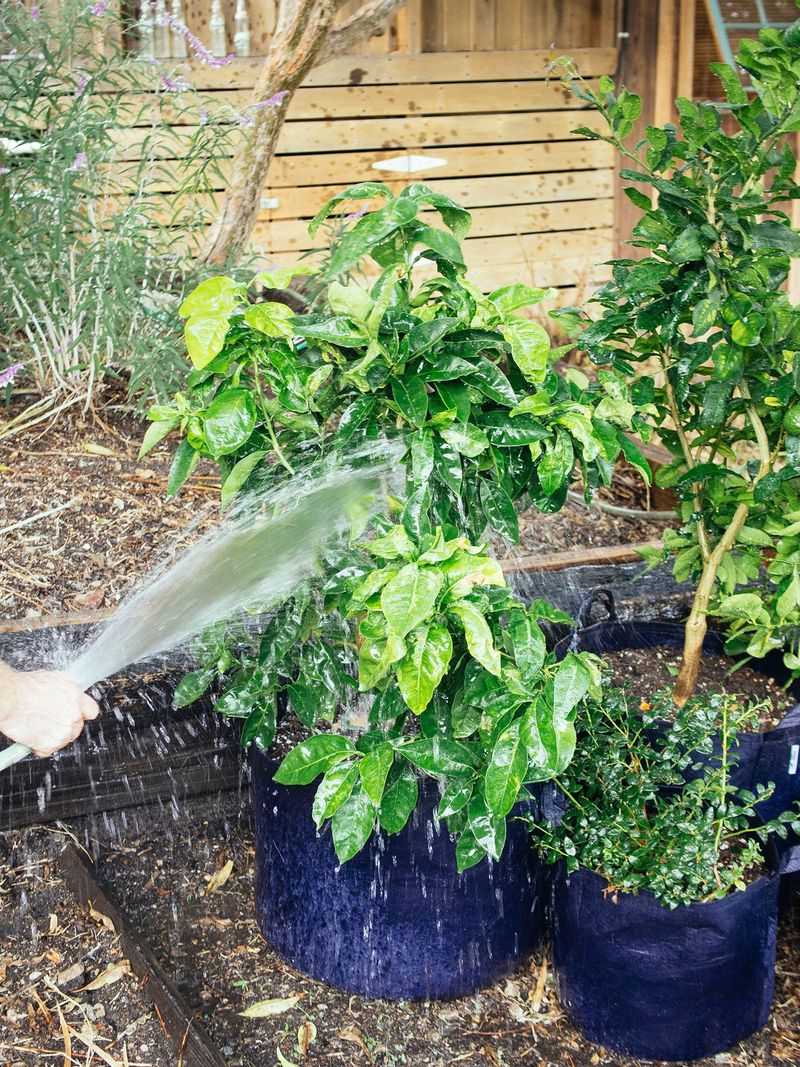
Dry winter air can tempt you to water more often, but the soil is a better guide than the air. Push a finger into the mix.
If the top inch is still damp, wait.
That matches Texas A&M AgriLife guidance, which advises letting the upper inch dry before watering and watering less often in winter. Growth slows in cooler, shorter days, so the tree uses less water than it did in summer.
Citrus likes to be moist but not soggy. Wisconsin Extension offers the same general advice for indoor trees, and both too much and too little water can stress a plant.
When you do water, soak the mix well and let the extra drain out. Then empty the saucer so the pot never sits in standing water.
Constantly wet mix is not a fix for dry rooms. It can harm roots, and a stressed root system is another possible reason fruit might drop.
Use a pebble tray only as an optional humidity measure
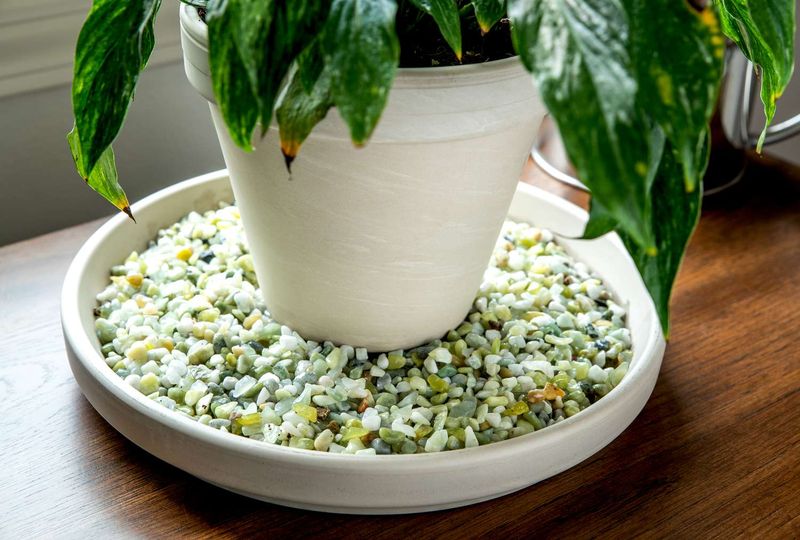
If you want to try a pebble tray, go ahead, but keep your hopes modest. Nebraska Extension explains that water evaporating from the tray adds some humidity around the foliage.
The source does not say how much, and nothing we reviewed shows that a tray prevents fruit drop.
Set it up carefully. Fill a shallow tray with pebbles, add water, and place the pot on top so its base stays above the waterline.
A pot sitting in water can keep the soil too wet and invite root rot.
Top off the water as it evaporates, and rinse the pebbles now and then to keep them clean.
The tray is a small extra, not a rescue. It does not replace moving the tree away from vents, finding it more light, and watering by the feel of the mix.
Sometimes the best answer is a boring checklist done well.