
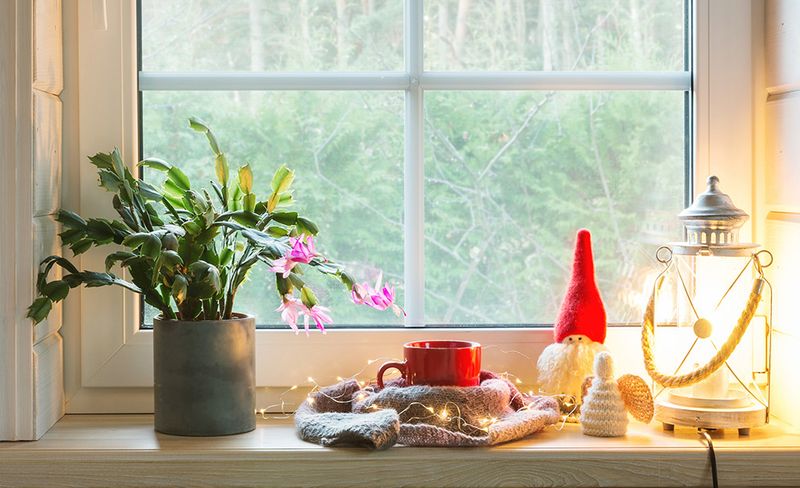
Few things feel more disappointing than a Christmas cactus that stays green and bloomless while the holiday lights go up. The good news is that this plant is not stubborn, it just needs the right signals at the right time.
Most of those signals come from light, temperature, and water, and you can start adjusting them now. Give your cactus these eight conditions over the next several weeks, and you will have a much better shot at a showy burst of color by December.
1. Long, Uninterrupted Nights
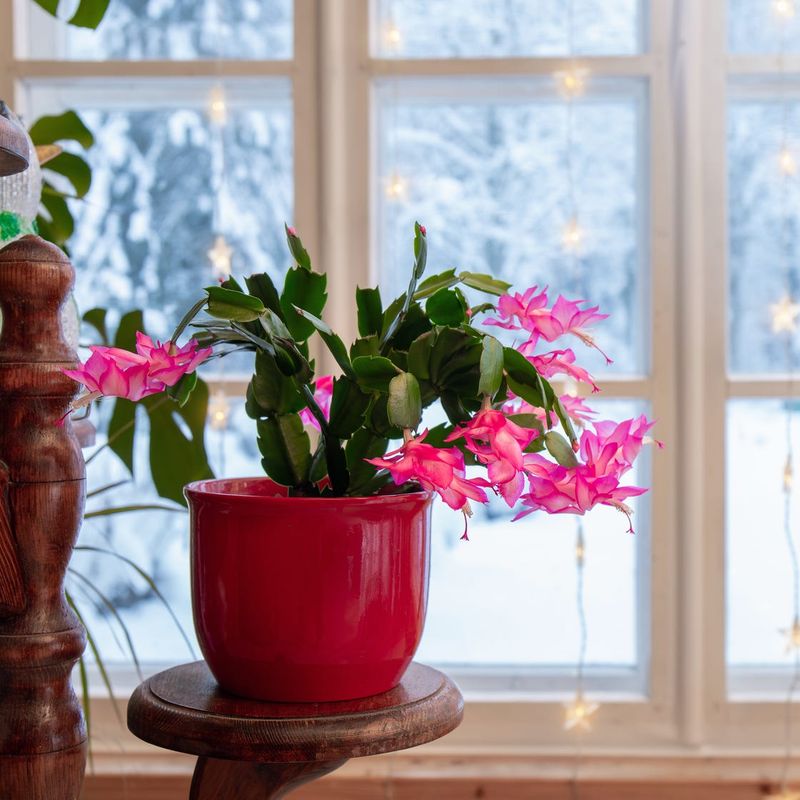
Darkness is the secret switch. A Christmas cactus is a short-day plant, which means it sets buds when nights stretch long and steady.
Aim for about 12 to 14 hours of total darkness every night for roughly six weeks. That means no porch light glowing through the window, no TV flicker, and no lamp switched on at 9 p.m. while you grab a snack.
Even a brief burst of light can reset the plant’s internal clock and delay bud formation.
Many gardeners in Texas and Florida keep their cactus in a spare bedroom or a closet-like corner from early evening until morning. Others simply drape a breathable cloth box or cardboard carton over the pot at dusk.
Whatever method you pick, consistency matters more than perfection.
Fun fact: Christmas cactus is native to the mountain forests of Brazil, where seasonal day length naturally shifts and cues flowering. Your living room is just standing in for that rainforest canopy.
Once you see small bumps at the tips of the stem segments, you can usually ease up on strict darkness. Buds that have clearly formed tend to keep developing under normal household light.
2. Cool Nighttime Temperatures
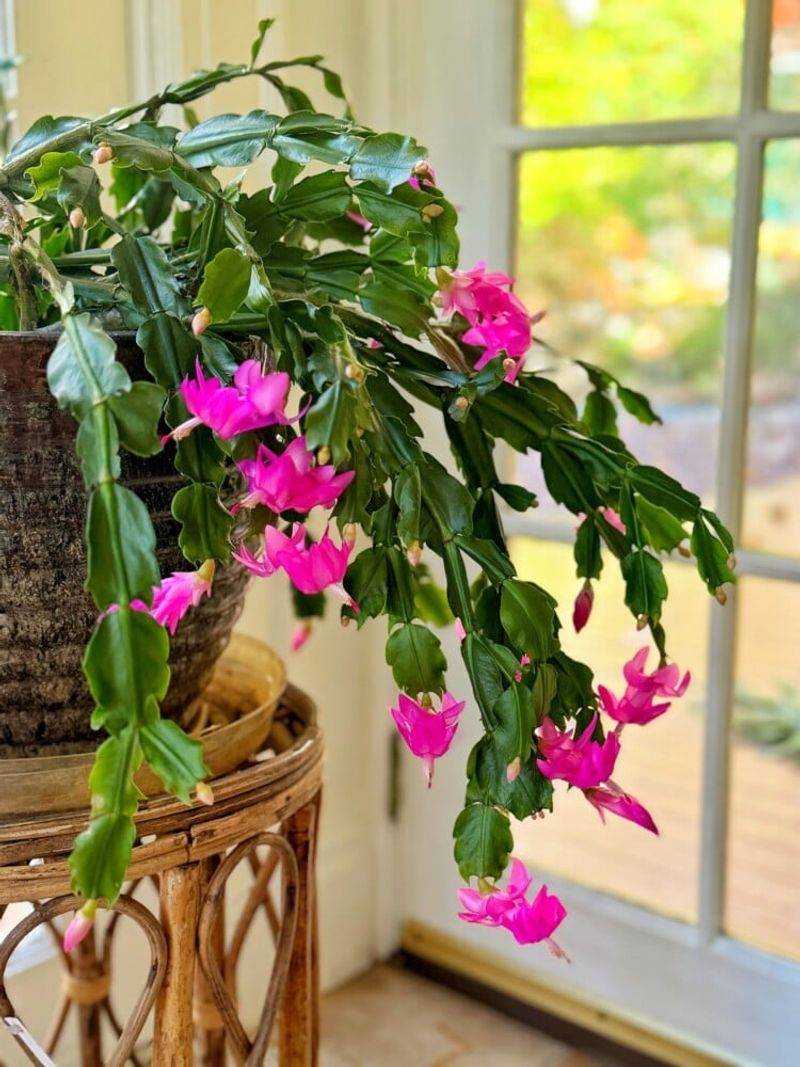
Picture a crisp October evening on a Southern porch. That slight chill is exactly what your Christmas cactus has been waiting for.
Night temperatures between about 50 and 60 degrees Fahrenheit can help trigger buds, sometimes even with less strict darkness. Warm, stuffy rooms that hover near 75 degrees all night often keep the plant in leafy mode instead of flower mode.
Here in the South, nature can do some of the work. In much of Texas and north Florida, fall nights often dip into that sweet spot, so a shaded porch or patio can be a smart temporary home.
Just watch the forecast closely and bring the plant inside if temperatures threaten to fall below about 45 degrees, since cold damage can show up as limp, discolored segments.
South Florida gardeners may struggle to find cool nights outdoors. A room away from heating vents, or a spot near a slightly cooler window, can help bridge the gap.
Keep in mind that days can stay warmer without harm. What seems to matter most is that drop after sunset, which tells the plant that the season is changing and blooming time is near.
3. Bright, Indirect Daylight
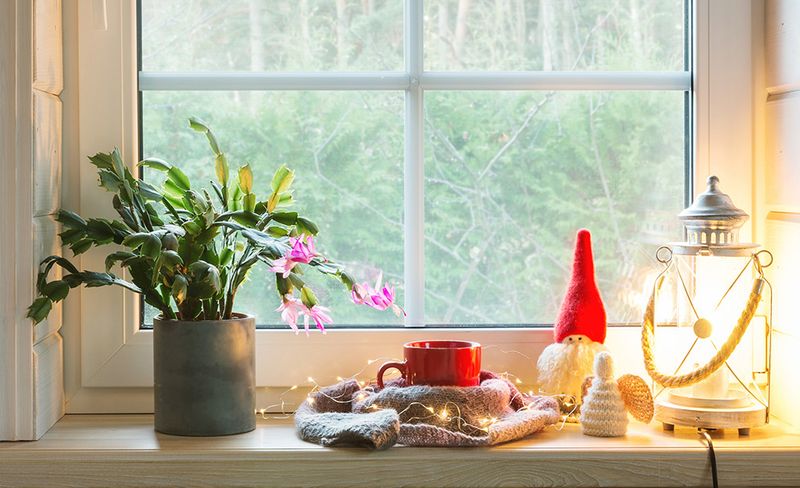
Long nights get all the attention, yet daytime light quietly fuels the whole show. Without enough energy from the sun, a cactus may set fewer buds or drop the ones it makes.
Bright, filtered light works best. An east-facing window, or a south window softened with a sheer curtain, gives the plant plenty of brightness without scorching it.
Direct afternoon sun, especially through glass in a warm Southern home, can bleach the segments to a reddish or yellow tint.
Think of it like a forest floor under tall trees. In the wild, these plants grow perched on branches with dappled sun streaming through leaves, so they never evolved to bake in open light.
If your plant lives outdoors on a porch for part of the fall, choose a spot with morning sun and afternoon shade. Covered porches in Houston, Tampa, or Austin often provide that balance naturally.
Rotate the pot a quarter turn every week or so. That simple habit can keep growth even and encourages buds to form all around the plant, not just on the side facing the window.
4. Reduced Watering in Early Fall
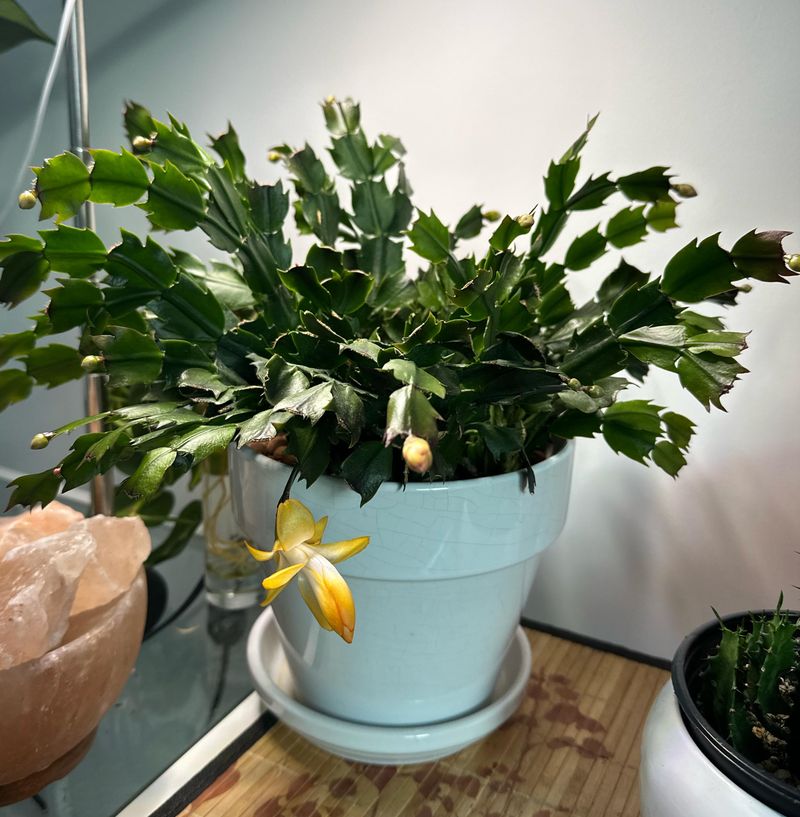
Sometimes a little neglect pays off. Pulling back on water for a few weeks in early fall can nudge a Christmas cactus toward blooming.
During spring and summer, you probably watered whenever the top inch of soil dried out. Starting now, let the top half of the soil dry before giving another drink.
The plant reads that slight dryness as a seasonal cue, similar to the drier spells in its native habitat.
Don’t go too far, though. Segments that look wrinkled or limp are asking for water, and severe drought can stress the plant enough to cause bud drop later.
A quick finger test works better than a calendar. Push a finger into the soil up to the second knuckle, and water only when it feels dry at that depth.
Once buds appear, shift back to more regular watering. Keeping the soil lightly and evenly moist from that point on may help those buds swell and open instead of falling off.
Southern humidity can slow drying, so indoor plants in air-conditioned homes may dry faster than porch plants. Adjust to what your soil tells you, not what last week looked like.
5. A Pause on Fertilizer
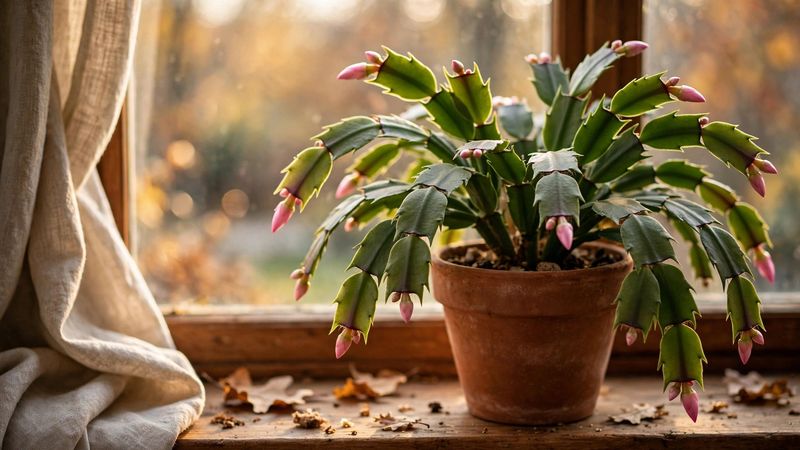
Feeding a plant more to get more flowers sounds logical. With a Christmas cactus in fall, that instinct can backfire.
Heavy fertilizing, especially with nitrogen-rich formulas, encourages fresh green segments. The plant then puts its energy into leafy growth rather than buds.
Stopping fertilizer around late September or early October often helps the plant shift gears.
Here’s a simple timeline many growers follow:
Spring through late summer, feed every two to four weeks with a balanced, diluted houseplant fertilizer. Early fall through bloom time, stop feeding entirely.
After flowering ends, rest the plant for a few weeks, then resume light feeding when new growth starts.
Some gardeners also give a light dose of Epsom salt in summer, since these plants seem to appreciate magnesium. Results vary, so treat that as an optional extra rather than a must.
If your cactus has looked pale or slow-growing all year, it might be tempting to make up for lost time now. Resist the urge.
You’ll likely see better results by improving its care next spring and letting this fall be about rest and bud formation.
6. A Steady, Draft-Free Spot
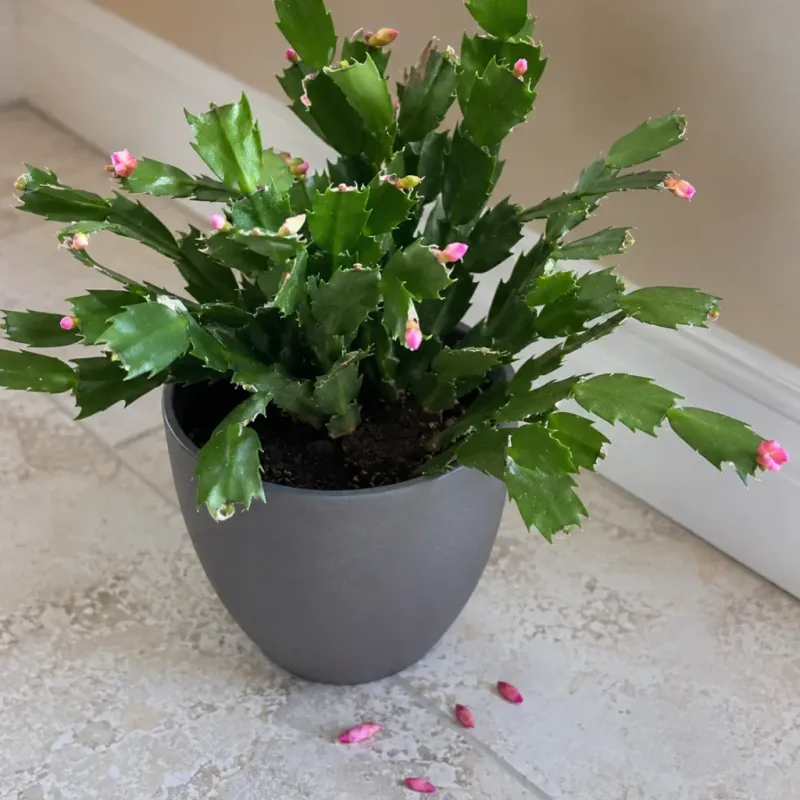
Ever wonder why buds sometimes drop overnight, right when blooms seemed close? Sudden changes are a common culprit.
Christmas cactus can be surprisingly sensitive once buds form. Blasts from heating vents, cold air from an opening front door, or a move from a cool porch into a toasty living room can all stress the plant.
Bud drop is often its way of protesting.
Choose a home for the plant before buds get big, then try to leave it there. A side table away from doors, fireplaces, and air vents usually works well.
Stable temperatures and light give buds the calm conditions they need to finish developing.
Moving a plant isn’t always avoidable. If you must relocate it, do so gradually, and keep the new spot similar in light and temperature to the old one.
Southern homes switch between AC and heat a lot in fall, which can create shifting drafts. Feel around the planned spot with your hand when the system kicks on.
If you sense a breeze, scoot the pot a few feet away.
A little planning here can protect weeks of patient effort.
7. Well-Draining Soil and a Snug Pot
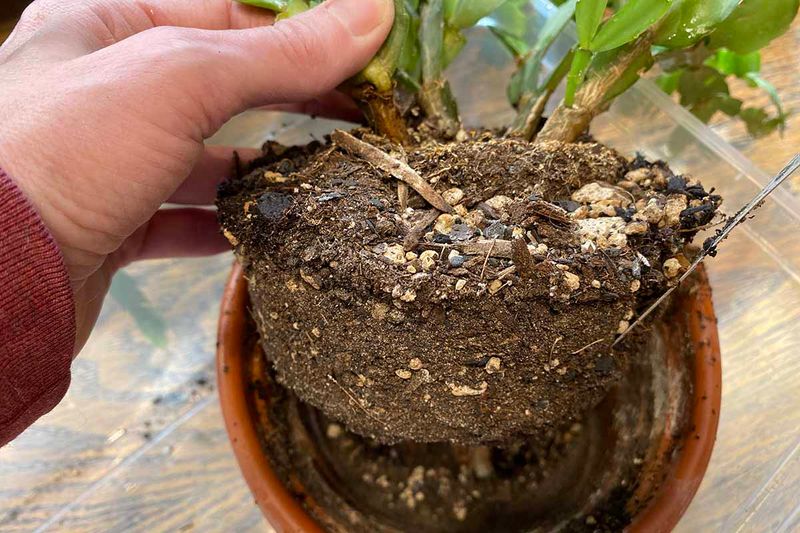
Roots rarely get credit, but they quietly decide whether a cactus thrives or sulks. Soggy roots are one of the fastest ways to lose buds or even the whole plant.
Christmas cactus grows on tree branches in the wild, so its roots expect air and quick drainage. A mix of regular potting soil with added perlite, orchid bark, or a cactus blend can mimic that loose, airy environment.
Always use a pot with a drainage hole and empty any saucer after watering.
Size matters too. These plants often bloom better when slightly root-bound, so a snug pot is usually better than a roomy one.
Repotting right before bloom season can disrupt the plant and delay flowers.
If your cactus needs a bigger home, wait until late winter or spring after blooming ends. Move up just one pot size at a time.
In humid Gulf Coast areas, terracotta pots can be helpful since they breathe and dry faster than plastic. That extra airflow may lower the chance of root rot during muggy fall weeks.
Healthy roots support healthy buds, and that foundation shows up in every flower.
8. Gentle Humidity Around the Plant
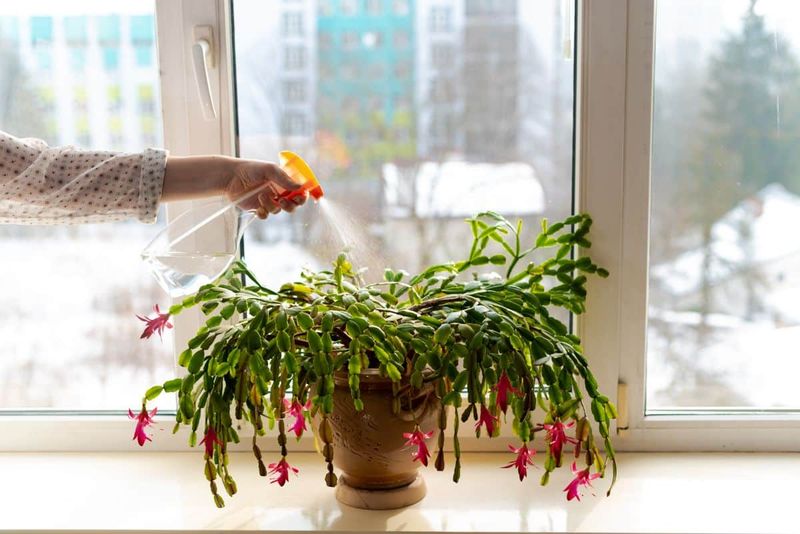
Rainforest roots run deep in this plant’s family tree. Even though it’s called a cactus, it prefers more moisture in the air than its desert cousins.
Moderate humidity, roughly 50 percent or so, can help buds stay plump and open fully. Outdoor air in Florida and coastal Texas often handles this easily.
Inside, though, air conditioning and heaters can dry the room enough to cause shriveled buds or brown edges.
A pebble tray is an easy fix. Fill a shallow tray with pebbles, add water just below the tops of the stones, and set the pot on top.
Evaporation adds moisture right where the plant needs it, without soaking the roots.
Grouping houseplants together can raise humidity a bit too. A small room humidifier works well for larger collections.
Skip heavy misting, since water sitting on segments for long periods may invite fungal problems in humid homes.
Here’s a fun detail: many plants sold as Christmas cactus are actually Thanksgiving cactus, with pointed segment edges. Both respond to the same care, so either way, these conditions can lead to a colorful holiday display right on cue.