
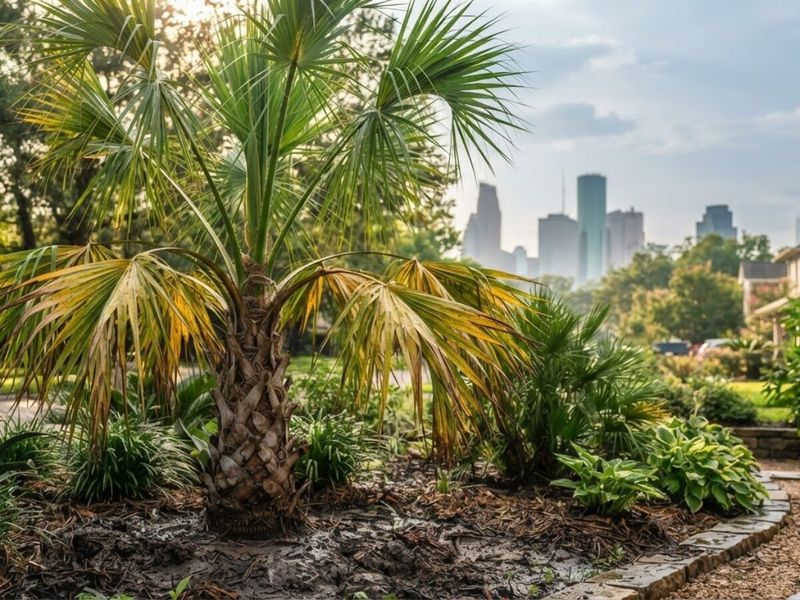
Orange spots and frizzled tips on your palm’s oldest fronds often point to a nutrient problem, not a need for more trimming. Potassium and magnesium shortages are common in Florida palms, and they can look a lot like cold damage.
Cutting off those fronds can make things worse, so a little detective work comes first. Here is how to read the clues and what to do next.
The oldest fronds offer the first clue
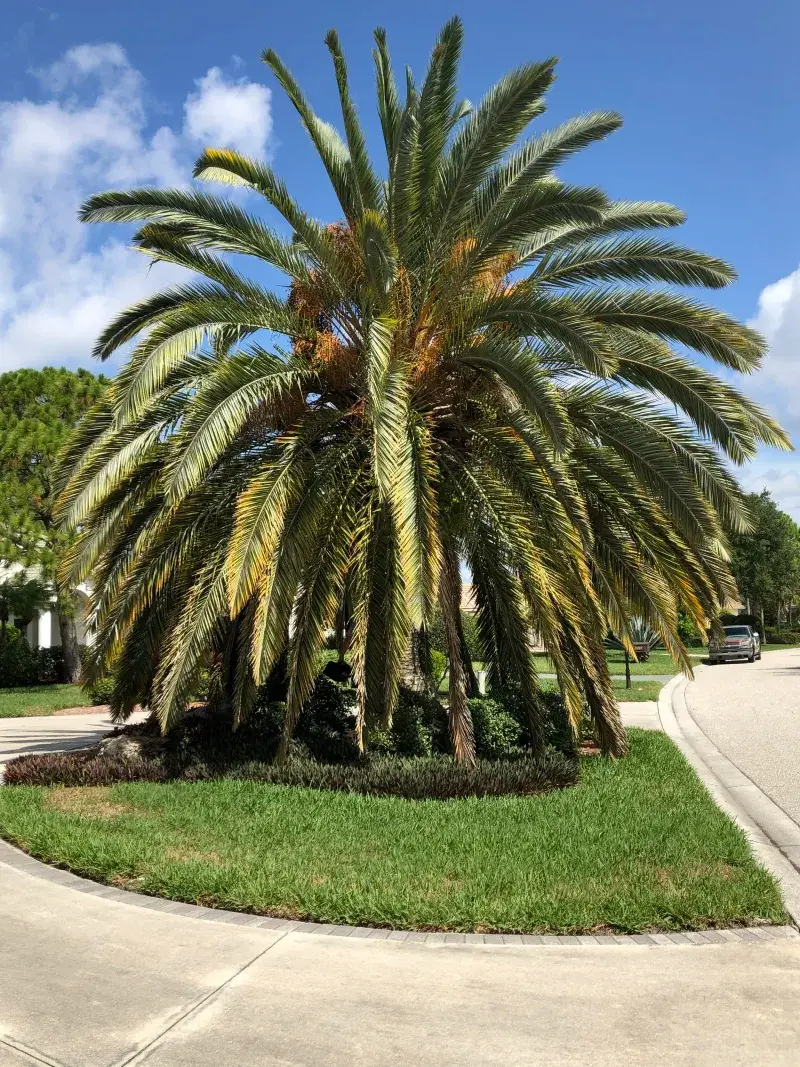
Start at the bottom of the crown. When orange spotting and frizzling show up on the oldest fronds first, potassium deficiency is a real possibility.
UF/IFAS palm nutrient guidance describes potassium symptoms that can include translucent yellow-orange spotting, dead tips or edges, and leaflets that look frizzled or burned.
Not every palm looks the same. Symptoms vary by species, so one palm may show heavy spotting while another shows almost none and mostly develops dead tips.
Because of that, an orange frond alone is not proof of anything.
Walk around the palm and compare leaves from top to bottom. Ask which fronds are affected, whether the youngest leaves still look healthy, and whether the damage is worst near the tips.
Older fronds that decline first, while newer ones stay fairly normal, fit the potassium pattern.
Take a few photos so you can track changes over the coming months. Resist the urge to grab pruners or a fertilizer bag just yet.
The next sections help you sort out cold injury, magnesium trouble, and combinations of the three.
Could a recent cold snap explain the damage?

Think back over the last few weeks. Cold injury can show up within days of chilling or freezing weather, and after a hard freeze it may be widespread.
Frost damage can be patchy, hitting some palms, or some parts of one crown, more than others, according to UF/IFAS cold damage guidance.
Location of the damage is a useful clue. Sudden browning across the middle and lower canopy after a cold night suggests cold.
Potassium deficiency, by contrast, concentrates on the oldest leaves and often starts toward their tips, as described in UF/IFAS nutrient deficiency information.
Timing alone will not settle it. A palm that was already short on potassium can also be hit by cold, and the two problems can overlap on the same tree.
A spotted frond in January may have been developing that way since last summer.
Check your local weather records for lows near you, since North Florida and South Florida see very different winters. Then compare that history with which leaves are damaged and how.
If the pattern looks mixed, treat it as mixed and keep gathering clues.
Magnesium deficiency has a different color pattern
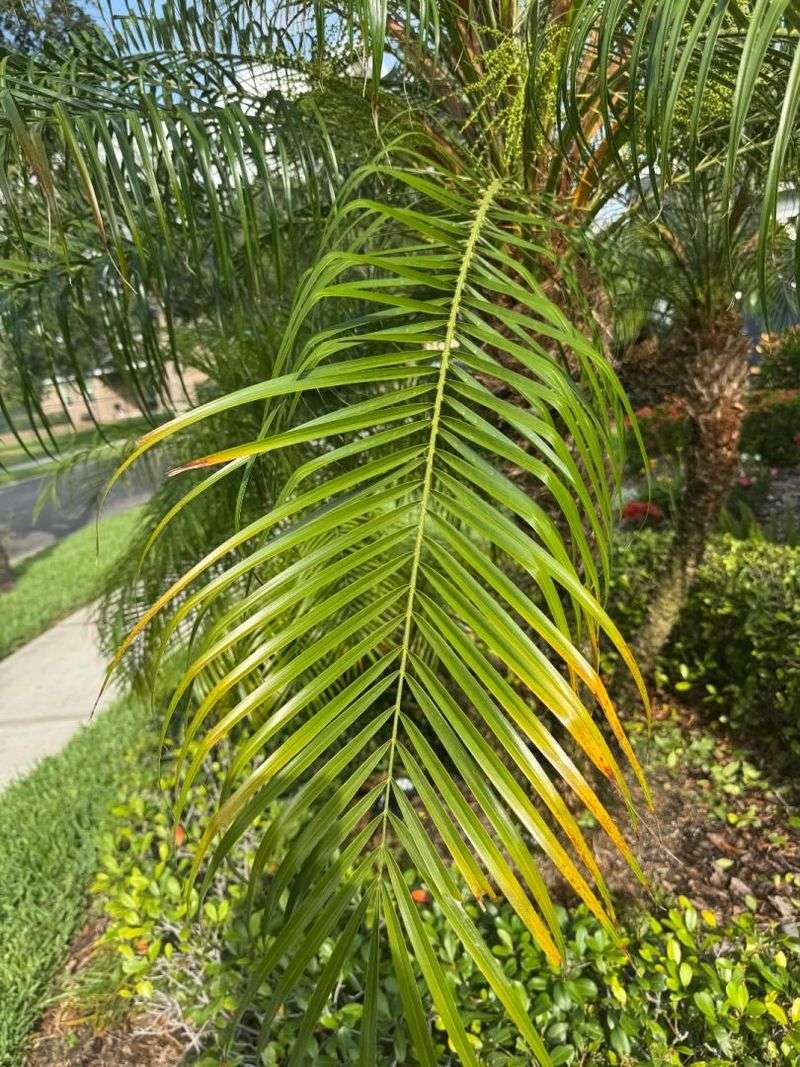
Magnesium trouble paints a different picture. On older leaves, it more often shows up as broad yellow-to-orange bands along the edges while the center of the frond stays greener.
UF/IFAS magnesium deficiency information describes this banded look as the usual sign.
Compare that with potassium trouble, which tends toward spots, dead tips, and frizzled leaflets. Picture a green stripe down the middle with golden shoulders for magnesium, and a speckled, scorched look for potassium.
The two can occur together. A single palm, and even a single leaf, can show both patterns, which is noted in the UF/IFAS palm nutrient guide.
That makes a confident call from the driveway tricky.
For now, treat this as a visual sorting step only. Note which pattern you see and on which leaves, but hold off on adding extra magnesium products.
Guessing at a single nutrient can create new imbalances.
Keep living fronds while you diagnose
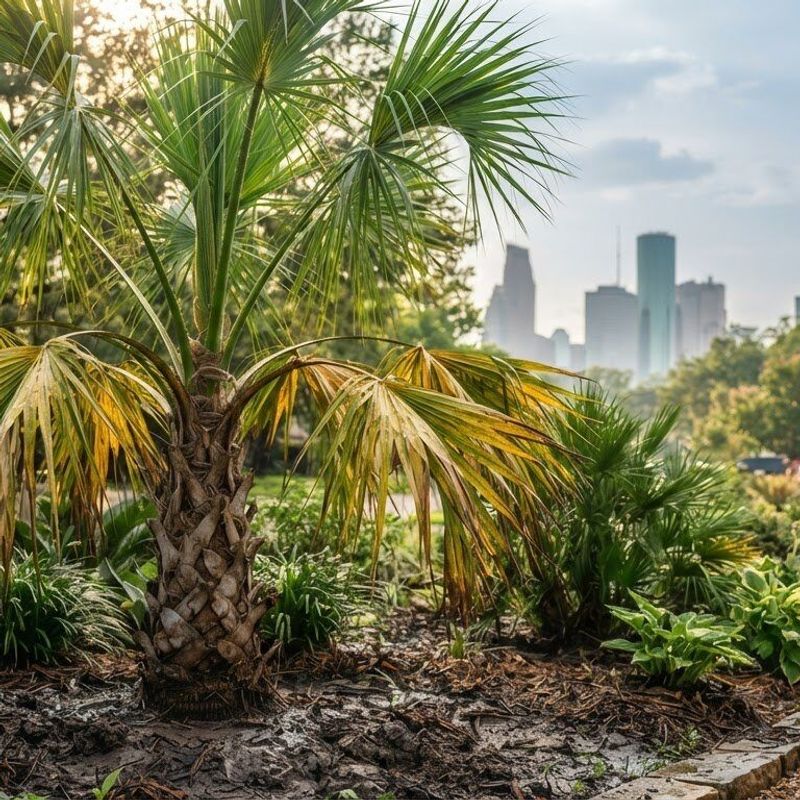
A droopy, spotted frond looks untidy, but it is still working for the palm. UF/IFAS palm pruning guidance explains that in a potassium-deficient palm, cutting off symptomatic older leaves can make the palm pull potassium from the next leaves up.
The result can be symptoms moving higher in the crown.
So yellowed or partly green fronds should stay while you figure out the cause. Trimming them for looks will not fix the discoloration, and it can speed the problem along.
Fully dead fronds are a separate case. Once a leaf is completely brown and has nothing left to give, it can be removed when appropriate.
The UF/IFAS palm nutrition page also supports leaving living tissue in place.
If neighbors or an HOA nudge you to tidy up, a quick explanation helps. Waiting until the cause is clear protects the palm, and a few weeks of imperfect looks cost very little.
A balanced palm fertilizer matters more than extra nutrients
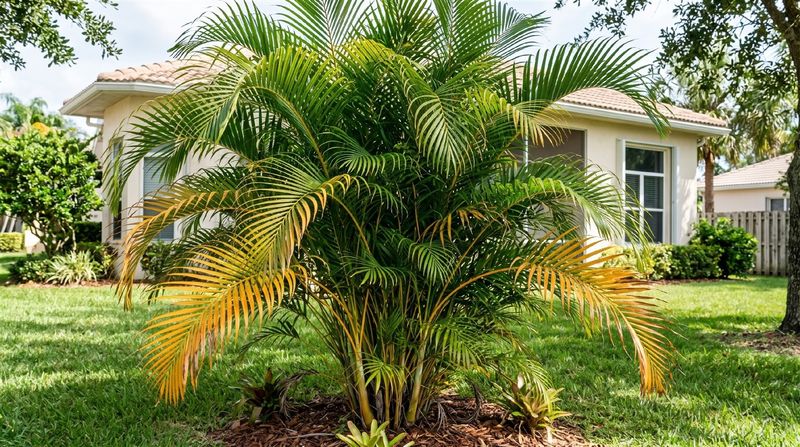
When a palm does need routine supplemental feeding, choose a product made for palms. UF/IFAS recommends a formula such as 8-2-12+4Mg or 8-0-12+4Mg that also includes appropriate micronutrients, as described on the UF/IFAS palm nutrition page.
Slow-release matters. Look for a label showing that the nitrogen, potassium, and magnesium are slow-release forms, since fast-release nutrients can wash past roots or cause imbalances.
Spread the granules evenly under the canopy and follow the label directions. UF/IFAS fertilization guidance does not call for spikes, drilled holes, or concentrated bands.
Skip the urge to add extra potassium or magnesium on a hunch. Without knowing the cause, extra amounts of one nutrient can trigger shortages of another.
A mixed problem is common, and a balanced product is built for that.
Also watch the lawn fertilizer. High-nitrogen turf products can worsen or trigger potassium problems in palms, even when spread some distance from the trunk.
When should Florida homeowners feed?
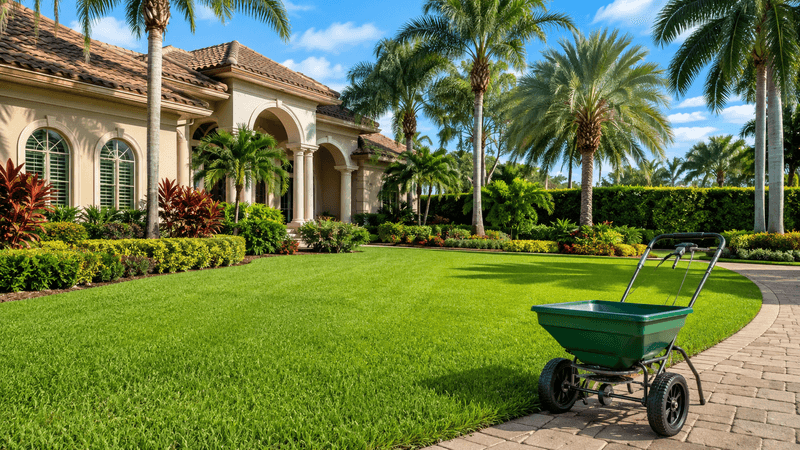
Think of palm feeding as seasonal upkeep, not a winter rescue. UF/IFAS homeowner guidance recommends applications from spring through fall and says winter applications are unnecessary, because growth slows in the cool months.
Fertilizer will not reverse cold injury either.
Rates and schedules are not the same everywhere. The UF/IFAS palm fertilization publication gives rates for a South Florida landscape setting, while Central and North Florida landscapes may use lower rates and skip winter applications.
Always read your product label.
Not every palm needs a feeding plan. Florida native palms usually do not need supplemental fertilizer, so a healthy cabbage palm or saw palmetto in the yard can be left alone.
Local rules also vary. Many counties and cities have their own fertilizer ordinances, and there is no single statewide blackout date for every homeowner.
The Southwest Florida Water Management District county list shows how restrictions differ by place.
Check your county or city rules first, then match your schedule to the label and the season.
New growth—not old spots—shows recovery
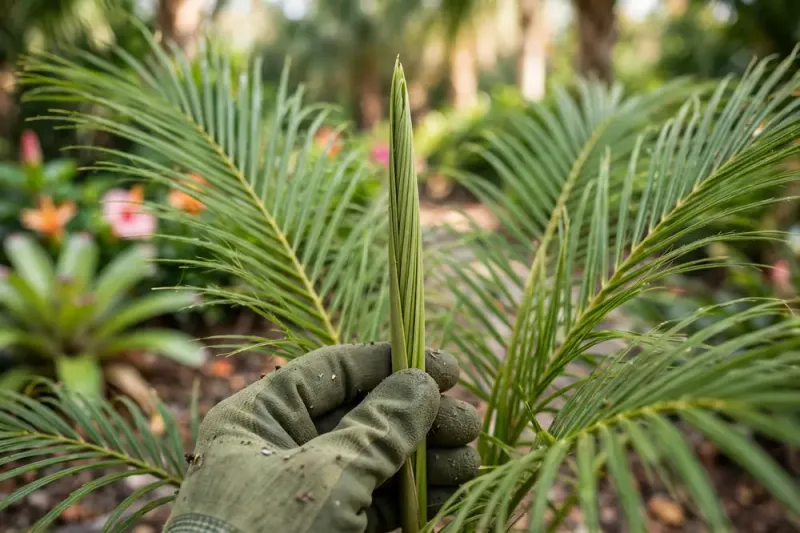
Here is the honest measure of success: the old spots will not turn green. UF/IFAS magnesium information explains that symptomatic leaves with potassium or magnesium deficiency do not recover and must be replaced by healthy new leaves.
Correction can take many months or years, as the UF/IFAS palm nutrition page notes.
So watch the center of the crown. Fresh fronds that open cleaner than the ones before them are the sign that things are heading the right way.
If the cause stays unclear, or the symptoms keep returning, contact your local Extension office. Leaf analysis can help in some cases, according to UF/IFAS nutrient deficiency guidance, though it is not needed every time.
Palms keep their own slow calendar, and the best reward is a clean new frond.