
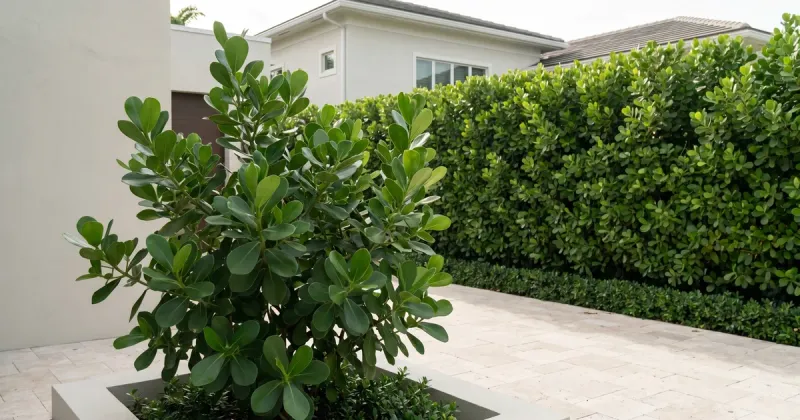
A bare fence feels a lot less private when the neighbors can see straight into your patio. Fall gives many Florida gardeners a chance to plant fast-growing hedges while cooler weather eases stress on new roots.
These seven shrubs are strong choices for building a leafy screen, but the best pick depends on your winter temperatures, soil, and available space. Plant before the ground turns cold in North Florida, and remember that even speedy shrubs need steady water while they settle in.
1. Sweet Viburnum
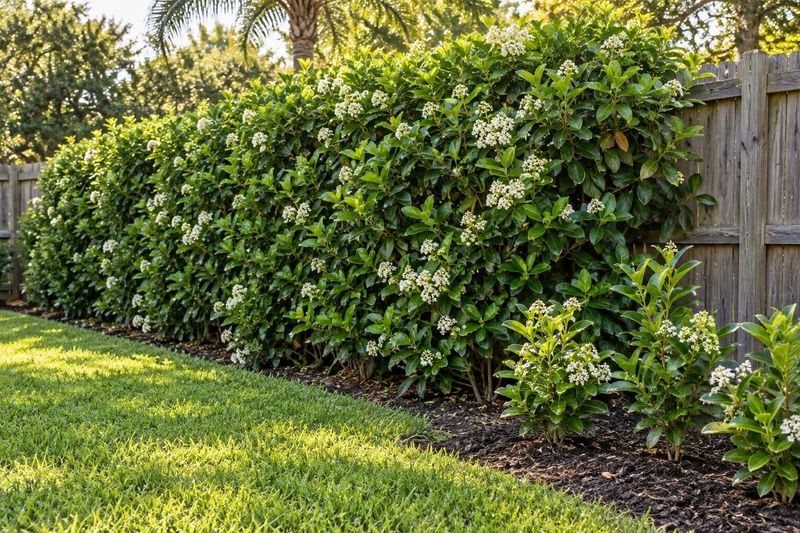
For a backyard that feels exposed from every angle, a wall of glossy green leaves can make a dramatic difference. Sweet viburnum, Viburnum odoratissimum, earns its place here because it combines vigorous growth with large leaves that block views well once branches overlap.
It works best in Central and South Florida, plus suitable warmer North Florida locations. Give it sun to partial shade and well-drained soil, and expect a large shrub that can exceed 15 feet if left untrimmed.
For a substantial screen, spacing around 5 feet apart is a common starting point, adjusted for the cultivar and intended width. Resist squeezing plants together for instant coverage, since crowded roots and shaded lower branches can create trouble later.
Water the root balls regularly during establishment, checking the soil rather than trusting a fixed calendar. Keep mulch off the stems and avoid planting in soggy ground, where root problems can undo that fast growth.
Light shaping encourages branching, but keep the bottom wider than the top so sunlight reaches the lower leaves. Choose this shrub for roomy yards, not a narrow strip that will demand constant cutting.
2. Wax Myrtle
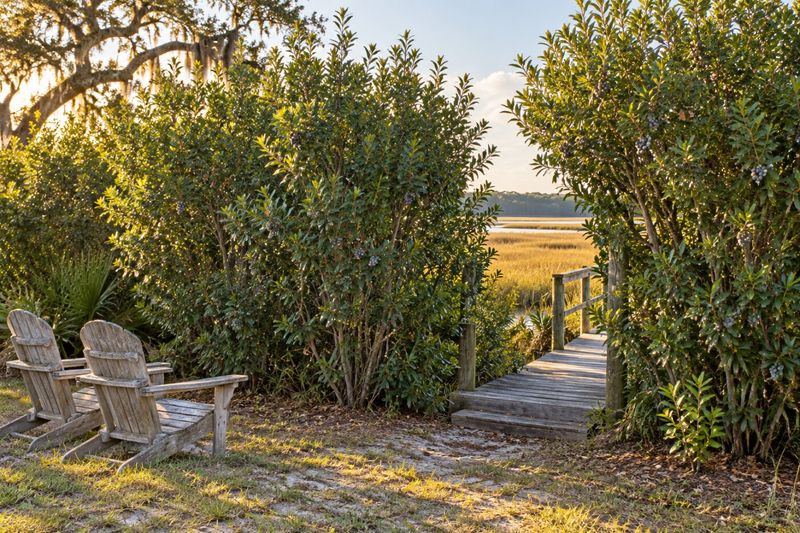
Not every privacy screen needs to look like a neatly clipped green box. Wax myrtle brings a softer, breezier look, with narrow leaves and branching growth that suits a relaxed Florida yard.
This Florida native, Morella cerifera, grows quickly in favorable conditions and works across much of the state. Its tolerance of varied soils and occasional wet conditions makes it useful where fussier hedge plants struggle, though new plants still need watering.
Allow plenty of elbow room because mature plants commonly reach 10 to 20 feet tall and can spread broadly. Spacing about 5 to 8 feet apart can suit an informal screen, depending on the plants and how much width you can spare.
Full sun usually produces the fullest growth, while shade can leave the screen more open. Begin light tip pruning while plants are young if you want branches near the ground rather than a row of small trees.
Female plants can produce waxy berries when a male plant is nearby, adding food for birds. Pick wax myrtle when you want quick coverage with a natural character, not a perfectly flat hedge that needs frequent shearing.
3. Small-Leaf Clusia
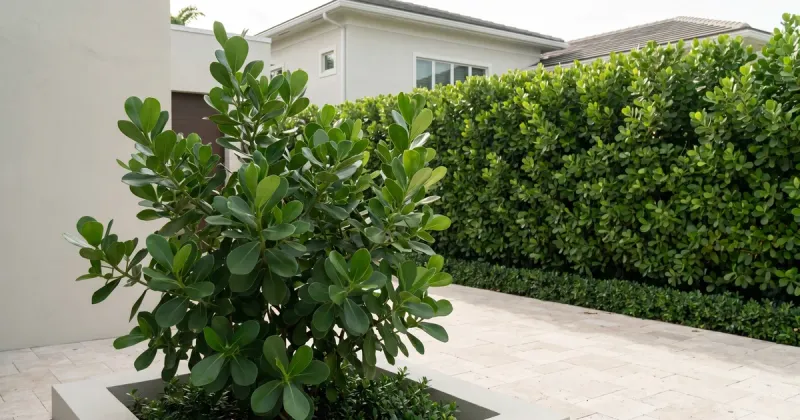
Thick, leathery leaves give a poolside screen a polished look even without flowers. Small-leaf clusia, commonly sold as Clusia guttifera, is a popular choice for warm South Florida yards where a broad evergreen barrier fits the space.
Its main advantage is dense foliage with a bold tropical texture. Growth can be fairly quick with warmth, water, and suitable soil, but cooler fall and winter weather may slow it noticeably.
Cold is the deciding factor with this shrub, so it is not a reliable statewide recommendation. Use it in frost-free or nearly frost-free settings, and check local guidance before planting in marginal parts of Central Florida.
Plan for a hedge that can become well over 10 feet tall and several feet wide. Around 4 to 5 feet between plants may suit a large screen, but the nursery’s cultivar information and your intended hedge size should guide the final layout.
Provide good drainage and water carefully through establishment rather than keeping the soil constantly saturated. Hand pruning gives cleaner results than repeatedly slicing through those thick leaves, and early branching matters more than chasing height alone.
4. Florida Privet

A native hedge can be tidy without looking stiff or formal. Florida privet, Forestiera segregata, offers small leaves, twiggy branching, and a useful ability to fill out with regular light pruning.
Despite its common name, it is not one of the invasive Ligustrum privets that gardeners are often warned about. Ask for the botanical name at the nursery so you bring home the right plant.
It is especially useful in Central and South Florida, including many coastal settings with sandy or alkaline soil. Give it sun for the fullest screen, although it can handle some shade.
Mature size varies with conditions, but plants can reach roughly 10 to 15 feet and sometimes more. For a medium-to-large hedge, spacing around 3 to 5 feet apart may work, with wider spacing where you want a looser shape.
Once established, Florida privet handles dry periods well, but withholding water from a new planting will not speed up coverage. Trim lightly to build lower branches, and leave some growth uncut if you want flowers and the small fruits that attract birds.
Choose it for a finer-textured native screen that responds well to shaping.
5. Cherry Laurel
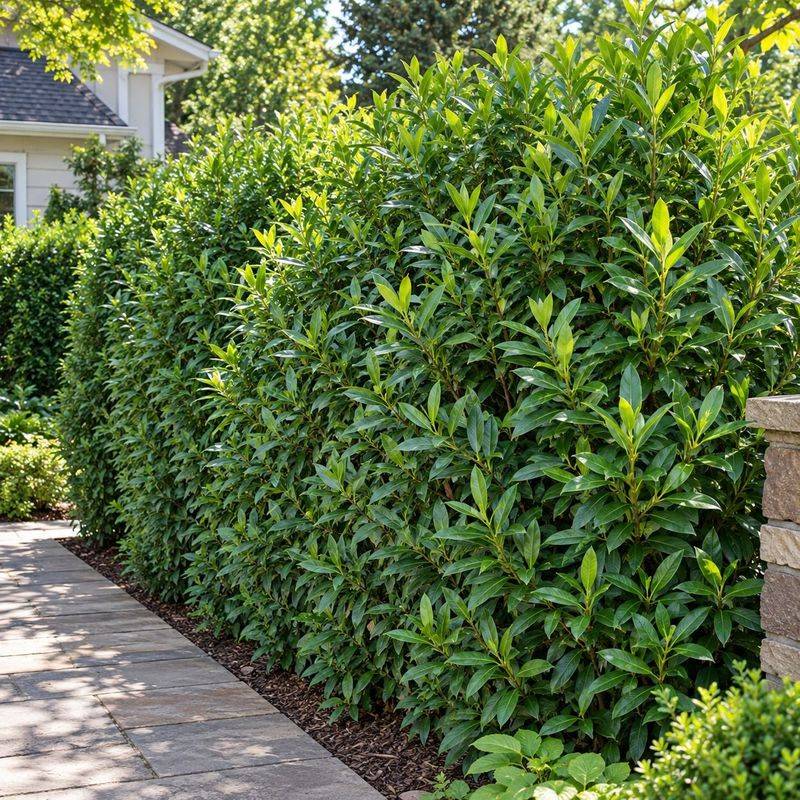
Cold snaps narrow the hedge choices in North Florida, but they do not rule out a fast evergreen screen. Cherry laurel, Prunus caroliniana, brings the size and vigor needed to screen a neighboring window or a busy road.
This native evergreen is best suited to North and Central Florida rather than the tropical southern tip. It naturally becomes a small tree, so think of it as a tall screening plant that can be managed as a large shrub.
Choose a sunny to partly shaded site with good drainage. Avoid low, soggy beds, and allow several feet of width instead of trying to squeeze it between a driveway and a fence.
Spacing around 5 to 8 feet apart can suit a tall screen, depending on the cultivar and desired form. Start pruning while plants are young to encourage lower growth, because removing low branches later creates permanent gaps at eye level.
There is one major household caution: leaves, stems, and seeds contain toxic compounds if chewed or eaten. Keep it away from livestock areas and choose another shrub where children or pets are likely to sample plants.
For a spacious inland yard, its cold tolerance sets it apart.
6. Silver Buttonwood
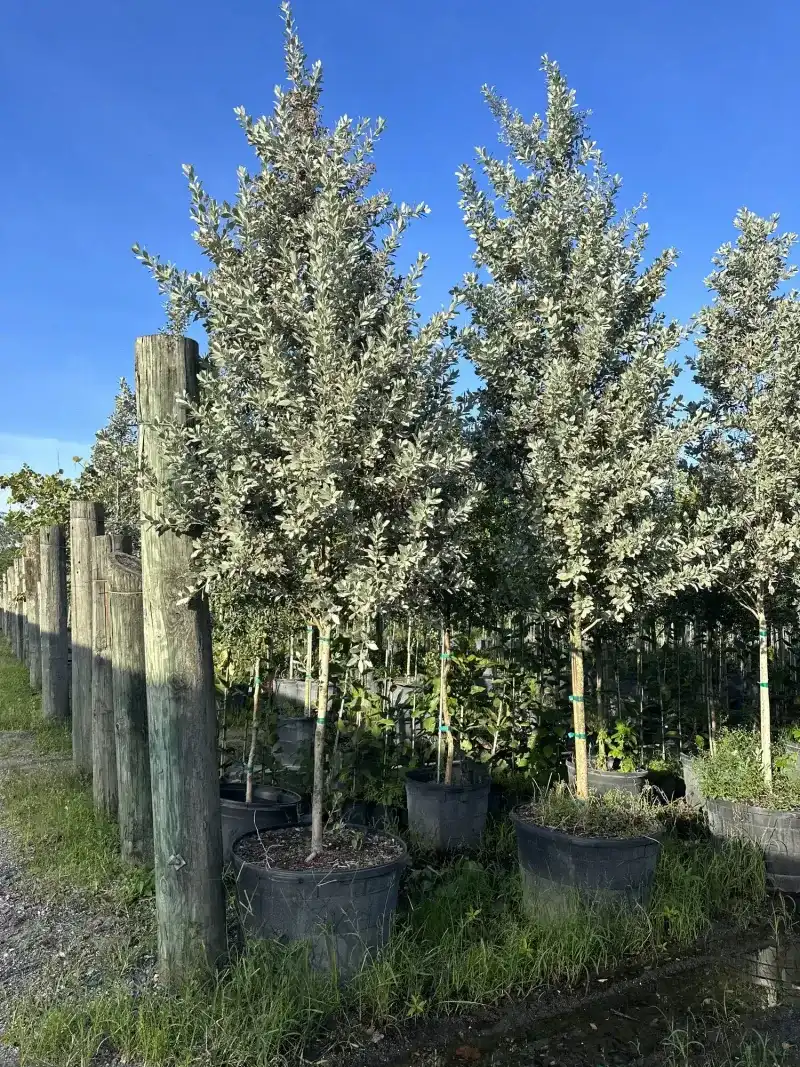
Silver foliage can make a privacy hedge feel like part of the landscape design rather than just a barrier. Silver buttonwood delivers that contrast, especially beside green lawns, pale walls, and colorful tropical plants.
The silver form of Conocarpus erectus grows vigorously in warm, sunny locations. It is a strong candidate for coastal South Florida because established plants tolerate salt exposure, wind, and dry conditions better than many common screening shrubs.
Warmth and drainage are essential, so skip it in cold inland locations or beds that stay wet. Fall planting works best while the soil is still warm enough for roots to grow before cooler weather arrives.
Give each plant room to develop a broad canopy, often spacing a large hedge about 5 to 8 feet apart. Without pruning, buttonwood can become a sizable tree, so this is not a low-maintenance choice for a tiny foundation bed.
Water new plants consistently, then reduce watering as roots spread and conditions allow. Selective pruning helps preserve the attractive foliage and branching, while repeated hard shearing can leave a coarse-looking surface.
Its standout role is a bright, salt-tolerant screen for warm coastal yards.
7. Cocoplum
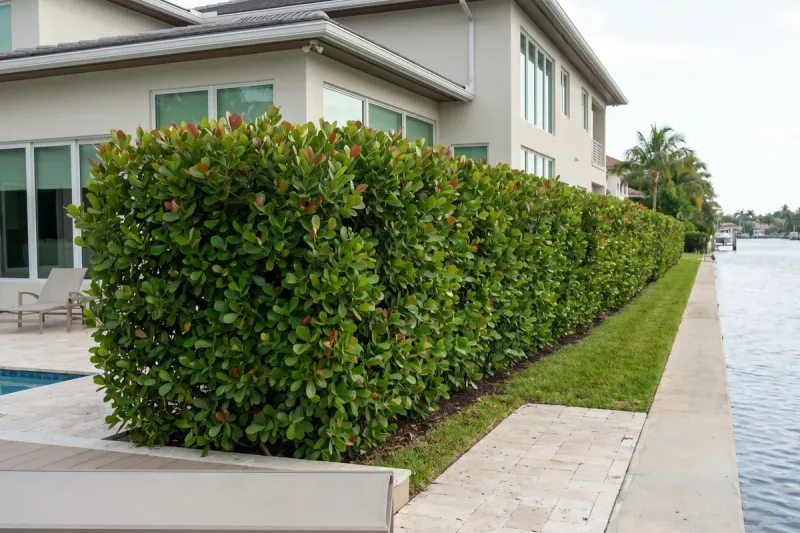
Coppery new leaves can turn an ordinary property line into an attractive garden feature. Cocoplum, Chrysobalanus icaco, adds that extra interest, especially when you choose an upright selection such as Red Tip for screening.
This Florida native is best suited to South Florida and warm parts of Central Florida. It fills in well under favorable conditions, though cool weather, drought, or deep shade can slow the process.
Check the plant label carefully because not every cocoplum has the same shape. Low-growing coastal forms make useful ground covers, but they will not deliver the tall privacy wall most homeowners have in mind.
For an upright hedge, allow room for plants that can reach 10 feet or more unless maintained lower. Spacing around 3 to 5 feet apart is a useful starting range, adjusted to the selection and desired width.
Plant in sun to partial shade and keep the root balls moist, not waterlogged, while they establish. Light pruning encourages a thicker screen, but constant shearing removes flowers and fruit along with the fresh growth.
Before digging, confirm property boundaries, utility locations, and local hedge-height rules. A well-placed cocoplum hedge should provide privacy without spilling across a sidewalk or a neighbor’s fence.