
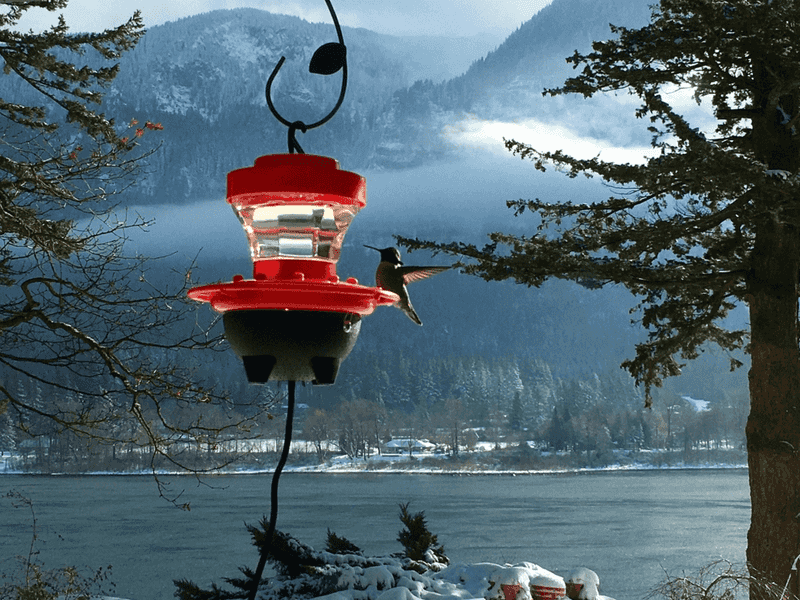
A clean feeder left up into December can give a late or unusual hummingbird a source of sugar water when flowers are gone. It will not hold back the hummingbirds that are supposed to leave, and it is not a promise that any bird will make it through winter.
Cold mornings bring one big problem, which is nectar turning to ice. Here is how to keep a feeder usable and safe when the temperature drops.
A feeder does not stop regular migration
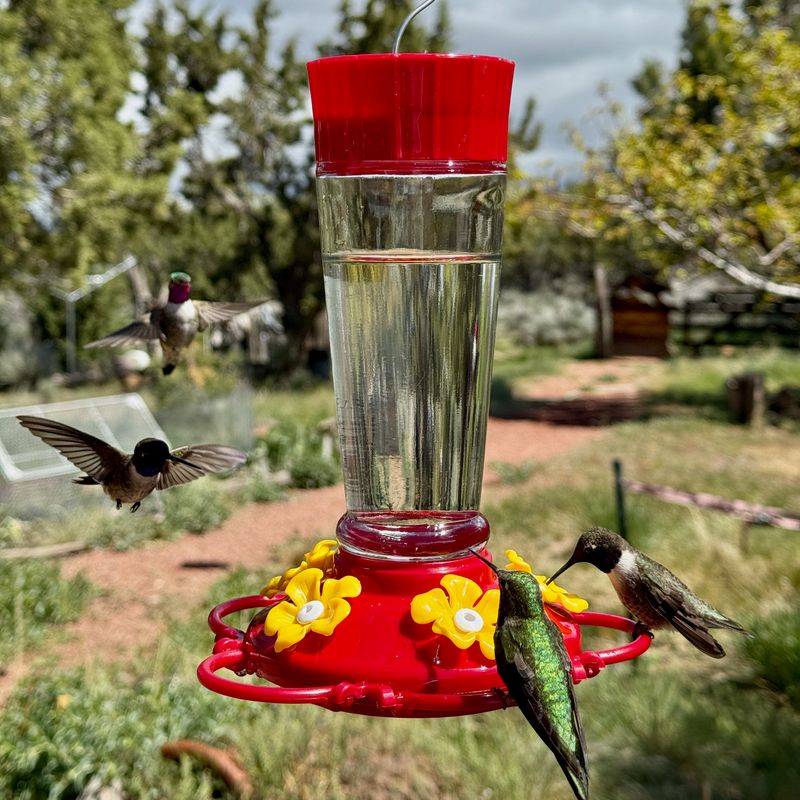
Many people worry that a feeder in late fall will trick hummingbirds into staying too long. In practice, regular migrants leave on their own schedule whether or not food is available, as Audubon’s bird FAQ explains.
Shorter days and an internal clock tell them when it is time to go.
So the old advice to take feeders down by a certain date is a myth for typical travelers. Your feeder is not holding the usual crowd back, and the birds that pass through will keep moving south.
There is one small exception. Kenn Kaufman’s column for Audubon notes that an unusual or out-of-range bird may settle near a feeder instead of moving on.
That is not the normal pattern, but it is a good reason to keep a clean feeder available if a straggler shows up.
Winter sightings depend on where you live
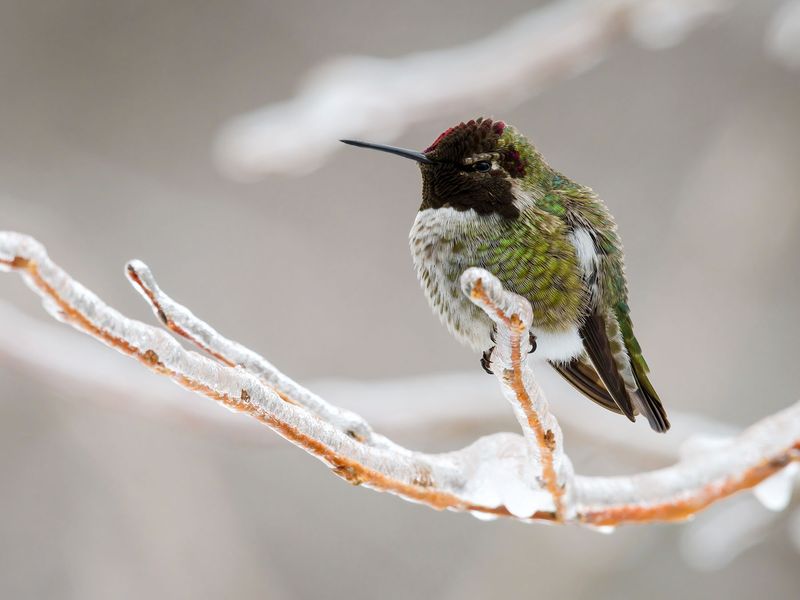
Seeing a hummingbird in December means different things in different places. Anna’s Hummingbirds live year-round in parts of the West, so a winter visitor there is simply a neighbor.
The U.S. Fish and Wildlife Service describes how species vary across North America.
Winter sightings also happen in the Southwest and along the Gulf states. Project FeederWatch tracks these winter birds, and it also shows that a December hummingbird is unexpected across much of the country.
In many other areas, a December bird is an uncommon lingerer or an out-of-range visitor. A sighting alone cannot tell you whether the bird is a late migrant, a resident, or something unusual.
Species, location, and the weather where you live all matter, so avoid guessing from one glimpse.
A feeder offers supplemental food, not a survival guarantee
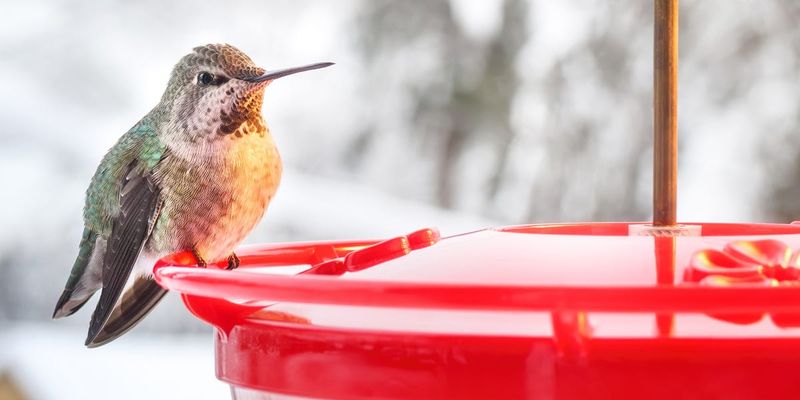
For a lingering or unexpected winter hummingbird, a feeder can supply sugar water when flowers are scarce. That is a helpful extra, but nobody can say it saves late birds as a group.
Temperature, species, natural food, and upkeep all change the outcome.
Nectar is also only part of the menu. Hummingbirds eat insects and spiders too, as the U.S.
Fish and Wildlife Service notes for Anna’s Hummingbird. Sugar water alone does not carry a bird through winter.
Winter feeding is also a commitment. The BC SPCA cautions that birds may come to rely on a feeder, and a frozen or empty one can cause problems for them.
Not every household needs to feed through winter. If you start, plan to keep the nectar fresh and thawed for as long as a bird visits.
Bring feeders indoors overnight and return them at dawn
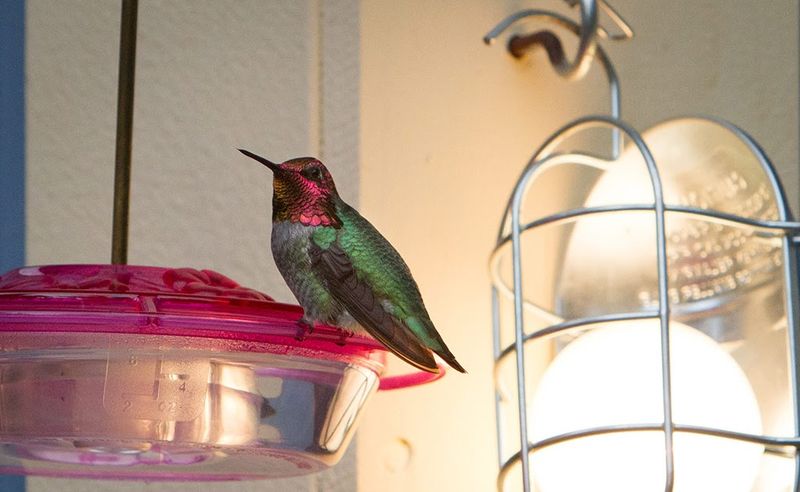
The simplest way to stop freezing is to carry the feeder inside at night. Put it back out at first light, because hummingbirds may need to feed early after a cold night.
Audubon points to this kind of routine for cold snaps.
Having two feeders makes it easier. While one hangs outside, the other waits indoors at room temperature.
In the morning, swap them so the feeder going out is never frozen.
Check ports for ice before you hang it. The BC SPCA also recommends keeping nectar from freezing.
Treat this as a guide, not a rule. Your weather, your schedule, and the bird’s habits may call for small changes.
Choose safe ways to keep an outdoor feeder thawed
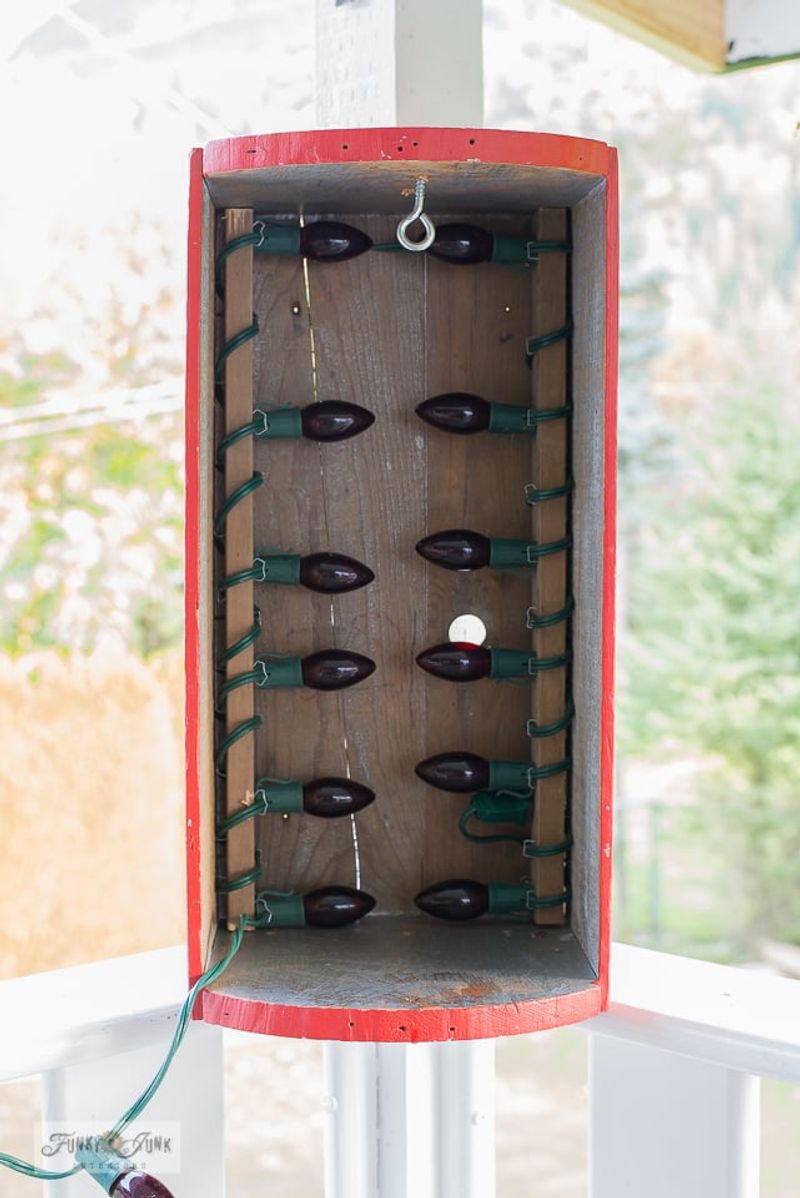
If you cannot bring a feeder inside each night, a purpose-made feeder heater is one option. These devices are built for outdoor use and for this job.
Bringing the feeder indoors is still the first choice.
The BC SPCA lists specialty heaters as an option and cautions that any warming solution must be safe. That means weather-safe for rain, snow, and wind, and safe for birds that might touch it.
Some sources mention putting an incandescent bulb near a feeder. That is not a safe plan for every yard, and Audubon’s guidance should be read with that in mind.
Skip improvised wiring, hot objects, and anything that could short out in wet weather. If you are unsure, go back to the indoor routine.
Use the standard nectar recipe and keep it fresh
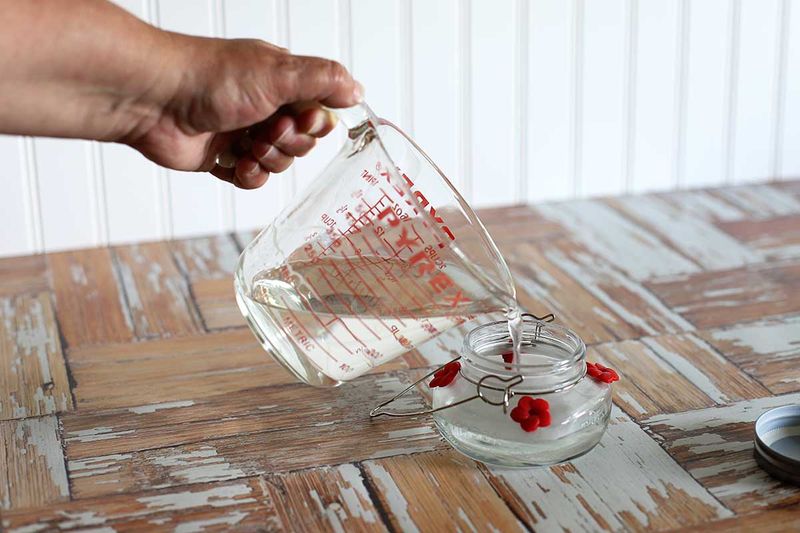
Mix one part plain refined white sugar with four parts water, even in winter. The Smithsonian’s National Zoo gives this recipe.
Extra sugar to slow freezing is not safe, and the BC SPCA warns against changing the ratio in cold weather.
Leave out honey, raw or brown sugar, artificial sweeteners, and red dye. Plain sugar and water is all a feeder needs.
Freshness matters just as much. The Smithsonian suggests weekly cleaning and refilling in cooler weather, and its general directions say to change feeders every other day.
Look for cloudiness, floating specks, or mold. If you see any, or if the feeder is busy or the weather is mild, follow the more frequent schedule.
A feeder that is clean and unfrozen is the whole goal. Everything else is detail.