
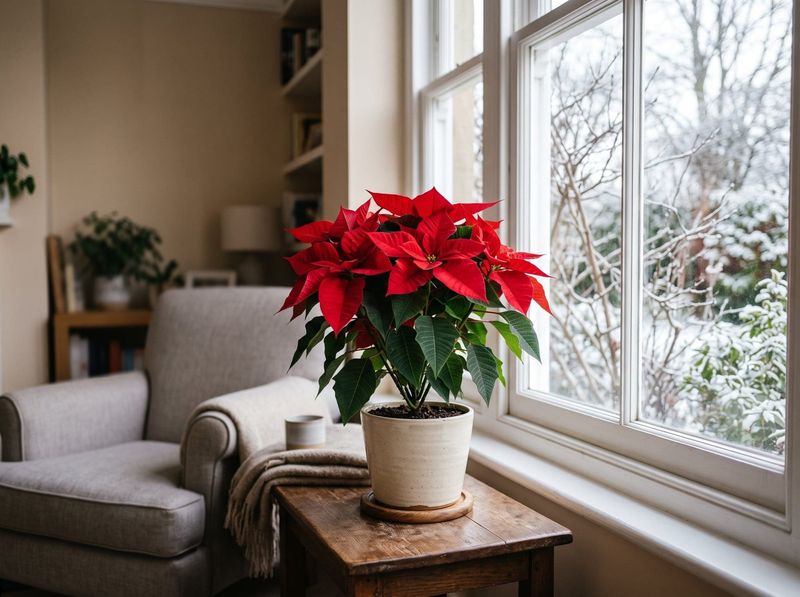
Wrap it, warm it, and get it home fast. That is the trip-home routine that protects a holiday poinsettia from cold damage, which can lead to dropped leaves and faded color.
Cold is only one of several things that can stress these plants, but it is one you can control. A few simple habits can help your plant stay full and colorful well into the season.
Start with a healthy plant
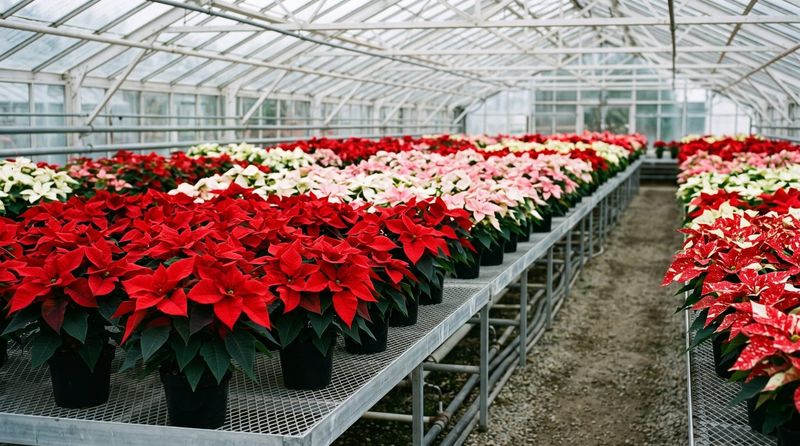
Shopping carefully is the first step, because no amount of gentle handling can undo damage that was already there at the store. Look for dark-green foliage and brightly colored bracts.
Skip any plant that looks wilted, has missing lower leaves, or shows obvious damage.
Give the plant a quick once-over before it goes in your cart. Iowa State Extension guidance also suggests checking for insects and broken stems.
Peek under the leaves and along the stems, since small problems are easier to spot in the store than at home.
A plant stacked tightly in a crowded aisle or parked near a chilly entrance may have already had a rough week. If it looks tired, leave it behind and pick another one.
Starting with a sturdy plant gives every later step a better chance of paying off.
Protect the plant on the ride home
Poinsettias come from warm climates, so cold air and sudden temperature swings can injure them. NC State Extension reports that temperatures below 50°F can cause chilling injury.
Treat that number as a warning line, not a comfortable target. A short walk through cool air is not automatically harmful, but there is no reason to test your luck.
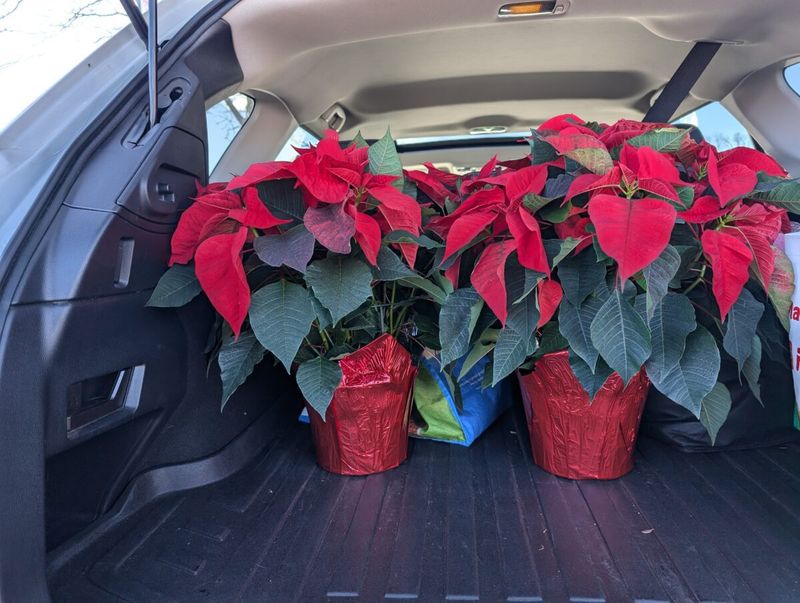
Make the poinsettia your last stop so it spends less time waiting in the cold. Ask for a paper or plastic sleeve, or wrap it yourself, before you step outside.
Once you are out the door, Iowa State advises moving it promptly to a heated vehicle. Keep it in the passenger area rather than the trunk, and do not leave it in the parked car while you run other errands.
Unwrap it once you are home.
Give it bright light and steady warmth
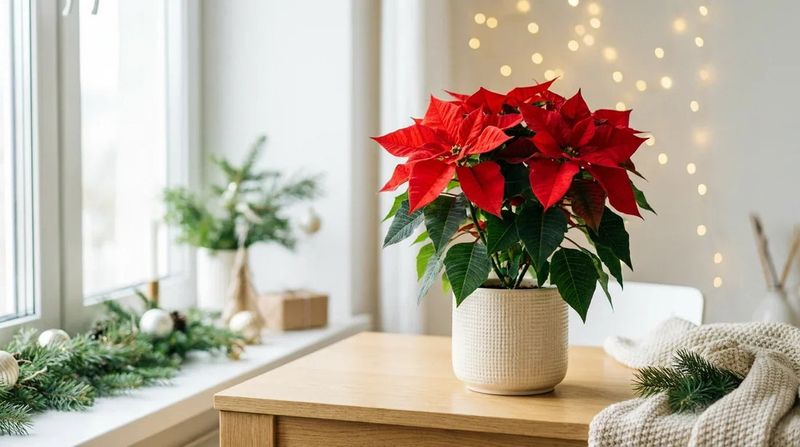
Where the plant lives matters as much as how it got there. Bright light keeps the foliage healthy, so pick a sunny spot, but keep the leaves from touching a cold windowpane.
Stay clear of exterior doors, drafts, heating vents, and fireplaces, which cause temperature swings or dry out the air around the plant.
Advice on the best indoor temperature varies a bit. Iowa State suggests 60 to 70°F, while University of Minnesota Extension lists 65 to 70°F as ideal.
Illinois Extension recommends keeping it at or above 55°F. No single number guarantees success, so aim for a steady, comfortable room and avoid abrupt changes.
Water when the soil surface feels dry
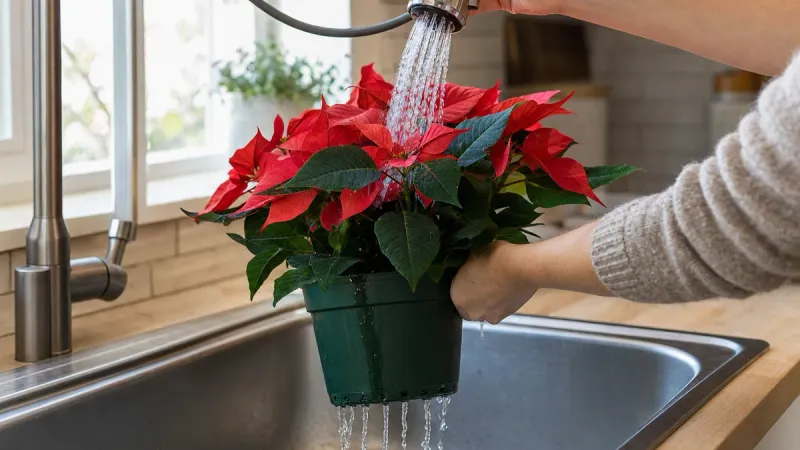
Forget the calendar and let the soil tell you. Press a finger into the surface, and water only when it feels dry.
Then let the extra water drain away completely before the pot goes back on display.
Foil wraps and decorative covers hold water at the bottom, so lift the plant out or poke the cover open to empty it. The same goes for saucers.
Standing water keeps roots soaked, and Iowa State Extension notes that both overly dry soil and overwatering can lead to leaf loss.
Soil that stays wet for long stretches can also cause root rot, as University of Minnesota Extension explains. A pot that feels light and dry needs a drink.
One that feels cool and heavy can wait another day or two.
Look at several possible causes of leaf loss
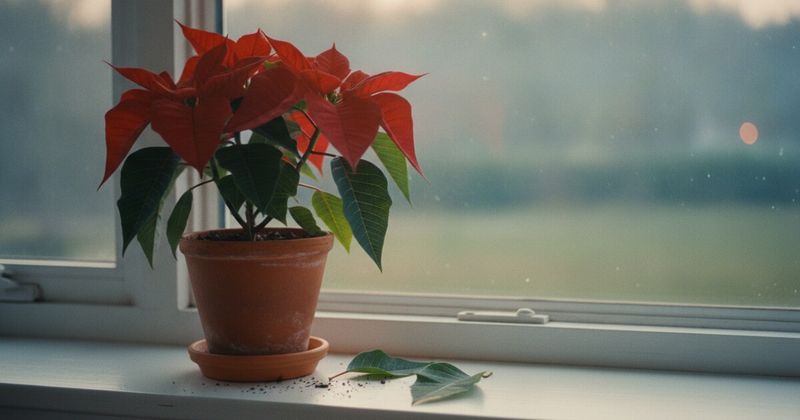
Fallen leaves are a symptom, not a verdict. Before you decide what went wrong, play detective.
Cold injury often shows up as blackening or discoloration followed by leaf loss, according to NC State Extension.
Other culprits look different. Iowa State’s troubleshooting answer points to watering problems as a common cause, and drafts, heat sources, and rapid temperature changes can contribute too.
Ask yourself a few questions. Did the plant sit in a cold car or near a door recently?
Is the soil bone dry or soggy? Is it close to a heating vent?
Matching the clue to the cause tells you what to adjust, and it keeps you from fixing the wrong thing. Dropping a few older lower leaves is also not a reason to panic.
A healthy display can last for weeks
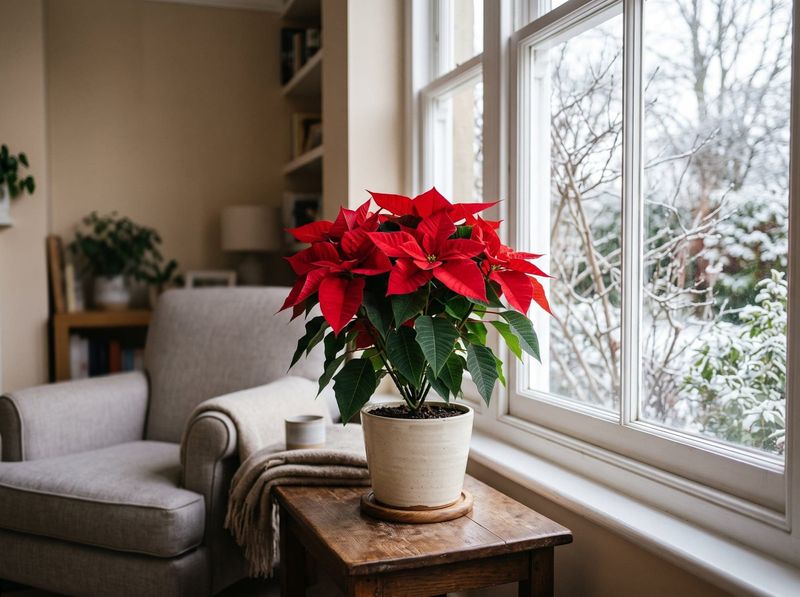
With good care, a healthy poinsettia can look great for a good while. Iowa State says it can stay attractive for several weeks, and Illinois Extension gives a 6 to 8 week estimate.
That makes New Year’s a reasonable hope for a plant bought around Thanksgiving, though it is not a promise.
Here is a fun detail to share with guests. The bright red, pink, or white display is not made of petals.
Those colorful parts are bracts, which are modified leaves.
The true flowers are the tiny yellow-green structures clustered in the center. When those start to fade, the show is not necessarily over, since the bracts often hold their color longer.
A poinsettia is a short-term holiday guest that rewards a little attention.