
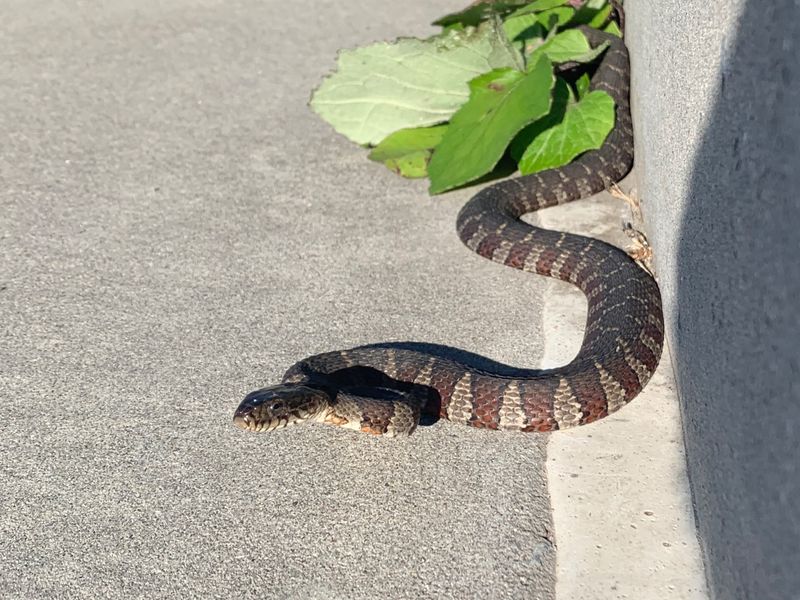
A cool morning does not mean your Florida yard is snake-free. Snakes slow down when temperatures drop, but sunny afternoons and warm spells can bring them out, even in winter.
Activity varies across North, Central, and South Florida, so the weather near your home matters more than the calendar. These seven species show why checking garden beds, brush piles, and pond edges is still a smart habit.
1. Southern Black Racer
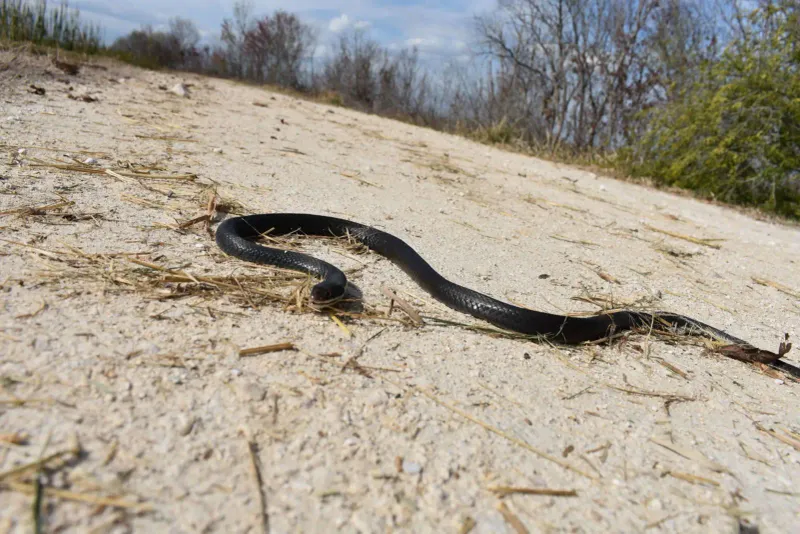
A black streak beside the walkway may be your first clue that a sunny winter afternoon has warmed the yard. Southern black racers are daytime hunters, and they may emerge during mild weather even after several chilly days.
Adults are usually sleek and black, often with a pale chin. Young racers look surprisingly different, with blotches that can confuse homeowners trying to identify them.
Open lawns, hedge borders, and sunny garden edges give racers places to hunt lizards, frogs, insects, and other small animals. A sidewalk can provide a warm resting spot, but that does not mean racers stay active through cold weather.
Despite the dramatic name, a racer generally wants an escape route, not an encounter. It is nonvenomous, though grabbing or cornering one can lead to a bite.
If one crosses your path, stop and let it pass rather than following it into the shrubs. Keep garage doors closed when practical, and clear clutter near entrances so a hunting snake has fewer sheltered places to investigate.
2. Corn Snake
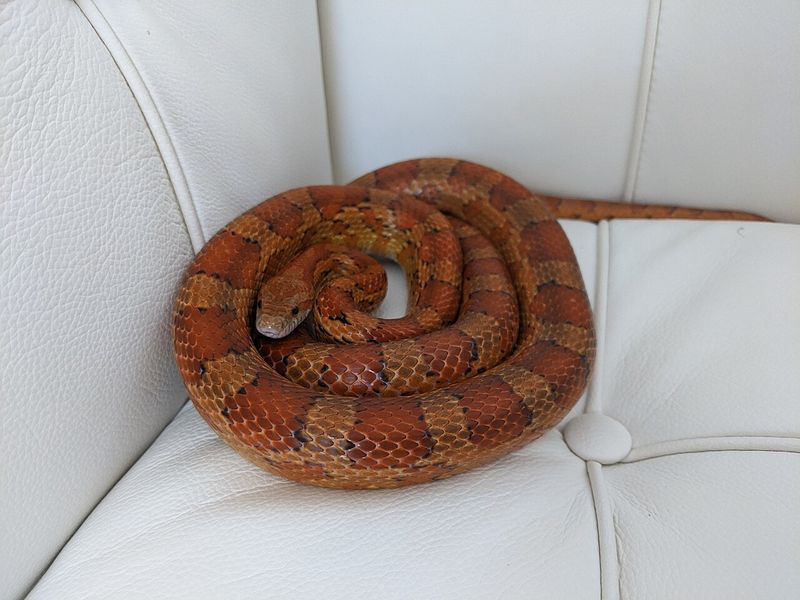
That orange shape near the shed might be a helpful rodent hunter rather than a fallen leaf. Corn snakes, also called red ratsnakes, live throughout much of Florida and sometimes appear during warm breaks in winter weather.
Their reddish or orange blotches stand out in photographs, but among dry leaves and pine bark, those colors blend remarkably well. Individuals vary, so color alone is not enough for a confident identification.
A corn snake has a good reason to investigate an outbuilding: mice may already be there. Stored birdseed, spilled pet food, and clutter can attract rodents, which can then draw snakes looking for a meal.
Cool conditions usually reduce movement, and sheltered spaces become especially valuable. A homeowner shifting boards or cleaning behind storage bins could uncover a resting snake without ever seeing one cross the lawn.
Wear gloves for cleanup, but never treat gloves as protection for handling snakes. Lift stored materials carefully, keep your hands out of hidden gaps, and let this nonvenomous visitor leave on its own.
3. Eastern Garter Snake
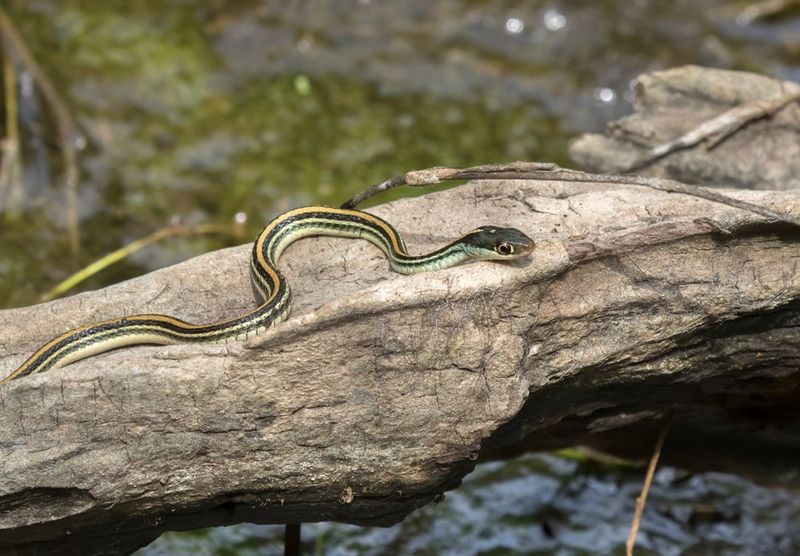
For a small snake, a damp garden bed can offer quite a menu. Earthworms, frogs, and other small prey help explain why eastern garter snakes turn up around watered landscapes and low, moist parts of Florida yards.
These nonvenomous snakes often have light stripes running along a darker body, sometimes with a checkered pattern between them. Their appearance varies, and other striped snakes can look similar from a distance.
Garter snakes can be active under cooler conditions than some other Florida snakes, although they still depend on outside warmth. A mild, sunny stretch may bring one out to bask or search for food.
Look at the setting as well as the snake. A leaky hose, thick ground cover, or leaves gathered along an irrigation box can create the damp shelter its prey also uses.
There is no need to strip a garden bare after a sighting. Fix unnecessary leaks, leave clear walking routes, and use a rake rather than your fingers to move packed leaves where you cannot see the ground.
4. Peninsula Ribbon Snake
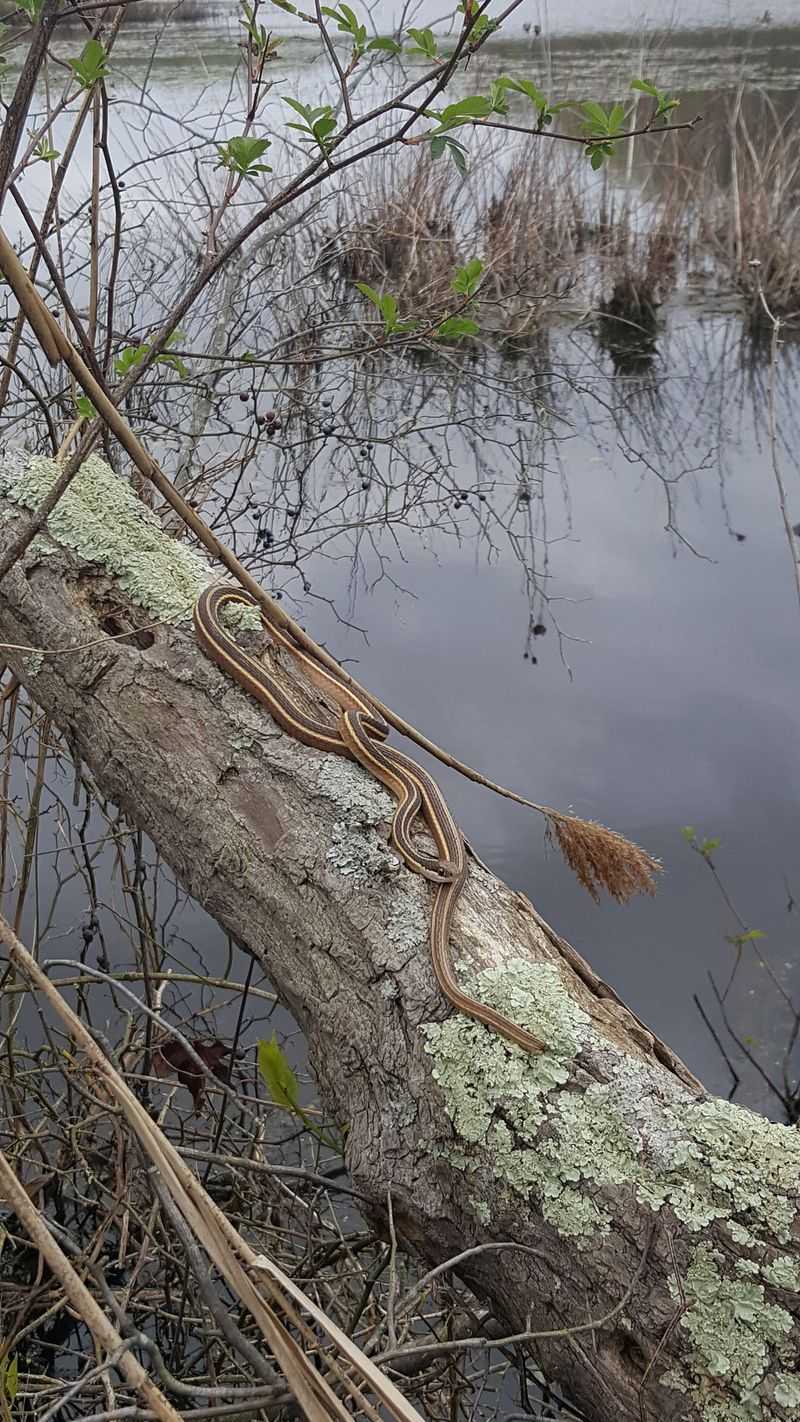
Picture a striped shoelace slipping through the plants beside a backyard pond. The peninsula ribbon snake has that kind of delicate build, with a long tail and a much slimmer appearance than many homeowners expect from a snake.
Found across much of peninsular Florida, this nonvenomous snake favors places near water. Pond margins, drainage channels, and rain gardens can provide cover and access to frogs and small fish.
Its place on this list comes from that close tie to wet landscapes. Even when the lawn looks quiet, a sunny pond edge may offer a sheltered pocket of warmth during a mild winter spell.
Ribbon snakes resemble garter snakes, so do not rely on a quick glimpse of stripes for identification. A clear photograph taken from several feet away is more useful than moving closer for a better look.
Before trimming pondside growth, scan the stems and ground beneath them. Give any snake time to move away, and keep pond nets, loose mesh, and discarded fishing line secured so small wildlife cannot become tangled.
5. Banded Watersnake
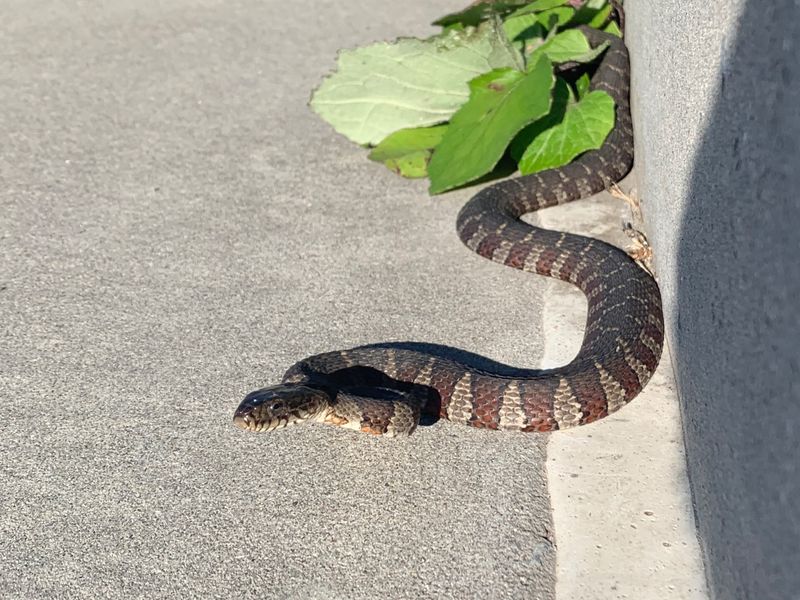
A snake sunning beside the neighborhood retention pond is not automatically a cottonmouth. Banded watersnakes are nonvenomous Florida residents that often get mistaken for their venomous neighbors.
They have stout bodies and dark bands, though some adults become so dark that the pattern is hard to see. Their appearance overlaps with other snakes enough that homeowners should avoid making safety decisions from color or head shape alone.
Fish and amphibians draw them to freshwater habitats, including some residential ponds and drainage features. During a warm winter afternoon, one may rest along the bank or on a log where sunlight reaches it.
The key distinction here is habitat: a waterside yard can remain useful snake habitat throughout the year, even when encounters become less frequent. Cool weather does not erase the food and shelter nearby.
Watch from a distance and leave the bank clear so the snake can retreat. Never pick one up to confirm its identity, because watersnakes can bite when restrained, and a mistaken identification could have much more serious results.
6. Florida Cottonmouth
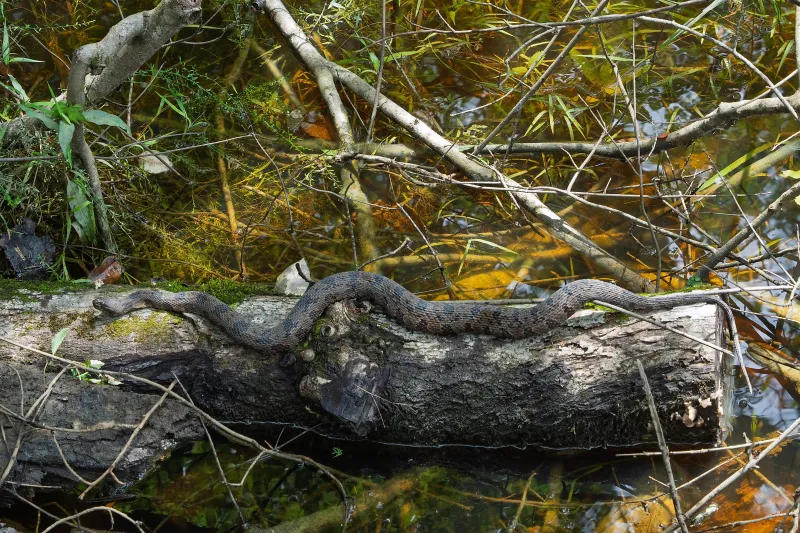
Near a wet ditch or marshy property line, give an unfamiliar snake plenty of room. Florida cottonmouths are venomous, and mild winter weather can allow them to emerge from shelter.
They are closely linked to wetlands, but they also travel over land and may appear away from the water’s edge. Adults are often heavy-bodied and dark, while younger snakes can show brighter bands and a yellowish tail tip.
None of those features is a reason to approach for a closer inspection. Head shape, swimming posture, and whether a snake opens its mouth are not reliable shortcuts for a homeowner deciding what is safe.
For yards beside canals, ponds, or swamps, winter precautions should include watching where pets explore. Use a leash near thick shoreline cover, and check the area before reaching under a low deck or moving storm debris.
If you spot a suspected cottonmouth, back away and bring children and pets indoors. Contact a qualified wildlife professional if it is trapped or poses an immediate problem near the home; do not try to catch or kill it.
Any suspected venomous snakebite requires emergency medical care. Call 911, and do not cut the wound, apply ice, or use a tourniquet.
7. Eastern Diamondback Rattlesnake
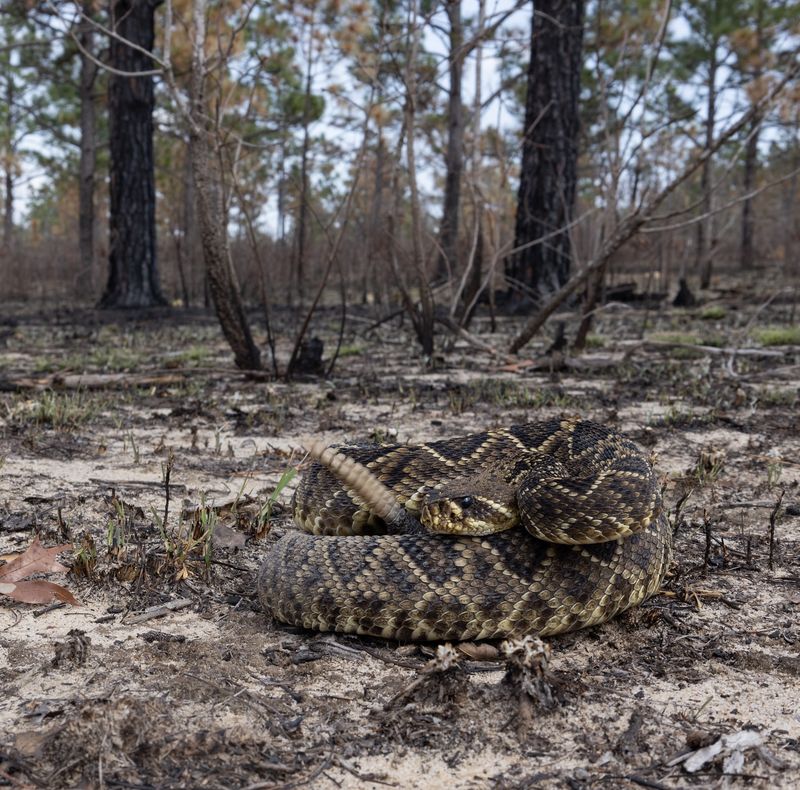
Dry, sandy ground deserves attention too, especially where a yard meets palmettos or pine woods. Eastern diamondback rattlesnakes use these Florida habitats, and they can bask near shelter on suitable winter days.
Their large bodies and dark, pale-edged diamond markings are striking in the open. Among pine needles, patchy shade, and fallen leaves, however, the same pattern can make them difficult to notice.
Cold periods usually mean much less movement, not a guarantee that every snake stays underground. Shelters such as animal burrows provide protection, and a snake may remain near an entrance when sunshine offers warmth.
Unlike the pond-associated species on this list, diamondbacks make the dry woodland border a place to check before yard work. Wear sturdy footwear, watch each step, and never reach into a burrow or beneath dense palmetto growth.
A rattlesnake may stay silent, so do not depend on hearing a warning. If you see one, stop, locate a clear retreat, and slowly increase the distance without trying to move it.
Keep pets away and seek professional help when necessary. Across Florida, the safest winter habit is simple: look before reaching, leave snakes alone, and treat warm spells as possible snake weather.