
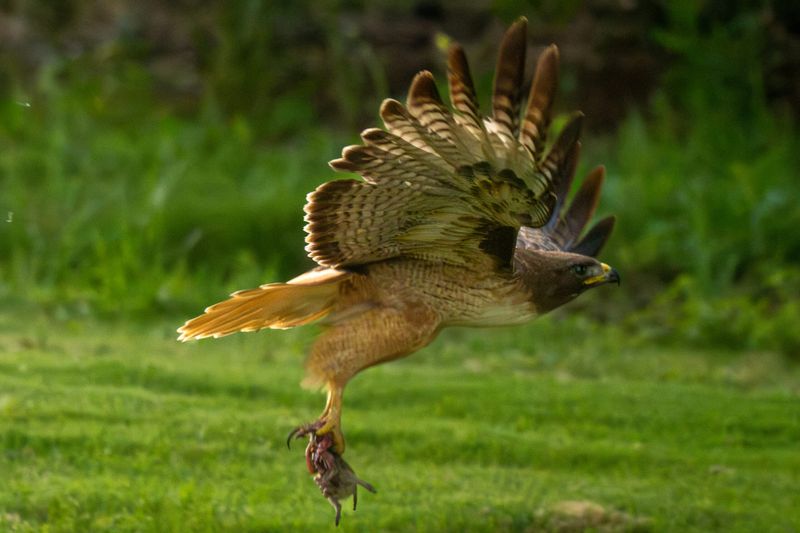
A big hawk sitting on a fence post or tree limb above your garden can make you wonder what it is watching for. Gophers may be among the animals a red-tailed hawk eats, and gophers can wreck vegetable beds and flower borders.
But a hawk on a perch does not tell you what it is hunting. Here is how to make room for hawks, and what to do about active gopher mounds.
Gophers Are Possible Prey, Not a Guaranteed Target
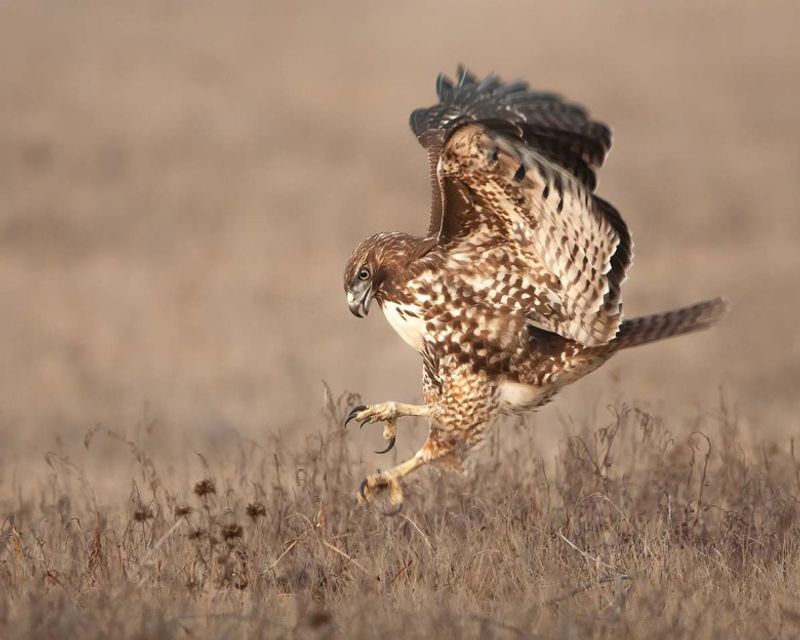
Red-tailed hawks can and do eat pocket gophers in California. They are not picky eaters, though, and a hawk watching your yard could be eyeing a gopher, a mouse, a vole, or something else entirely.
From the ground, you simply cannot tell which.
Gophers make this even trickier. They spend most of their time underground, feeding on roots and plant parts from inside their tunnels, so they only give a hawk a short window when they push up dirt or poke out near a burrow opening, as described in UC IPM’s pocket gopher guidance.
California’s species account for the bird points the same way. The state’s red-tailed hawk life history account describes a varied diet and says the birds rely largely on mice in winter.
Gophers are on the menu, but they are not the only item and may not be the main one in your neighborhood.
So the honest way to look at that hawk over your garden is as a possible helper. It might take a gopher now and then, and that is a nice bonus for a wildlife-friendly yard.
It is not a confirmed fix for chewed roots and bumpy beds, and it should not be treated as one.
That framing keeps you from two mistakes. You will not chase away a bird that may be doing you a small favor, and you will not sit back and wait for it to solve a problem it may never be targeting.
A Winter Sighting Does Not Mean a New Arrival
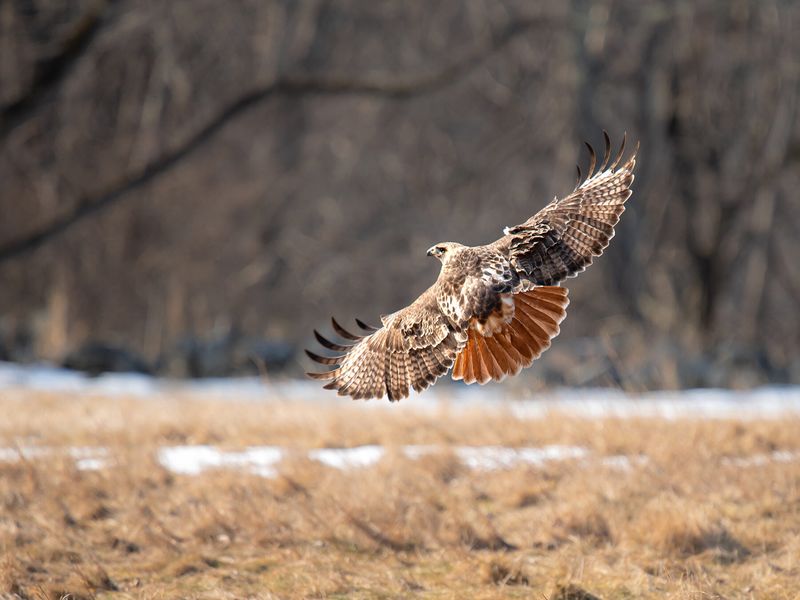
Seeing a hawk in January can feel like a seasonal event, as if it just showed up for the cold months. Sometimes that is true.
Often it is not.
According to California Department of Fish and Wildlife, red-tailed hawks live in the state year-round, and California also hosts wintering and migrating birds. That means the hawk on your fence could be a permanent resident that you simply notice more when the leaves are gone and the garden is quiet.
Winter can also change what you see. Bare branches open up the view, and shorter days put your yard time at dawn and dusk, when hawks are often active.
A bird that was there all summer may suddenly seem new.
A practical clue is repetition. If the same hawk shows up on the same perch day after day, it likely knows the area and may be hunting nearby.
That still does not tell you whether it is after gophers, mice, or other small animals.
Keep the two questions separate. When the bird arrived is one question, and what it is eating is another.
A winter sighting answers neither one on its own, so use it as a reason to watch, not as proof of anything about your gophers.
Perches Give Hawks a Place to Watch and Strike
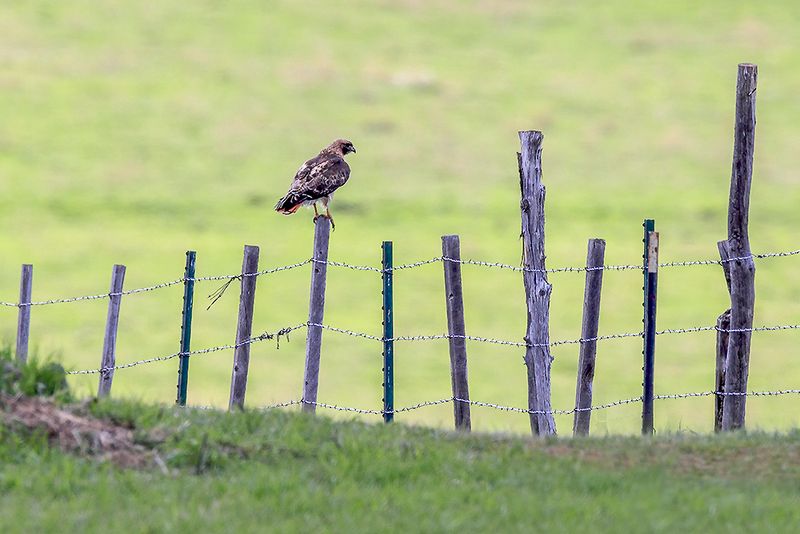
Red-tailed hawks often hunt by sitting still and scanning the ground, then dropping on prey they spot. A good perch gives them height, a wide view, and a quick path down.
A study of overwintering hawks in Arkansas farm fields, published in the Journal of the Arkansas Academy of Science, found that the birds used available perches to hunt. California agencies describe the same idea.
Guidance from the California Department of Pesticide Regulation says artificial perches can offer vantage points and increase hunting success.
There are limits worth knowing. The study looked at agricultural fields in another state, and the DPR guidance was written for school settings.
Neither one measured how many gophers disappeared from a California home garden after a perch went up.
So the takeaway is modest. Perches help explain why a hawk sits where it does, and they make a yard more usable for a hunting bird.
They do not guarantee fewer gophers.
If you see a hawk using the same high spot repeatedly, that is a fair sign the spot works for hunting. What it catches from there is still its own business.
An Open, Safe Perch Is the Yard-Level Opportunity
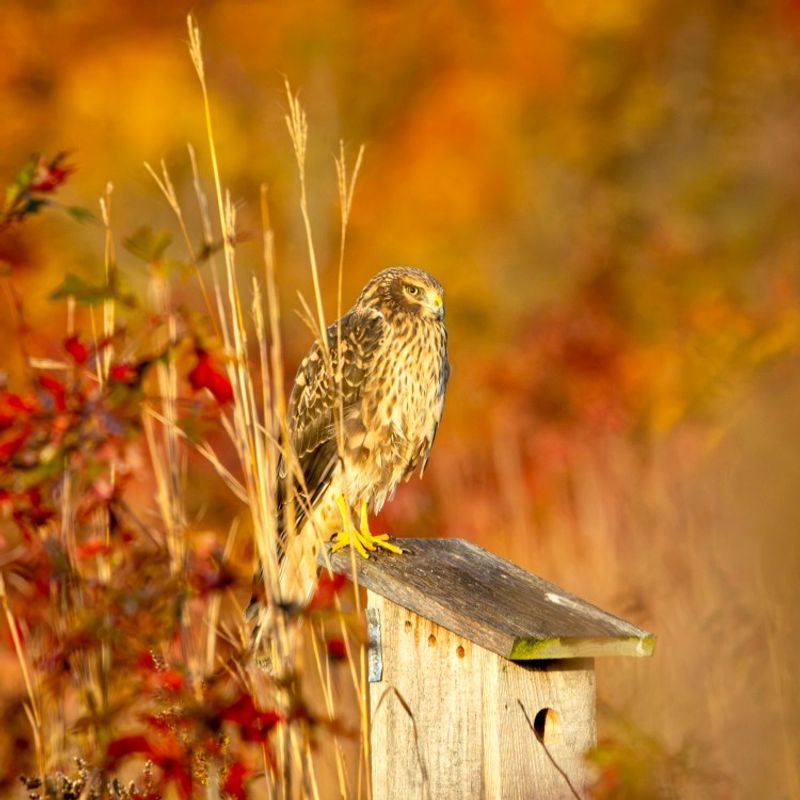
The simplest move is also the easiest: leave safe perches alone. If a sturdy tree limb, fence post, or pole already gives a hawk a clear view of your yard, you do not need to do anything to it.
Try not to wave, shout, or hang scare devices that would drive a visiting bird away for no reason.
Some homeowners wonder about adding a perch. California DPR’s hawk perch guidance recommends an open location away from trees and power lines.
That keeps the bird’s view clear and keeps it away from hazards.
Be realistic about the project, though. The structure DPR describes is substantial, and it may not suit every yard, especially a small suburban lot.
It is not a weekend stake in the lawn.
There is also no promise that a new perch will bring in a hawk. Birds choose their own spots, and a perch only helps if one happens to be hunting nearby.
You also do not need to remove or reshape trees for this. Existing safe features are enough of an invitation, and keeping them costs nothing.
Predators Cannot Replace Direct Gopher Control
Natural predators do eat gophers, but they rarely remove every one. UC IPM notes that relying on predators alone may not give the control you want.
DPR says much the same, that hawks alone will not eliminate a rodent problem.
If your beds are at risk, start by watching for fresh mounds. A new, loose mound of soil is a sign of an active gopher, while old, crusted mounds may mean the animal has moved on.
Checking every few days tells you whether a problem is current.
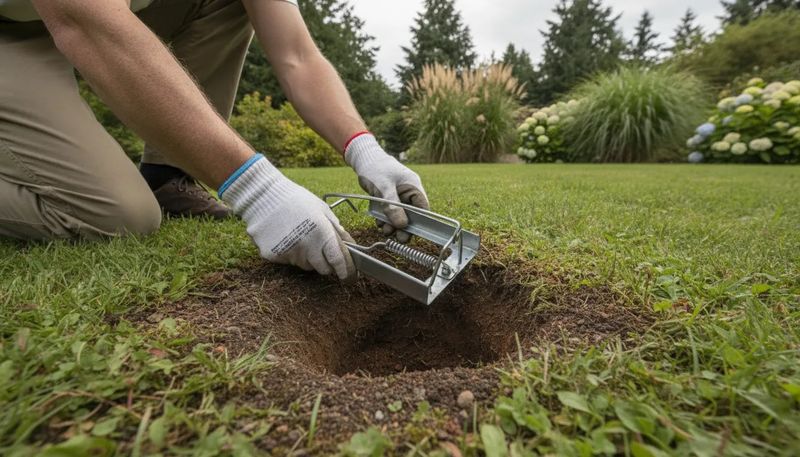
For active burrows, UC IPM describes trapping as a safe and effective option. The basic steps are to place traps in the active burrow and check them regularly, so an animal is not left sitting and you can tell quickly whether the trap worked.
Trapping fits well beside a wildlife-friendly yard because it targets the animal in its tunnel instead of spreading something into the environment. A hawk on a post can still do its part.
Think of it as two layers. The hawk is a possible bonus, and your monitoring and traps are the part you control.
Outdoor Bait Can Put Other Wildlife at Risk
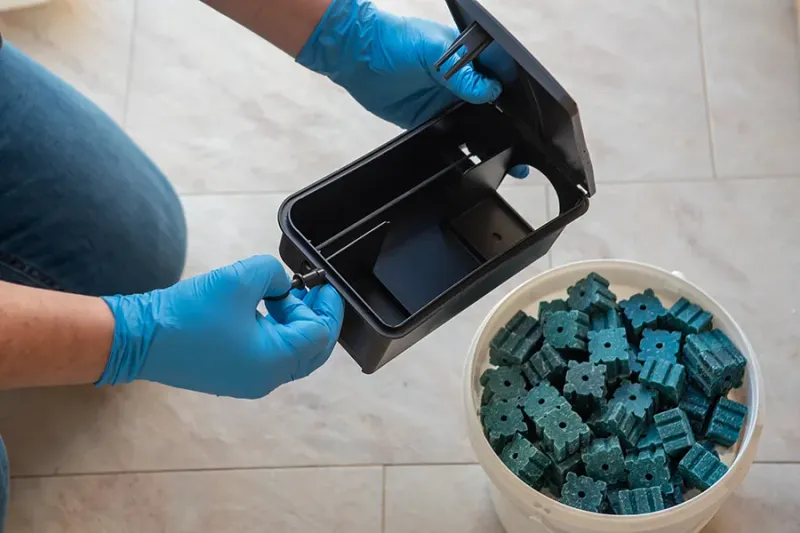
When a yard is meant to welcome wildlife, toxic bait deserves extra caution. UC IPM warns that baits can threaten wildlife, pets, and children in backyard settings, and that spilled bait can endanger wildlife and pets.
That is a safety point, not a claim that every use of bait harms a hawk. The concern is that bait can end up where it was never meant to go, and animals that are not the target can be exposed.
California DPR makes a related suggestion in its perch guidance. Before installing hawk perches, it advises considering discontinuing outdoor rodenticides.
If you are inviting a predator, it makes sense not to put out products that work against that goal.
For a typical homeowner, the practical move is to keep your gopher plan focused on monitoring and trapping, which avoid those exposure risks. If you have used bait before, think about whether it still fits a yard where kids, pets, and wildlife share the space.
You can protect beds and still keep the yard safe for the creatures you want to see.
Make Room for Hawks and Act on Active Burrows
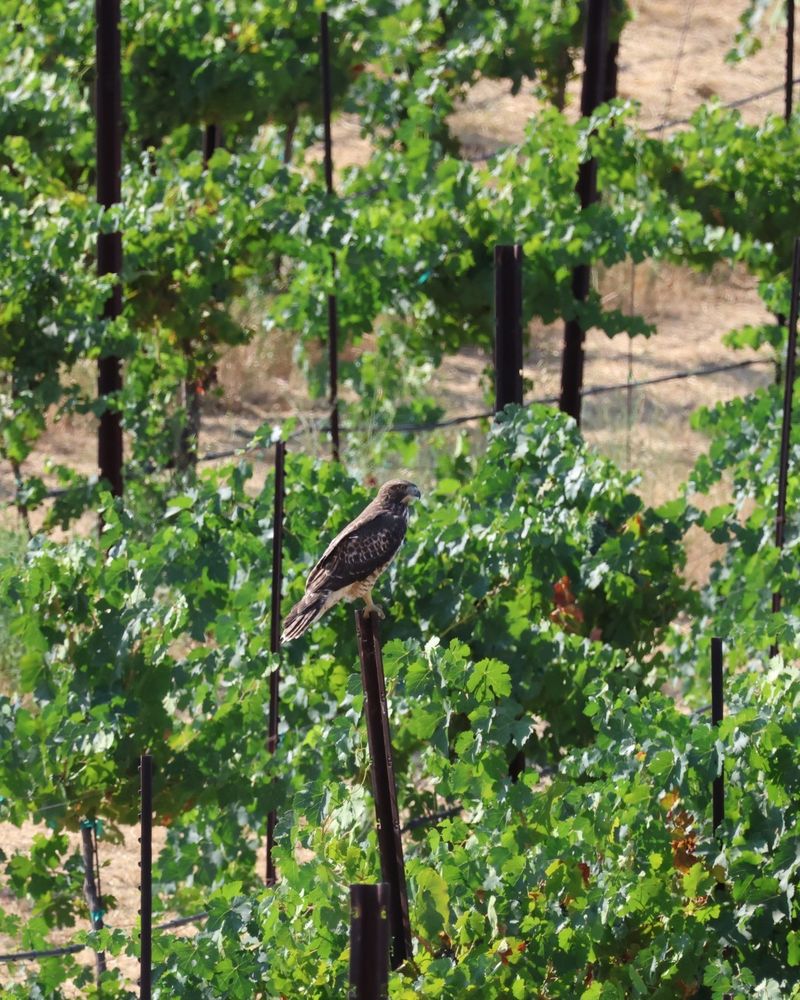
Keep the safe perches, and let visiting hawks hunt in peace. Watch for fresh mounds, and use UC IPM’s trapping approach when a burrow is active.
Skip outdoor bait where you want wildlife to thrive, as DPR suggests.
A hawk is a welcome guest, not a hired hand.