
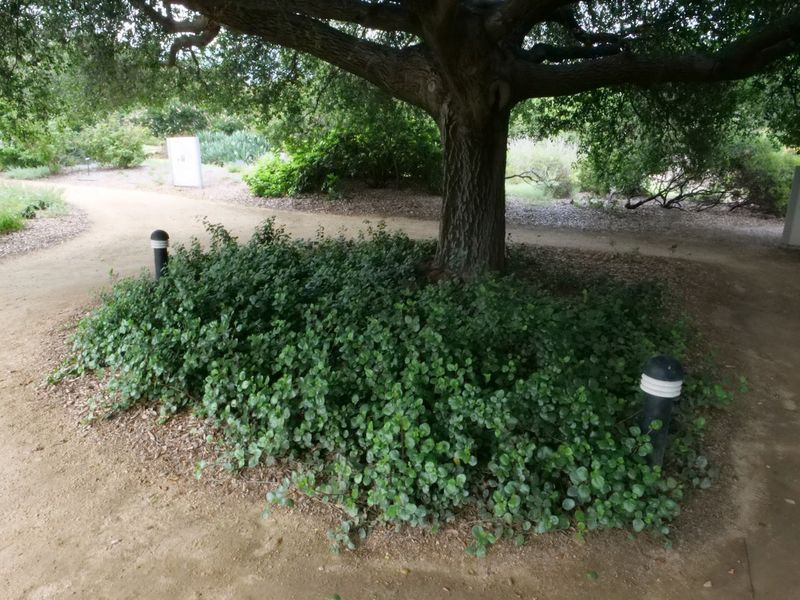
Boxwood hedges look tidy, but in a California summer they can drink a lot of water and still turn bronze, patchy, or blighted. Many homeowners are tempted to tear them out and start over with gravel or nothing at all.
There is a better path. The California natives below can give you that same evergreen wall of green while using far less water and feeding local bees and birds.
1. Coffeeberry (Frangula californica)
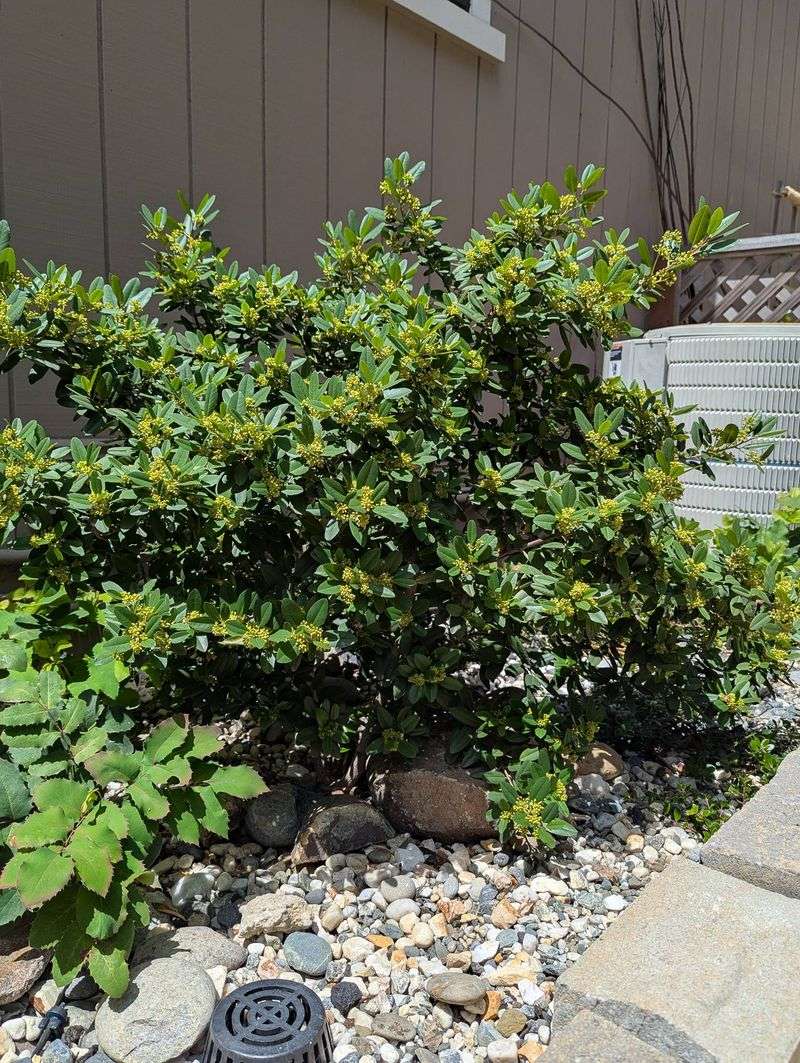
Ask a native plant nursery owner which shrub fools people into thinking it is a thirsty ornamental, and coffeeberry usually tops the list. Its leaves are glossy, dark, and dense, so it reads as formal from the curb.
Once established, usually after two summers, many coffeeberries can get by on a deep soak every few weeks in coastal and inland valley gardens. Compact selections like ‘Mound San Bruno’ and ‘Eve Case’ stay closer to 4 to 8 feet, which makes them easy to shape into a hedge line.
The berries ripen from red to nearly black in late summer, and birds such as robins and thrushes snap them up. Small flowers draw native bees, too.
If you want the closest swap for a boxwood look, start here.
2. Toyon (Heteromeles arbutifolia)
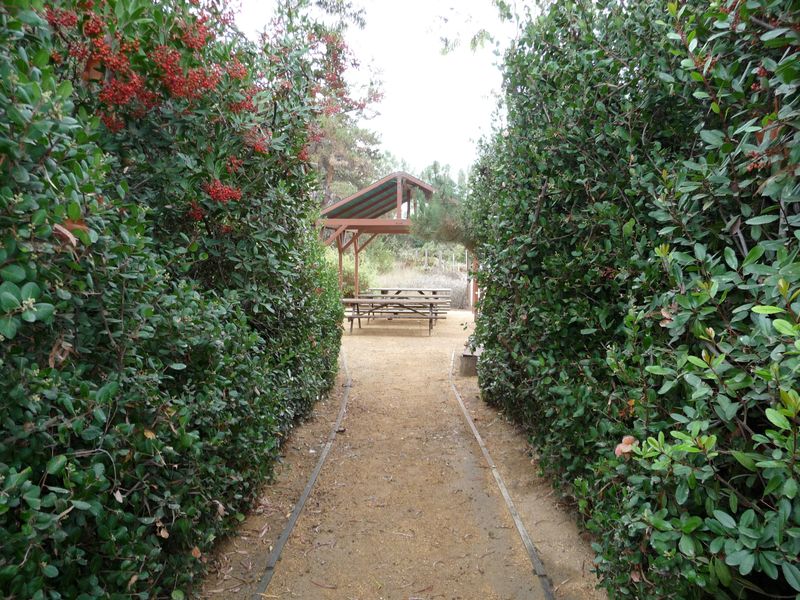
Hollywood got its name from this shrub, at least according to local legend, because early settlers mistook toyon’s red berries for holly. That bit of history is a fun bonus, but the real draw is toughness.
Toyon handles heat, clay soil, and long dry spells once its roots settle in. It grows larger than boxwood, often 8 to 15 feet, so it works best as a privacy screen along a back fence rather than a low edging hedge.
Winter is its showtime. Clusters of red berries feed cedar waxwings and mockingbirds when food is scarce, and summer flowers buzz with pollinators.
Light pruning in late winter keeps it fuller at the base.
3. Pacific Wax Myrtle (Morella californica)
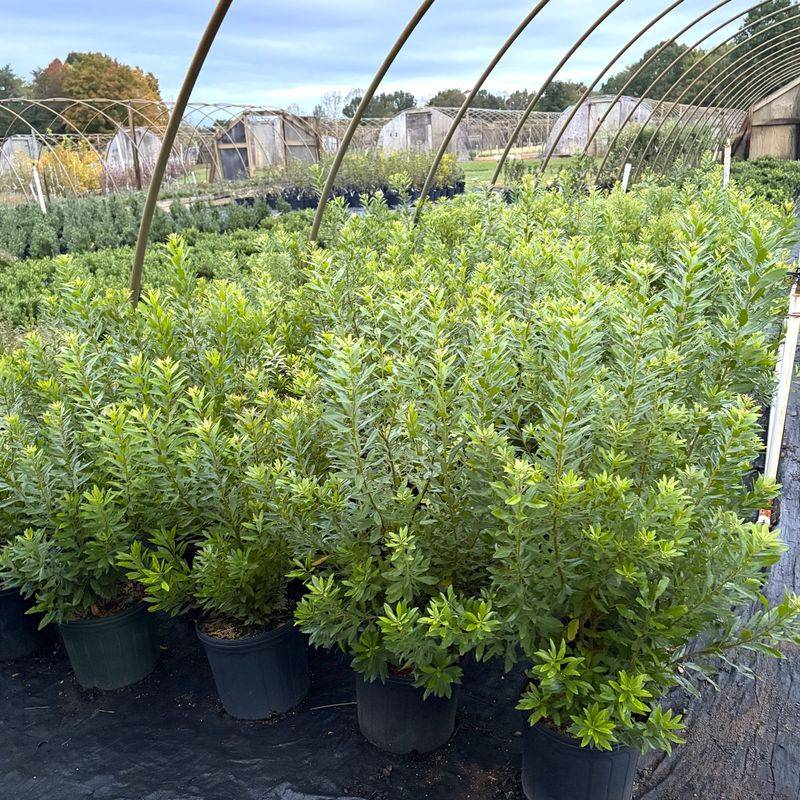
Coastal gardeners, this one is your secret weapon. Pacific wax myrtle shears almost as neatly as boxwood, holding a crisp edge with narrow, aromatic leaves.
It prefers the cooler, foggier side of the state and may need a bit more summer water inland than other picks here. Even so, it typically uses noticeably less than a struggling boxwood row in the same spot.
Birds eat the small waxy fruits, and the dense branches give them safe cover. If you want a formal hedge near the coast without constant hose time, wax myrtle earns a long look.
4. Hollyleaf Cherry (Prunus ilicifolia)
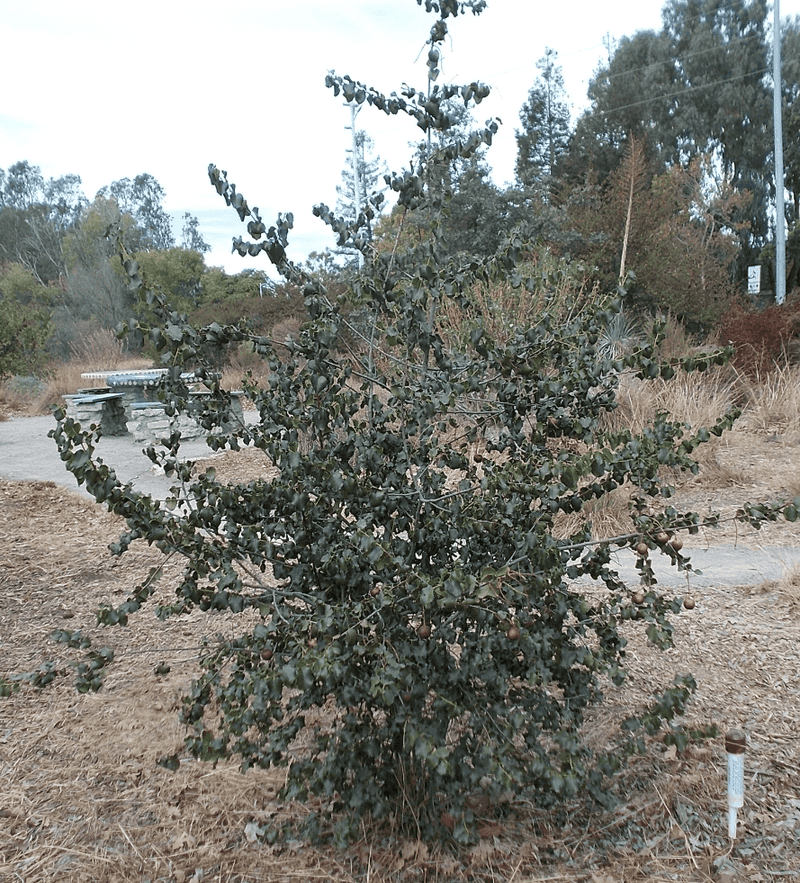
Spiny, glossy, and stubborn in the best way. Hollyleaf cherry looks a bit like holly and behaves like a native that has seen a hundred droughts.
Deep roots let it ride out dry summers in inland valleys and foothills, often with only occasional summer watering once established. It takes clipping well, so you can keep it as a tight hedge or let it grow into a small tree.
Spring flowers pull in bees, and the dark cherries feed birds later in the year. Fire-prone homeowners can appreciate its relatively high leaf moisture compared with many ornamentals, though spacing and cleanup still matter in defensible space.
5. Catalina Cherry (Prunus ilicifolia ssp. lyonii)
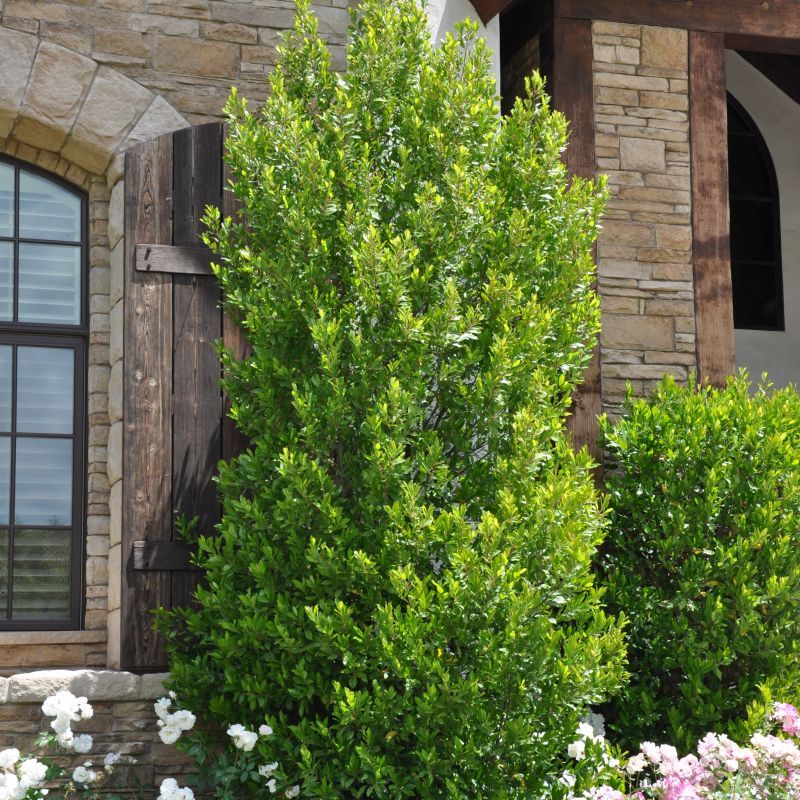
Think of Catalina cherry as the smoother, faster cousin of hollyleaf cherry. It comes from the Channel Islands and has larger, mostly spine-free leaves that look polished and friendly near walkways.
Because it can top 20 feet, it shines as a tall screen blocking a neighbor’s second-story window. Regular trimming will keep it hedge-sized, though it rewards space.
Like most natives, it wants deep, infrequent watering rather than daily drips. Overwatering in summer is actually one of the most common ways homeowners lose it, so let the soil dry between soaks.
6. Lemonade Berry (Rhus integrifolia)
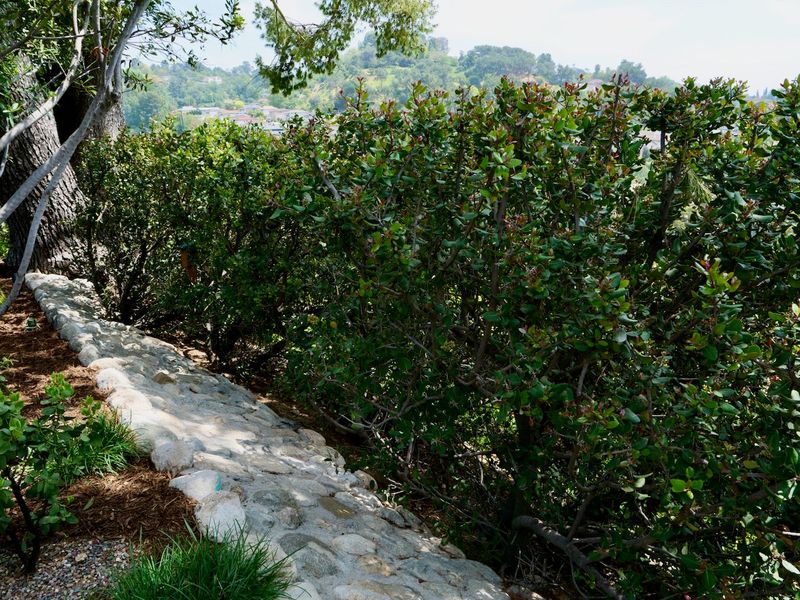
Kids love this one once they learn the sticky berries taste tart, like lemonade. Indigenous Californians soaked them to make a sour drink long before the name caught on.
Leathery leaves stay green through brutal summers, and coastal Southern California gardens often need little to no summer irrigation once plants mature. It forms a broad, mounding hedge that works well on slopes where boxwood would bake.
Pink spring blooms bring native bees and hoverflies. Give it full sun, sharp drainage, and room to spread about 8 feet wide.
7. Evergreen Currant (Ribes viburnifolium)
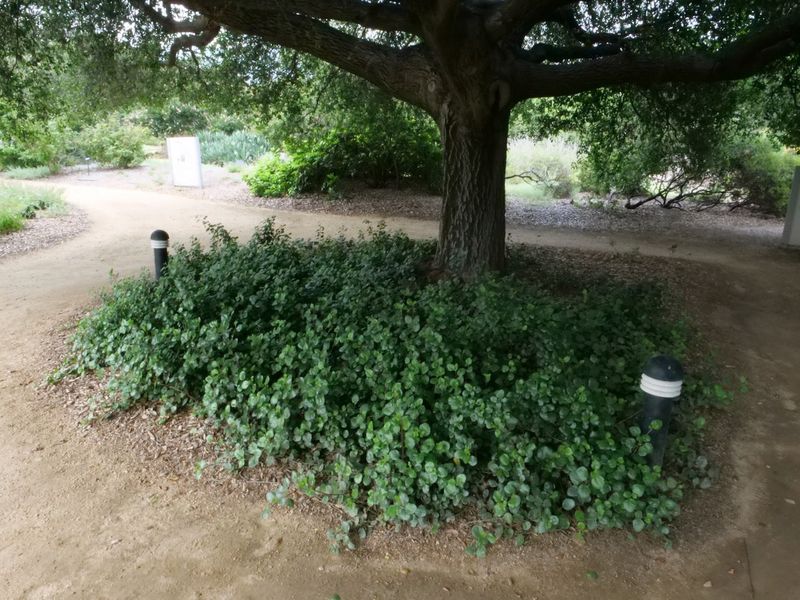
Got a shady spot under an oak where boxwood keeps sulking? Evergreen currant, also called Catalina perfume, was made for that corner.
It stays low, around 2 to 3 feet, and its leaves give off a spicy scent when brushed. That height makes it a natural fit for the short border hedges boxwood often fills along paths.
It tolerates dry shade, which many plants hate, and it is safe under native oaks that suffer from summer water. Tiny maroon flowers in late winter feed early hummingbirds.
8. Bush Anemone (Carpenteria californica)
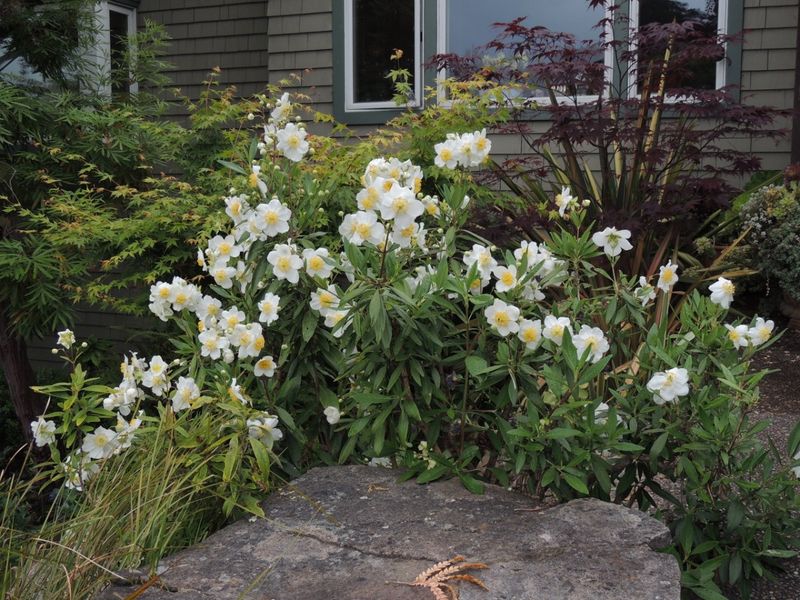
Here is the showoff of the group. Bush anemone grows naturally in just a small area of the Sierra foothills, yet it adapts to many California gardens.
Narrow leaves stay green all year, and in late spring the shrub covers itself in white, yellow-centered blooms that look almost like single roses. It reaches about 4 to 6 feet, a good height for an informal hedge near a patio.
It does best with afternoon shade inland and modest summer water. Pollinators visit steadily, and you get a hedge that actually flowers, something boxwood never offered.
Before pulling your boxwoods, sketch which spots get sun, shade, and slope, then match one of these natives to each zone and plant in fall to catch winter rains.