
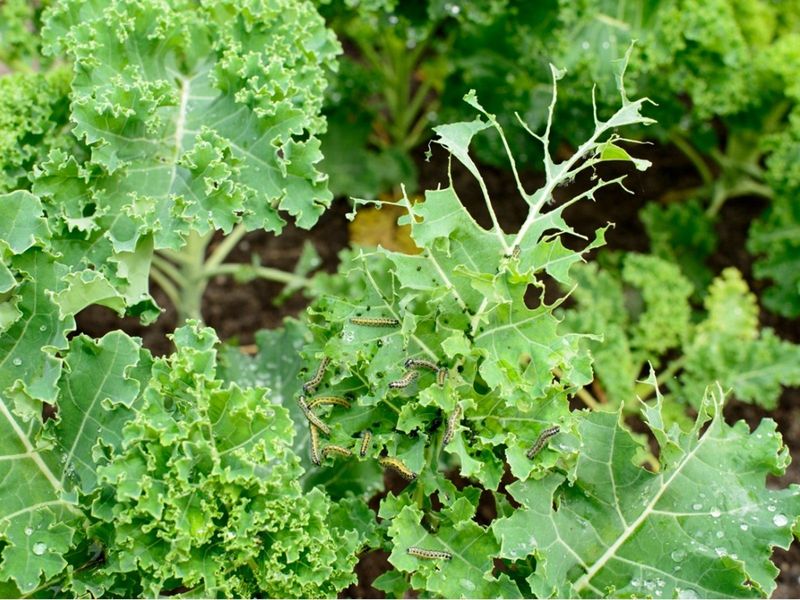
Tiny holes in your fall kale can be alarming, especially when the weather turns cool and you expect the bugs to be gone. Many gardeners blame the cold, but holes may point to chewing pests instead.
A few minutes of checking leaf undersides can tell you far more than guessing from across the garden bed. Here is how to look, what to do, and what to expect.
Holes may point to chewing pests, not frost
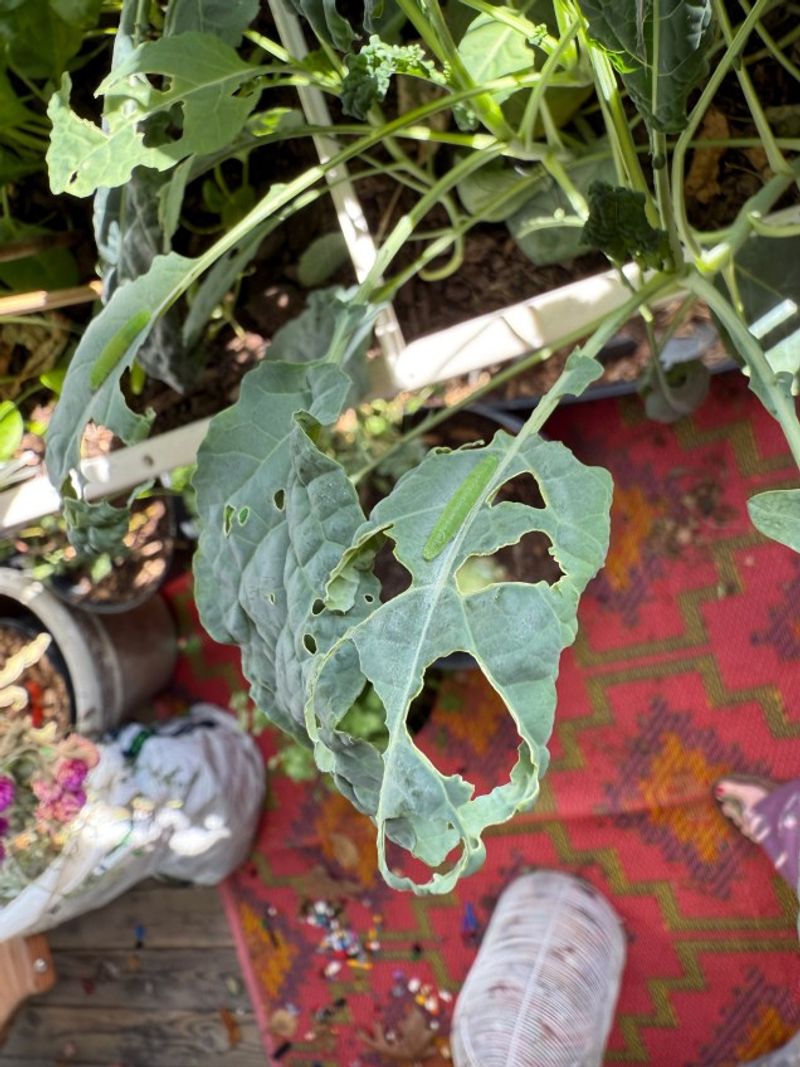
Cold snaps get blamed for plenty of garden trouble, but frost has its own look. Extension guidance describes frost and freeze injury as discoloration, limp or water-soaked foliage, and burned leaf edges.
Those symptoms usually show up as damaged tissue, not as clean holes where part of the leaf is simply missing.
Eaten-through holes make chewing insects a stronger possibility. Several caterpillars feed on kale, and South Dakota State University Extension lists other pests that chew on it as well.
So the holes tell you where to start looking, but they do not tell you which pest made them.
Keep in mind that cold and pests can hit the same plant. A kale leaf might have both holes and a browned edge after a chilly night.
Treat the damage as a clue, then check the plant before you decide on any fix.
November pest activity varies across the South
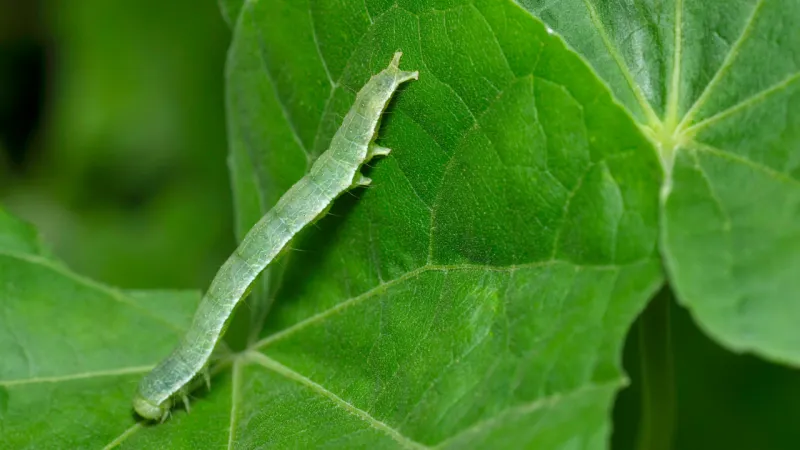
Florida and Texas are good examples of why one rule will not fit the whole South. UF/IFAS reports that, according to its Florida cabbage pest profile, cabbage looper numbers often peak in early fall in central Florida, and the pest can stay active through winter in southern Florida.
In those warmer spots, feeding in November is believable.
Texas gardeners may see something different. Texas A&M AgriLife Extension notes in its fall vegetable guide that looper reproduction slows during cold periods.
A garden near the Gulf Coast and one in the Panhandle can behave very differently in the same week.
Your own recent weather is the best guide. After a run of warm nights, expect more insect activity.
After a hard cold stretch, activity may slow, though plants can still carry caterpillars that are already there.
Inspect the plant before naming the culprit
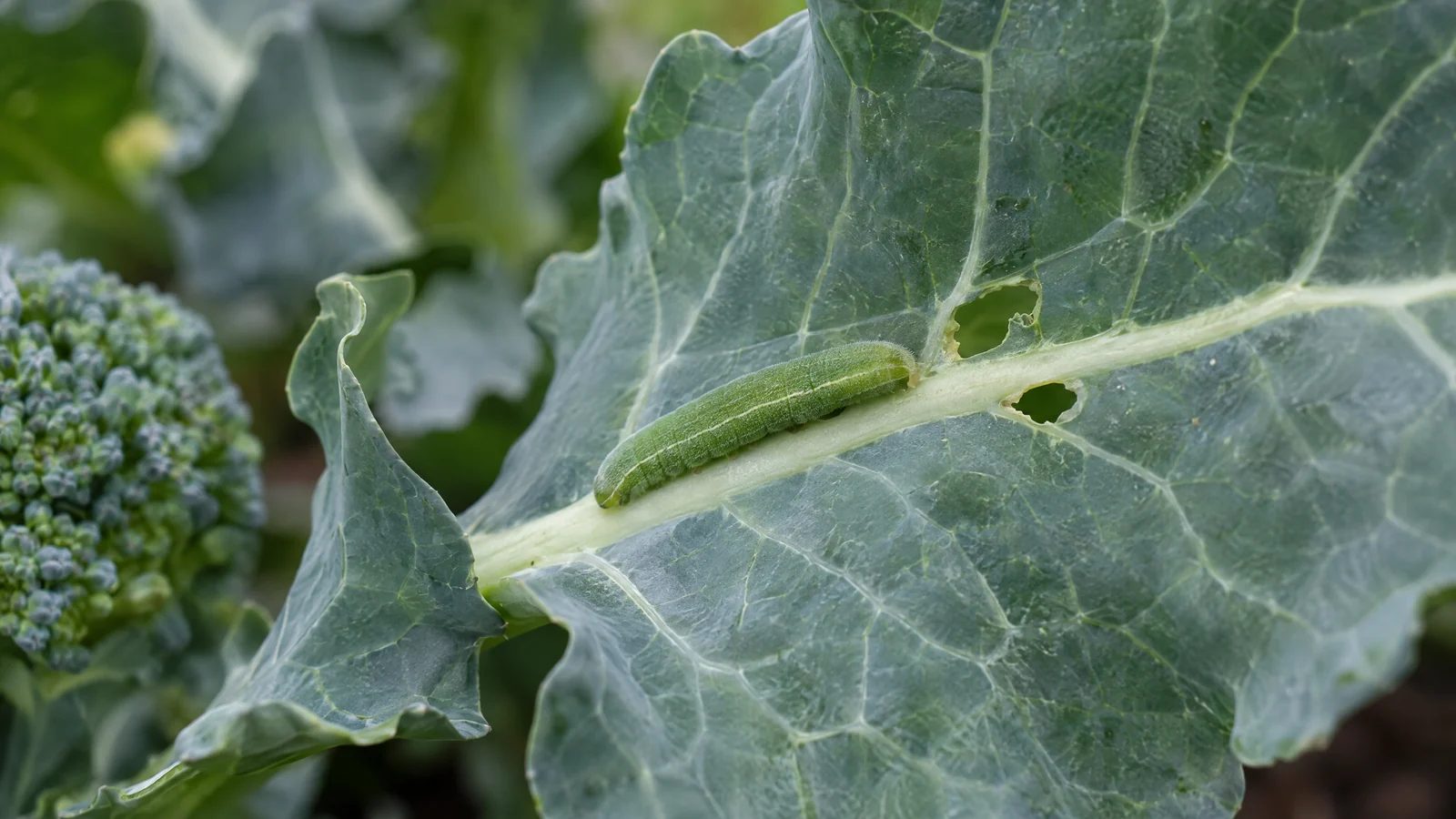
Grab a cup of coffee and take a slow walk down the row. Flip leaves over and check the undersides, the center of the plant, and the spots where leaf stems join the main stalk.
You are looking for caterpillars, tiny eggs, and dark specks of droppings called frass.
Clues help sort out who is who. Imported cabbageworms are velvety green and may have faint yellow markings, while cabbage loopers are pale green and move in a looping arch, as described by University of Minnesota Extension.
Diamondback moth larvae are much smaller and wriggle when disturbed, a trait also covered in WVU Extension kale guidance.
Flea beetles can also leave small holes, so finding none of these caterpillars is useful information too. Tiny dark beetles that hop when you touch the leaf point toward flea beetles.
Damage alone cannot confirm the pest, and the list of kale chewers is longer than most people expect.
Hand-pick caterpillars and check again
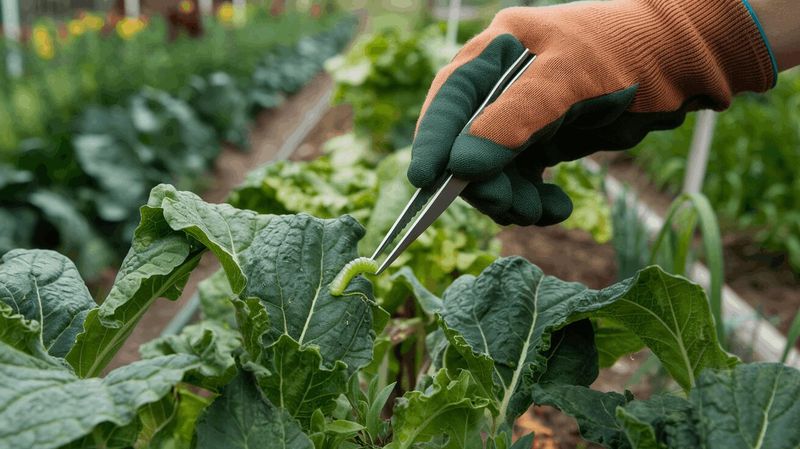
Found a caterpillar? Pluck it off and drop it into a bucket of soapy water.
It is low-cost, needs no special product, and works well when you only have a handful of larvae to deal with.
One pass will probably not finish the job. New larvae can hatch from eggs you missed, so repeat the check every few days, especially after warm spells.
Rub off any small egg clusters you spot on leaf undersides while you are at it.
Expectations matter here. According to University of Maine Cooperative Extension, light to moderate feeding may be tolerable, while heavier feeding can remove a lot of foliage.
A few ragged leaves on a big plant are usually no cause for panic. If you can still pick tender leaves from the center, the plant is likely coping.
Use row cover to prevent new egg-laying
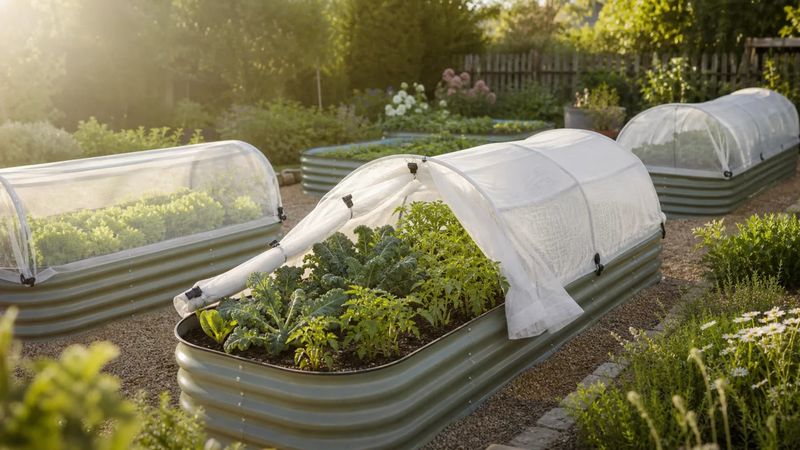
Row cover works like a screen door for your kale. Moths and butterflies cannot reach the leaves to lay eggs, which is why Cornell Cooperative Extension treats it as a preventive tool for pest management.
Timing is everything. A cover cannot remove larvae that are already on the plants, and it cannot repair holes that are already there.
Inspect first, pick off what you find, and only then cover the bed. Otherwise you may seal caterpillars in with the very leaves you want to protect.
Secure the edges with soil, boards, or staples so egg-laying adults cannot slip in. Each time you open the cover to harvest or check plants, reseal it afterward.
In warmer Florida or south Texas gardens, keep an eye on heat under the fabric on sunny days and lift it briefly if the bed feels stuffy.
Choose a caterpillar treatment only when the label fits
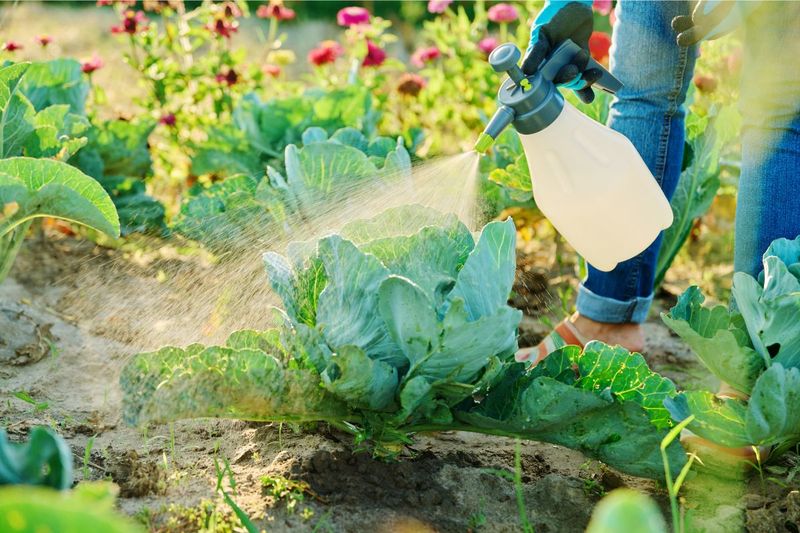
Spraying is an optional step, not the first move. If hand-picking and cover are not keeping up and you have confirmed caterpillars, a labeled product may be worth considering.
Bt kurstaki is one option. The Alabama Cooperative Extension System describes it in its list of organic insecticides for vegetable gardens.
It targets caterpillars and works best when small larvae eat treated foliage. It will not help with flea beetles, and it can affect other caterpillars, not just the pest you meant to treat.
The label is the rule book. Check that the product lists kale, or the crop group that includes it, and the pest you found.
Then follow the directions for rates, timing, and harvest intervals, as shown on a sample EPA-registered Bt label. An organic label does not make a product right for every situation, so read before you buy.
Reduce damage without counting on a guaranteed harvest
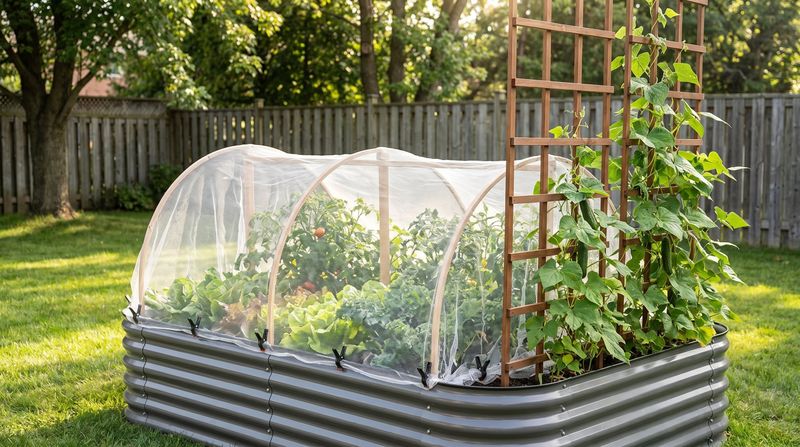
Kale is a sensible cool-season crop for the South. UF/IFAS says it can be grown in Florida during winter, and Texas A&M AgriLife Extension lists it as frost-tolerant.
Severe cold and pest pressure can still set plants back.
Looking, picking, and covering can all cut down on feeding. None of them promises a full harvest, because results depend on your local weather and how healthy the plants are.
Some holes are simply the price of growing food outdoors.