
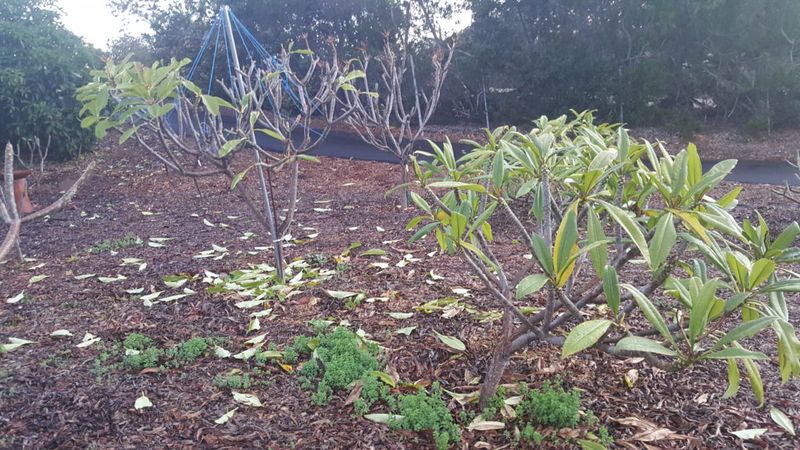
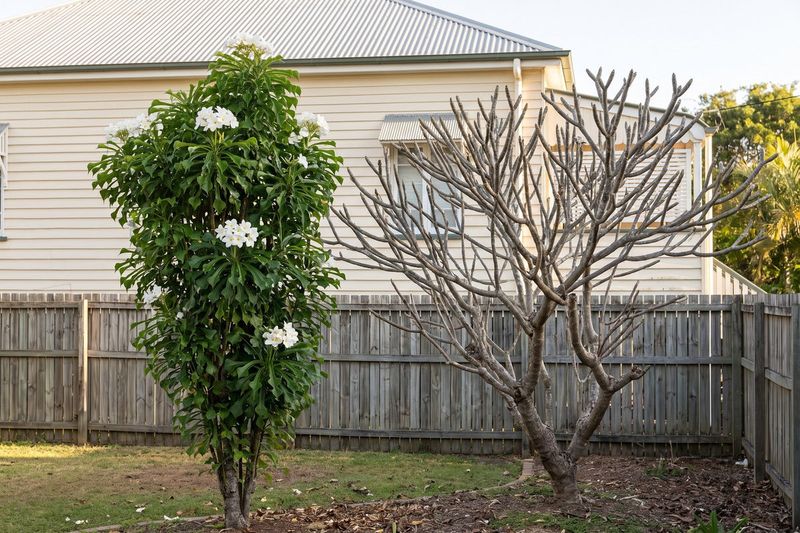
Many Florida plumerias slow down in winter, and some drop most of their leaves. That bare look can feel alarming after months of fragrant blooms.
A few simple November habits help you tell normal rest from real trouble. They also keep your plant ready for the cold nights ahead.
Is the leaf drop normal winter rest?
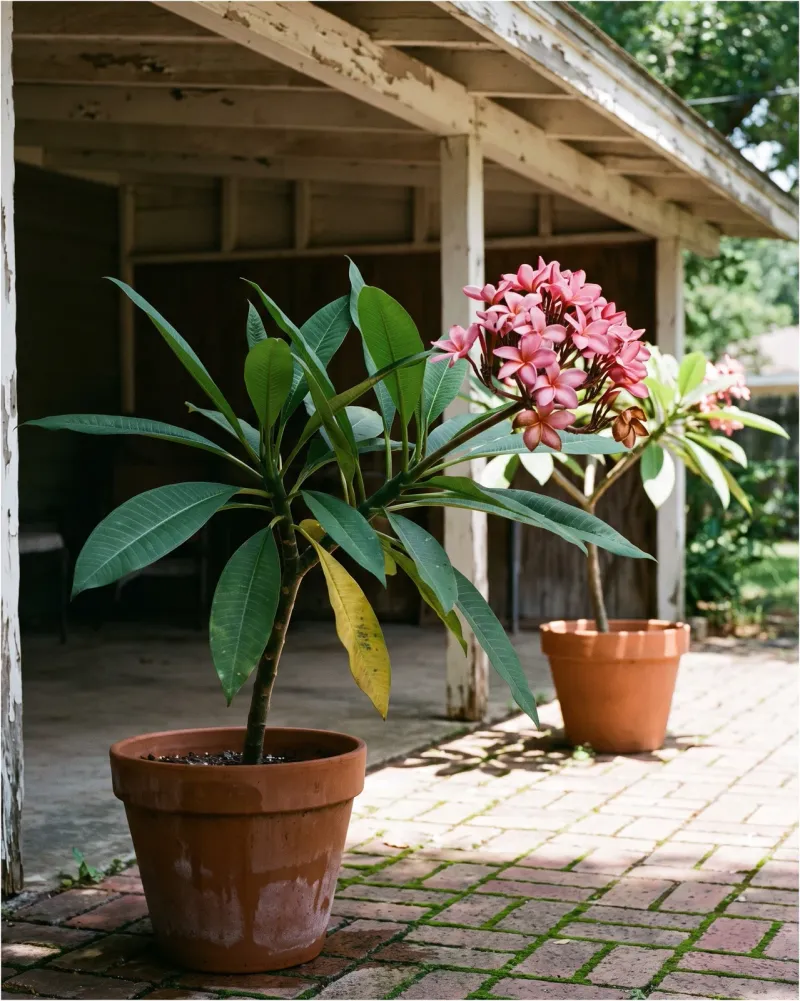
Many Florida plumerias slow down or go dormant in winter and lose leaves as the days shorten and nights cool. Seeing a few yellow leaves in November is often just the plant changing seasons.
Still, leaf drop alone does not prove your plant is resting in a healthy way.
Other things can strip leaves too. Rust, cold, drought, and soil that stays too wet can all cause defoliation.
Flip a few leaves over and look at the undersides. UF/IFAS rust guidance points to yellow-orange pustules there as a clue that rust is involved.
Next, think about what the plant has been through lately. Did a cold night just pass, or has the pot been sitting in a soggy saucer?
A dry spell can also trigger leaf loss, so check how moist the soil is a few inches down.
Not every plumeria sheds everything, either. Some types are described as evergreen, and leaf behavior varies with the kind of plumeria and its growing conditions.
A related species, Plumeria pudica, can still drop leaves with cold or drought, according to UF/IFAS Extension in Charlotte County.
So the first November job is simply to look. Slow, even leaf drop with clean leaves and firm branches usually fits normal rest.
Orange dust on leaf undersides, mushy stems, or a sudden drop after a cold snap deserve a closer look before you follow the rest of the checklist.
Clear fallen leaves from around the plant
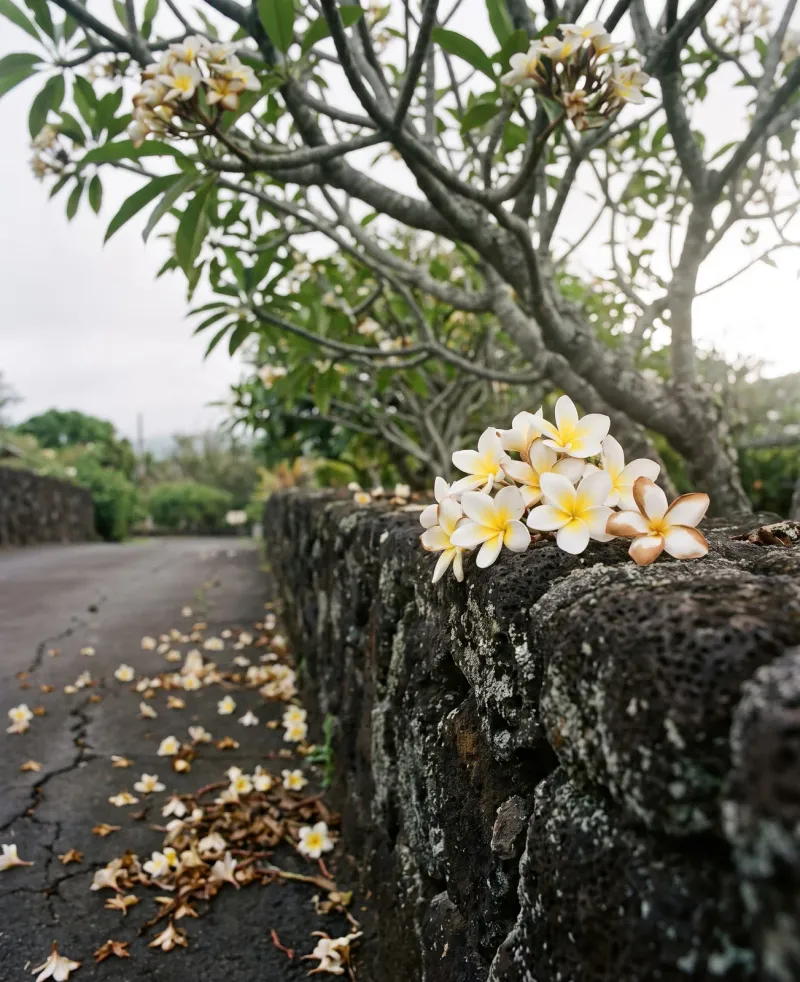
Once the leaves start dropping, pick them up. Rake or gather them from the soil, the mulch, and the rim of a container.
Bag them rather than leaving them to pile up under the plant.
There is a practical reason behind this chore. UF/IFAS recommends collecting and removing dead leaves in fall to reduce plumeria rust in the next growing season.
A clean base is a small step that lowers the odds of trouble when new growth returns.
Plan on more than one pass. Leaves rarely fall all at once, so a quick sweep every week or two through the season keeps things tidy.
If your plumeria grows in a pot, check the saucer and the bottom of the container too, since leaves slip into those spots easily.
Keep the job simple. You are removing fallen foliage, not trimming the plant or doing a big bed makeover.
If you handle a broken stem along the way, wear gloves, because plumeria sap contains irritants that can bother skin.
Done this way, cleanup takes about ten minutes and leaves the planting looking neat even while the branches are bare.
Let watering follow the plant’s slower growth
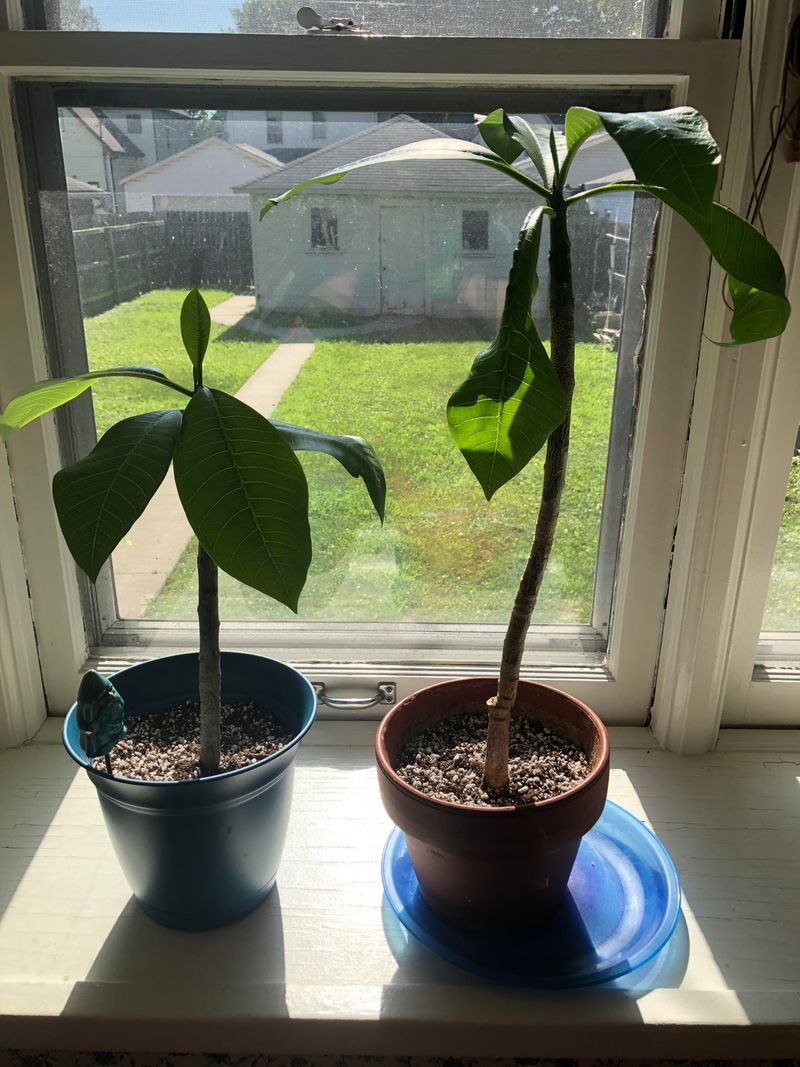
A plumeria that is shedding leaves is using far less water than it did in summer. Roots keep sitting in damp soil while the plant barely drinks, and that is how root rot starts.
So ease up as growth slows, rather than sticking to your July routine.
Easing up does not mean cutting off water for every plant. Container plants, in-ground plants, and plants with some leaves left all behave differently.
Let the potting mix or soil dry between waterings, and water less often when the weather is cooler, as University of Wisconsin Extension advises.
Drainage does a lot of the work here. UF/IFAS notes that plumeria grows best in full sun and well-drained soil.
A pot with open drainage holes and a gritty mix forgives a missed day. Heavy soil or a plugged hole does not.
Skip a fixed calendar and check the soil instead. Push a finger or a wooden skewer a few inches into the mix.
If it comes out damp or dark, wait. If it is dry deep down, give a measured drink and let the extra drain away.
After a long rain, empty saucers and check that in-ground plants are not sitting in a low, soggy spot. Persistently wet soil is the thing to avoid.
Routine feeding can wait until growth resumes
Fertilizer will not wake a sleeping plumeria or push out early flowers. A plant with little active growth has no use for the extra nutrients.
Hold off on routine feeding until new leaves appear.
The timing comes from the plant’s growing season. University of Wisconsin Extension advises fertilizing during the growing season, not at other times.
Unused fertilizer can also build up in a pot and add stress rather than help.
You may run into recipes that promise winter blooms from extra phosphorus, potassium, or Epsom salts. Those are not a reliable way to force flowers.
Florida guidance in the Florida-Friendly landscape best management practices manual generally calls for omitting phosphorus unless a soil or tissue test shows a need.
That same manual notes that high nitrogen may reduce flowering in some plants, so more is not better. Our sandy soils also let nutrients wash through quickly, which makes extra applications wasteful.
If you are curious about what your soil needs, a test is the way to find out. Until then, put the fertilizer away and let the plant rest.
Cold protection depends on your Florida location

November alone does not tell you when to cover a plumeria. Your location, how exposed the spot is, and the forecast matter far more.
A sheltered yard near the coast and an open lot in North Florida can have very different nights.
Plumeria is cold-sensitive. UF/IFAS lists USDA Zones 10B to 11 as the best fit and notes that frost can threaten plants in much of Central Florida.
If you garden north of that range, plan on protection more often. Low spots, open fields, and areas away from buildings or water tend to run colder.
For container plants, the easiest fix is to move them. Bring them indoors when cold strikes, or tuck them into a protected area such as a garage, a porch against the house wall, or under an eave.
Move them back out when temperatures recover.
In-ground plants need a different approach. UF/IFAS Extension winter protection guidance says a frost cover should reach the ground and not touch the foliage.
Stakes or a light frame can hold the cloth up and away from the plant.
Plastic is not always safe. Foliage that touches plastic can be injured, and plastic should be removed or ventilated on sunny days so heat does not build up inside.
Watch the forecast through the season, and keep covers or a spot indoors ready before the first cold night, rather than scrambling after dark.
Winter care supports blooms, but cannot promise them
Good winter habits keep a plumeria healthy, but they do not set a bloom date. Florida plumerias generally flower from May through November, according to UF/IFAS.
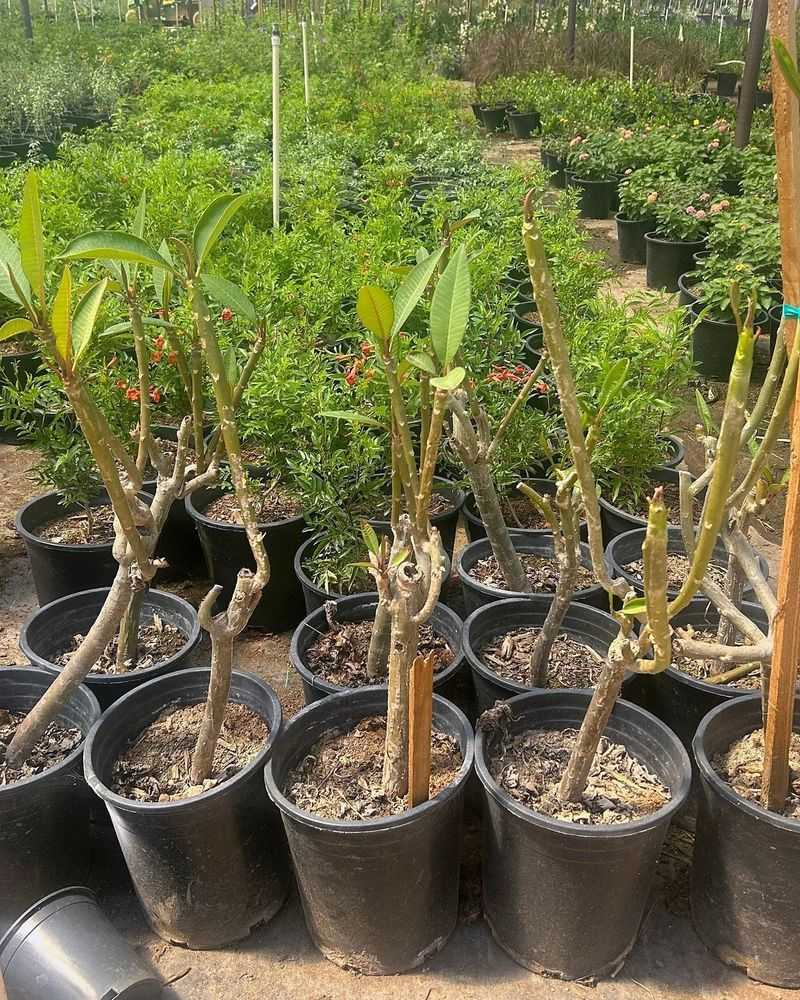
Plants bloom after their leaves reestablish, so flowers follow new growth rather than leading it.
That means a bare plant in February is not behind schedule. Watch for fresh leaves in spring, and expect blooms to come after that.
Early or heavy flowering is never guaranteed by anything you do in November.
Age and origin also play a part. University of Wisconsin Extension notes that cuttings may take one to three years to bloom, and seed-grown plants three or more years.
A young plant that skips flowers is not necessarily doing anything wrong.
Think of the checklist as seasonal care. You are protecting roots, limiting rust, and avoiding cold damage so the plant has a fair start when warm weather returns.
Match the November check to your plant and forecast
Walk out to your plumeria this month with a short list. Look at the leaf drop, clear what has fallen, water less as growth slows, hold off on routine feeding, and plan for cold based on the forecast.
Each step should fit your plant’s pot or planting spot and your corner of Florida, not a statewide calendar.
A plumeria in a sheltered Zone 10B yard and one in an exposed North Florida pot need different calls on the same night. Check UF/IFAS winter protection tips when a cold night is forecast.
For general plant needs, UF/IFAS plumeria guidance is a handy reference.
A resting plumeria asks for very little. Mostly it wants you to pay attention.