
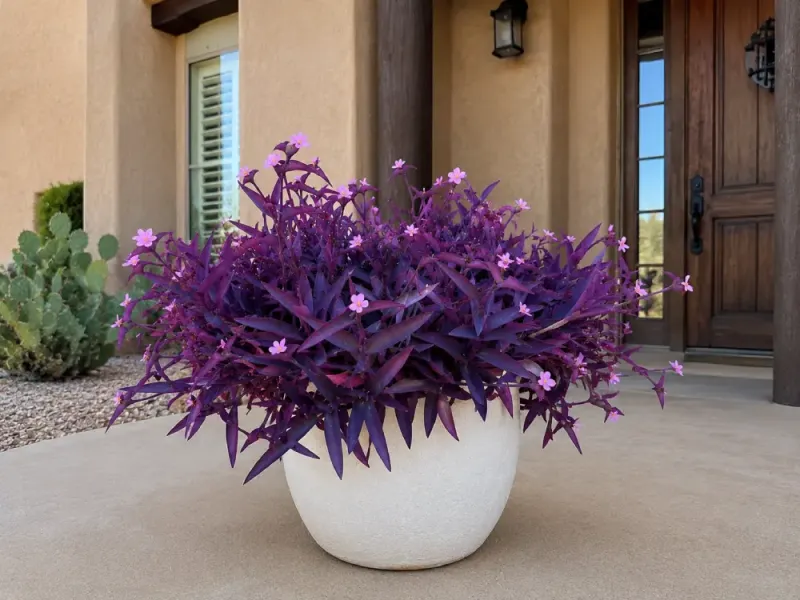
A concrete patio in a Texas summer can get hot enough to cook the roots of most potted plants by mid-July. The slab soaks up sun all day and keeps radiating heat long after dark, so pots dry out fast and tender plants give up.
The good news is that some tough, beautiful plants actually love this kind of punishment. Here are ten container picks that keep their color and shape even when the thermometer pushes past 100.
1. Lantana
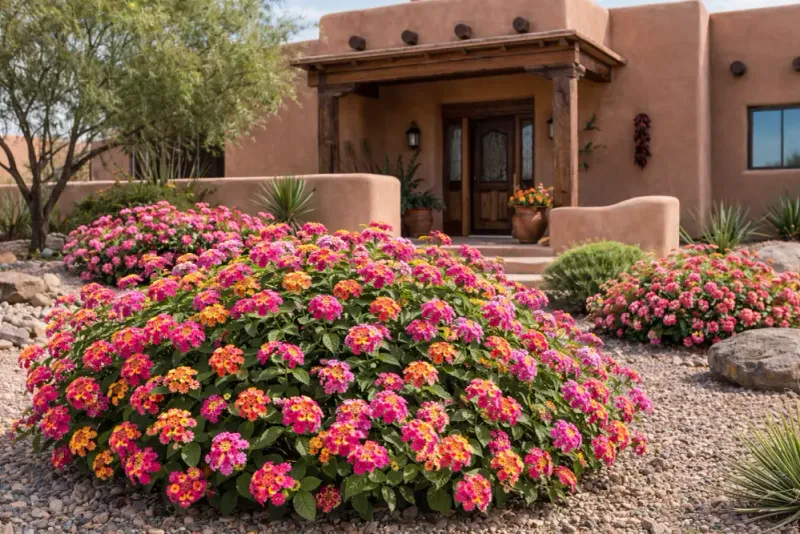
Ask any Texas grandma what still blooms in August, and lantana will probably be the first word out of her mouth. It shrugs off reflected heat from concrete like it was built for the job, and in a sense it was.
Native Texas lantana (Lantana urticoides) grows wild across the state.
In a pot, trailing or mounding varieties like New Gold or Chapel Hill spill over the edges and flower nonstop from spring until the first cool snap. Butterflies, including monarchs passing through, tend to show up within days.
Give it a container at least 14 inches wide so the soil does not bake dry between waterings. Skip heavy fertilizer, since too much can mean more leaves and fewer flowers.
A quick trim in midsummer keeps it tidy if it starts getting leggy.
2. Esperanza (Yellow Bells)
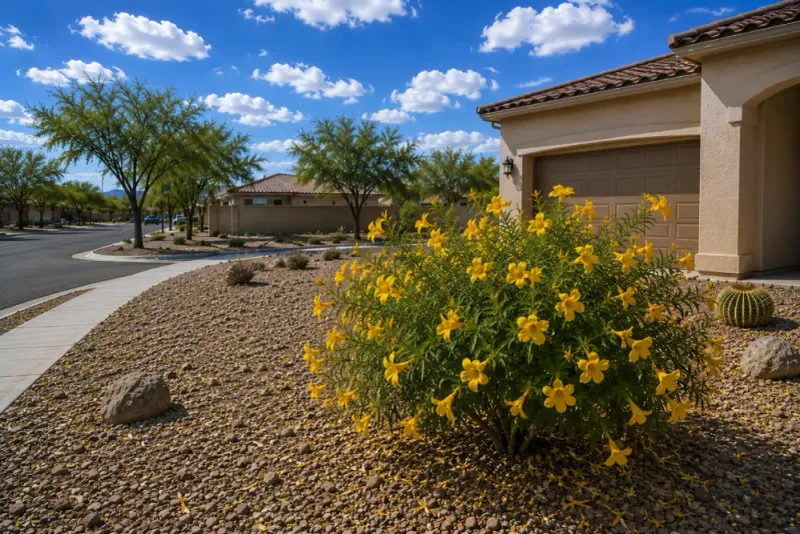
The name means hope in Spanish, and it fits. When everything else on the patio looks tired, esperanza is just hitting its stride with clusters of sunny yellow trumpets.
Tecoma stans is native to parts of West Texas and thrives in blazing sun. In a large container, around 20 gallons, it can reach four or five feet, giving your patio some real height and a focal point near a door or seating area.
Hummingbirds visit the tubular flowers regularly. Water deeply about twice a week in peak summer, letting the top inch of soil dry out first.
In much of North Texas, pots may need to be moved into a garage during a hard freeze, while South Texas gardeners can usually leave them out.
3. Pentas
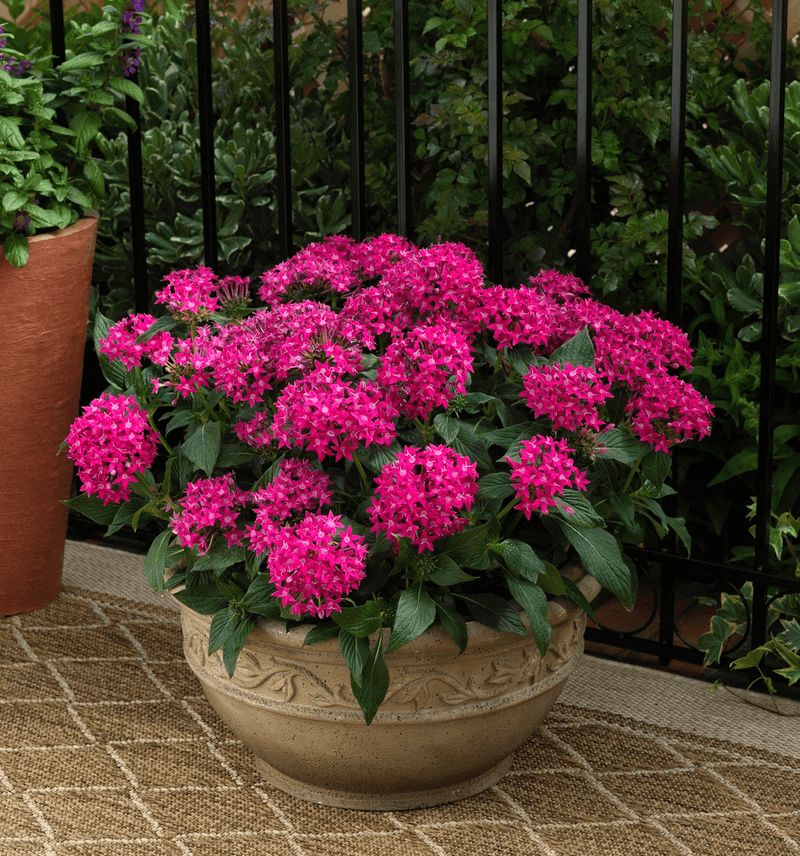
Picture a hummingbird zipping in at breakfast, dipping into a cluster of tiny red stars. That is the everyday scene pentas can bring to a hot patio.
Also called Egyptian star clusters, pentas hold up through Gulf Coast humidity and Central Texas heat without losing their bloom power. The flower heads come in red, pink, lavender, and white, so they play nicely with almost any color scheme.
Unlike some heat lovers, pentas like steady moisture. A self-watering container or a saucer underneath can help on scorching days.
Pinch off spent flower clusters now and then, and they will keep pushing out new ones well into fall.
4. Purple Heart (Setcreasea)
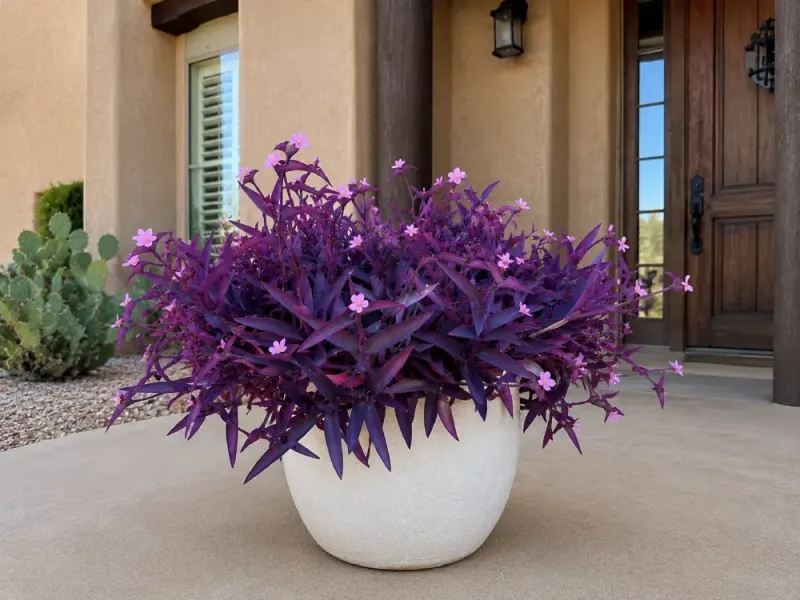
Some plants earn a spot with flowers. Purple heart earns it with leaves so richly violet they look almost painted.
Tradescantia pallida is close to indestructible in Texas containers. Full sun actually deepens the color, and the trailing stems drape beautifully over the edge of a tall pot or hanging basket.
Small pink flowers pop up in the mornings as a bonus.
It handles skipped waterings better than most patio plants, which makes it a smart pick if your city has watering restrictions. Pair it with chartreuse sweet potato vine or yellow lantana for a combo that looks designer-planned with almost zero fuss.
Broken stems root easily, so you can share cuttings with neighbors.
5. Agave
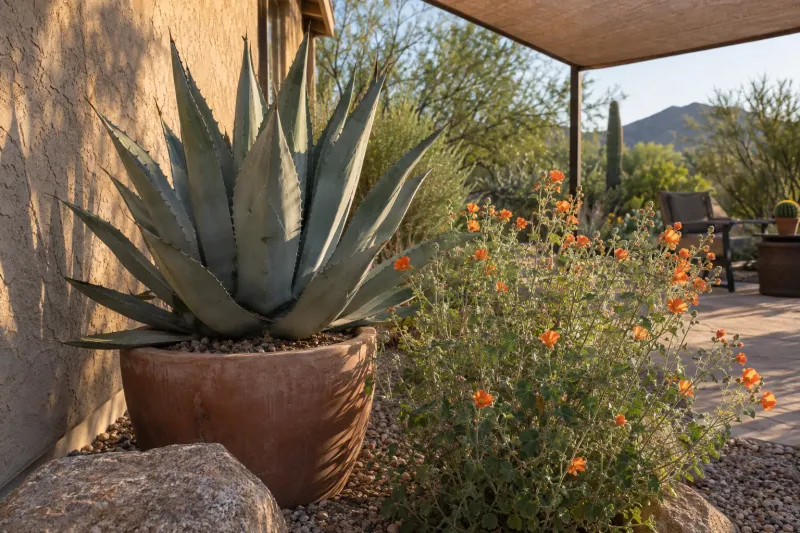
Here is a plant that practically asks you to forget about it. Agaves store water in their thick, sculptural leaves, making them perfect for a patio that bakes from sunrise to sunset.
Smaller species like Agave parryi or Agave victoriae-reginae stay manageable in pots and bring a bold, modern look. Use a fast-draining cactus mix and a container with a large drainage hole, since soggy roots are far more dangerous to agave than drought.
Place them where people will not brush against them, because many have sharp tips. Water every couple of weeks in summer and barely at all in winter.
Fun fact: some agaves bloom only once after many years, sending up a towering flower stalk before the mother plant dies off.
6. Mexican Bush Sage
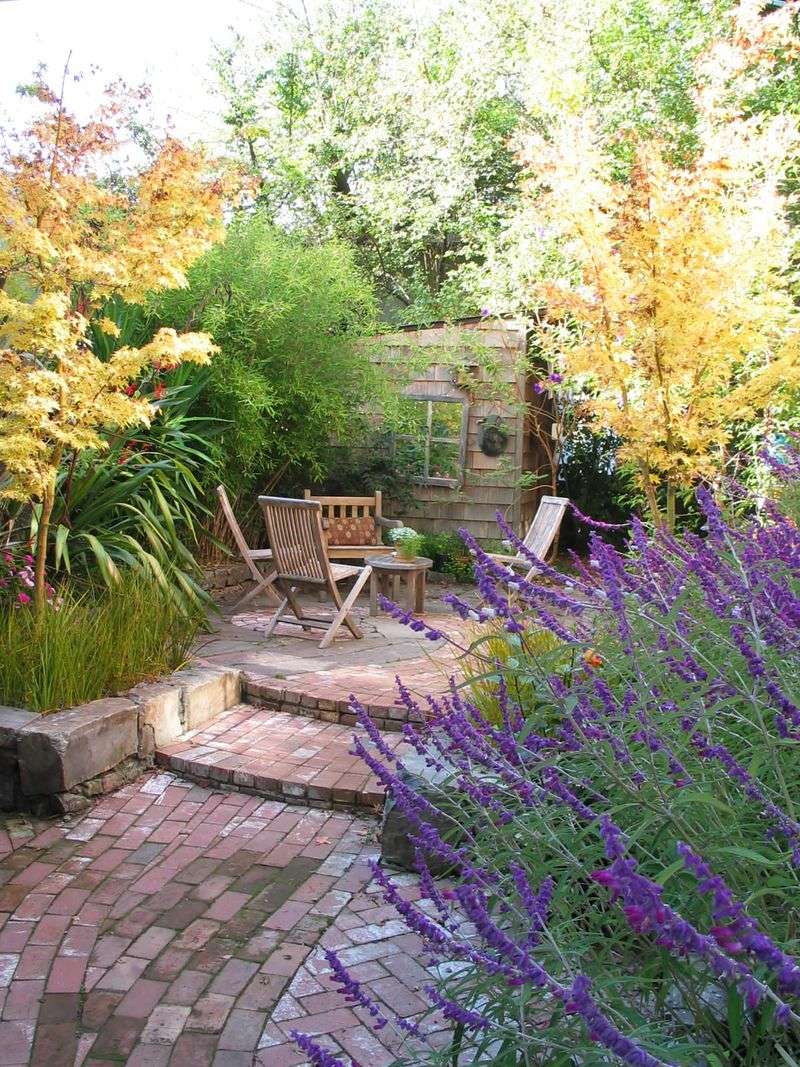
Fuzzy, velvet-purple flower spikes make Mexican bush sage one of those plants guests reach out to touch. It grows into a soft, arching mound that looks great in a big pot.
Salvia leucantha handles heat and drought well, then puts on its biggest show from late summer into fall. That timing matters on a Texas patio, because it gives you color when many spring bloomers have faded.
Bees and butterflies love it.
Choose a roomy container, since mature plants can get three to four feet wide. Cut it back by about a third in early summer if you want a more compact shape.
After a freeze, trim it to the ground, and it usually returns from the roots in warmer parts of the state.
7. Portulaca
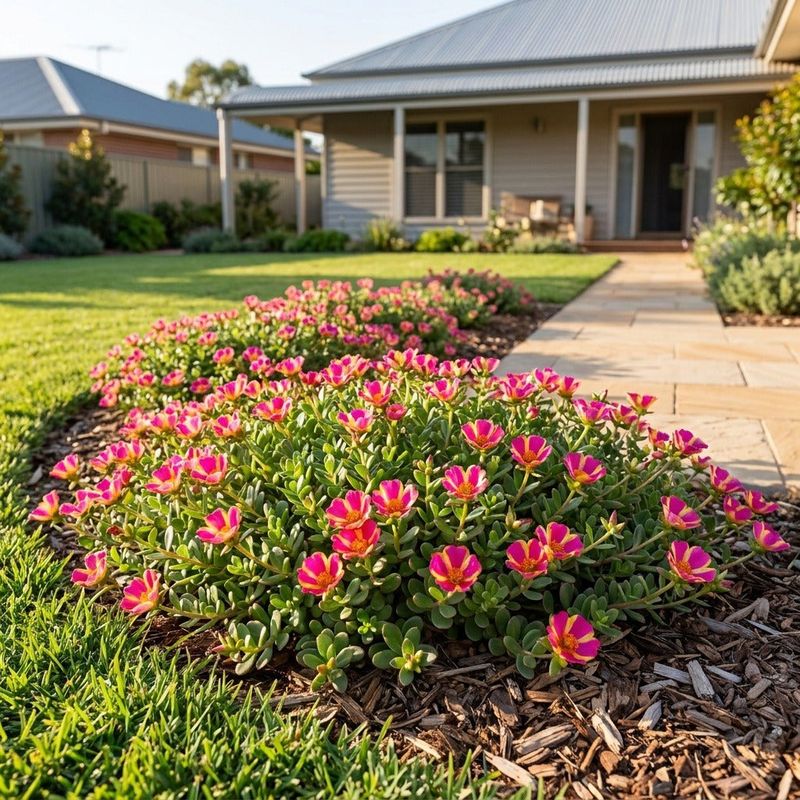
Moss rose opens its jewel-toned petals in bright sun and closes them on cloudy days, almost like it is checking the weather. On a Texas patio, it will be open almost every day.
Portulaca’s succulent leaves hold water, so shallow bowls and wide, low planters work well. The flowers come in hot pink, orange, yellow, and white, and newer varieties stay open longer into the afternoon.
Plant it in well-drained soil and let it dry out between drinks. Keep it on the hottest edge of the patio, where other plants struggle.
It is also a cheap way to fill pots quickly, since one small six-pack can carpet a container in just a few weeks.
8. Bougainvillea
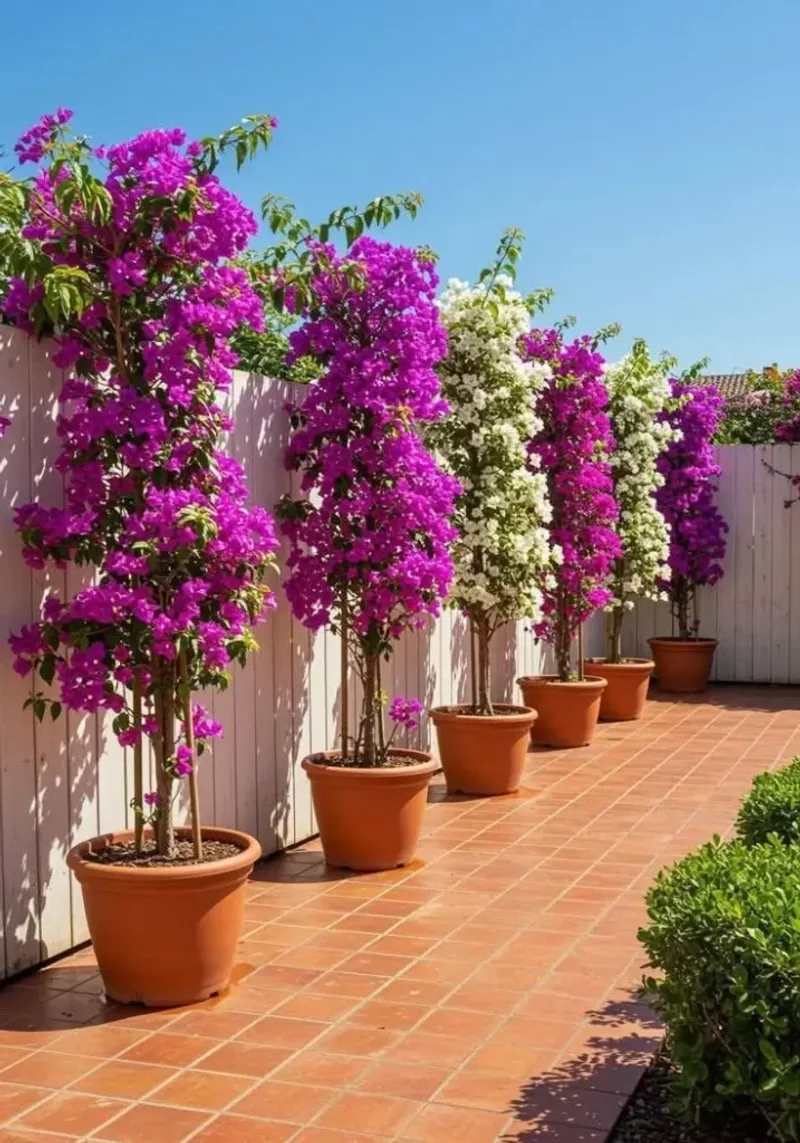
Nothing says vacation quite like a cascade of magenta bougainvillea. Bring that resort feel home, and the hot patio becomes its happy place.
The bright color actually comes from papery bracts surrounding tiny white flowers. Bougainvillea blooms best when its roots are a little snug and the soil dries between waterings, so a slightly tight pot can help.
Too much water and fertilizer may lead to leaves instead of color.
Add a trellis for a vertical splash against a wall, or let it trail from a large urn. Watch for thorns when pruning.
Outside of the Rio Grande Valley and coastal areas, plan to move it indoors or into a garage when freezing nights arrive.
9. Blackfoot Daisy
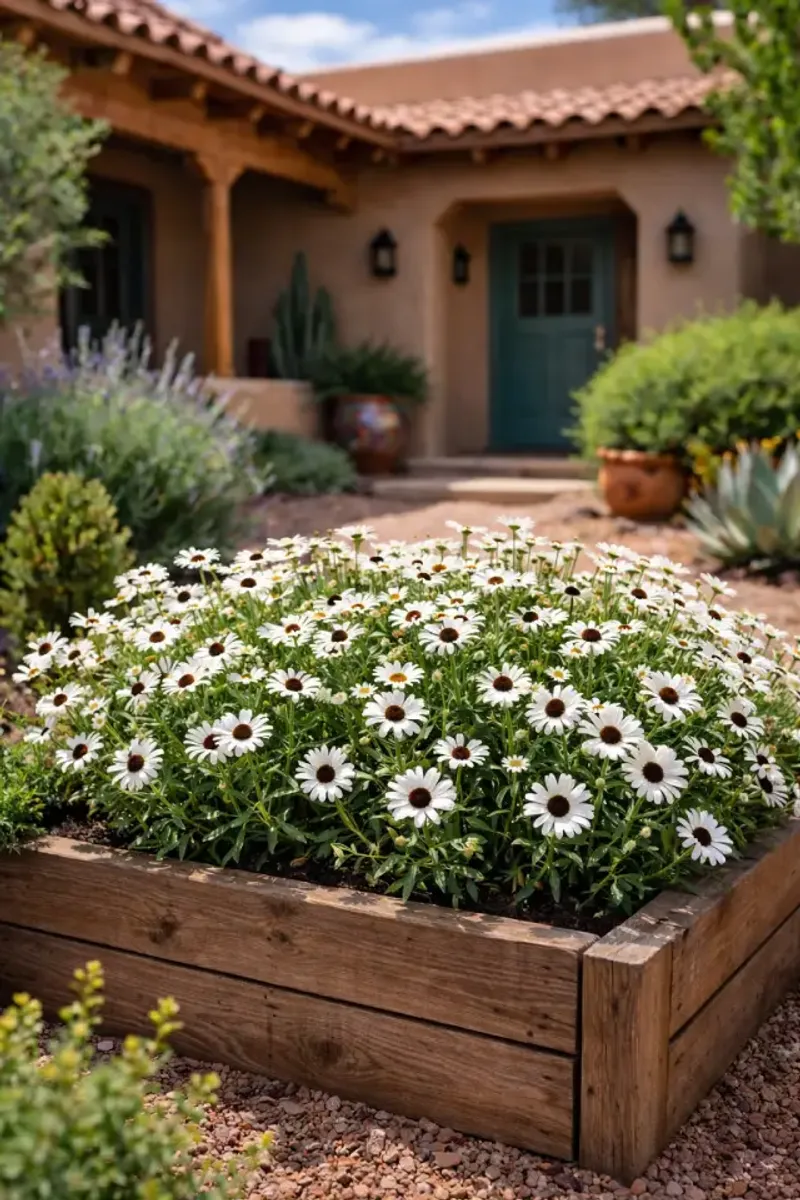
Small but mighty, blackfoot daisy is a Texas native from the rocky hills of the Edwards Plateau and West Texas. It is used to thin soil, harsh sun, and very little rain.
Melampodium leucanthum forms a neat mound covered in honey-scented white daisies with yellow centers. It blooms for months and stays low, so it works nicely at the front of a grouping or in a shallow stone trough.
The biggest mistake is kindness. Overwatering and rich potting soil can rot it, so use a gritty mix with added pumice or decomposed granite.
Treat it a little rough, and it rewards you with flowers through the hottest stretch of the year.
10. Firebush
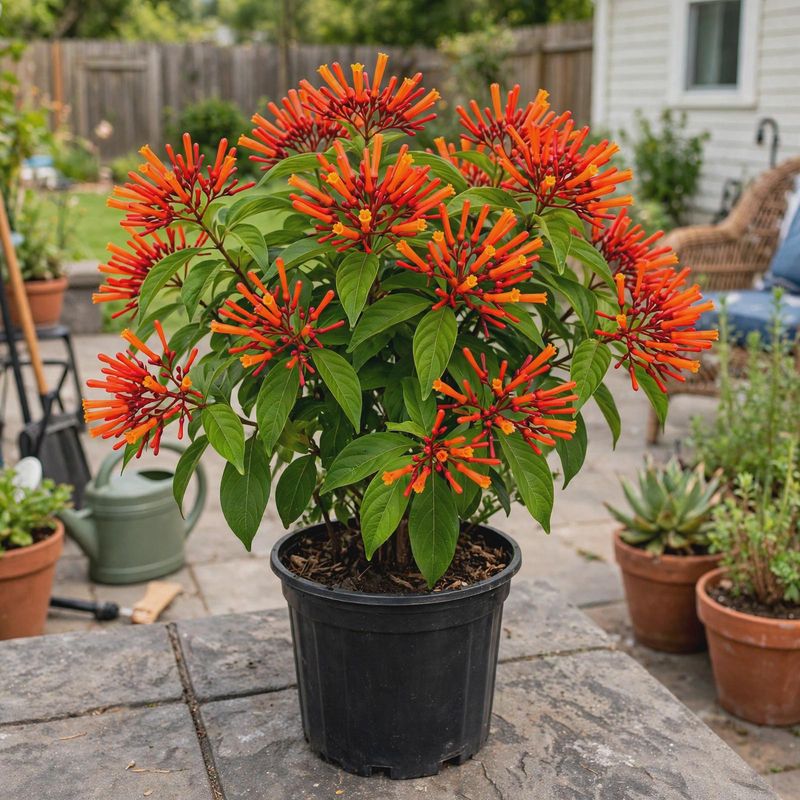
If hummingbirds had a favorite restaurant on your patio, firebush would be it. Its red-orange tubular flowers seem made for long, thin beaks.
Hamelia patens laughs at triple-digit days, and its leaves often take on a reddish tint as temperatures cool in fall. In a big container, it grows into a lush, rounded shrub that adds tropical fullness without needing pampering.
Water regularly while it settles in, then deeply once or twice a week during peak heat. Butterflies like the blooms too.
In cooler parts of Texas, it acts like a perennial that dies back in winter, so protect the pot from hard freezes and expect fresh growth in spring.
For a quick takeaway: group a few of these plants together, use big pots, and water deeply in the morning. Your patio can stay full of color all summer long.