
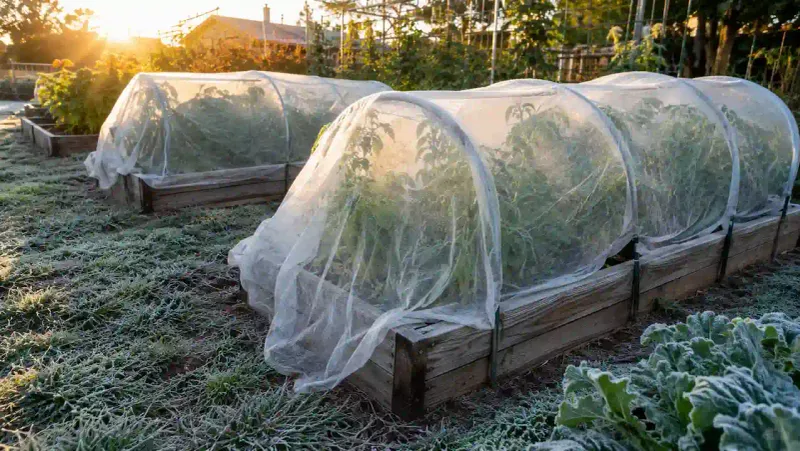
A surprise cold snap sends many Southern gardeners running for whatever is in the garage, and a roll of plastic sheeting is often the first thing they grab. Plastic is not always the villain, but how you use it can make the difference between a healthy plant and a mushy one.
Touching leaves and sunny mornings are the two big trouble spots. Here is how to cover your tender perennials so they get the protection you intended.
Plastic can pose two separate risks
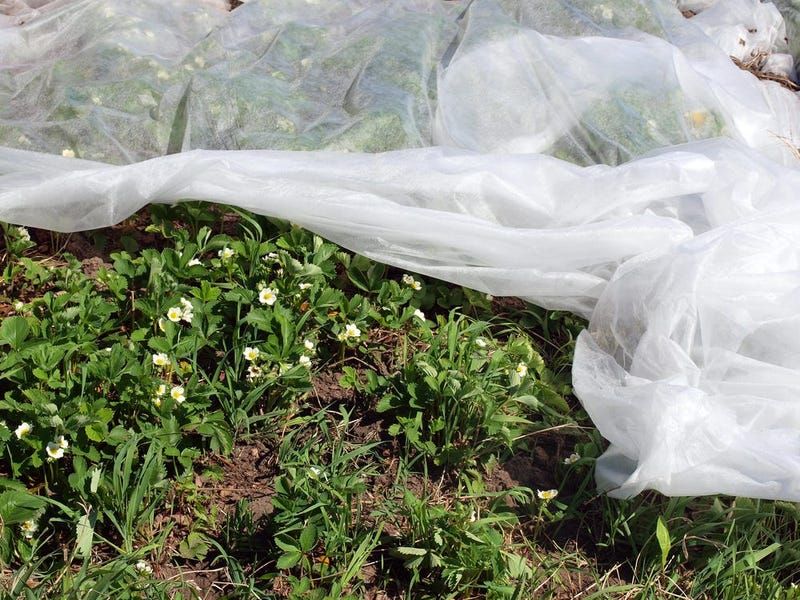
Gardeners often say plastic burns plants, but two different things can go wrong. The first happens at night.
When plastic rests right on the leaves, cold can pass through to the plant tissue, and Texas A&M AgriLife Extension describes that kind of contact injury as tissue that actually freezes.
The second problem shows up the next morning. Clear plastic left in place when the sun comes out can trap heat, and the air underneath may climb fast enough to stress or damage the plant.
That is a heat problem, not a freezing one, so the two should not be lumped together.
Neither outcome is guaranteed. Plastic is not automatically worse than leaving a plant bare.
According to UF/IFAS cold protection guidance, a supported plastic enclosure can work when it stays off the foliage and is managed as the day warms. Setup and timing decide how it turns out.
Make a ground-reaching fabric cover
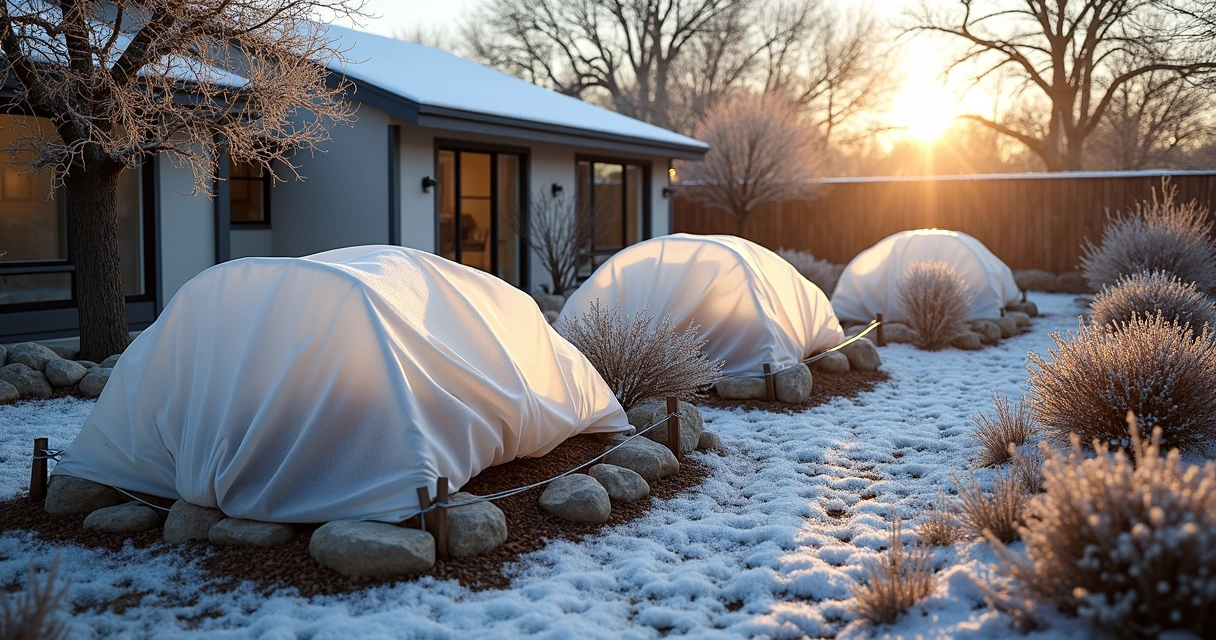
Timing matters most. Cover susceptible plants before sunset, using frost cloth, an old sheet, or a blanket, so the soil’s stored warmth is still available to capture.
UF/IFAS Extension in Pinellas County suggests letting the cover reach the ground and securing its edges against wind.
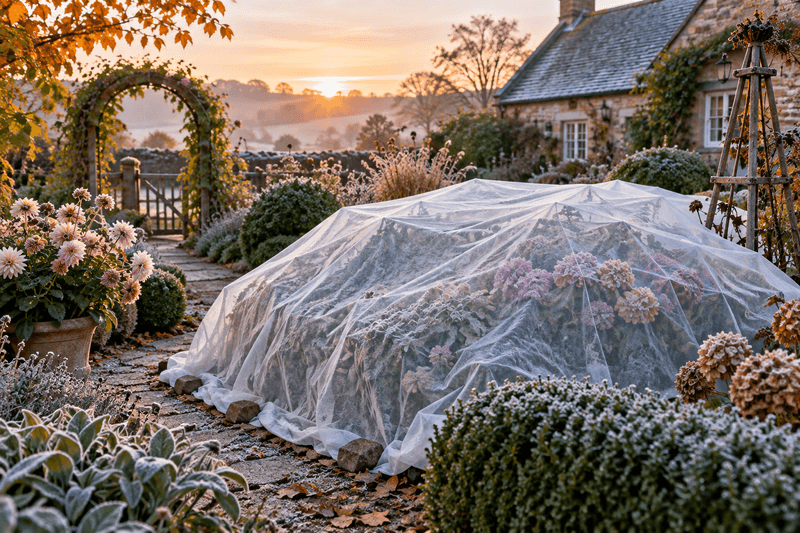
Next, build a little frame. Push a few stakes into the soil, set a tomato cage over a small plant, or bend hoops over a bed, then drape the fabric on top.
Where practical, this keeps the material from pressing on the leaves and rubbing them in the breeze.
Keep the jobs straight. The frame does not make heat.
It mostly prevents contact and abrasion. The fabric that drops all the way to the soil is what helps hold in warmth rising from the ground, as Texas A&M explains.
Bricks, rocks, or landscape pins hold the hem down, and a cover that ends at the plant’s knees leaves a gap for warmth to escape.
Manage covers as temperatures change
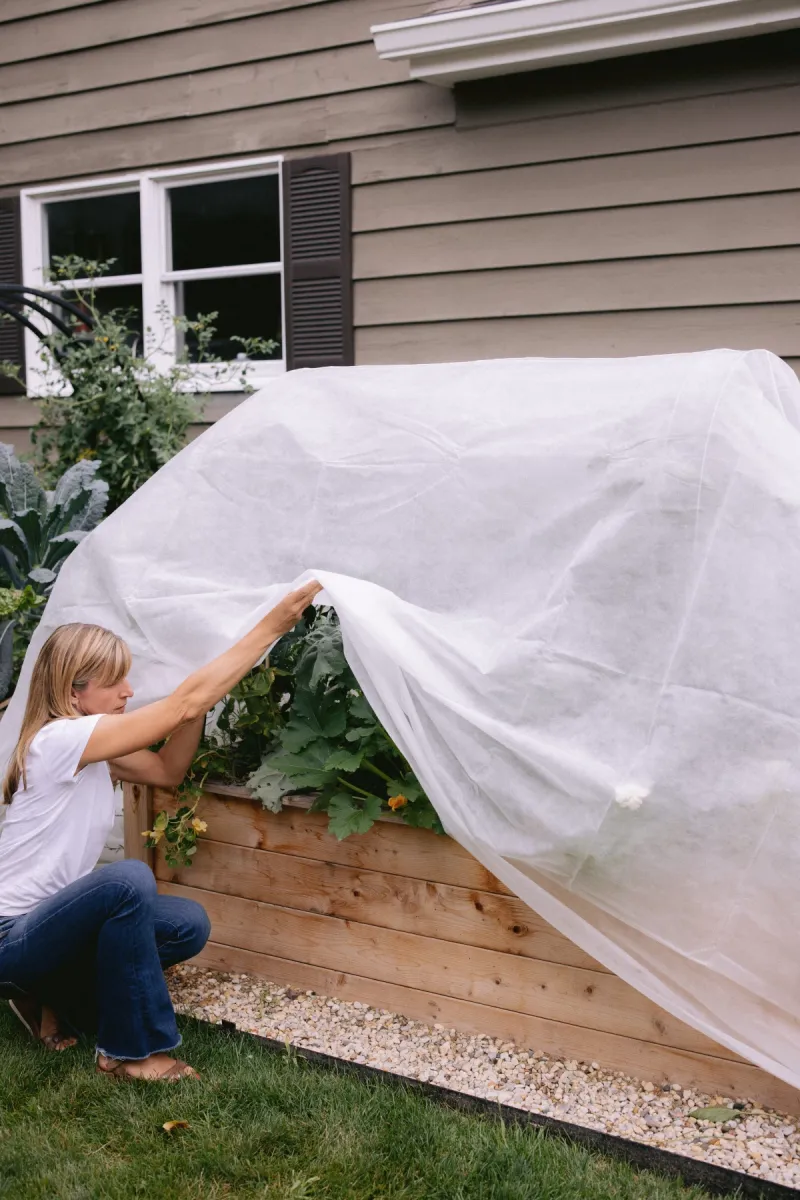
A cover is not a set-it-and-forget-it item. Ordinary sheets and blankets should come off once temperatures climb during the day, since they are not meant to stay on.
Commercial frost cloth is different, and UF/IFAS Extension in Hillsborough County notes that breathable freeze cloth can stay for several days if the product directions allow.
Plastic needs the closest watching. A plastic enclosure should be propped up so it never touches the plant, and it needs venting or removal as the morning warms.
Clear plastic in bright sun can heat up quickly, which is the overheating risk described in UF/IFAS cold protection advice.
A simple habit helps. Check the forecast the night before, then set a phone reminder to uncover plants after sunrise.
If you work long hours, breathable frost cloth is the more forgiving choice.
Protect roots and move portable containers
Containers are the easy win. Pots can be carried to a garage, porch, or sheltered wall, so move them before the cold arrives, as UF/IFAS Extension recommends for portable plants.
Roots in a pot are far more exposed than roots in the ground.
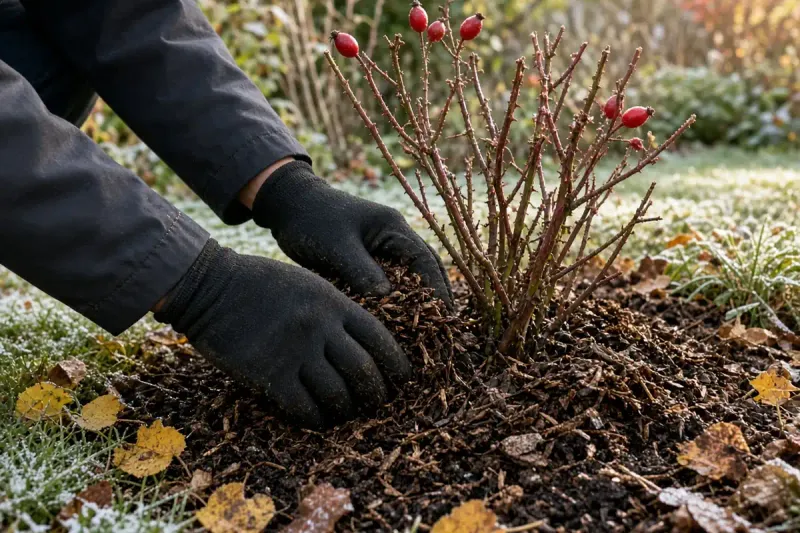
For in-ground perennials, think about the crown and roots first. Many die back above ground and regrow from their root systems in spring, so a layer of mulch over the base may be worth more than trying to save every leaf.
Soil moisture can lend a small hand. UF/IFAS notes that moist soil holds and releases more heat than dry soil.
It is a modest aid, not a stand-in for a cover in a severe freeze, and soaking the ground for long periods can cause its own trouble.
Judge risk by the plant and local forecast
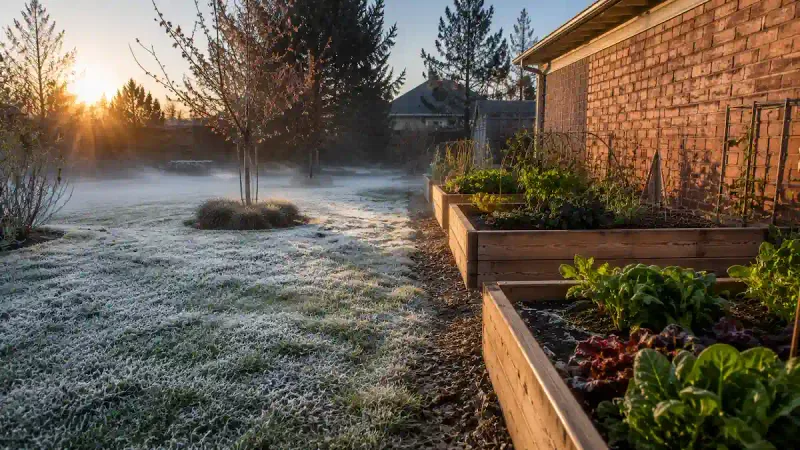
No single number tells you when to cover. Risk shifts with the species, how long the cold lasts, wind, whether the plant has had time to acclimate, its age, and the microclimate in your yard.
A spot near a brick wall or a low corner that collects cold air can behave very differently from the rest of the garden. UF/IFAS Extension in Marion County also notes that frost can form on plant surfaces even when the forecast air temperature is above 32°F.
Set fair expectations, too. Covers help most with frost and brief cold, and UF/IFAS says windy freezes are harder to protect against.
A plant that does not suit your site may struggle regardless.
Skip the lawn sprinkler idea. Protective irrigation only works when it is designed well and runs continuously through the freeze and thaw, and Texas A&M warns that stopping too early can make injury worse.
Most home systems lack the capacity.
Choose a cover without assuming plastic is always worse
Here is a simple rule to keep on hand. Plastic is not always worse than no cover, but it should never rest on the leaves, and any plastic enclosure needs attention as the day warms.
A bare plant is not automatically the safer choice.
When a cold snap sneaks up on you, reach for fabric. Frost cloth, a sheet, or a blanket that reaches the ground and stays off the foliage where practical is the quicker setup, as UF/IFAS Extension in Pinellas County advises.
Keep your hopes realistic. A cover can reduce exposure, but it cannot promise survival in every freeze, especially a long, windy one.
Plants that die back often return from the roots, so patience in spring pays off. Good protection is mostly about the setup, and a few stakes beat a lucky guess.