
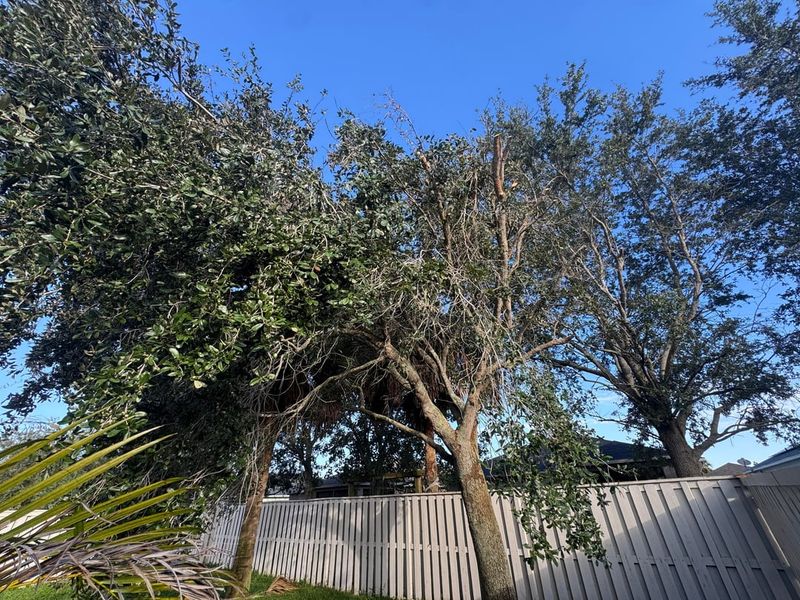
Fall brings falling leaves, and it also brings a close look at limbs hanging over the fence. Many North Carolina homeowners reach for the saw before they know where their property really ends.
A wrong cut can hurt a tree, upset a neighbor, or even lead to a legal problem. A little checking first can save you a lot of trouble.
Start by locating the actual property line
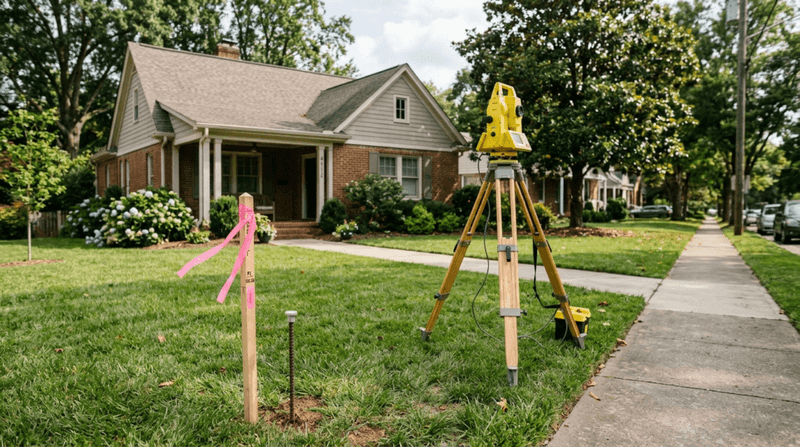
Before you plan a single cut, find out where your yard actually stops. Many people assume the fence marks the line, but fences are often built a little inside or outside the true boundary.
Over the years, a fence can drift from the legal line without anyone noticing.
If you are not sure, a professional survey is the reliable way to settle it. NC State Extension advises that a licensed survey is the dependable way to establish a boundary when it is uncertain.
It also notes that guessing wrong about the line can create liability.
Think about what a mistake could look like. You trim what you believe is an overhanging branch, but the limb actually belongs to a tree standing on your side, or the cut lands on the neighbor’s land.
Either way, you may end up responsible for harm to a tree you do not own.
Look through your closing documents for a plat or an earlier survey, since these may show the lines and any markers. Metal pins at the corners of a lot can also be clues, though they can be buried or moved.
If anything looks off, pay for a survey rather than rely on a hunch.
Once you know the boundary, you can look at the limited trimming guidance for North Carolina homeowners. That guidance depends on the line being right, which is why this step comes first.
Every later decision in this article builds on it.
The right to trim stops at the boundary
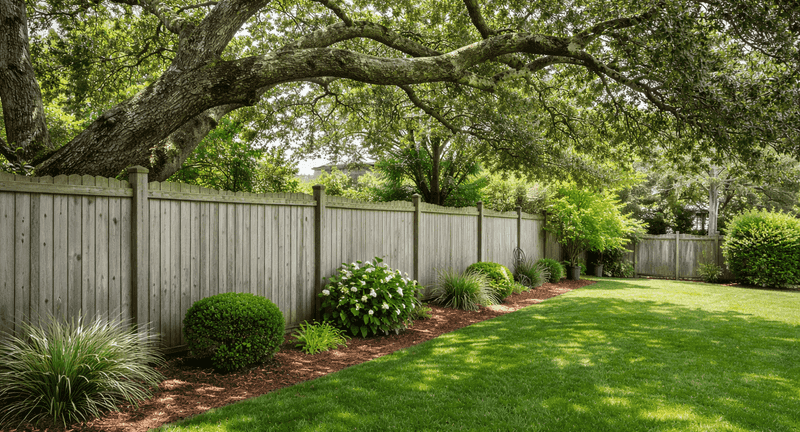
Here is the general rule in plain terms. According to the North Carolina Disaster Assistance Manual, a homeowner generally may trim branches that extend over their property.
The trimming can only go back to the boundary, and it must not kill the tree.
Two limits come with that rule. The first is that it covers the part of the branch hanging over your land.
It does not give you permission to step onto the neighbor’s yard, lean over the fence line with a pole saw from their side, or cut anything beyond the boundary.
The second limit is that you cannot make your neighbor do the trimming. The same manual says a homeowner generally cannot require the neighbor to cut back overhanging limbs.
Self-help on your side of the line is the main option.
Some neighbors will gladly handle it if you ask kindly, and a friendly conversation often works better than a surprise. A short note or a chat over the fence can also head off hard feelings.
Still, a neighbor saying yes does not mean you may walk onto their property to do the work, so get clear permission for that separately.
This is general guidance, not a promise for every lot or every dispute. Special facts, local rules, or a tree sitting on the line can change the answer.
When something about your situation feels unusual, a short talk with a local attorney can be money well spent.
A careful cut protects the tree
Once you know a limb is truly over your side, the way you cut matters. A sloppy cut can leave a wound that invites decay and stress, and that is exactly the harm you want to avoid.
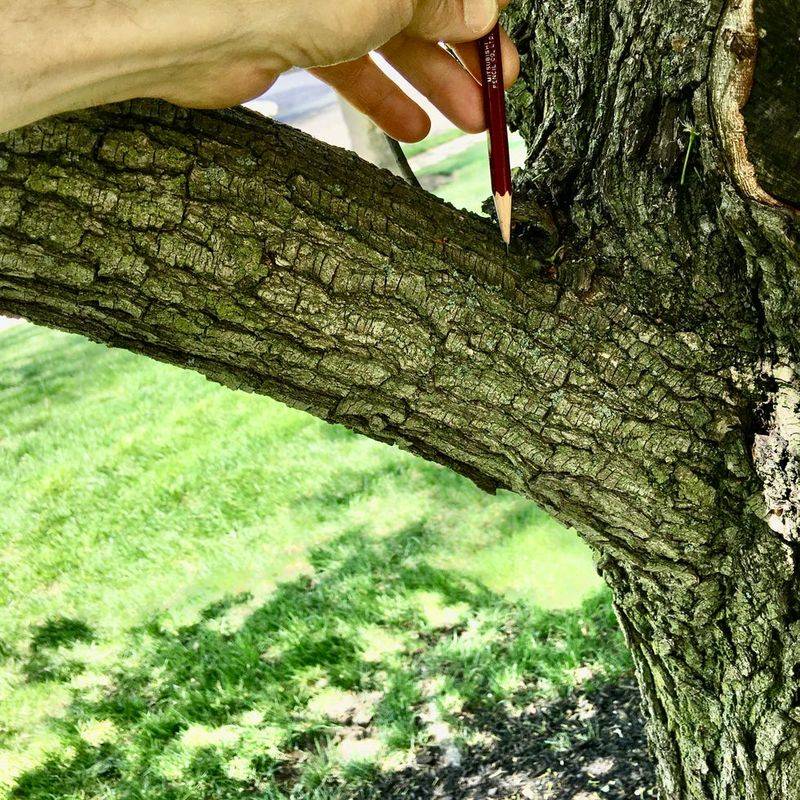
NC State Extension’s pruning guidance recommends making cuts just outside the branch collar, the slightly swollen ring where the branch meets the trunk or a larger limb.
Do not cut flush with the trunk. Flush cuts remove the collar, which is the area that helps the tree seal off a wound.
Leaving it in place gives the tree its best chance to heal.
Look for the collar before you start. It often shows up as a wrinkled or raised band at the base of the branch.
Use sharp, clean tools, since dull blades tear bark and leave ragged edges.
Small branches that you can reach from the ground are a fair do-it-yourself job for many homeowners. Large limbs are a different story.
They are heavy, they can swing or split as they fall, and a bad cut can strip bark down the trunk.
For big limbs or mature trees, the same guidance suggests considering a certified arborist. A pro can also tell you how much a tree can lose without suffering.
Remember that the aim is a tidy yard and a healthy tree, not a quick fix that leaves your neighbor with a damaged one.
Roots and boundary trees are different cases
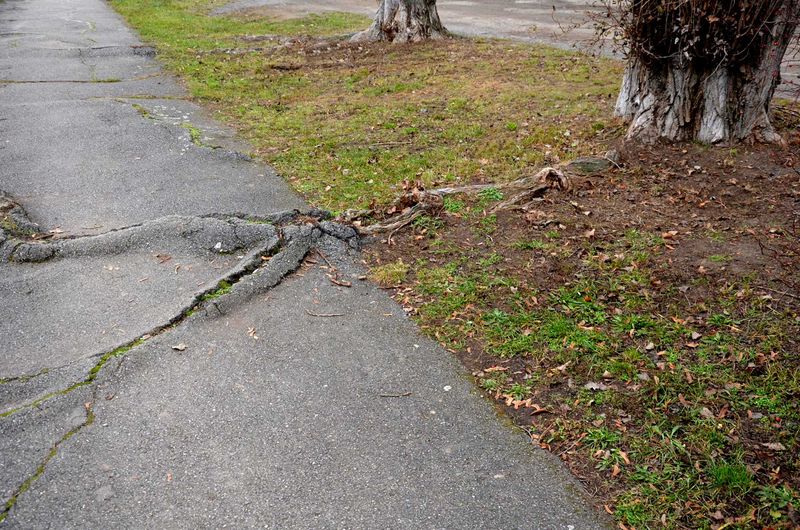
Branches get the clearest guidance, but roots and boundary trees do not follow the same simple rule. The state legal-aid manual from the North Carolina Pro Bono Resource Center spells out trimming overhanging limbs.
In the guidance reviewed, it does not set a matching blanket rule for cutting roots, so do not assume root cutting is automatically lawful.
Roots are also a safety matter. Cutting them can weaken a tree or make it unstable.
NC State Extension’s tree liability guide points out that cutting a large anchoring root can be a fact that matters if the tree later falls and negligence is argued.
If roots are lifting a walkway or crowding a foundation, talk with an arborist first. Ask the neighbor for agreement before any significant root work.
A written note of what you both agreed on can help later.
Boundary trees are another special case. If the trunk sits on the line or crosses it, you are not dealing with an ordinary overhanging branch.
The state manual notes that ownership interests may arise when a tree is on the property line.
Start by confirming the boundary, since NC State Extension recommends a survey when the line is unclear. Then seek the neighbor’s agreement before any substantial pruning, removal, or root work.
Doing it together protects the tree and the relationship.
Some jobs call for a professional or a local-rule check
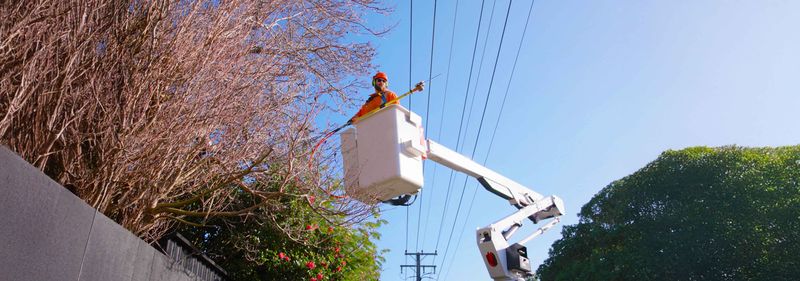
Some tree jobs are not worth the risk of doing yourself. The North Carolina Department of Labor says to assume power lines are energized.
It also says tree work within 10 feet of a power line must be done by trained, experienced line-clearance tree trimmers.
That means no ladder, no pole saw, and no reaching with a long tool toward a limb near a wire. A branch touching a line can carry current, and so can wet wood or a metal tool.
If a limb is near a line, call the utility company or a qualified line-clearance contractor.
Rules are the second reason to pause. Even when the branches are clearly yours to trim, local requirements may still apply.
NC State Extension notes that cities and counties across North Carolina may have tree protections, and these can matter for certain protected trees, public right-of-way trees, or development-related work.
State guidance does not override those local rules. So check your city or county ordinance, your HOA covenants, and any easement on your lot before you cut.
A utility easement, for example, may limit what you can do near the lines.
A quick call to the planning office or a read of your HOA documents can save a fine. Safety worries or local rules are both good reasons to put the saw down.
A dangerous tree calls for notice, not unilateral removal
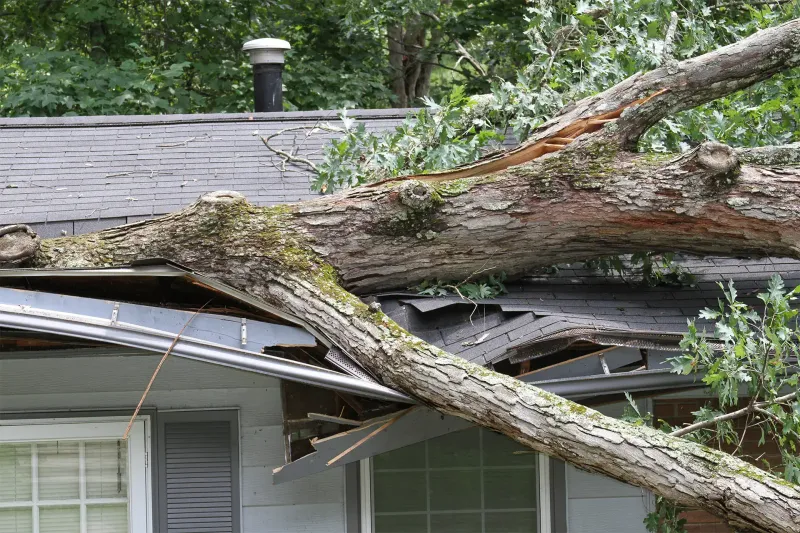
Say you spot a leaning trunk, a cracked limb, or dead branches hanging over your roof. Your first move is to speak up, not to grab a chainsaw.
The North Carolina Disaster Assistance Manual advises telling the neighbor about a dangerous tree and asking them to address it.
Put your concern in writing as well, such as a polite letter or email. Describe what you see, add dated photos, and mention which part of the tree worries you.
That gives you a record that the owner was told.
Why does notice matter? Liability for damage from a falling tree does not simply follow the property line.
NC State Extension explains that a tree owner’s responsibility generally turns on negligence and whether the danger was reasonably foreseeable.
In other words, an owner who knew about an obvious hazard and did nothing may face a different situation than one whose healthy tree fell in a freak event. No one can promise how a particular case would turn out.
If the neighbor does not respond and you remain worried, consider asking a certified arborist to look at the tree and write up the findings. You may also want to talk with an attorney or your insurance agent.
Avoid cutting the tree down yourself, since removing a neighbor’s tree can create its own problems.
Leaf drop and storm damage need different responses
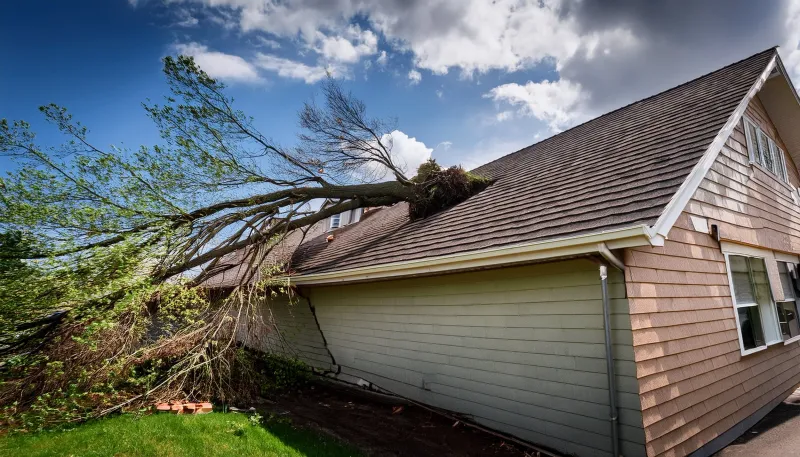
A yard full of leaves in October is a normal part of living near trees. Falling limbs and trees that were already in dangerous shape are a different matter.
The sources reviewed support the idea that ordinary natural events differ from a foreseeable danger, but they do not lay out a complete rule for every leaf, twig, or bit of debris.
So treat routine leaf drop as yard work first. If a particular tree keeps dropping heavy dead limbs, though, that pattern may be worth raising with the owner.
NC State Extension’s liability guide ties responsibility to negligence and foreseeable danger rather than to simple ownership.
After a storm, take photos of the damage before cleanup, and then start with your own insurance. In practice, damage and removal costs are commonly handled through the affected owner’s policy, though a negligent tree owner may sometimes be liable.
Coverage depends on the policy, so do not assume that your neighbor will pay or that your insurer will cover removal.
The North Carolina Disaster Assistance Manual’s insurance section advises contacting your insurer or agent about the specific loss. Ask what is covered, what your deductible is, and what paperwork to keep.
Hold onto receipts for emergency steps such as tarping a roof.
Pause before the cut if the facts are uncertain
Think of it as a short checklist. Confirm the line, trim only what hangs over your side, and make clean cuts that leave the tree healthy, as the state manual and NC State Extension suggest.
Stop and get advice when roots, boundary trunks, hazards, or local rules enter the picture, and leave anything within 10 feet of a wire to trained line-clearance crews.
A branch can be cut in minutes, but a bad cut can last for years.