
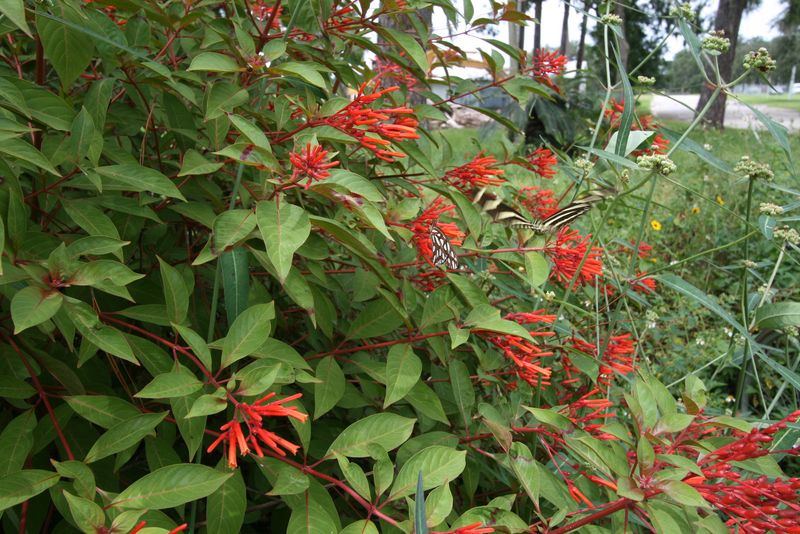
When November rolls around, many Florida flower beds start to look tired. Florida firebush is one plant that may keep sending out bright orange-red blooms after other flowers fade.
Its tube-shaped flowers are the kind hummingbirds are known to visit. Here is how to choose it, place it, and care for it, plus what else to plant alongside it.
Firebush can flower toward Florida’s first frost
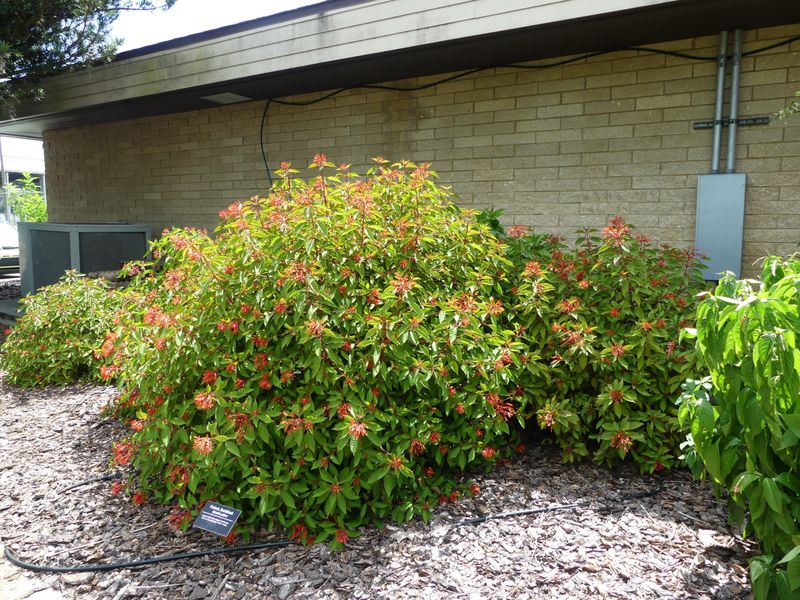
Here is the good news for a fading fall garden: Florida firebush (Hamelia patens) is one of the few shrubs that keeps flowering as the weather cools. UF/IFAS Gardening Solutions describes its bloom season as lasting from late spring until the first frost.
That makes it a strong candidate for gardeners who want nectar in the yard late in the year.
Another UF/IFAS listing gives a slightly different picture. In its nectar plants list, the bloom period is spring through winter.
The two descriptions fit together when you think about geography. Where frost comes late or rarely, flowering can run longer, and where a freeze arrives early, blooms stop sooner.
So whether your firebush is covered in flowers in November depends on your location, the weather that year, and how the plant is growing. A yard in the Panhandle will likely see blooms end well before one in the Keys.
Plants that are stressed by drought or poor siting may also flower less.
Hummingbird visits are just as hard to predict. Hummingbirds do turn up in Florida in late fall and winter, but presence and species vary, and Project FeederWatch notes that ruby-throated hummingbirds are rare in winter outside extreme South Florida.
Planting firebush gives birds a reason to stop by, but it cannot promise they will.
Why hummingbirds may visit firebush flowers
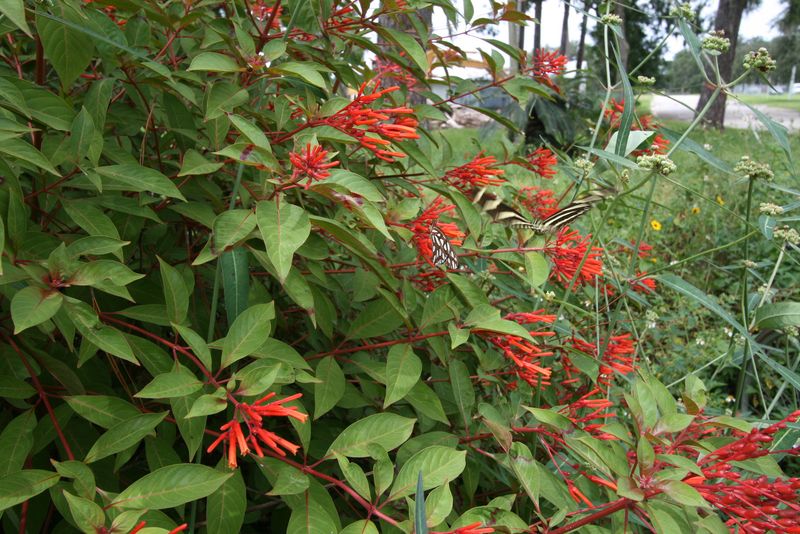
Take a close look at a firebush flower and you will see why it gets so much attention. The blooms are small, tubular, and orange-red, and they appear in clusters at the ends of the branches.
UF/IFAS lists hummingbirds among the wildlife the plant attracts.
The Florida Museum of Natural History says the same thing, describing the flowers as year-round and appealing to hummingbirds. That fits the broader pattern in UF/IFAS hummingbird garden guidance, which says these birds favor red, orange, or pink flowers, often with a tubular shape.
Firebush checks those boxes on both color and form. A long, narrow flower suits a hummingbird’s slim bill and tongue, and bright colors are easy for the birds to spot from the air.
The UF/IFAS nectar plants list also describes firebush as a small tubular orange-red bloom suited to North, Central, and South Florida.
Still, color and shape only improve the odds. Whether a bird finds your shrub depends on migration timing, nearby habitat, and which species are in your area that season.
Think of firebush as a well-set table, not a guest list.
Florida location changes how firebush grows
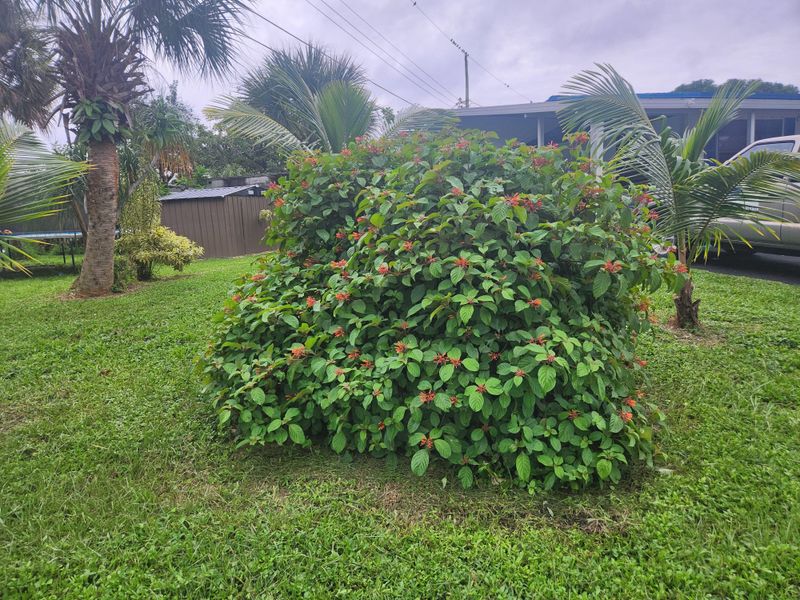
Where you garden decides what firebush looks like. In South Florida, UF/IFAS says it can reach up to 15 feet, though you can keep it at a smaller size.
If you have a tight spot, plan for that mature size before planting.
North Florida is a different story. After the first freeze, firebush may die back, then regrow in spring.
Gardeners there should expect a shorter bloom window and leave the damaged stems alone until new growth shows, rather than assuming the plant is lost.
Central Florida falls between the two. Size and winter performance there depend on how often cold snaps reach your yard, so a sheltered spot near a wall may help.
Before you buy, check the name on the label. Florida firebush is Hamelia patens, and it is native.
Dwarf firebush, sold as Hamelia patens var. glabra, is not native according to UF/IFAS, and the UF/IFAS EDIS publication on Hamelia patens covers the species in detail. Common names get mixed up at garden centers, so the botanical name is the safest guide if you want a native planting.
Give firebush sun and well-drained soil
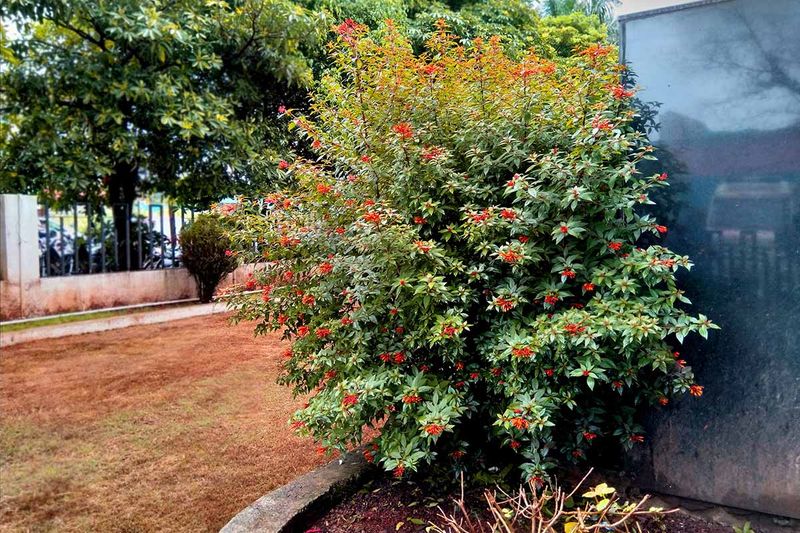
A sunny spot with soil that drains well sets firebush up for the most flowers. UF/IFAS says it grows best in full sun but tolerates partial shade.
Expect fewer flowers in a shadier bed, so save the brightest part of the yard for it.
Good drainage is easy to come by in much of Florida, where sandy soil lets water pass quickly. If your yard has a low spot that stays soggy after summer storms, pick a higher, drier place instead.
A mounded bed can help in areas that collect water.
Watering is where new plants differ from older ones. A fresh planting needs regular watering while it becomes established, so check the soil often during the first months, especially in dry spells.
Sandy ground dries out fast, and a new root system cannot reach deep moisture yet.
Once established, firebush is heat and drought tolerant. That is the low-effort payoff many Florida gardeners want, but it is earned by those early weeks of care.
Give it a good start, then ease off as the plant settles in and starts working for you.
Prune lightly to protect flowering
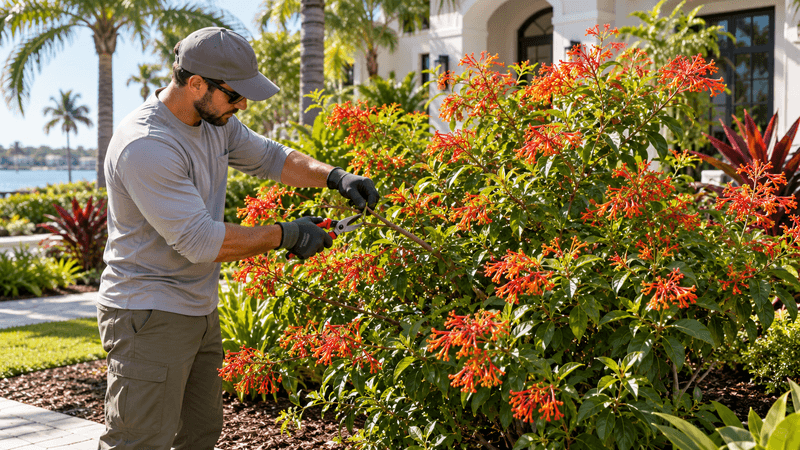
Many gardeners reach for the shears the moment a shrub gets bigger than expected. With firebush, that habit can cost you flowers.
UF/IFAS warns that hard pruning, or pruning too often, may reduce blooming.
The practical lesson is to go easy. If the plant is crowding a walkway, take off the extra growth that is in the way and leave the rest.
A light touch keeps the branch tips that carry the flower clusters.
Size planning helps here. In South Florida, where firebush can get big, choosing a roomy spot at planting time means less cutting later.
That saves work and protects the bloom.
In North Florida, the plant may die back after a freeze and regrow in spring. That is a natural cycle, so wait for new growth before deciding what to remove.
Stick to this simple approach rather than a strict schedule, since the guidance covers what to avoid, not a set calendar.
Build a varied nectar garden
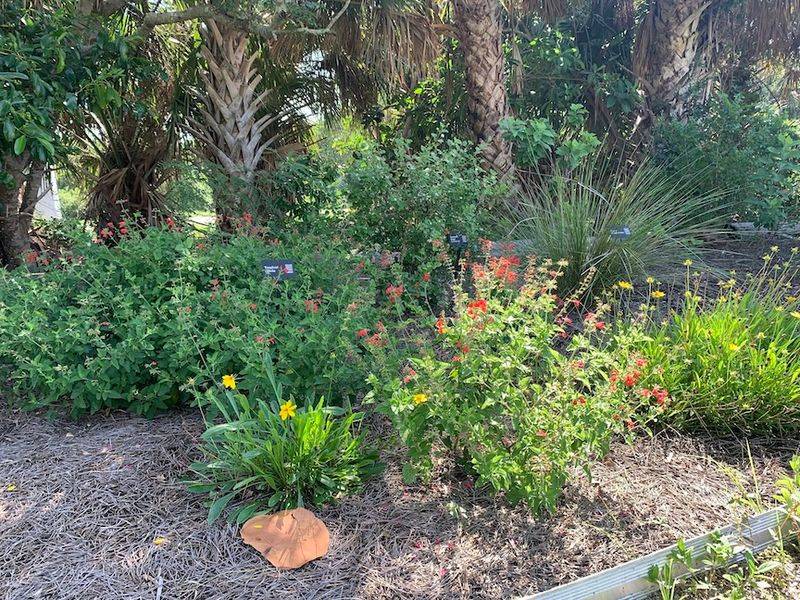
One shrub should not carry the whole job. UF/IFAS hummingbird garden guidance recommends a variety of nectar plants, which spreads out the bloom times and gives birds more than one reason to stop.
Firebush makes a solid anchor, and other plants can fill in around it. The UF/IFAS nectar plants list includes fall-blooming choices such as red star hibiscus, listed as blooming summer through fall, and flat-topped goldenrod, listed for September through November.
This also keeps the plan honest for different yards. Not every Florida garden has lost its summer flowers by November, and some beds still have color from other plants.
Mixing species means something is likely to be blooming even if one plant slows down.
Try grouping a few plants in a sunny corner, with red, orange, or pink flowers in a mix of heights. Bloom timing still shifts with location and conditions, and no planting guarantees hummingbird visits.
A varied bed simply gives you better odds and more to enjoy.
Use a feeder only as a careful supplement

A feeder can fill gaps when flowers are scarce, but it works best beside nectar plants, not in place of them. If you choose to hang one, Audubon recommends mixing one part refined white sugar with four parts water.
Skip the honey, and skip the red dye, which is unnecessary.
Cleaning matters as much as the recipe. In hot weather, clean the feeder every day or every other day, since nectar spoils quickly in the heat.
In cooler conditions you can clean less often, but follow Audubon’s guidance and look at the feeder itself. If the nectar looks cloudy or shows mold, wash it right away.
Place the feeder where you can see it from a window, and keep it in shade if you can, which helps slow spoilage. Refill with fresh nectar rather than topping off old liquid.
Frost timing and bird activity in your area will set realistic expectations. Some yards will see steady visitors, and others only a passing flash.
Either way, a blooming firebush is a nice reason to keep watching.