
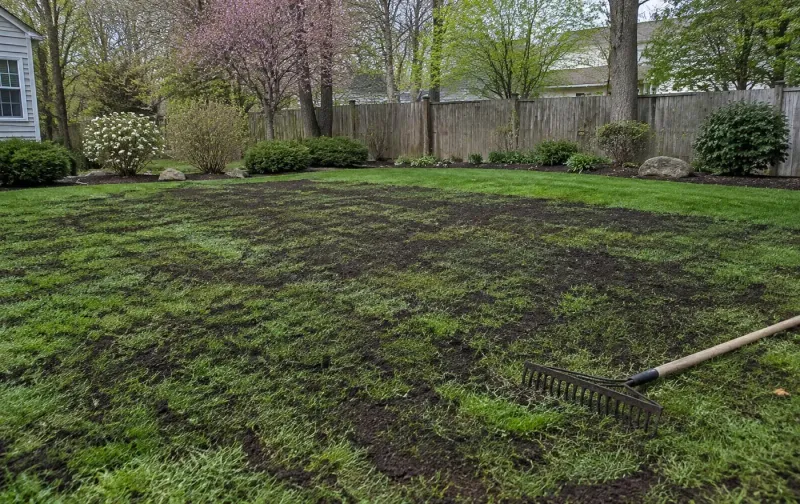
Many homeowners hear that one natural item can thicken a lawn and turn it green before winter. The item is mature compost, spread in a thin layer over established grass.
Compost can build better soil over time, but it is not a magic switch for fast color. Here is how to use it wisely in Florida, Texas, and other Southern yards.
Compost may improve soil, but it is not a fast green-up switch
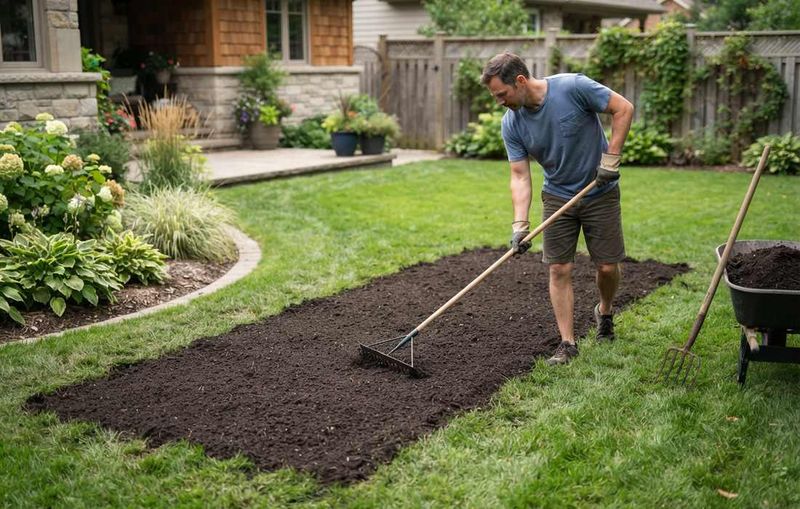
Mature compost is the item behind those big lawn promises. Spread thinly over established turf, it can add organic matter and some nutrients to the soil underneath the grass.
Over several seasons, that may help the soil hold moisture and nutrients better.
Here is the catch. Penn State Extension’s turf compost guidance describes gradual soil benefits and nutrient content that varies from one compost to the next.
That is quite different from a quick change in lawn color.
Thicker grass and deeper green are two separate results. Either one depends on the compost quality, the grass species, the soil you already have, and whether the lawn is actively growing.
University of Maryland Extension also treats topdressing as part of long-term lawn care, not a one-time color boost.
So think of compost as an investment in the soil. One November application may not visibly thicken or green your lawn before winter, and that is a perfectly normal outcome.
The payoff, if it comes, tends to show up gradually.
Apply a thin layer through the grass canopy
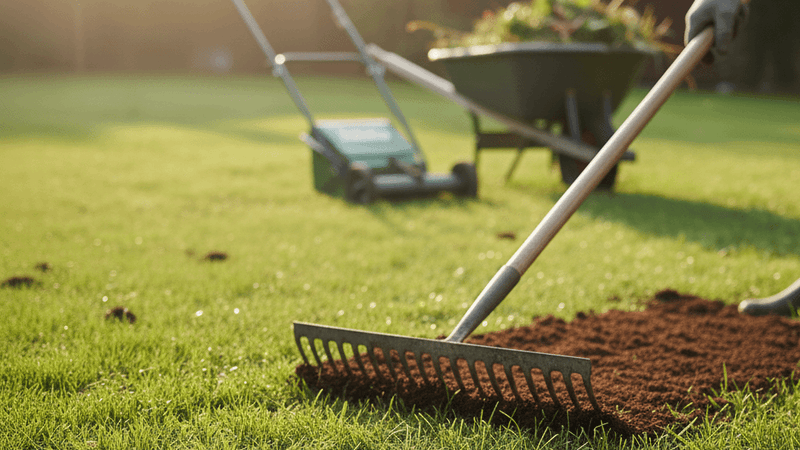
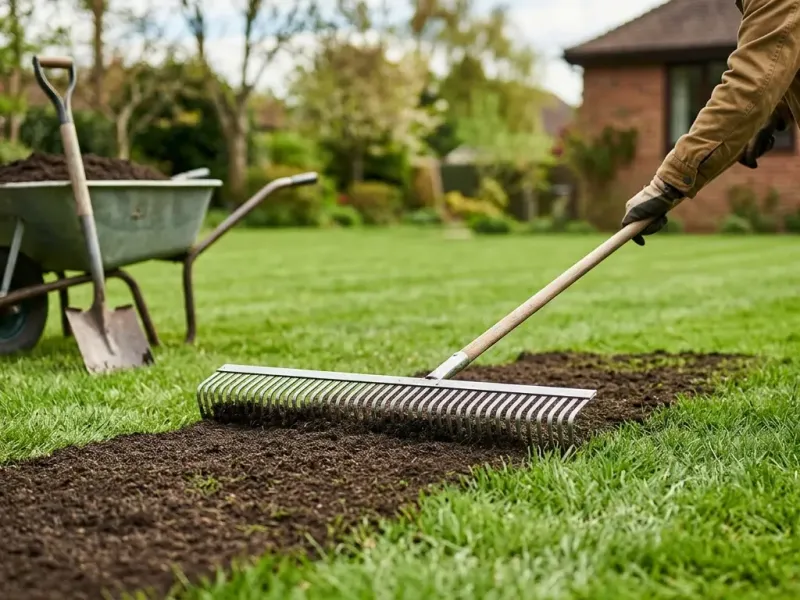
Picture a light dusting rather than a blanket. For established turf, the target is about 1/4 inch of compost.
University of Minnesota turfgrass specialists likewise advise not going beyond 1/4 inch at a time.
After spreading, use the back of a rake or a push broom to work the compost down between the grass blades. You should still see green when you are done.
A heavy layer left sitting on the leaves can smother the turf and block light.
A simple check helps: if you cannot see most of the blades, you have used too much, so rake some off. Spreading in small piles and working outward gives you better control than dumping loads in one spot.
For compacted soil, UConn Extension recommends pairing compost topdressing with core aeration. The small holes give the material a path into the soil.
Choose mature, reasonably fine compost
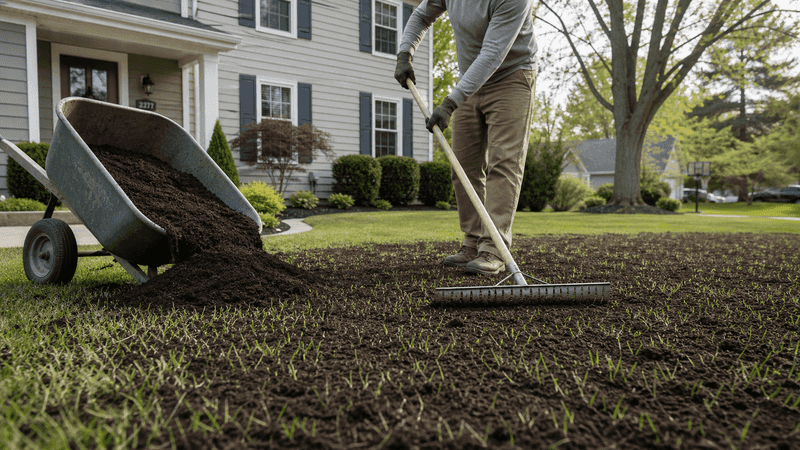
Not every bag or truckload is lawn-ready. Look for mature compost from a source you know, with a dark color, a crumbly texture, and an earthy smell.
Sour, ammonia, or rotten odors are warning signs.
Fine texture matters because the material has to sift down among the grass blades. For surface use, Penn State Extension recommends compost screened to pass through a 3/8-inch screen.
Chunks of bark or twigs would just sit on top of the turf.
Screening alone does not guarantee a good product, though. Immature compost can harm turf, and poorly managed piles may still hold weed seeds that survived the process.
Ask the supplier how long the compost was cured and how it was managed. If you can, try a small test patch first and watch it for a few weeks before covering the whole yard.
Compost does not necessarily meet a lawn’s fertilizer needs
Compost improves soil, while fertilizer is a planned supply of nutrients. They overlap a little, but one does not automatically stand in for the other.
Nutrient levels in compost swing widely depending on what went into it.
Penn State reports that much of the nitrogen in compost is in organic forms that release slowly. That gentle pace is useful for steady soil health, but it means the grass may not get a quick boost.
Maryland Extension cautions that topdressing may not supply all the nitrogen and phosphorus an established lawn needs.
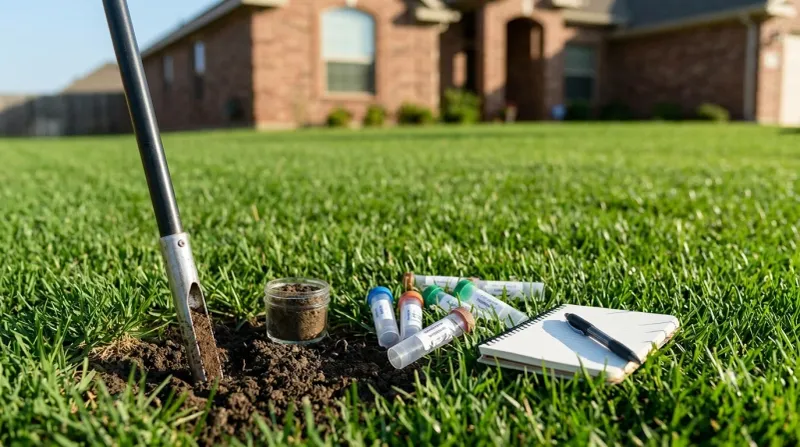
A practical next step is a soil test through your county extension office. It shows what your soil already holds, so you can decide whether compost alone is enough or whether a separate fertilizer plan makes sense for your grass.
November timing depends on grass type and location
You may hear that Southern grass is still building roots in November. That is not true across the board.
NC State Extension notes that cool-season tall fescue roots peak in spring and fall, while warm-season bermudagrass and zoysiagrass root growth often peaks in summer.
Fertilizer guidance shows how much timing varies by region. Texas A&M says the final nitrogen application on warm-season lawns should come no later than six weeks before the expected first frost.
Florida differs too. UF/IFAS gives late September as a usual last fertilizer timing in North Florida and early October in Central Florida, and South Florida can differ.
A Hillsborough County UF/IFAS post describes a local mid-November cutoff.
Florida lawns generally slow down or go dormant as days shorten, as UF/IFAS Gardening Solutions explains. Keep in mind that these are fertilizer cutoffs.
They are not compost-topdressing deadlines, and they do not show that compost will green a lawn.
Treat topdressing as a gradual soil-building step
Start with what you are growing. Know whether your lawn is bermudagrass, zoysiagrass, St. Augustinegrass, or tall fescue, and pay attention to how it behaves where you live.
That tells you more than any calendar date.
Then choose mature compost and keep the layer near 1/4 inch, worked down between the blades. Penn State’s guidance backs the idea of quality material applied with care.
If your soil is packed hard, UConn’s advice to add core aeration is worth following.
Treat the job as a potential long-term soil improvement. Winter color and instant density are not part of the deal, and your regular fertilizer plan still stands on its own schedule.
Compost works the way savings do: small, steady deposits that add up in seasons to come.