
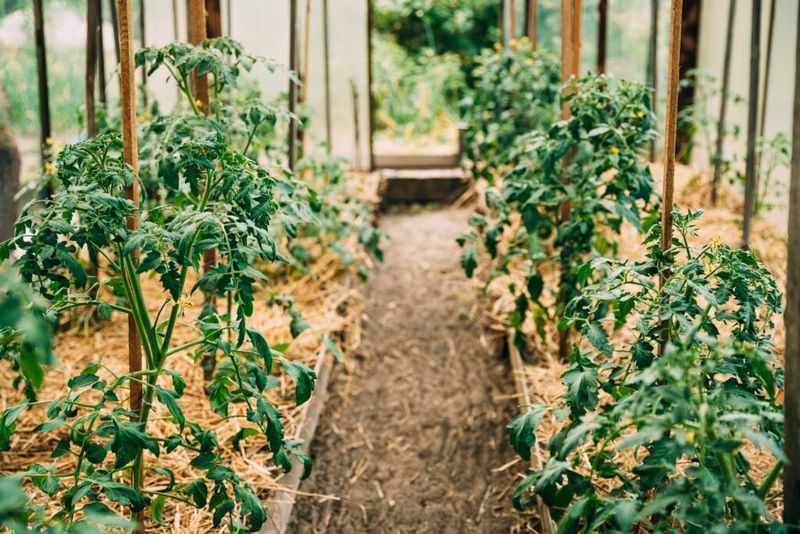
Your tomato plant made it through winter, it is covered in yellow flowers, and yet no little green fruit shows up. That can feel like a puzzle with no answer.
Some gardeners find that gentle movement helps, but it is not the only thing that can go wrong. Here is how to sort out what your plant may be telling you.
Blossom drop is a symptom, not a diagnosis
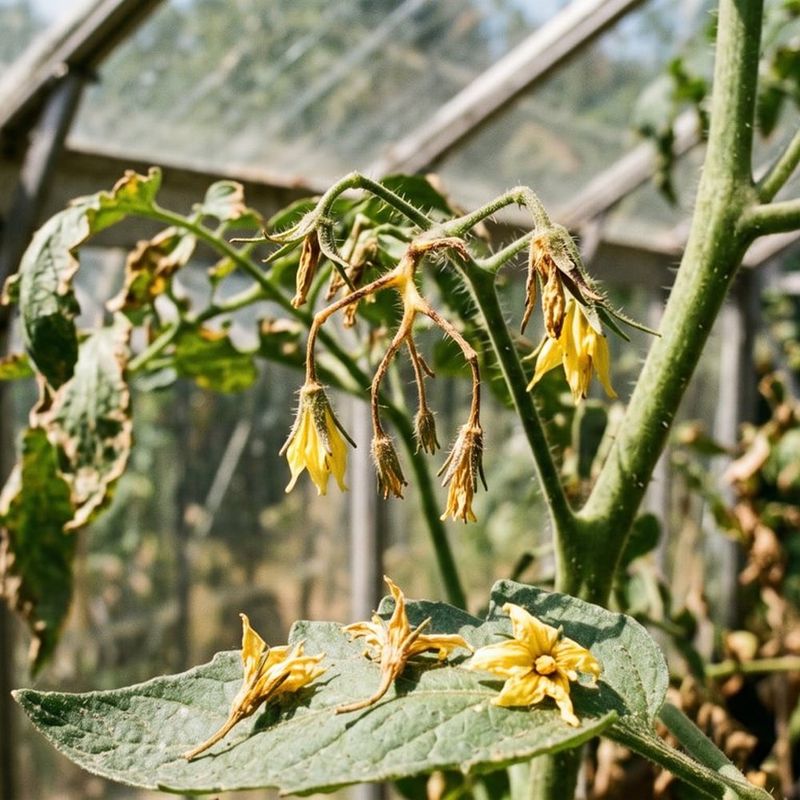
You walk past your tomato, spot a cluster of yellow flowers, and a few days later the blossoms are lying on the soil. It is frustrating, but the falling flowers themselves do not tell you why it happened.
Think of blossom drop like a cough: it shows something is off, not what is causing it.
Several things can be behind it. Poor pollination is one, and temperature is another.
Iowa State University Extension lists conditions such as temperature extremes and other stresses among the reasons tomatoes flower without setting fruit.
Water stress and too much nitrogen can also get in the way, as described in Mississippi State University Extension tomato guidance. Because so many causes look alike, a good approach is to check one thing at a time instead of changing everything at once.
Not every indoor plant will lose all its flowers, either. Some set fruit just fine.
If yours is dropping blooms, treat it as a clue and work through the possibilities calmly.
Tomatoes self-pollinate, but movement can help
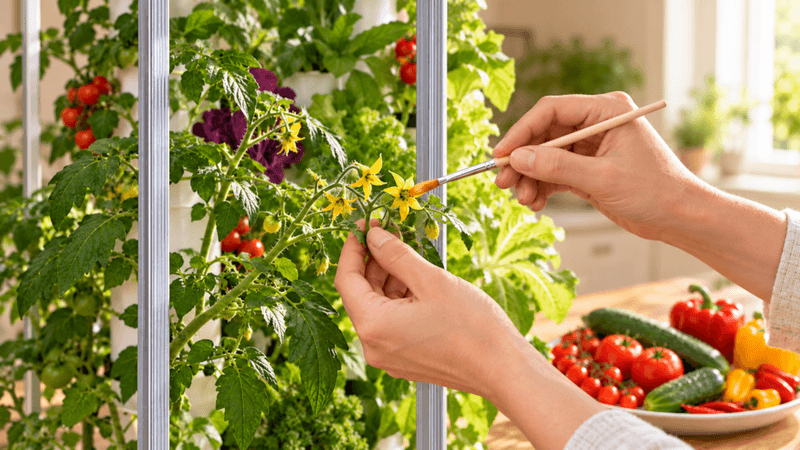
Here is a surprise for many growers: a tomato does not need bees or pollen from a second plant. Each flower holds both male and female parts, so it typically pollinates itself.
That means a single potted plant in your living room has everything it needs on paper.
The catch is that pollen often needs a little jostling to fall from the anthers onto the stigma. According to UConn Extension, vibration helps move pollen within the flower.
Outdoors, wind and visiting bees supply that movement.
Indoors, the air is often still, so pollen transfer may be weaker. UF/IFAS greenhouse guidance treats vibration as a standard way to make up for that.
Still, greenhouse advice does not prove every home plant needs help, since light, warmth, and the variety you grow all differ from a commercial greenhouse.
So still air is a possible factor, not a guaranteed culprit. It is worth testing, but keep other causes in mind.
Gently vibrate open flower clusters
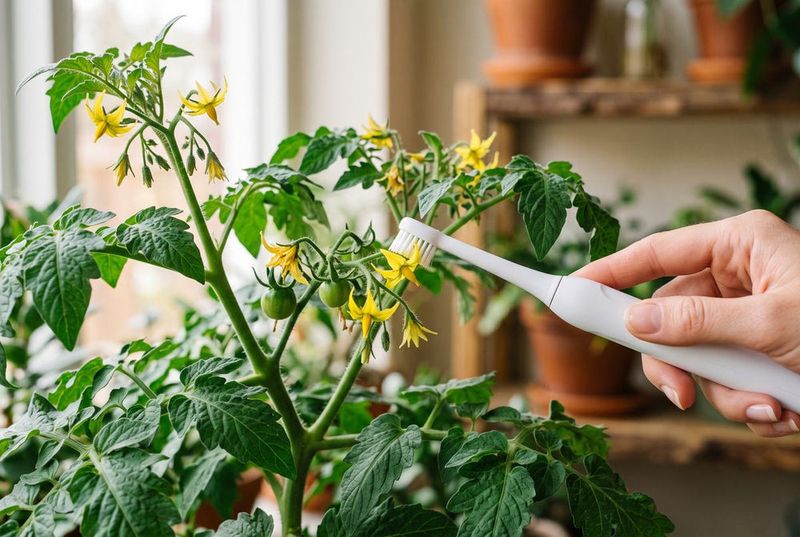
Look for clusters where the petals have opened and curled back. Those are ready.
Use a finger to give the stem that holds the cluster a few light taps, as UConn Extension describes for small plantings.
Another option is to touch a vibrating electric toothbrush briefly to the supporting stem, not the flower. University of Alaska Fairbanks Extension describes this kind of gentle approach for home plants.
Keep it light and short. UF/IFAS warns that too much vibration can harm growth and that scraping developing fruit can leave scars.
Never press on the blossoms or young fruit.
A toothbrush is simply one handy way to provide a brief buzz. Mississippi State Extension says it can accomplish some pollination but may not match the yields of a purpose-built electric pollinator.
Use a sensible schedule, not a morning ritual
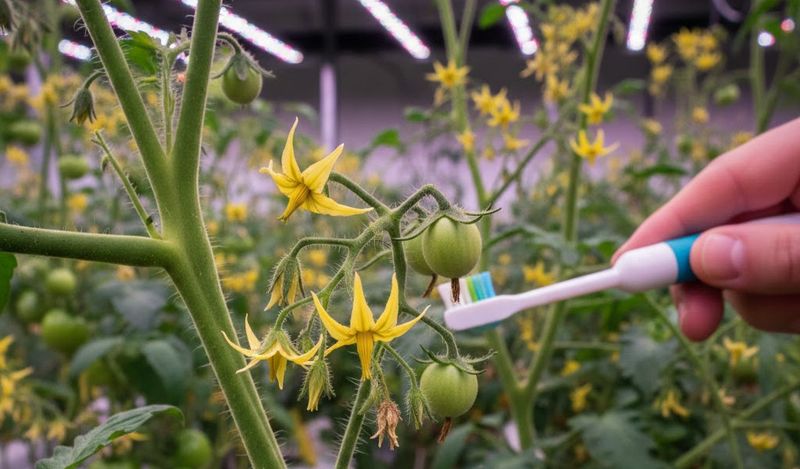
Daily shaking at sunrise sounds tidy, but it is not a proven rule. Greenhouse growers commonly work open clusters every other day or about three times a week, as UConn Extension and UF/IFAS outline.
Timing matters too. Alabama Cooperative Extension and the other greenhouse sources lean toward the warmer, drier part of the day, often around 10 a.m. to 3 p.m., when pollen tends to release more easily.
Treat that as a starting point, not a house rule. A small kitchen-window plant has different needs than a commercial greenhouse row, so adjust to what you see.
Most important, shaking each morning does not guarantee blossoms will stay on. If flowers keep falling after a few weeks of gentle attention, the cause is probably something else, and the next steps are worth checking.
Check temperature and moisture before blaming pollination
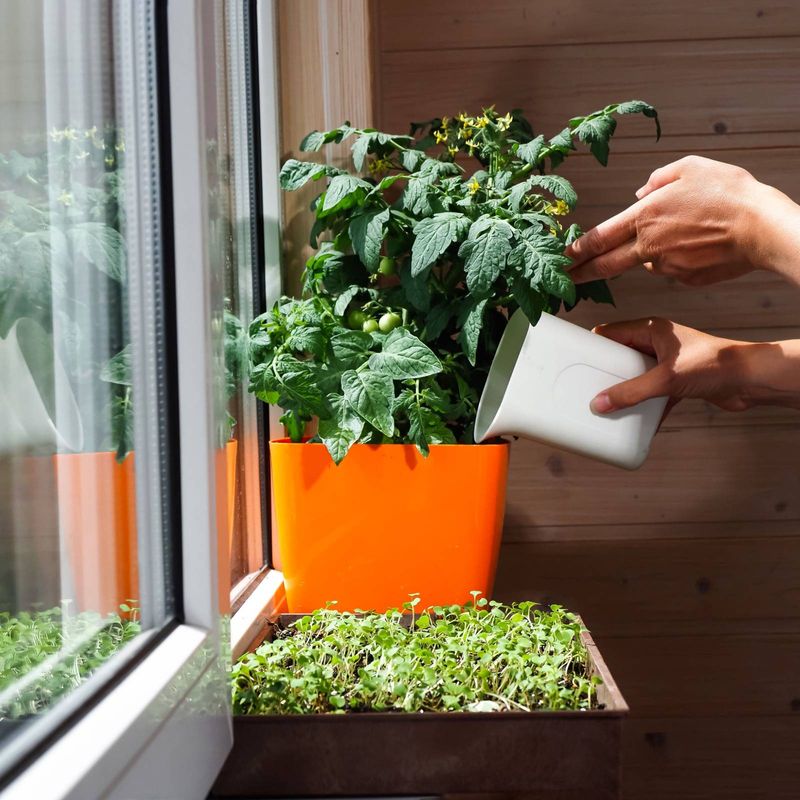
If vibrating does nothing, look at the room. Extension sources commonly flag daytime temperatures above roughly 85 to 90°F and nights below about 55°F as trouble for fruit set, according to Iowa State University Extension.
Those numbers are approximate and shift with the source and your setup.
A plant by a heater or a cold glass pane can swing past them without you noticing. A cheap thermometer near the leaves tells you more than guessing.
Water and feeding matter as well. Mississippi State University Extension notes that moisture stress and too much nitrogen can interfere with fruiting.
Soil that swings from bone dry to soggy, or a feed heavy in nitrogen, can push leafy growth over flowers.
Humidity has no single magic number. UConn Extension and University of Alaska Fairbanks Extension suggest different ranges, but both agree that air that is too damp or too dry can hinder pollen transfer.
Aim for a comfortable, steady room.
Review winter light, then reassess fruit set
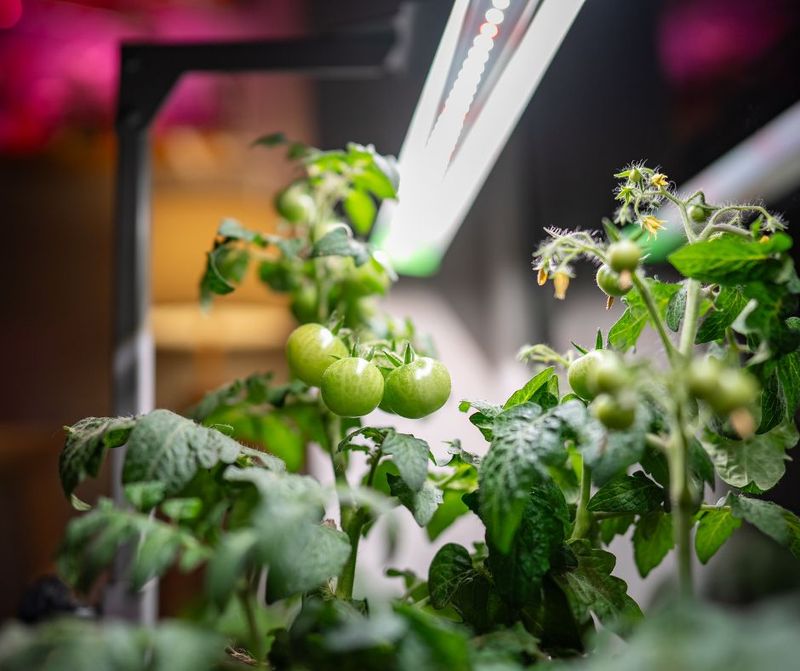
Winter sun is weak and short, and tomatoes are sun lovers. University of Alaska Fairbanks Extension lists low light among the conditions that can contribute to poor pollination.
Utah State University Extension suggests a bright window and supplemental lighting for winter tomatoes. If your plant leans toward the glass or has pale, stretched stems, a grow light may help.
Here is a simple order to follow. First, gently vibrate open clusters a few times a week.
Second, if flowers still fall, check light, then room temperature, then soil moisture and feeding, as Iowa State University Extension outlines for fruit set problems.
Indoor conditions vary a lot from home to home, and UConn Extension frames vibration as help for pollen movement, not a fix for everything. Give each change a couple of weeks before judging it.
Sometimes the answer is a brighter spot, not a stronger shake.