
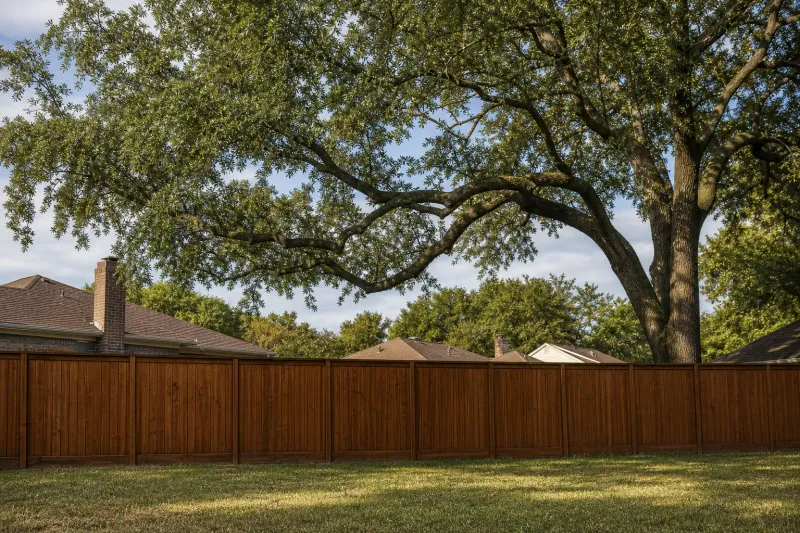
A big limb hanging over your fence can feel like an open invitation to grab the saw. Before fall cleanup or storm prep begins, it helps to know where your right to trim stops.
One wrong cut can turn a quick chore into a fight with the neighbor or a damage claim. Here is how to prune with confidence and know when to pause.
Texas generally lets you trim overhanging branches back to the property line
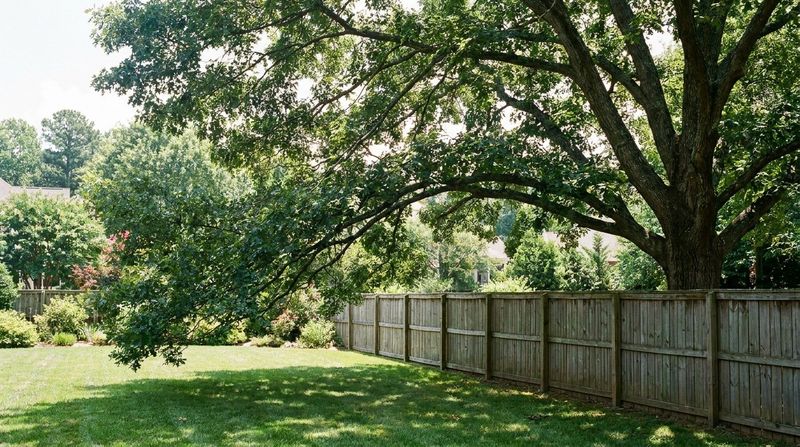
Here is the basic rule. A Texas homeowner generally may trim branches from a neighbor’s tree that reach over the homeowner’s own land, but only back to the actual property line.
Anything beyond that line belongs to the neighbor’s side of the dispute, not yours.
This rule is not written into a Texas statute aimed at neighbor trees. According to the Texas State Law Library, there is no law that specifically governs this situation, and the right comes from court decisions.
A Texas A&M real estate research article describes the same right and the same limits.
Think of it as a narrow permission. It lets you deal with the part of a limb that has crossed into your airspace.
It does not let you remove the neighbor’s tree, reshape the whole canopy, or do whatever is most convenient from your side.
That narrow scope matters in a Texas yard. Live oaks, pecans, and cedar elms often spread wide, and a single limb can reach twenty feet past a fence.
The overhanging portion is yours to cut back, but the trunk, the roots on the other side, and the rest of the crown are not.
Keep in mind that this is general guidance, not a ruling on your particular lot. Boundaries, tree location, city rules, and the likely effect of the cut can all change the practical answer.
The next sections walk through each check so you can see where to slow down.
One more point worth holding onto: having the right to trim does not mean the neighbor has to do it. You may cut the overhang yourself, within the limits above, but the law generally gives you no way to force a healthy tree’s owner to cut it for you.
A fence may not show where your property ends
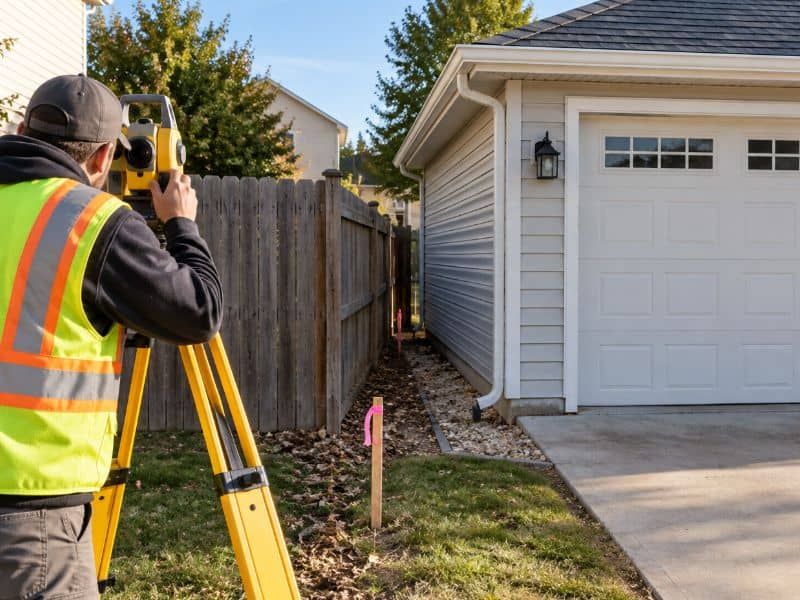
Before you lift a pruning saw, confirm where your property actually ends. Many people assume the fence marks the line, and that assumption is where trouble often starts.
The Texas A&M Real Estate Research Center notes that fences may sit on the boundary or on either side of it. It also advises caution about locating the true line before trimming.
A fence built years ago by a previous owner may be a foot or two off, or more.
Reliable boundary information is the better starting point. Your deed, your closing paperwork, and a recorded plat can help, and a licensed surveyor can mark the line on the ground.
Survey pins, if they are still in place, may also help, though they can be buried or moved.
This check ties directly to the legal limit. A cut confined to your side of the actual line is one thing.
A cut that crosses it can create a separate dispute, because you may have damaged property that is not yours.
Picture a limb that seems to hang over your patio. If the fence sits a foot inside the true boundary, part of that limb may actually be over the neighbor’s land.
Trimming it flush with the fence would take more than you are allowed to remove.
If the line is unclear and the limb is large, pause. A survey costs far less than a quarrel over a damaged tree.
A boundary tree is different from a tree with overhanging limbs
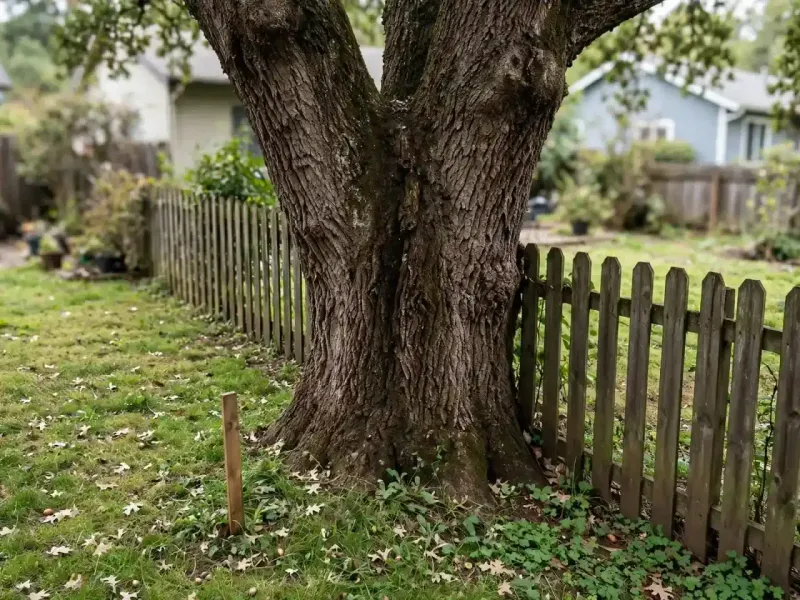
Not every tree near a fence is handled the same way. The first question is where the trunk stands.
If the trunk is wholly on your neighbor’s land, the tree is generally the neighbor’s, and the overhang rule above applies to the branches that reach your side. If the trunk forms or straddles the boundary, you are dealing with a different and riskier situation.
A 2023 Texas appeals decision, Lisle v. DO-MO Joint Venture, says parties may not cut back border trees or vegetation without the adjoining owner’s consent.
That is why a boundary tree calls for a conversation before any cutting.
Status is not always obvious. The 2018 decision in 4415 W Lovers Lane v.
Stanton shows that tree ownership and boundary-tree status can depend on the facts. Courts look at the specific circumstances, not a simple rule of thumb.
One misunderstanding is worth clearing up. A tree does not become shared just because some branches cross the line.
Crossing limbs alone do not make a tree jointly owned, and a trunk that sits entirely on one side generally stays that owner’s tree.
Practical clues can help you sort this out. Look at where the trunk meets the ground, compare it with your survey marks, and check whether the base spans the line.
If you cannot tell, treat it as a possible boundary tree.
When the answer is uncertain, get the adjoining owner’s written consent or seek legal advice before cutting. A mistaken cut into a boundary tree is hard to undo.
Your right to trim does not include trespass or tree damage

The trimming right has firm edges. Staying inside them keeps a simple chore from becoming a lawsuit.
First, stay on your own land. The Texas State Law Library says not to enter the neighbor’s property without permission.
It mentions a narrow caveat for an imminent threat, but that is not a general right of entry, and a leaning limb you would simply prefer gone does not qualify.
Second, cut only to the property line. Going past it means cutting something that belongs to someone else.
Third, do not hurt the tree. State Bar of Texas disaster guidance says a neighbor cannot kill the tree by trimming.
Stripping a crown on one side or making cuts that leave the tree unstable could cross that line.
The consequences can be real. The State Law Library warns that injuring the tree or other property can expose the person trimming to a damages lawsuit.
A ladder leaning on the neighbor’s fence or a falling limb that dents their shed could lead to a claim.
Plan the work so the debris lands on your side. Use a pole saw from your own yard, and if the cut would require stepping over the line, ask first.
A quick text or knock on the door is usually enough to turn a risky shortcut into an agreed plan.
A conversation can prevent a cleanup dispute
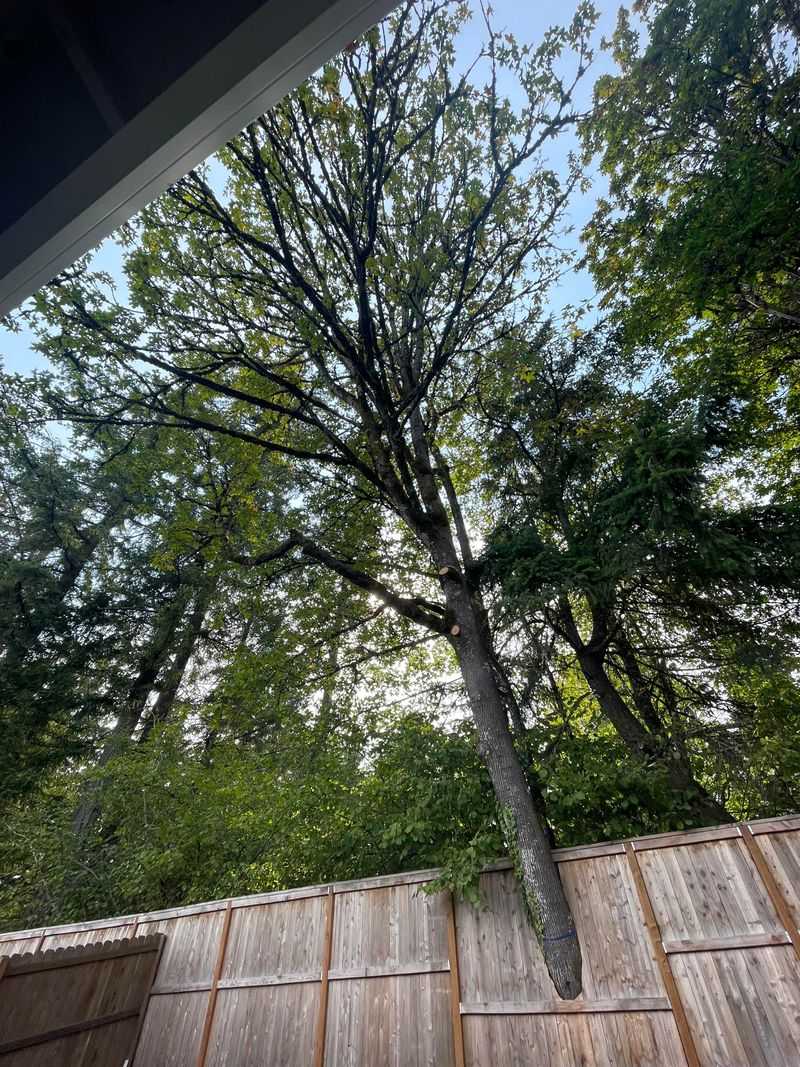
Most tree arguments start with surprise. A neighbor who comes home to a freshly cut canopy tends to feel ambushed, even when you were within your rights.
The Texas State Law Library recommends talking before acting. Use that talk to agree on a few details: who will do the work, whether anyone needs to enter the yard, how far back the cut will go, and who will haul away the debris.
It also helps to know what you cannot demand. State Bar guidance says the adjoining homeowner may trim the overhang but cannot make the owner trim it.
A neighbor generally has no duty to cut back a healthy tree just because limbs reach over the fence.
A friendly request may still work. Many owners are glad to share the cost of an arborist, especially before storm season.
Things change if you believe the tree is dangerous. Texas law guidance, in the State Bar disaster manual, says to notify the owner in writing and keep a copy.
Describe what you see, such as dead limbs, a cracked trunk, or fungus at the base, and add dated photos.
A written notice does not decide who is liable on its own. It does create a record that you raised the concern, which can matter if the situation later ends up in a dispute.
Large limbs and power lines call for professional help
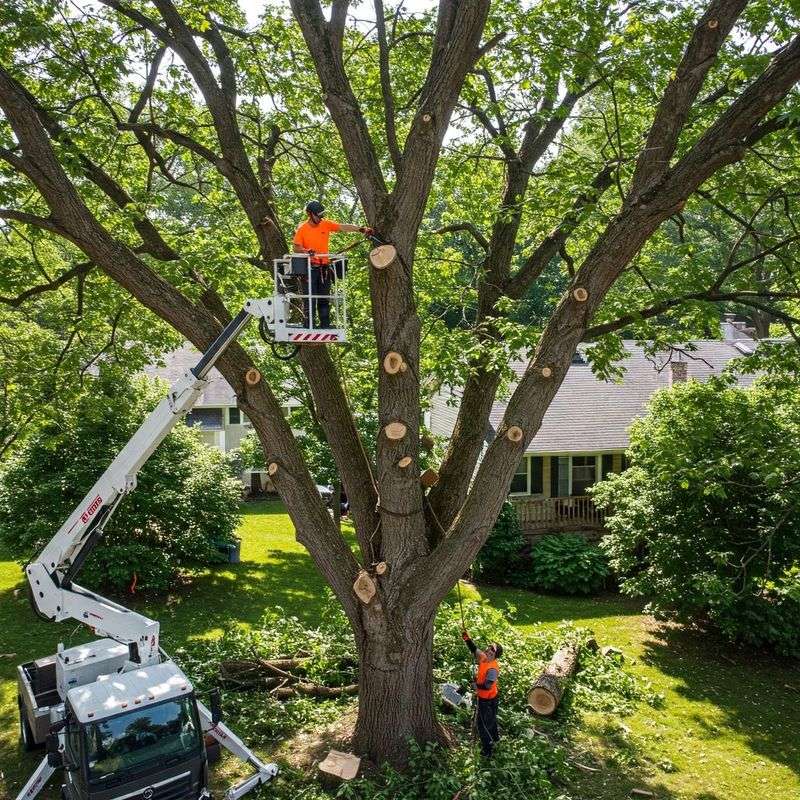
Some jobs are too big or too risky for a weekend ladder. A heavy limb can swing, split, or fall in ways that are hard to predict.
The Texas A&M Forest Service recommends professional assessment for trees that could threaten property and says large-tree pruning is best handled by a certified arborist. Call one if the limb is thick, the tree looks unhealthy, or the cut could change how the tree holds together.
Power lines raise the stakes. Texas Department of Insurance guidance says to treat overhead lines as energized and keep at least 10 feet of separation.
It directs people to qualified line-clearance workers for work within the applicable approach distance. Do not prune near those lines yourself, and keep ladders and pole saws well away.
Technique matters too. The International Society of Arboriculture advises against topping, which means chopping large limbs back to stubs.
Pruning wounds can also spread some tree diseases, and the right timing varies by species.
If you are unsure about timing or method, a local arborist can tell you what suits your tree and your part of Texas. That advice is especially valuable when the tree is the neighbor’s, since lasting harm to it can become your problem.
Ask any arborist you hire to cut only what overhangs your property, and to keep the crew on your side unless the neighbor has agreed otherwise.
Local rules can add requirements before you prune

State-level guidance is only part of the picture. Cities and neighborhoods often layer on their own rules, and they differ a great deal from place to place.
The Texas State Law Library points readers to check local ordinances. That is wise advice, because a rule in one Texas city may not exist in the next.
Austin offers a useful local example, and only that. According to the City of Austin arborist program, certain impacts to regulated trees require permits, and canopy removal is limited without one.
Those are Austin rules, not statewide ones, and you should not assume they apply in Houston, Dallas, San Antonio, or a small town.
Local requirements can matter even when the branch hangs over your own property. A protected tree stays protected whichever side the limb is on, so the right to trim an overhang does not cancel a city rule.
Homeowners associations can add another layer. Covenants may limit tree work, require approval, or set standards for how cuts are made.
A quick call to your city’s development or forestry office is a good first step. Then read your HOA documents.
Taking ten minutes to confirm both can save you from a fine or a stop-work order.
Storm damage responsibility depends on the tree’s condition
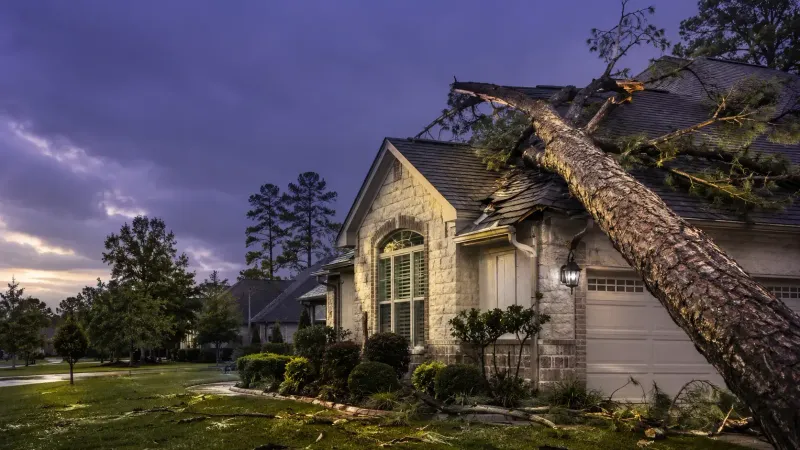
When a storm sends a limb into your yard, many people assume the tree’s owner pays. Texas guidance is more careful than that.
According to State Bar of Texas disaster guidance, a neighbor is likely not liable when a healthy tree falls because of high winds. Severe weather can topple a sound tree, and ownership alone does not make the owner responsible.
A different outcome is possible if the tree was decayed, diseased, dead, or otherwise dangerous. It may matter whether the owner knew about the problem or should have dealt with it.
Those facts can change who bears the loss.
The Texas A&M Forest Service recommends professional assessment for trees that could threaten property. Warning signs include dead branches, fungus on the trunk or roots, cracks, heavy leaning, and hollow areas.
For storm prep, walk your yard and the fence line before the season. Take dated photos of any tree that worries you, and share concerns with the owner in writing.
This is not a definitive test of liability. Insurance coverage, the exact facts, and the weather all play a role, so check your policy and speak with an attorney if a real loss occurs.
Verify the boundary and the tree before you cut
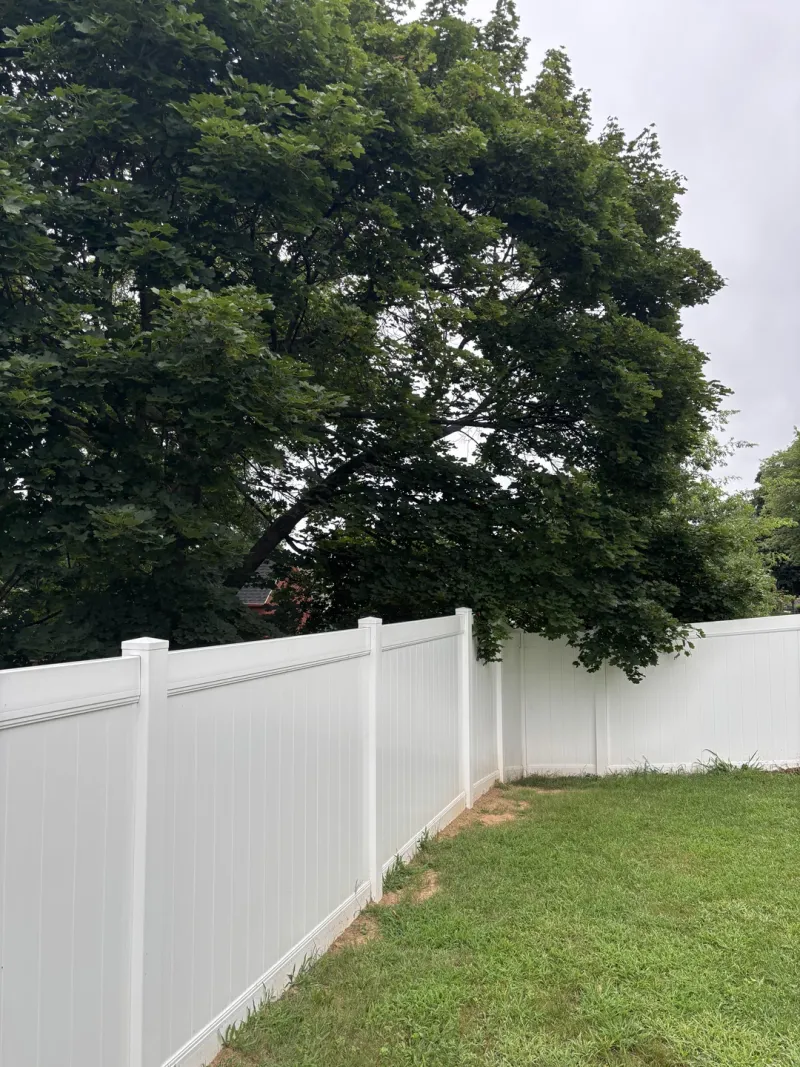
Start with the line. Confirm where your property truly ends, using a survey or reliable records rather than the fence, as the Texas A&M Real Estate Research Center cautions.
Next, see where the trunk stands and whether it could be a boundary tree. Ask permission before stepping onto the neighbor’s land, as the Texas State Law Library advises.
If a cut might hurt the tree or break a local rule, stop and call a professional. The best pruning job is the one nobody argues about later.