
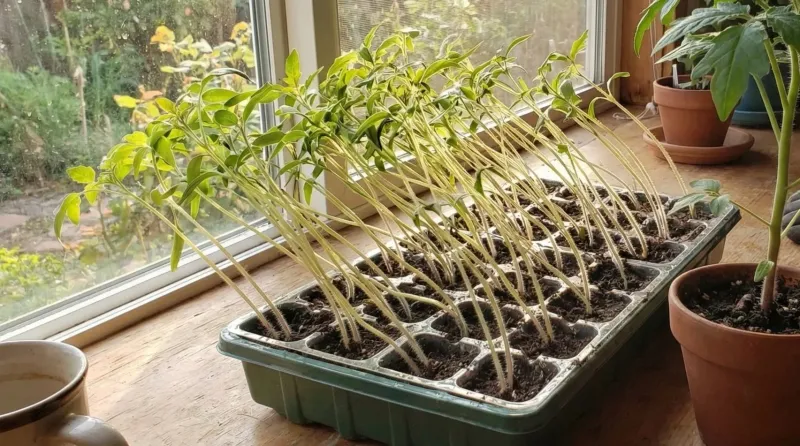
You start tomato seeds with high hopes, and a few weeks later the seedlings are tall, thin, and flopping over on the windowsill. That stretched look is a common problem for gardeners who want a head start on spring.
The good news is that a simple overhead shop light, set up the right way, can help keep new growth short and sturdy. Here is how to set one up, what to check if stretching continues, and how to time your planting for your own part of the South.
Why tomato seedlings get tall and floppy
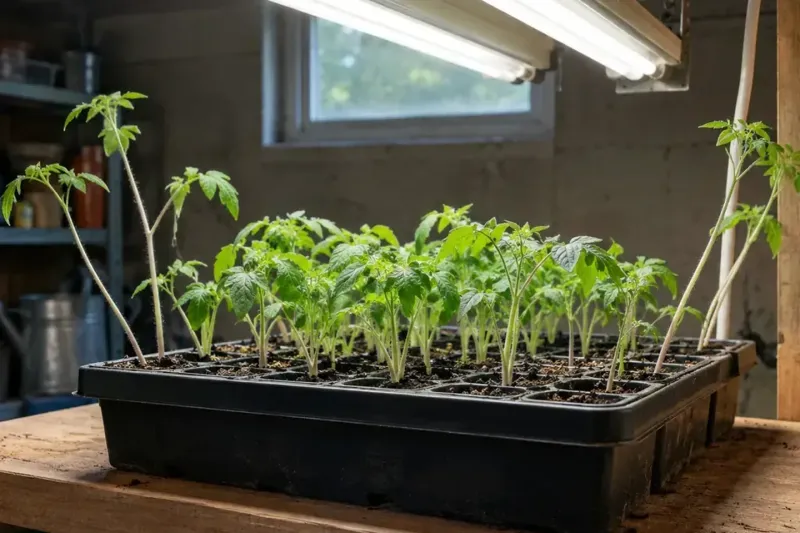
Leggy seedlings are easy to spot. The stems are long and pale, thin as a pencil lead, and the plant leans or flops over.
The leaves may look small and far apart, with lots of bare stem between them.
A common cause is not enough light. When a window gives weak or one-sided light, seedlings stretch toward it, trying to reach more.
Winter and early spring days are short, and even a sunny sill often falls short. Illinois Extension troubleshooting advice lists low light among the usual reasons for spindly seedlings.
Light is not the only suspect. Too much warmth after germination can also push lanky growth, and crowded seedlings shade one another.
Missouri Extension guidance on starting plants indoors points to these growing conditions as things worth checking. So look at your light, your room temperature, and your spacing before deciding what went wrong.
A suitable shop light can help seedlings grow sturdier
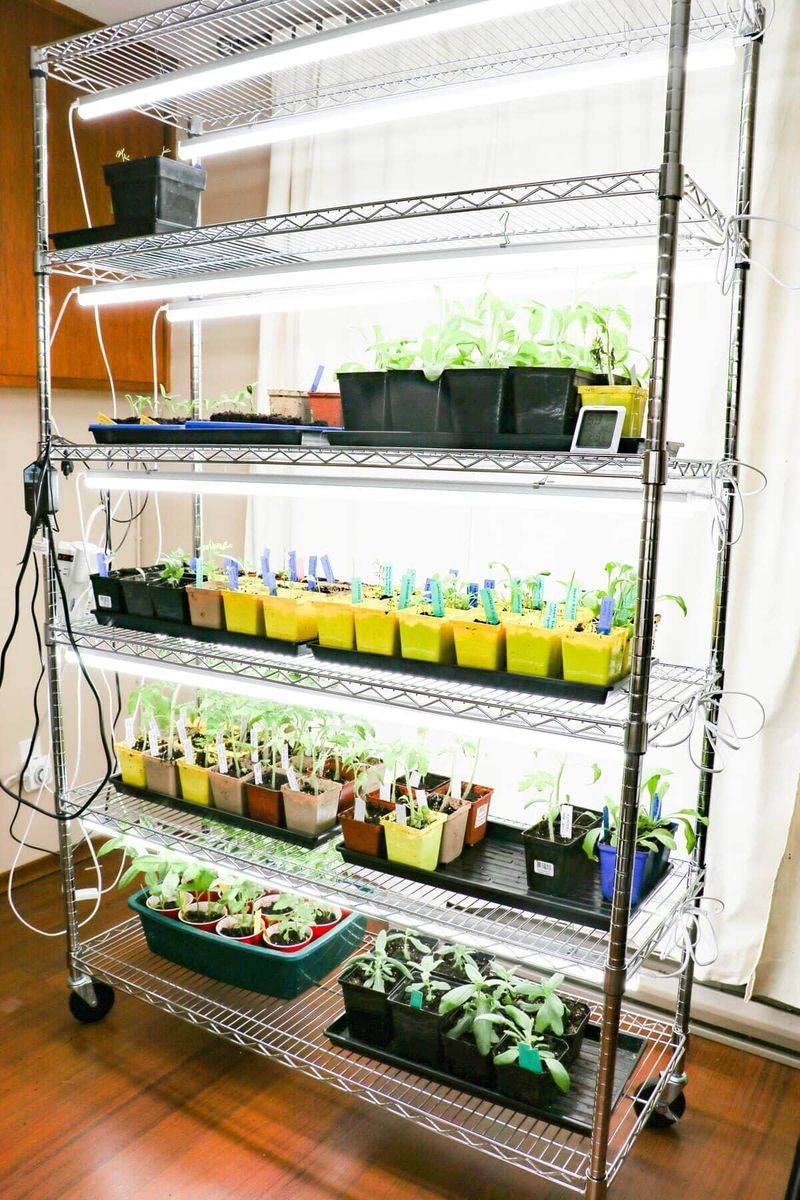
Plain fluorescent or LED shop lights can give seedlings useful light, so you do not always need a pricey specialty grow light. Extension sources such as Clemson’s seed-starting guide describe ordinary shop fixtures as a workable choice for home gardeners.
That said, not every cheap fixture will do the job. The light has to deliver enough brightness across the whole tray, not just a small spot in the middle.
A dim bulb or a short fixture over a wide tray can still leave seedlings reaching. University of New Hampshire Extension covers how growing seedlings under lights works and what the setup needs.
Rather than chasing one perfect wattage or bulb color, focus on what you can control. Utah State University Extension also notes that lighting setups differ.
The two big levers are how close the light sits and how long it stays on, and the next sections cover both.
Place the light close above the seedlings
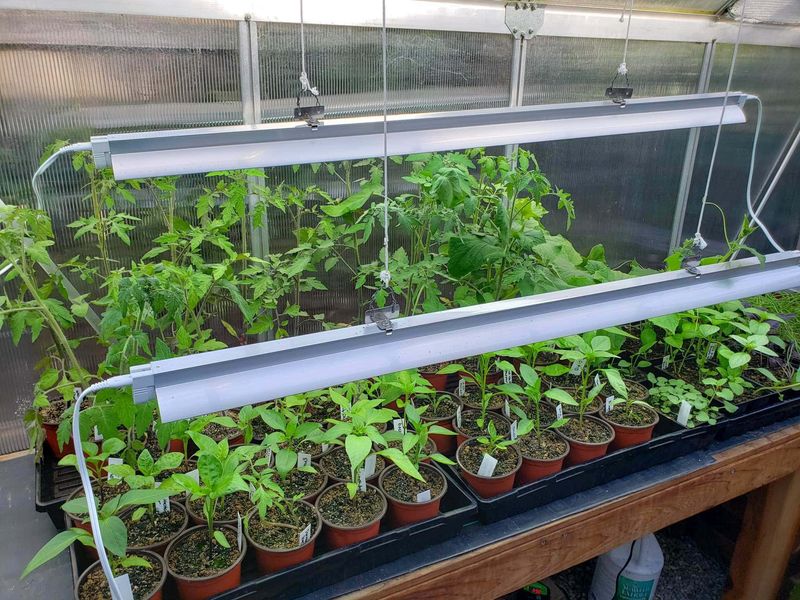
Hang the fixture directly over the seedlings, not off to the side. Side light makes plants lean, while overhead light lets them grow straight.
Keep it close, then raise it a bit as the plants gain height.
Published distances vary. Clemson suggests about 2 to 4 inches for fluorescent tubes, while Minnesota Extension gives roughly 4 to 6 inches.
Treat these as starting points, not rules for every lamp.
Your own fixture matters most. Read its instructions, and check how warm it runs.
Bleached or scorched leaf tips are a sign the light is too close or too hot, so lift it. Utah State guidance also stresses adjusting the light as plants grow.
Chains or an adjustable stand make this easy to do every few days.
Use a timer for consistent daily lighting
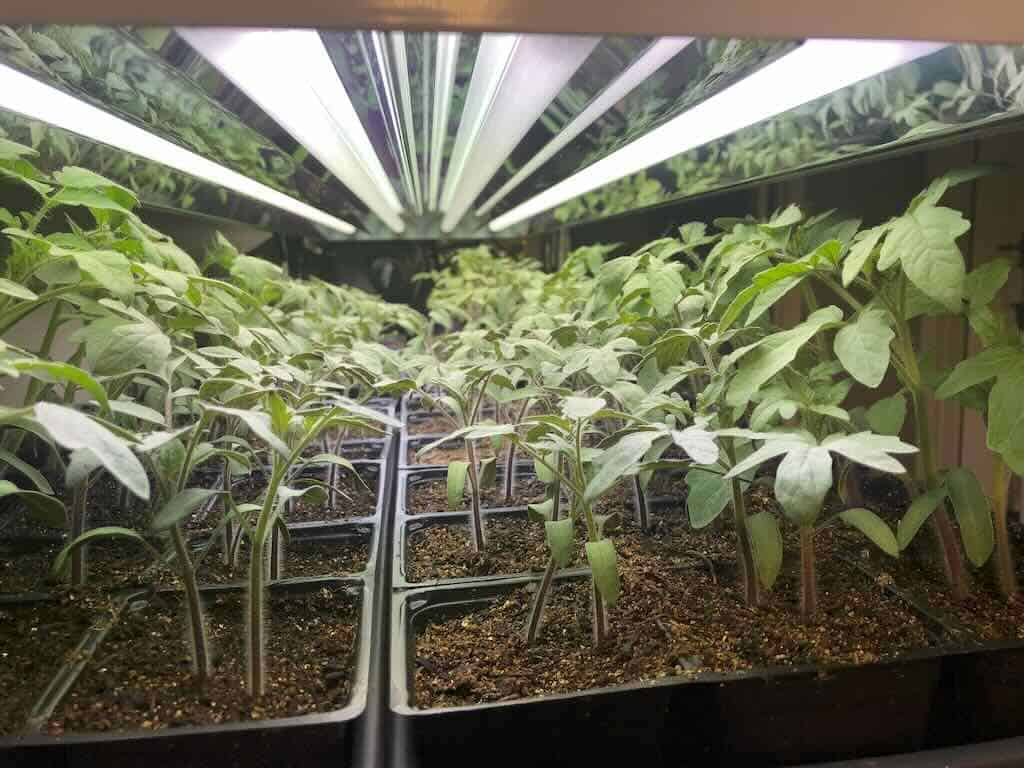
A cheap outlet timer takes the guesswork out of lighting. Seedlings do best with steady days, and it is easy to forget the switch on a busy morning or evening.
Extension sources commonly suggest about 14 to 18 hours of light per day, and 16 hours is a practical place to begin. You can see this range in guidance from Clemson, Minnesota, and Utah State.
Keep in mind that hours are only part of the picture. A dim light left on all day still gives weak light, and a fixture hung too high will not make up for it with a longer schedule.
Start at 16 hours, watch how the seedlings respond, and adjust from there.
Troubleshoot ongoing stretch and set expectations for leggy plants
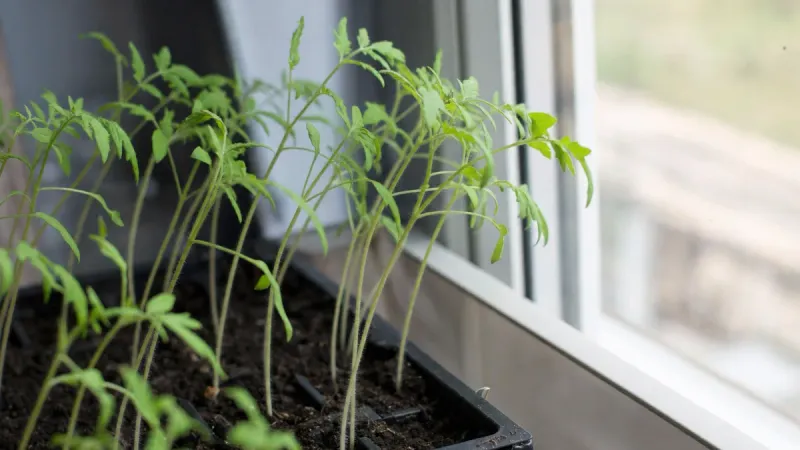
If seedlings keep stretching under a light, walk through a quick checklist. Is the fixture close enough and bright enough?
Does it cover the whole tray, including the edges? Are the plants crowded so that they shade each other?
Illinois Extension points to these kinds of causes.
Also check the temperature. Rooms that stay too warm after germination can add to lanky growth, a point raised in Missouri Extension seed-starting advice.
Simply running the timer longer may not help if the light is weak or misses part of the tray.
Here is the honest part. Better light can help prevent further stretching, but it cannot shorten a stem that has already grown long, as noted in University of New Hampshire Extension guidance.
Leggy tomatoes may still be usable. Missouri Extension advises planting leggy tomatoes at an angle in a trench, leaving the upper 5 to 6 inches exposed.
Treat this as an option, not a guaranteed recovery.
Plan transplanting around your local conditions
February or March is not a transplant window for the whole South. Florida varies by region: UF/IFAS lists open-field tomatoes for January to February in central Florida, August to February in south Florida, and February to August in north Florida.
Those are broad production periods, not a promise for your yard in any given year.
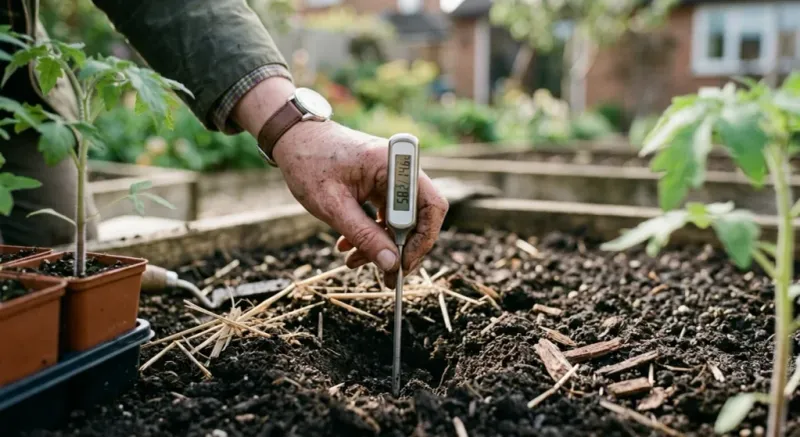
Texas differs too. Texas A&M gives March to April for Central Texas, while a High Plains guide says to wait until frost danger passes, generally mid-April, and soil at 6 inches is at least 60 to 65 degrees F.
So pick a date that fits your local frost risk, then count back. UGA Extension recommends starting tomatoes indoors about 6 to 8 weeks before transplanting.
Starting too early can leave plants overgrown.
Begin hardening off about two weeks before planting, as Illinois Extension suggests, with a little more time outside each day. Seedlings raised in a good light setup still deserve a gentle introduction to the sun.