
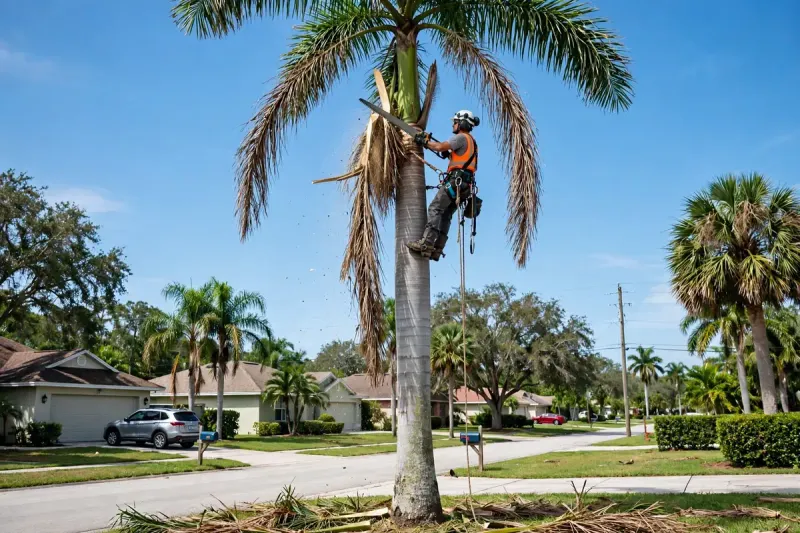
Few things pile up in a Florida yard as fast as palm fronds, coconuts, and seed pods. When they come from the neighbor’s tree, it is natural to wonder who has to deal with them.
The answer depends on whether the debris has already fallen, is still attached, or has caused damage. Knowing the difference can save you money, protect the palm, and keep the peace next door.
Fallen palm debris usually stays with the yard where it lands
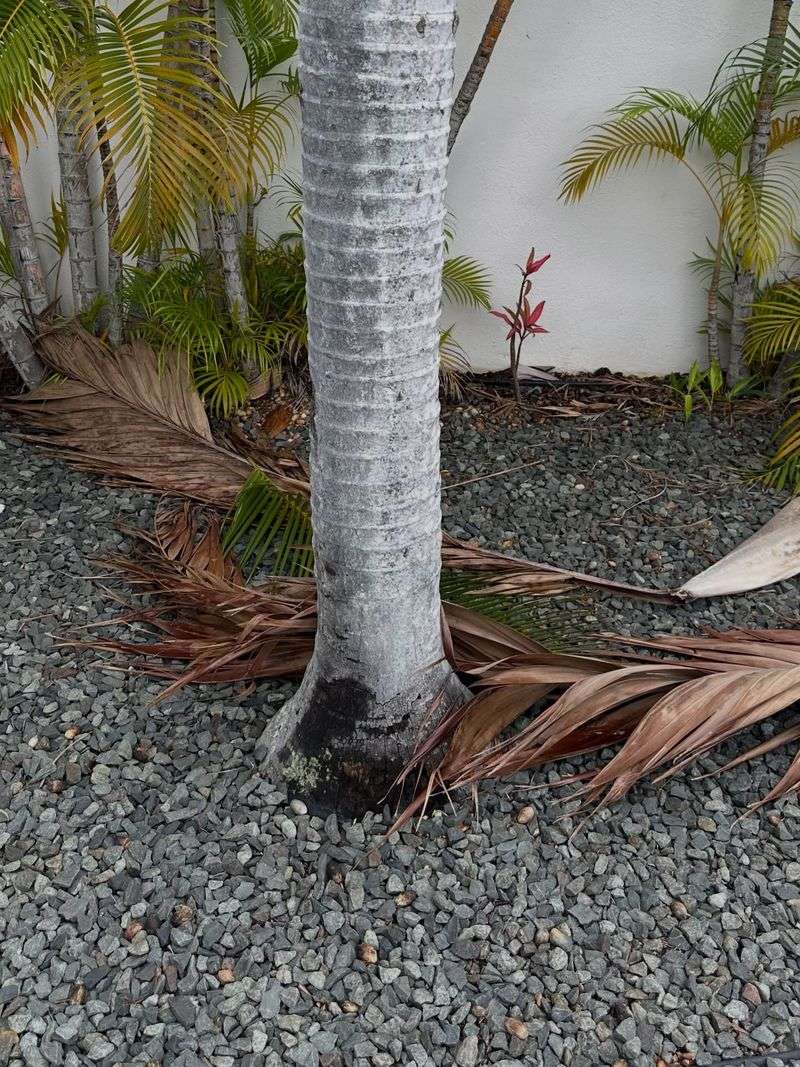
Here is the short answer most people want first. Broward County advises residents in its Municipal Services District that the owner of the property where naturally fallen leaves, fruit, and seeds land generally handles that debris.
In plain terms, a neighbor is not automatically required to clean up every frond, coconut, or seed pod that drops next door.
That is county guidance, though. It is not a statewide statute, and it does not create a rule that applies the same way in every Florida city or county.
Your own county, city, or homeowners association may have its own expectations, so it is smart to check.
The guidance also covers only naturally dropped debris. It does not decide who is responsible if a falling limb cracks a roof, dents a car, or flattens a fence.
Those situations raise a separate question, covered later in this article.
For everyday cleanup, a practical approach works well. Rake or bag the debris when it lands, wear gloves around spiky fronds, and save the bigger conversations for problems that go beyond routine mess.
Most palm drop is simply a part of Florida yard care.
An attached frond that crosses the line is different
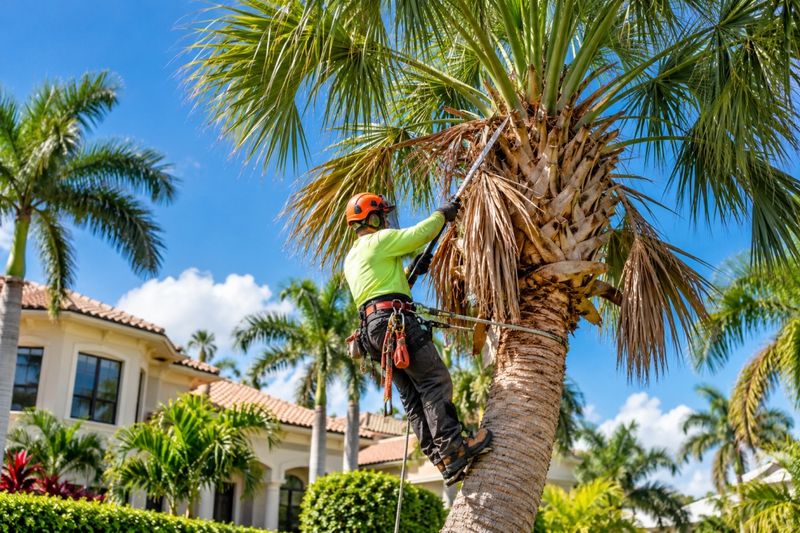
Once a frond has fallen, it is debris. While it is still attached to the palm, the rules change.
Florida common law generally lets a property owner trim the part of an attached branch or frond that reaches over onto their land, and the UF/IFAS Handbook of Florida Fence and Property Law describes this as a common law right, not a palm-specific statute.
The right is limited. You may trim back only to the property line, and you pay for the work yourself.
Collier County’s guidance adds that the work must be done from your own property, and it warns against trespassing to get it done.
That means no leaning over the fence into the neighbor’s yard and no stepping across the boundary with a pole saw. It also does not allow cutting back the whole palm because a few fronds drift your way.
Damaging the tree can create liability for you.
Think of it this way: an example would be one brown frond arching over your patio. The part above your side of the line is the part you may address, and only if you can do it safely and without harming the palm.
Anything beyond that calls for a conversation, not a saw.
Check the boundary and local rules before you cut
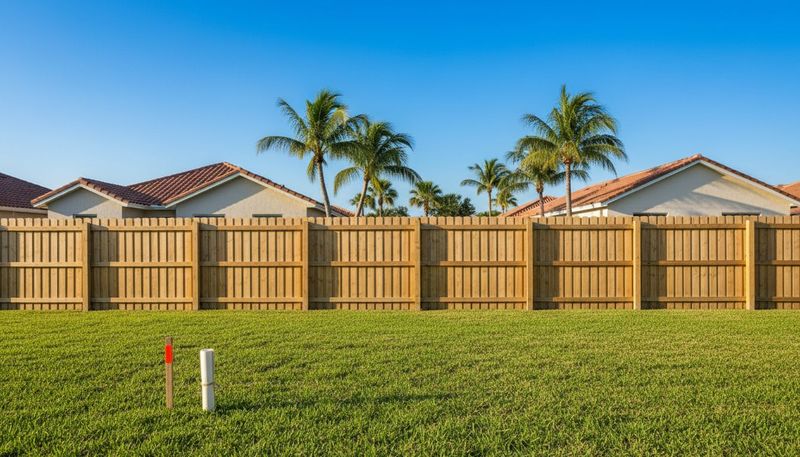
Before any cutting, find out where your land actually ends. Collier County advises confirming the boundary because a fence may not match the legal property line.
A survey or your property records can settle the question.
Next, talk with your neighbor. Broward County recommends direct communication, and Collier County advises notifying the tree owner before work begins.
A friendly note or chat often leads to an easy fix, such as the neighbor hiring a pro to trim the whole palm.
Also check local rules. Protected-tree ordinances and HOA covenants may limit what you can do, especially for substantial work.
A quick call to your city, county, or HOA can prevent a costly mistake.
You may also hear about Florida Statute 163.045. It is a narrow permitting rule.
It applies to qualifying tree work on an owner’s own qualifying single-family residential property, and only when statutory conditions are met, including a risk assessment from a qualifying arborist or landscape architect. It does not give anyone general permission to prune a neighbor’s palm.
Palm pruning should protect the tree—and the person doing it
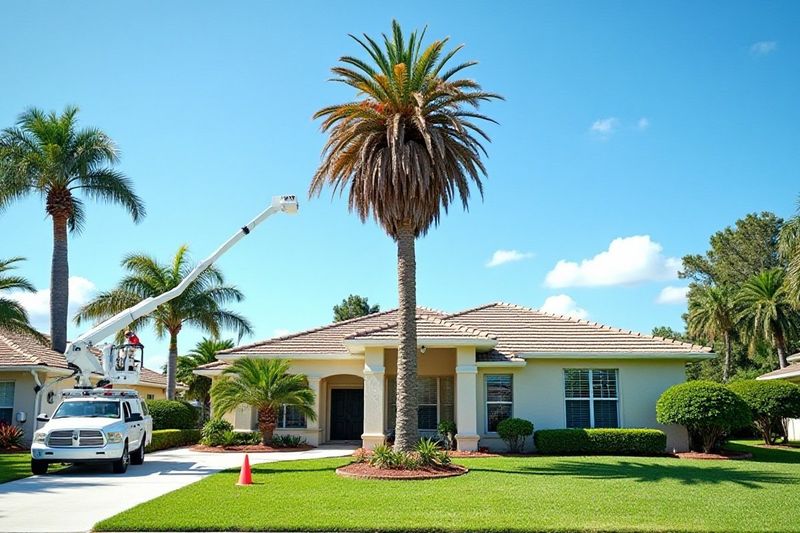
Palms are not pruned like oak or maple trees. UF/IFAS gives a simple rule of thumb: remove only fully brown fronds, never live green ones.
If a brown frond resists, do not yank it off by force, since that can injure the trunk.
Removing most of the fronds does not make a palm safer. UF/IFAS says it harms the tree and can leave it less able to withstand hurricane-force winds.
So avoid hurricane-cutting, even when a palm looks shaggy.
Safety matters just as much. Fronds are heavy, trunks can be rough, and ladders near power lines are a real danger.
For high, heavy, or hard-to-reach fronds, UF/IFAS recommends hiring a certified arborist.
This ties back to your legal limit. Even when a frond overhangs your yard, you should trim it only if you can reach it safely from your own land and it is fully brown.
Otherwise, ask the neighbor to arrange the work or hire a pro yourself after talking it through.
A tree on the property line is not ordinary overhang
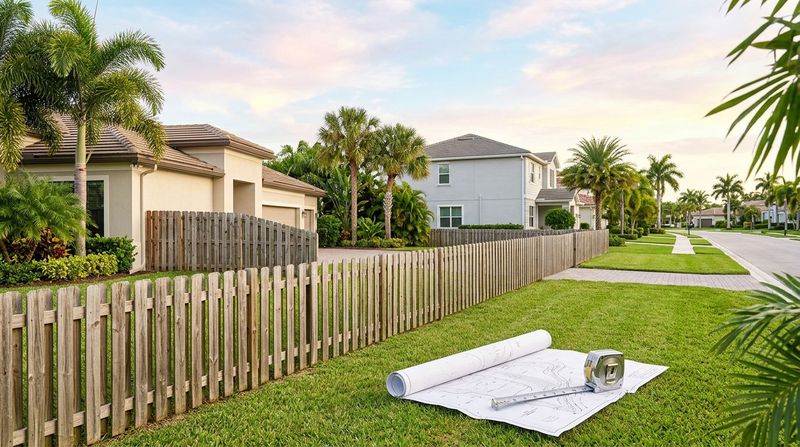
Sometimes the palm itself stands on the boundary. In that case, you are not dealing with a neighbor’s branch reaching over.
The trunk may belong to both owners, and the one-sided trimming rule does not fit.
UF/IFAS warns that removing a boundary-line tree without the adjoining owner’s consent can create liability. That makes it very different from trimming a frond that crosses the line.
If you suspect the trunk sits on or near the line, pause. Confirm where the trunk stands with a survey, then talk with your neighbor about what you both want.
Written agreement on any pruning or removal is worth having.
If you cannot agree, consider speaking with a Florida attorney before touching the tree. The handbook also notes that the law can change and that it is not legal advice, so a professional can help with your specific situation.
A limb that damages property raises a separate question
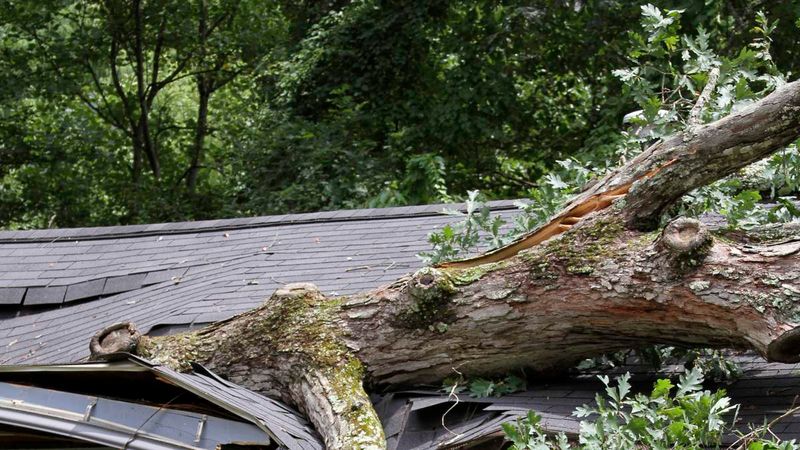
A frond landing on the lawn is one thing. A heavy limb crashing onto a roof, vehicle, or fence is another.
Routine cleanup guidance, like Broward County’s advice about natural debris, does not answer who pays for damage.
Liability may depend on the tree’s condition and whether the owner knew or should have known about a hazard. UF/IFAS says dead branches may raise liability concerns, but notes no Florida case directly settles the live-versus-dead question for a tree falling onto adjoining property.
A Florida Senate analysis describes ordinary negligence as the apparent framework.
So neither neighbor always pays. The cited materials do not give a categorical answer for every case.
You may have heard of the 2025 Fallen Tree Act, SB 724. It did not become law, and the bill history shows it died in committee.
If damage happens, take photos, keep repair estimates, notify your insurer, and consider legal advice.
Start with the least risky next step
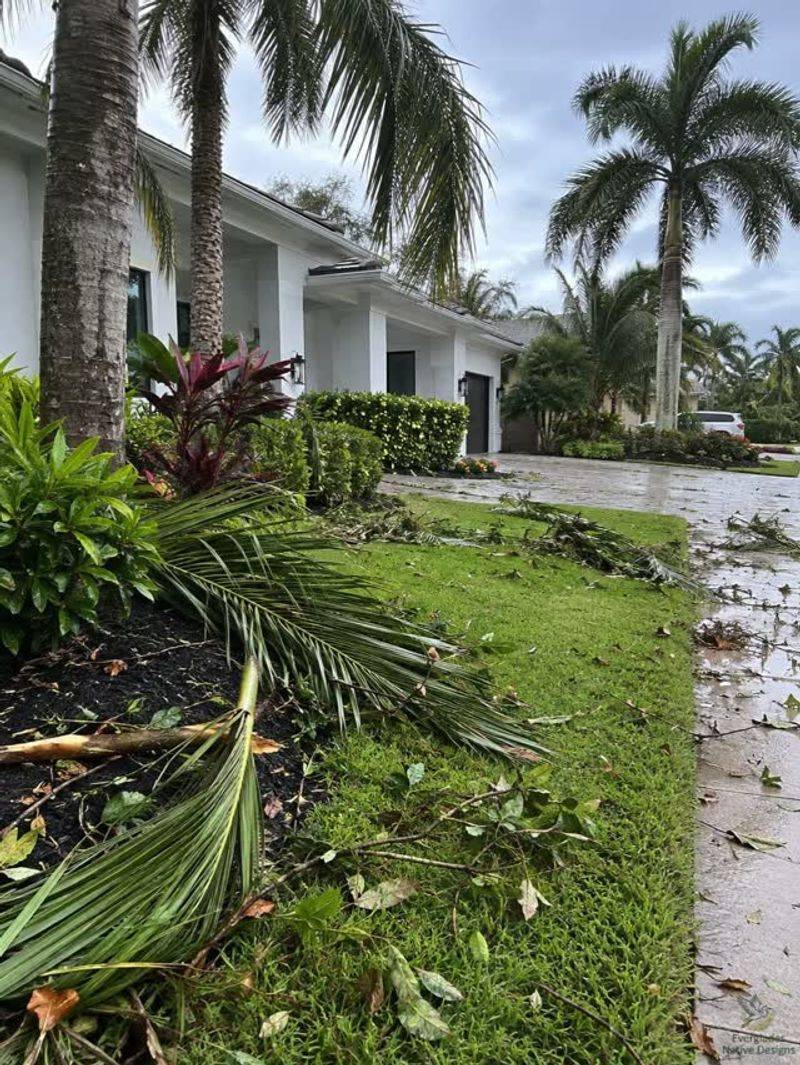
Think of this as a short decision path. For fronds, coconuts, and seed pods that have already fallen, treat it as cleanup and follow your local advice.
For attached overhang, confirm the legal boundary and talk with your neighbor, since Collier County’s guidance supports notice before work.
If trimming makes sense, keep it limited to your side of the line, from your own land. For anything high or heavy, follow UF/IFAS palm pruning advice and call a certified arborist.
Pause for boundary trees, local restrictions, or damage, and see the UF/IFAS property law handbook for background.
Cleanup and damage liability are separate questions. A rake solves one, and calm paperwork solves the other.