
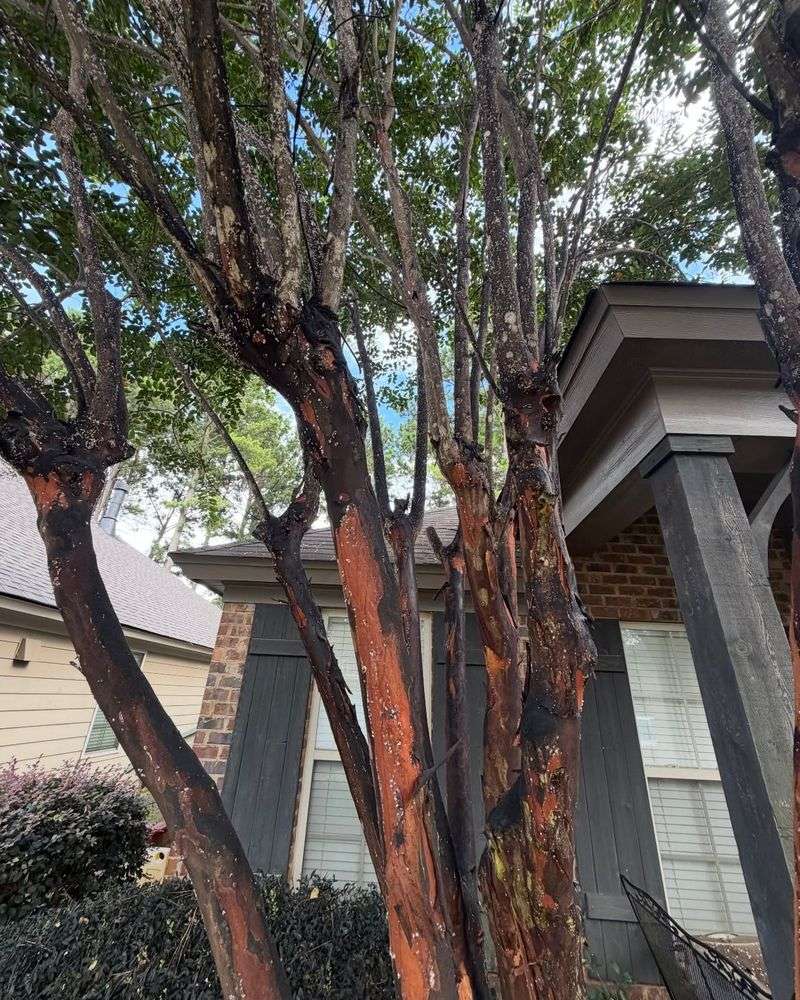
A crape myrtle that looks like it was dusted with soot can make any North Carolina yard feel neglected. The black coating is a fungus, and it usually points to a bug problem somewhere on the tree.
But the coating does not tell you which bug is to blame, and picking the wrong treatment wastes time and money. A careful look at the bark and leaves can save your tree a lot of trouble.
Sooty mold points to honeydew, not a diagnosis
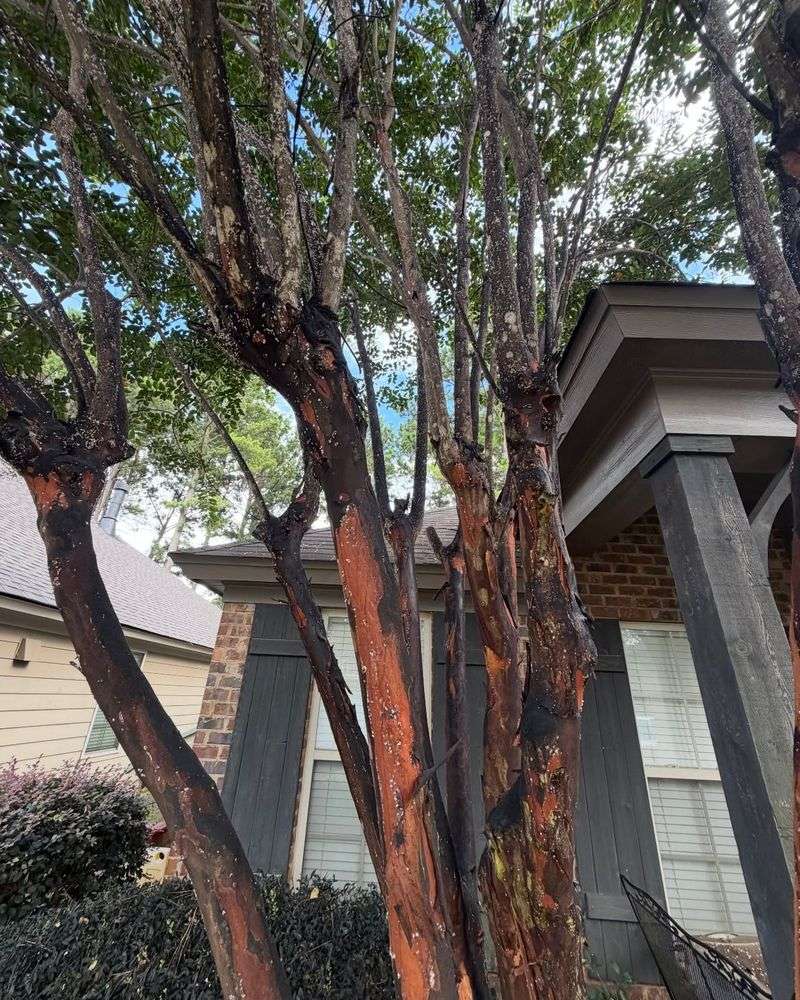
Sooty mold is a fungus that grows on honeydew, the sugary liquid that sap-feeding insects leave behind as they feed. The mold is not the insect and it is not attacking the tree directly.
It is more like a messy guest that shows up where the sweet drips land.
That makes the black coating a useful clue. According to NC State Extension guidance on crape myrtle bark scale, bark scale produces honeydew that supports sooty mold.
Bark scale is not the only suspect, though.
Crape myrtle aphids also drip honeydew, and NC State’s crape myrtle pest guide lists sooty mold among their symptoms. The NC Department of Agriculture and Consumer Services describes the same black coating in connection with bark scale.
So the mold tells you that something is feeding, but not what.
The coating is not harmless either. A heavy layer can block light from reaching the leaves, which can make the tree work harder to make food.
It also makes the tree look grimy, which is often what sends homeowners outside to look in the first place.
Treat the black film as a signal to investigate. Scrubbing or spraying the mold alone will not stop the insects that keep feeding the next batch of honeydew.
Where should you look for the insect?
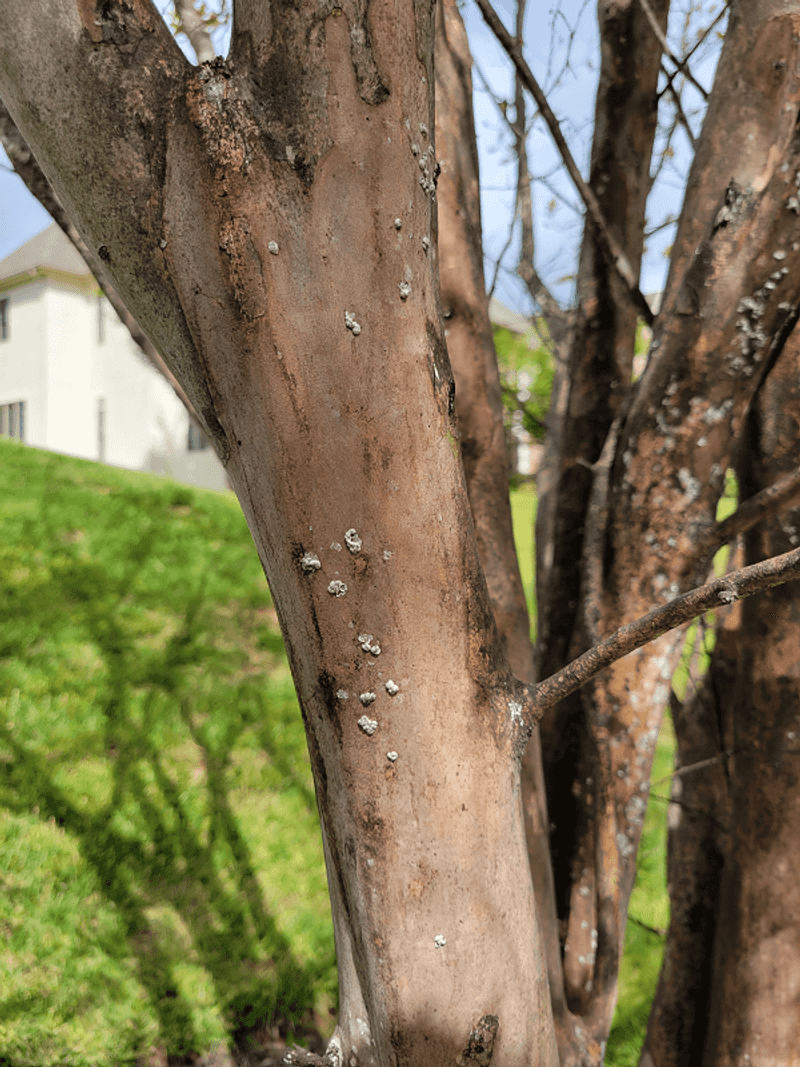
Start with the bark, then move to the leaves. Walk around the tree on a bright day and look closely at the trunk, the branches, and the spots where branches fork.
Bark scale shows up as white or gray waxy or felt-like bumps in those places, according to NC State Extension. If you press one and it releases pinkish-red fluid, that supports a scale suspicion.
Older bark can hide them, so check crotches carefully.
Next, turn over some leaves. Crape myrtle aphids are small and greenish, and NC State’s pest guide places them on the undersides of foliage.
In winter, with the leaves gone, aphids will not be there, so a bare tree with bark bumps points toward scale.
Also notice any shiny or sticky residue on leaves, branches, or things parked beneath the tree. That stickiness is honeydew, and it is a clue that feeding is happening.
It does not prove which insect is responsible.
Take photos as you go. If you cannot match what you see to either description, the NCDA&CS suggests contacting your county extension agent or submitting a specimen for verification.
Confirm bark scale before cleaning up the tree
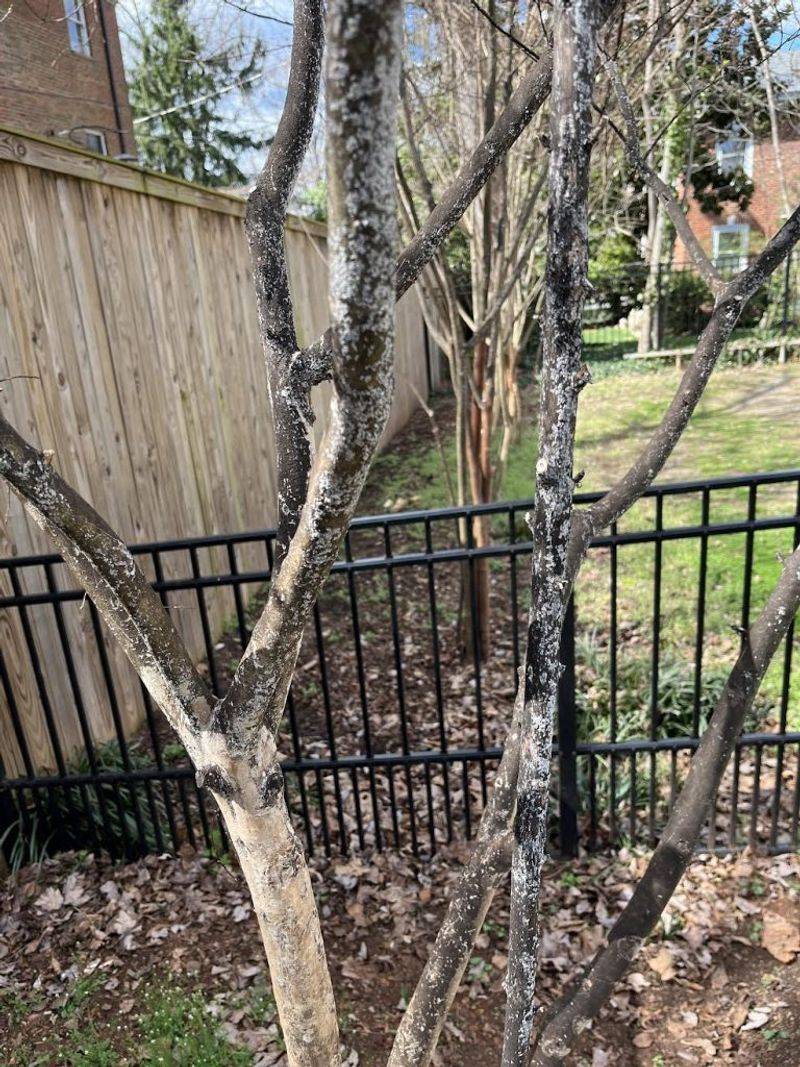
Once you think you have bark scale, resist the urge to grab a sprayer right away. Document what you see with clear photos of the trunk, branches, and any sticky or black areas.
Then, if you are not sure, get a second opinion.
The NC Department of Agriculture and Consumer Services recommends that homeowners with uncertain identification contact a county extension agent or submit a specimen for verification. A quick confirmation keeps you from treating the wrong pest.
After that, a few hands-on steps are available. NC State Extension lists removing heavily infested branches and using a hose or pressure washer to dislodge scales as homeowner options.
Bag pruned material rather than leaving it under the tree.
Arkansas Extension also suggests washing the trunk and branches with a soft brush and mild soap. Go gently so you do not scrape the bark.
These steps can reduce the visible pests and the mold that follows them. They are not guaranteed control, so plan to recheck the tree over the coming months.
Winter may help with bark scale, but it is not a reset
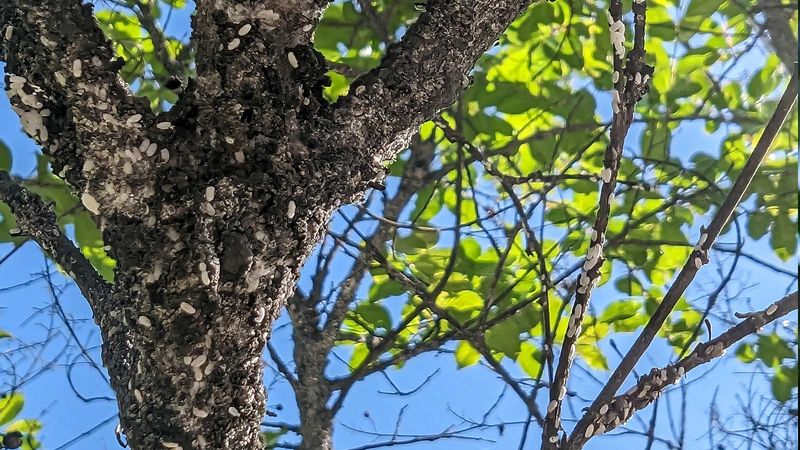
Bare branches make bark scale easier to see, which is one reason winter feels like the right time to act. It can be a good moment to inspect and plan.
It is not a magic reset button.
In many parts of North Carolina, bark scale can be present in several life stages all year, according to NC State Extension. The same guidance says oils and soaps are especially useful when newly hatched crawlers are present, since those young insects are the most vulnerable.
Timing varies across the mountains, Piedmont, and coastal plain, so no single statewide date fits every yard.
Extension sources are not fully in agreement about dormant oil. Virginia Cooperative Extension says dormant oil may help smother overwintering scale but notes that this option has not been fully researched.
An earlier Arkansas Extension publication said oil had not yet been shown effective against the pest, while another Arkansas article described winter application as potentially beneficial.
The practical takeaway is simple. A winter treatment may reduce an infestation, but it cannot be promised to eliminate it, and bark scale can have multiple generations.
Plan on monitoring and follow-up rather than one big spray.
Oil and soap treatments depend on careful application
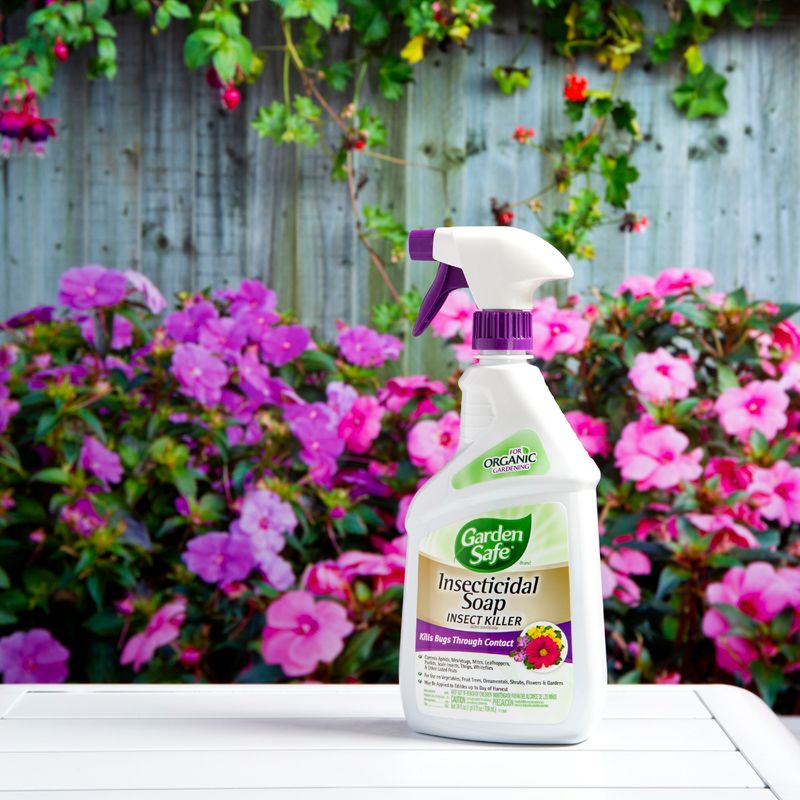
Oils and soaps work by contact. They only help if the spray actually reaches the insects, so thorough coverage of the trunk, branches, and crotches matters as much as the product itself.
Choose only a product labeled for crape myrtle and for the pest you have confirmed, then follow the label directions closely. Skip homemade mixes and any rule of thumb about a single safe temperature.
Product formulas differ, and the label’s plant-safety and weather warnings are the ones to heed.
Oil is not risk-free. NC State Extension’s guide to horticultural oils cautions that dormant oils can damage green plant tissue and that even horticultural oils can injure plants under some conditions.
Misuse is where most of the trouble starts.
Systemic insecticides are not a casual first step either. NC State warns in its bark scale guidance that imidacloprid may contaminate flower parts visited by bees and other beneficial insects.
Crape myrtles bloom for weeks in summer, which makes that concern very real for pollinators.
If the label, the weather, or the plant’s condition leaves you uneasy, ask your county extension office before spraying.
Aphids call for a foliage-focused plan
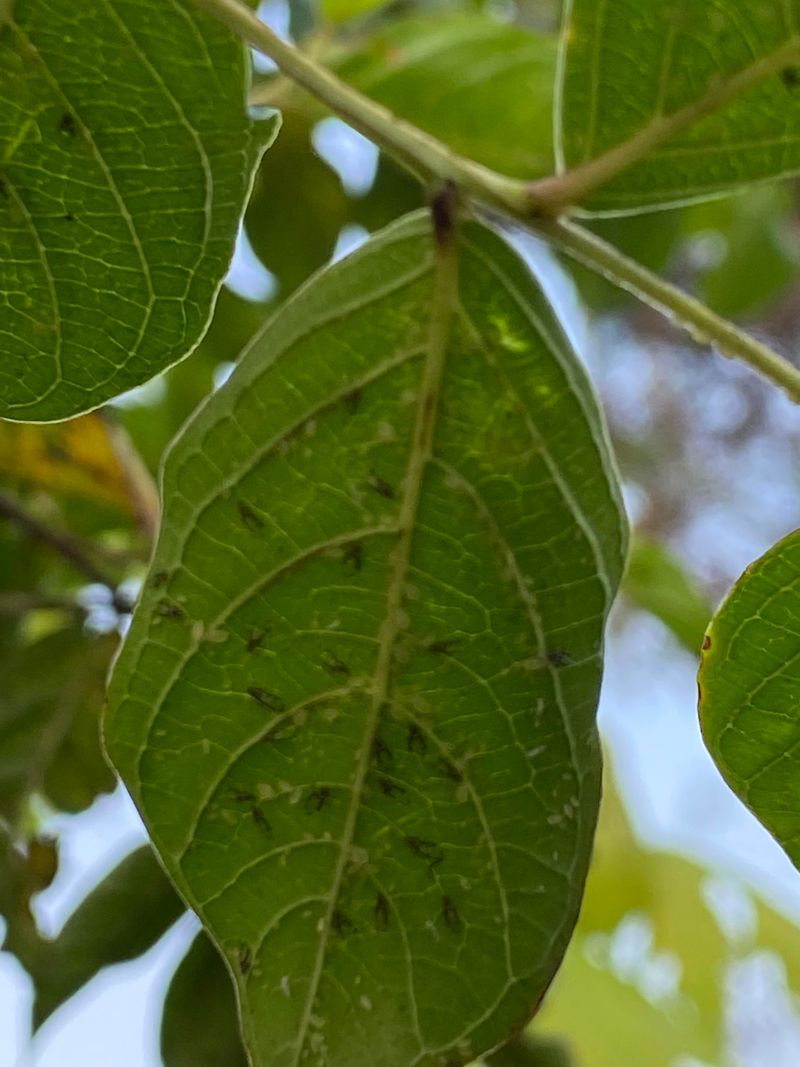
Picture a perfectly timed winter bark treatment. If aphids are your problem, it still misses them, because they feed on leaves that are not even on the tree yet.
Aphids are a growing-season job.
NC State reports that crape myrtle aphids are found on foliage from late April through September in the Southeast, in its crape myrtle pest guide. That window describes aphids only.
It does not apply to bark scale.
If you find small greenish insects on leaf undersides, any spray you choose has to reach those undersides. Spraying only the tops of leaves or the trunk will leave most of the colony untouched.
Check the product label for crape myrtle and aphids before you buy.
Keep the plan conditional. Confirm that aphids are really there, since a sticky, sooty tree with clean-looking leaves may be dealing with bark scale instead.
Some trees have both, and in that case each pest needs its own approach at its own time.
Recheck leaves every week or two through summer. Catching a small colony early gives you more options and less honeydew to deal with.
Identify the pest before choosing the treatment
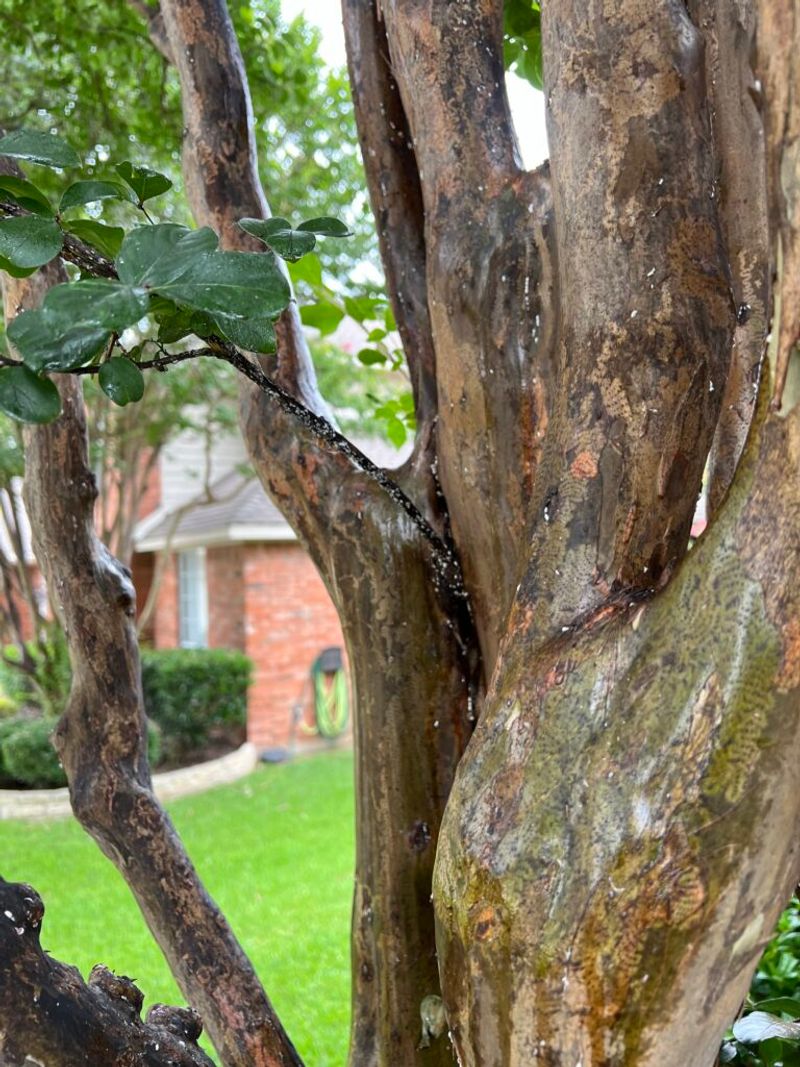
Think of the black coating as a clue, not an answer. Check the bark for white or gray bumps and the leaf undersides for small green insects, as NC State describes.
If you are unsure, send photos or a sample through your county extension office, as the NCDA&CS advises.
Winter steps may help with bark scale, but they will not leave a clean slate or touch aphids on leaves. Match the plan to the pest, and read the product label before you spray, as NC State stresses.
A sooty tree is only the opening question, and the insect is the answer.