
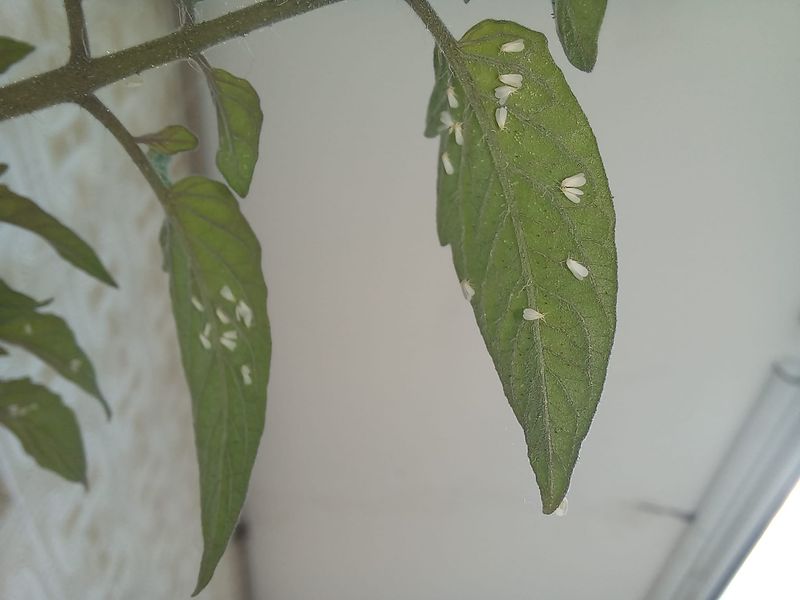
Flip over a tomato or pepper leaf in November and you might spot tiny pale specks that weren’t there a few weeks ago. Brush the plant, and a little cloud of white insects may drift up.
Mild Southern fall weather can keep whiteflies active, but what you see on the leaves matters more than the thermometer. Here is how to check the specks, judge the damage, and pick a response that fits.
Mild fall weather can support activity, but it does not prove an outbreak
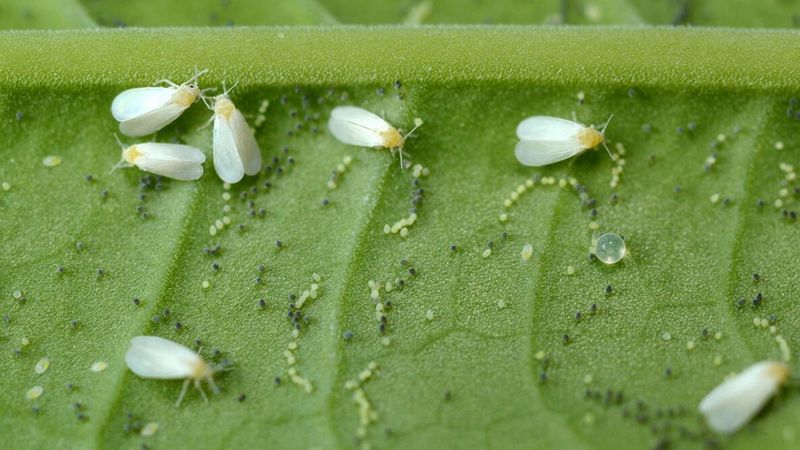
Warm weather gives whiteflies room to grow, but a mild November alone does not tell you they are thriving in your garden. A laboratory study on silverleaf whitefly found that development and population growth change with temperature and host plant.
Those results come from controlled conditions, so they cannot predict what will happen in every garden.
Location matters too. UF/IFAS guidance reports that whitefly populations are typically worse in fall in south-central Florida, but worse in spring in southern Florida.
That is a good reminder not to assume one seasonal pattern fits the whole South.
Local weather, the type of plant, and natural enemies like predators and parasitoids all shape what you will find. So treat mild weather as a reason to look closely, not as proof of a problem.
Your own leaves will give the real answer.
Check leaf undersides before identifying the specks
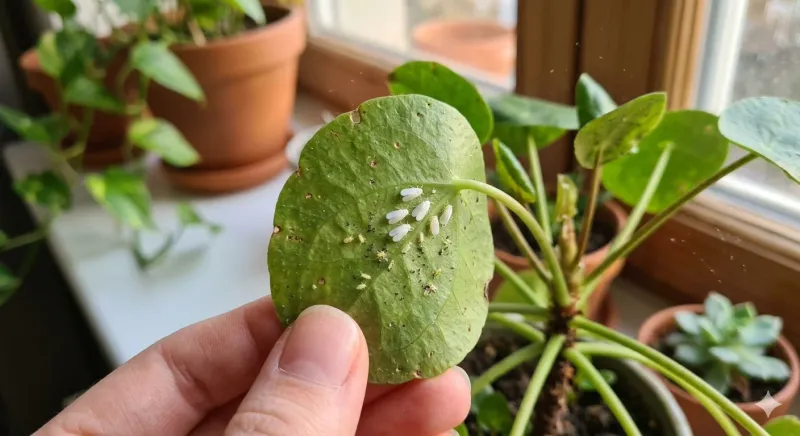
Start by turning leaves over, since that is where whiteflies and their young usually sit. Look at newer growth near the top and also at older leaves lower on the plant.
A hand lens or phone camera zoom can make small details easier to see.
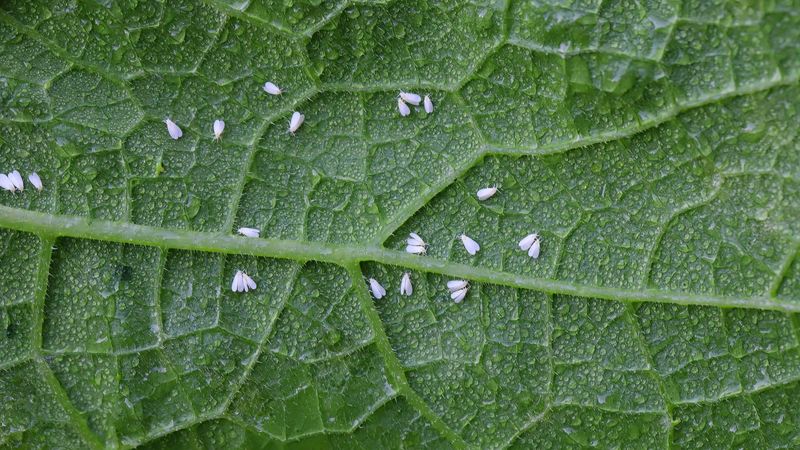
UF/IFAS describes whitefly eggs as yellow and the later nymphs as immobile and scale-like. If your specks match that description and sit on the underside, whiteflies become a reasonable guess.
Next, try the shake test. Texas A&M AgriLife Extension notes that a gentle shake can send adults flying off tomato plants.
If tiny white insects flutter up and settle again, that supports the whitefly idea.
Still, specks alone do not confirm anything. Pale spots can have other causes, so combine what you see on the leaf with what happens when you disturb the plant.
Separate whitefly sightings from plant damage
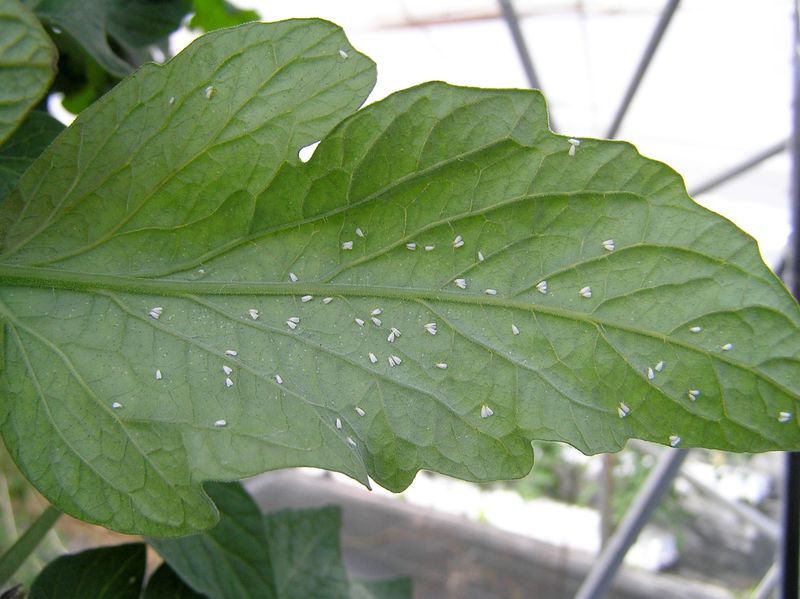
Seeing a few adult whiteflies is not the same as seeing a hurting plant. Whiteflies feed on plant sap, and Texas A&M AgriLife explains that larger populations can yellow or dry leaves and leave behind sticky honeydew.
That honeydew may support black sooty mold.
The clue to watch is the nymphs. UC IPM notes that damage generally depends on significant nymph populations, except where adults spread a plant pathogen.
That exception is the virus question. Some whitefly species can transmit plant viruses, which is a separate risk from sap feeding.
It does not mean every sighting puts your plants in danger.
So ask what the plant is telling you. Are leaves yellowing, drying, or sticky, and are nymphs crowded on the undersides?
If the plant looks steady and only a few adults appear, close watching may be enough.
Use yellow sticky cards to monitor flying adults
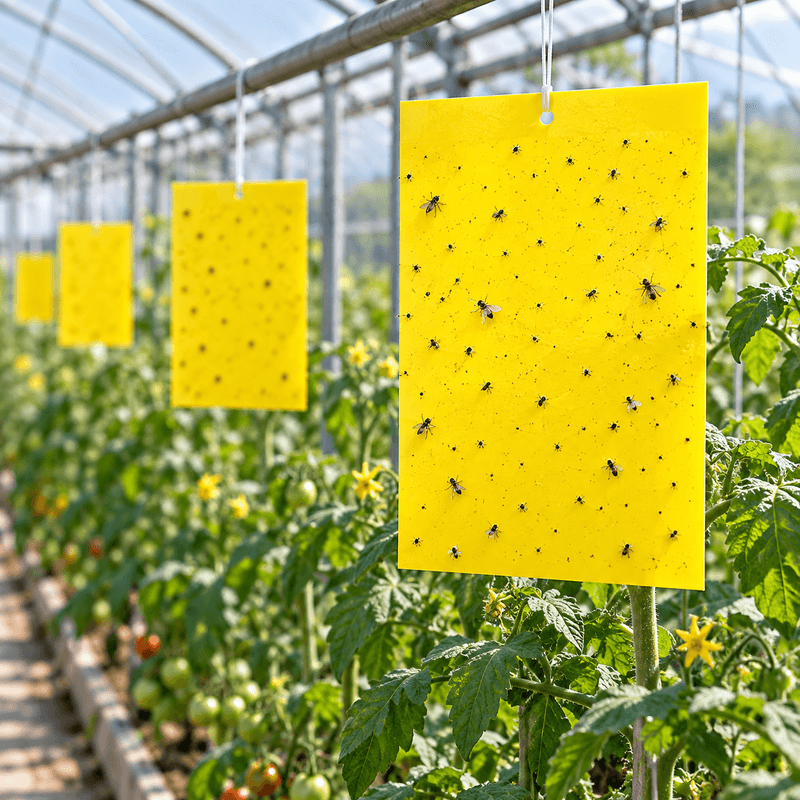
Think of a yellow sticky card as a thermometer for adult activity, not a cure. It catches flying adults, so it says nothing about the eggs and nymphs sitting on leaves.
Pair each card with a regular look at leaf undersides.
For home vegetable gardens, UC IPM suggests placing cards near plants, with the sticky surface at the height of the infestation, facing the plants, and out of direct sun. The same guidance says traps may reduce numbers somewhat within a broader program but may not eliminate damaging populations.
Field results back up that caution. A review of yellow sticky traps found no significant population-control effect in field trials.
Check what the card collects. UC IPM monitoring advice notes that traps can also catch beneficial and other non-target insects, and that counts alone do not show whether treatment is needed.
Start with physical steps for a small infestation
When whiteflies are just getting started, your hands and a hose are good first tools. Pick off badly infested leaves and bag them rather than leaving them on the ground.
Then rinse the undersides of the remaining leaves with a steady stream of water to knock insects loose.
UC IPM recommends these steps for early or small infestations. Go easy on the pressure so you do not tear tender tomato or pepper foliage.
Natural enemies deserve protection while you work. Texas A&M AgriLife notes that whiteflies have predators and parasitoids that help hold them in check.
Broad-spectrum pesticides can disrupt those helpers, which may let whiteflies rebound.
These cleanup steps are separate from trapping. Cards watch adults, while pruning and rinsing remove the insects living on leaves.
Neither is guaranteed to clear every whitefly, so keep checking over the next few weeks.
Use labeled soaps or oils carefully
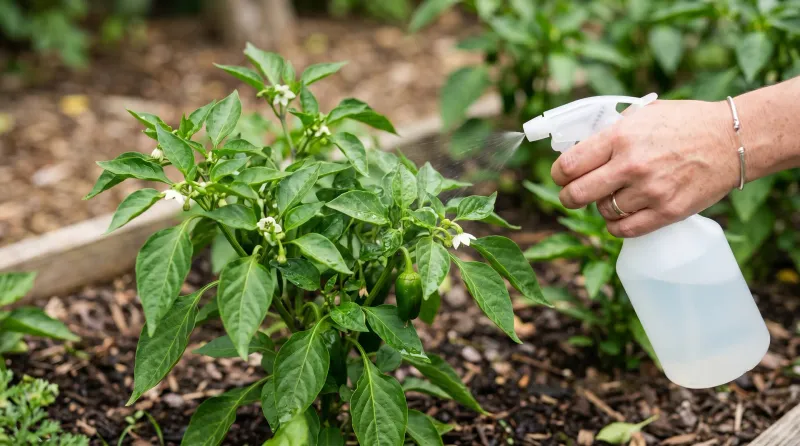
If pruning and rinsing are not enough, a soap or oil product may be the next step. It must be labeled for both your crop and the pest, and you must follow the label.
The EPA explains in its pesticide labeling Q&A that the label directs permitted use, including which food crops are listed.
These are contact products, so they affect only insects they reach. Cover the affected leaf undersides well.
UC IPM notes that repeat applications may be needed, and you should repeat only if the label allows it.
Skip homemade dish-soap sprays. UF/IFAS explains that household detergents are not formulated or labeled as garden pesticides and may injure plants.
Even insecticidal soap can harm plants or beneficial insects if misused.
UF/IFAS also cautions against treating drought-stressed plants or plants in temperatures above 90°F. Even a correct product will not guarantee that whiteflies disappear or that a plant recovers.
Let plant inspections guide the next step
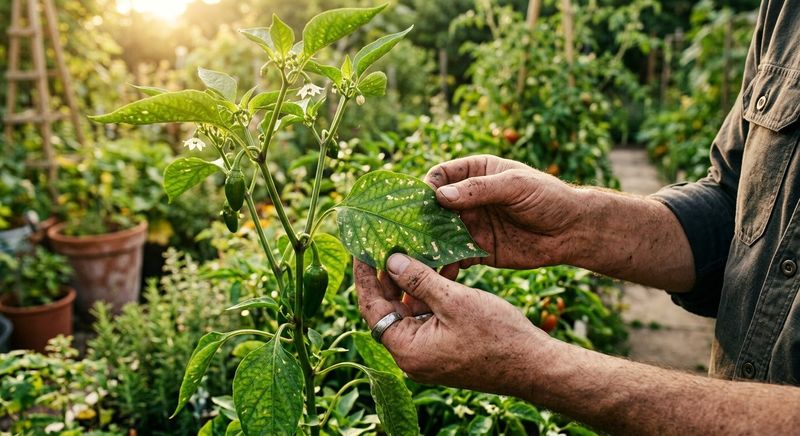
Your decision rule is simple: flip the leaves, look for nymphs, and judge how the plant looks. UC IPM ties damage to significant nymph numbers, so a few adults on a healthy plant usually call for watching, not spraying.
Use sticky cards only as a measure of adult activity. UC IPM monitoring guidance says counts alone do not show whether treatment is needed.
Weather and trap catches are clues, but the leaf has the final word.