
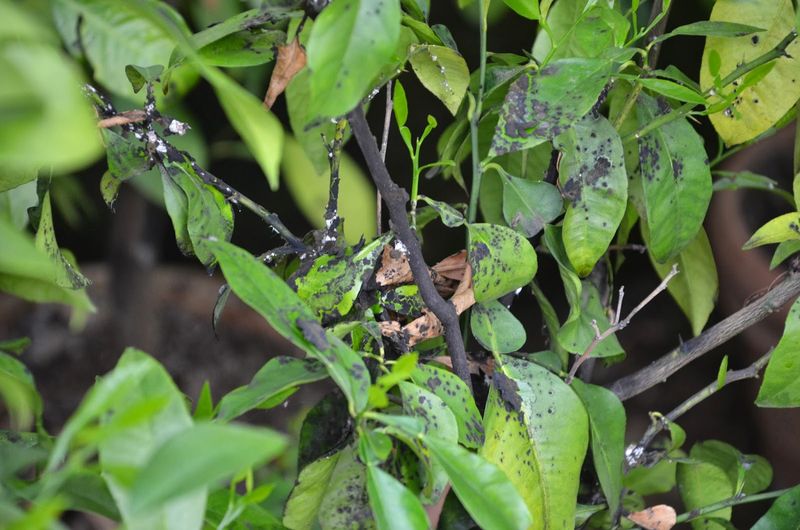
Wipe a finger across a citrus leaf and find a black, sooty smudge, and it is natural to worry. That film is usually a mold growing on sticky insect waste, not a sickness inside the leaf.
Finding what left the mess behind tells you whether the tree needs help or just a little patience. Here is how to look, what to make of what you find, and when to leave the sprayer in the shed.
Black film is a clue, not proof of scale
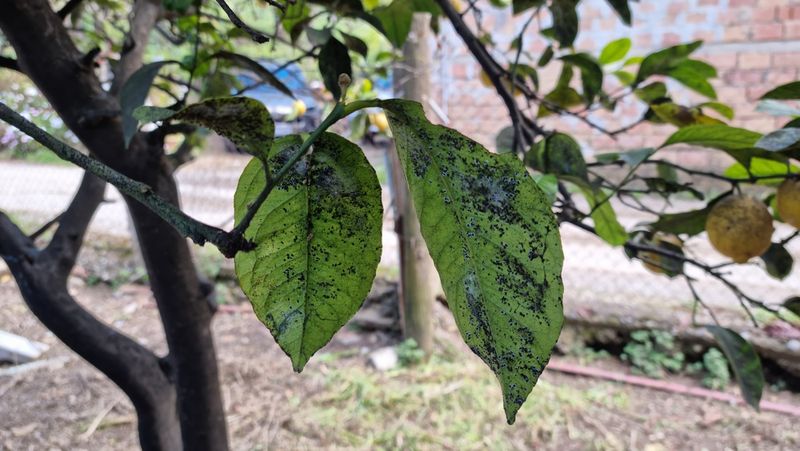
That black coating is sooty mold, and it grows on sugary honeydew left by sap-feeding insects. Texas A&M’s citrus disease guide describes it this way, and it is the first thing to understand before you reach for any spray.
Scale is one possible source, but not the only one. UF/IFAS lists whiteflies, aphids and mealybugs as other honeydew producers, and Texas A&M also names blackflies.
That list is not necessarily complete, so the film alone cannot tell you which pest, if any, is still at work.
The mold does not infect citrus tissue. A heavy layer, though, can block light and reduce photosynthesis, which may slow growth, according to Texas A&M’s sooty mold page.
Black leaves alone do not prove a serious infestation, so treat them as a reason to investigate.
Inspect for the source of honeydew
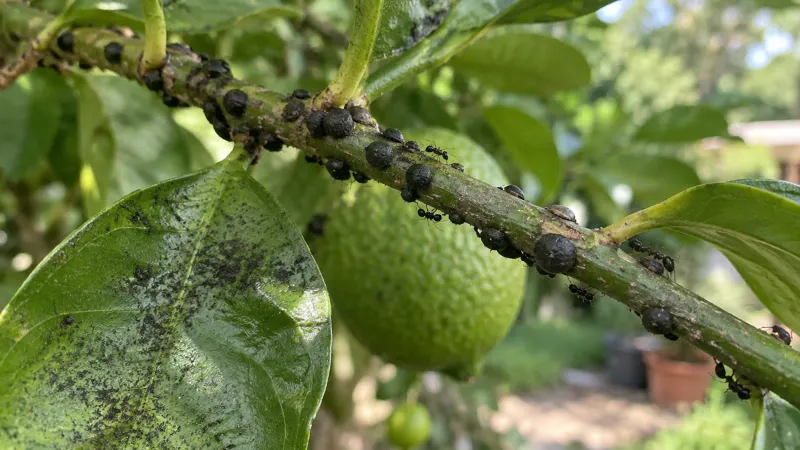
Grab a hand lens and spend ten minutes with the tree. Turn leaves over and check the undersides, then look along young stems and branches for bumps, fuzzy white clusters, or tiny soft-bodied insects.
Sticky, shiny leaves are a good sign honeydew is fresh.
Watch for ants marching up the trunk, since they often feed on honeydew and may guard the insects making it. Then tap a branch gently.
Whiteflies tend to flutter up in a small cloud, which points away from scale.
Keep in mind that sooty mold means a honeydew producer is or was nearby. The insects may have moved on, died off, or been eaten by natural enemies by the time you notice the black layer.
Look beyond the citrus too. Honeydew can drip from a neighboring plant, so check nearby shrubs and trees.
Clemson Extension’s citrus pest guide is a handy reference for matching what you see to likely culprits.
Soft scale and armored scale leave different clues
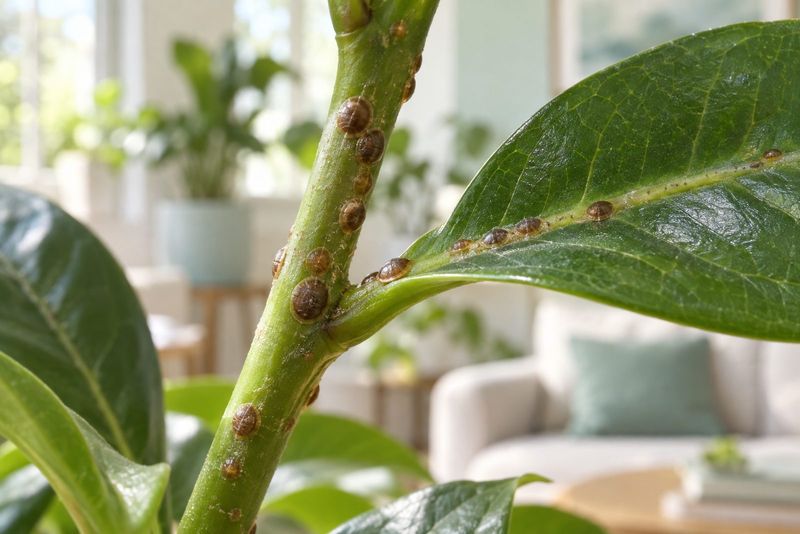
Not every scale makes the mess you are looking at. Soft scales produce honeydew, while armored scales do not, as UF/IFAS citrus production guidance explains.
So a twig crusted with armored scale will not necessarily explain a sooty leaf.
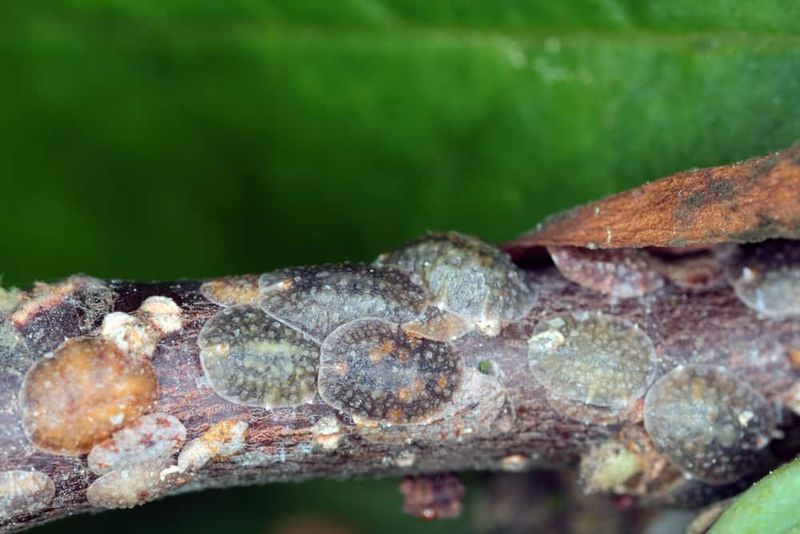
Soft scales often look like flat or slightly rounded bumps that may feel sticky around them. Armored scales wear a harder, separate cover that can be lifted off the insect beneath.
Here is the catch: old covers can stay stuck to the bark long after the insect has died. Scrape a few with a fingernail or the tip of a pin.
A live scale is moist or soft underneath, while a dead one is dry, hollow or papery.
Finding only empty covers is good news. It means there is nothing alive to treat, and you can skip the spray.
The coating may fade when honeydew stops
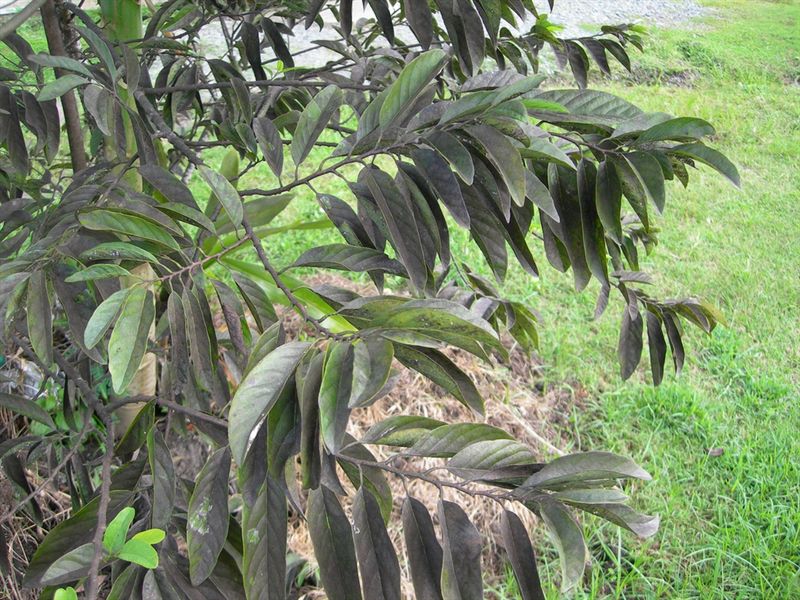
Cleanup and pest control are two separate jobs. Once insects stop replenishing the honeydew, rain usually washes away much of the mold.
The film may also dry, flake and drift off on its own.
If you want to speed things along, UF/IFAS notes that oil can help loosen the coating. Even so, wiping or washing leaves does nothing about an insect still making honeydew, and the black layer will simply return.
A dark tree also does not tell you whether the pests are still there. Some leaves stay black for weeks after the insects are gone, while a tree with an active problem may look only mildly sooty.
Check for live insects and fresh stickiness rather than judging by color.
Treat confirmed, active scale selectively
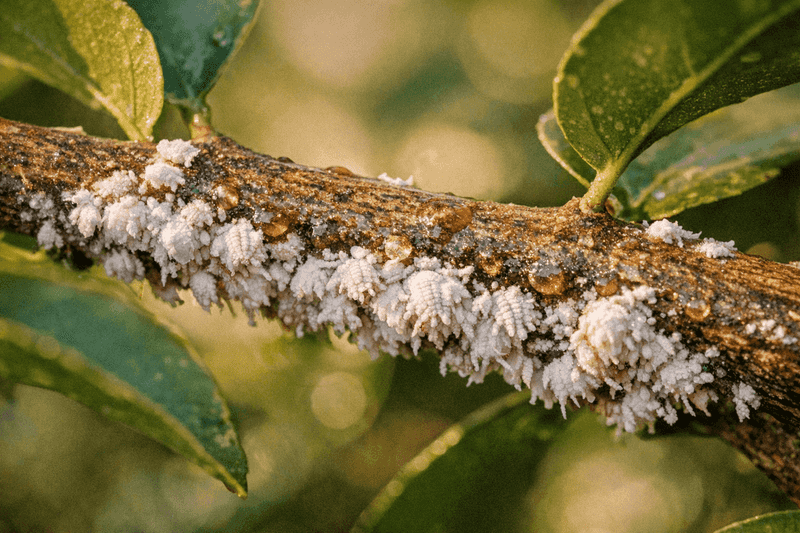
Let live insects, not soot, make the call. If you find active soft scale, consider how many trees you have and how heavy the infestation is.
Old covers or a black film with no living pests behind it do not justify treatment.
UF/IFAS guidance recommends assessing live scale first and notes that spot treatment may suit a small number of trees. For a backyard with one or two citrus, that could mean treating only the infested branches rather than drenching the whole canopy.
Natural enemies matter here. Lady beetles and parasitic wasps often keep scale in check, and repeated broad-spectrum pesticide use can disrupt them.
Wiping out the helpers may make the problem come back worse.
You do not need to remove every last scale. Aim for a population low enough that honeydew stops piling up on the leaves.
Fall is not a universal spray deadline
Plenty of advice treats autumn as a spray deadline, but a sooty tree does not automatically need treatment before winter. Decisions should follow what you find on the branches.
If there are no live pests, there is nothing to time.
Timing matters when you do have a target. For soft scales, UF/IFAS production guidance says applications outside the crawler or young-nymph period can be ineffective.
Those tiny young stages are the vulnerable ones, and they do not appear on one fixed date.
That guidance was written for commercial Florida groves. It is not a calendar rule for a backyard tree in the Texas Hill Country, the Rio Grande Valley, or south Florida, where warmth and pest cycles differ.
Look closely for crawlers and young nymphs on your own tree, and ask your local extension office what stage your pests are in.
Use horticultural oil only as its label directs
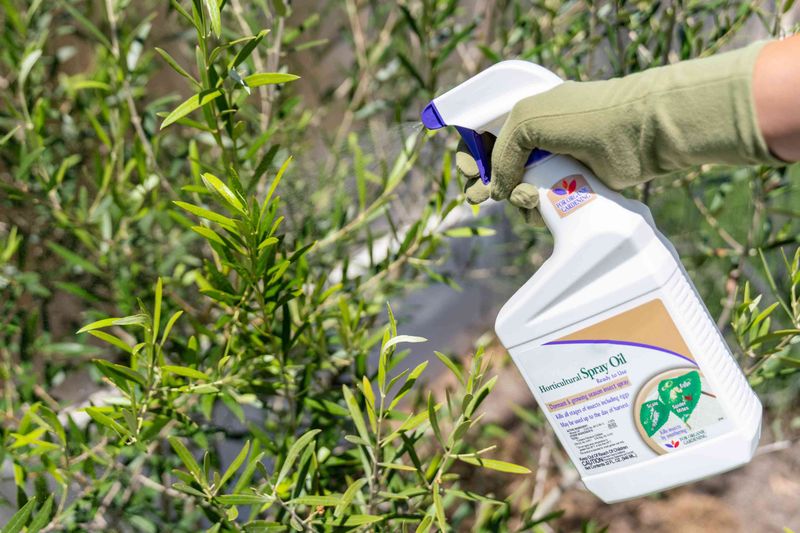
Oil can be a sensible tool once you have confirmed a live pest, but it is not harmless and it is not for guessing. Choose a product labeled for citrus and for the pest you actually found.
Then follow that label, because rates vary by product and region and should never be copied from another source.
Clemson Extension advises against spraying in direct sun, when rain is likely, or outside the temperature range the product allows. It also gives a lower maximum concentration when fruit is on the tree, so check what your label says about fruit-bearing citrus.
Misused oil can injure plants, as UC IPM’s guide to spray oils points out. Spray early or late on a mild, dry day, cover the pests directly, and test a small area if the label suggests it.
Aim for a healthy tree, not a spotless one
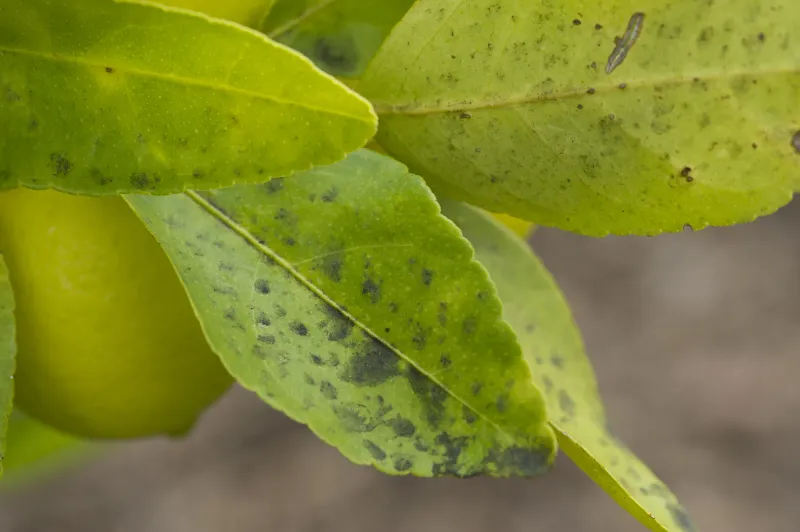
Start by finding the honeydew source, then confirm live pests before acting. Use targeted control only if the problem warrants it, and let the coating clear once the source stops.
UF/IFAS says complete elimination is neither practical nor necessary, and Texas A&M notes the mold often fades on its own.
No single fall treatment promises a cure. A few dusty leaves are a small price for a tree that still has its helpers.