
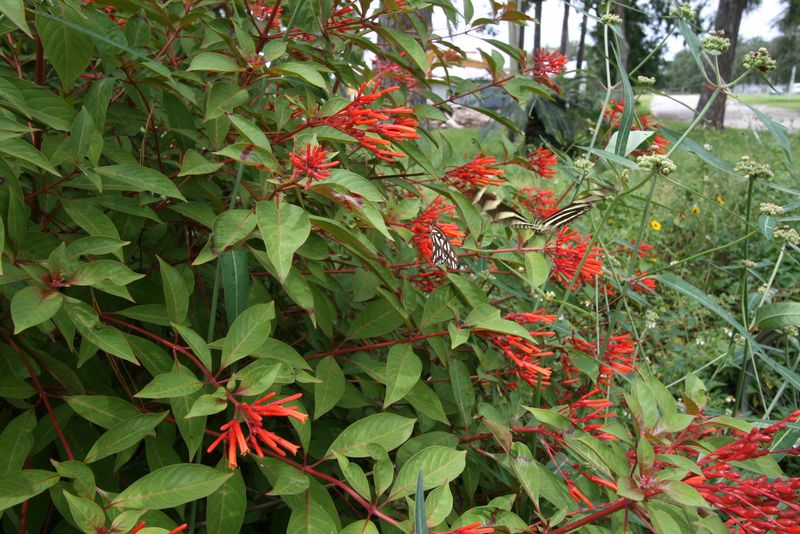
Picture a shrub covered in orange-red flowers while most of the yard looks tired and green. Firebush, a Florida native, can give that kind of show over a long season.
Its nectar-rich blooms may also bring hummingbirds close enough to watch from a window. Here is how to pick the right plant, give it a good start, and set realistic expectations.
Firebush can add a long season of color
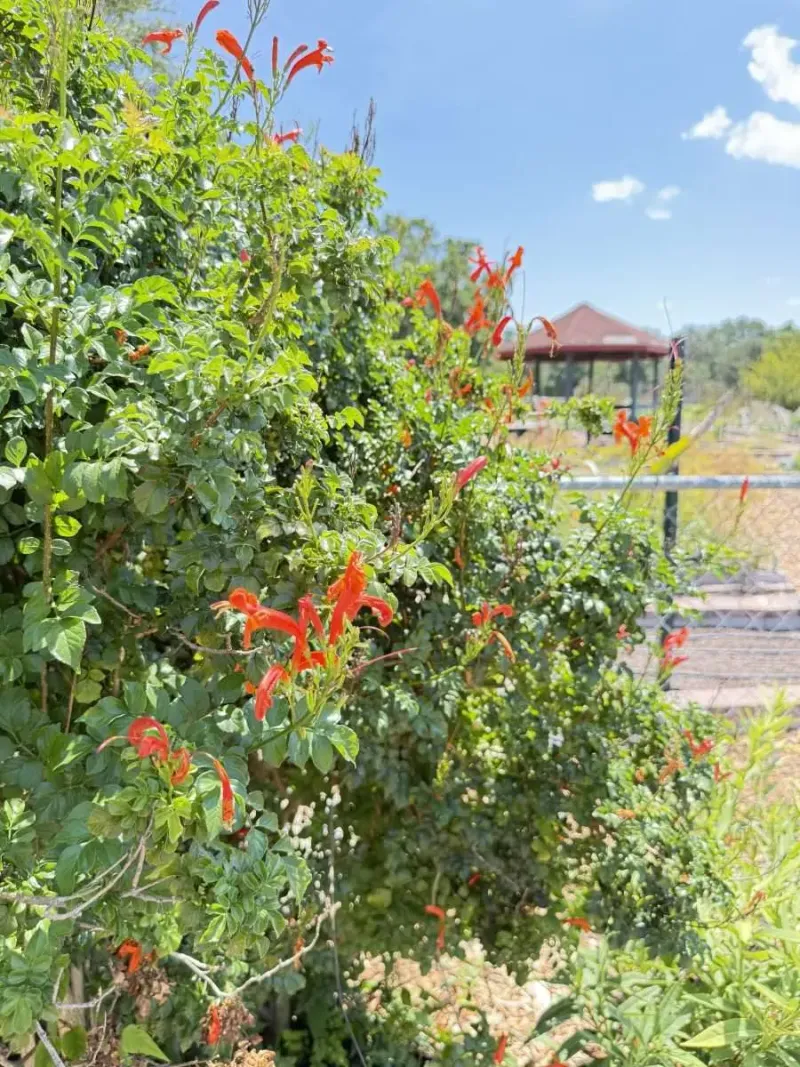
Few shrubs in a Florida yard can hold color for months, but firebush is built for it. Its tubular flowers open in clusters of orange-red, and new buds keep forming among the older blooms.
UF/IFAS describes flowering from late spring until first frost, which means the display can stretch across a big slice of the year.
The foliage adds to the look. Whorls of green leaves, sometimes tinged with red, make a leafy backdrop that makes the flowers stand out against fences, walls, or a mixed border.
Fall is where many gardeners notice it most, since so many other shrubs have slowed down by then. A UF/IFAS Extension report from Leon County lists firebush as a fall-flowering choice with dark red-orange blooms.
That is a local example from North Florida, not a statewide calendar, so bloom timing in your yard may differ.
Think of firebush as a color anchor for the back or middle of a bed. Place it where you can see it from a porch, patio, or kitchen window, and the long season will have an audience.
Why hummingbirds visit firebush flowers
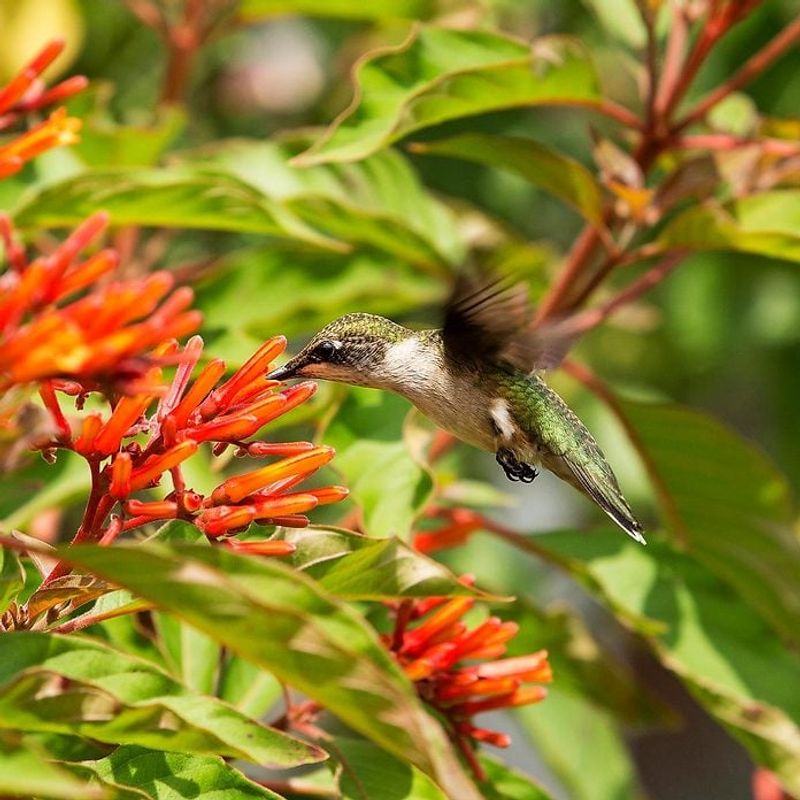
Shape and color explain a lot here. Firebush flowers are narrow tubes in bright orange-red, which is just the kind of bloom a hummingbird’s long bill and tongue are designed to reach.
Ruby-throated hummingbirds prefer tubular flowers and are especially drawn to red or orange blossoms, and the Florida Wildflower Foundation lists firebush among their favored blooms.
Butterflies visit the same flowers, so a firebush can turn into a small wildlife stop. Watch it in the morning or late afternoon, when birds tend to feed.
Here is the honest limit. Sources show that hummingbirds use these flowers as a nectar source.
They do not show that any particular yard will get visitors, or how many birds a planting will draw.
Your odds can improve if you offer more than one nectar plant and keep a sunny, open spot where birds can approach easily. Treat a sighting as a bonus, and enjoy the flowers either way.
Bloom and bird timing vary across Florida
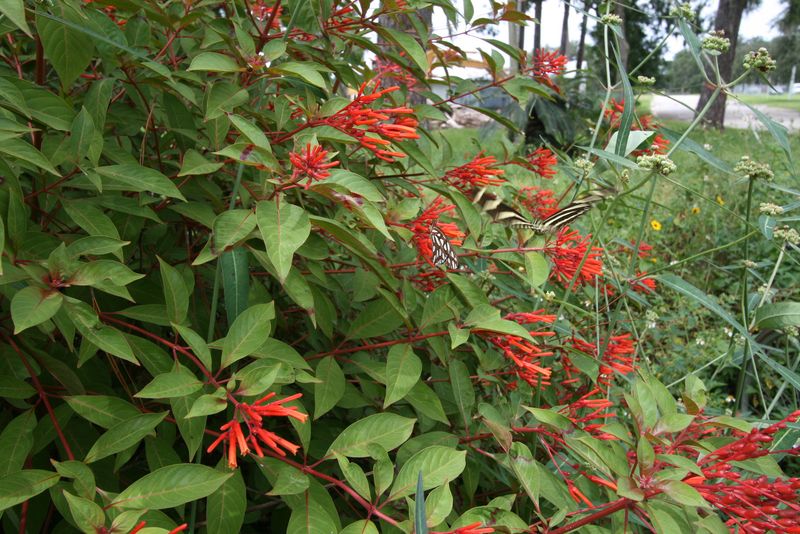
Florida stretches across very different climates, so one bloom calendar will not fit every yard. UF/IFAS describes firebush flowering from late spring until first frost.
In warmer areas, where frost is rare or absent, plants may flower year-round.
That means a gardener in the Panhandle may see blooms fade as cold arrives, while one in the Keys may see flowers in January. Fall color is a possibility in many places, but the peak date shifts with your location and the weather that year.
Birds follow their own schedule too. The Florida Wildflower Foundation reports ruby-throated hummingbirds in Florida from March to October, with some staying year-round in South Florida.
So a fall visit is not guaranteed, and year-round hummingbirds should not be expected. A simple habit helps: jot down when your firebush starts and stops blooming for a season or two, and note any birds you see.
Your own notes will tell you more than any general calendar.
Choose full sun for the fullest flower display
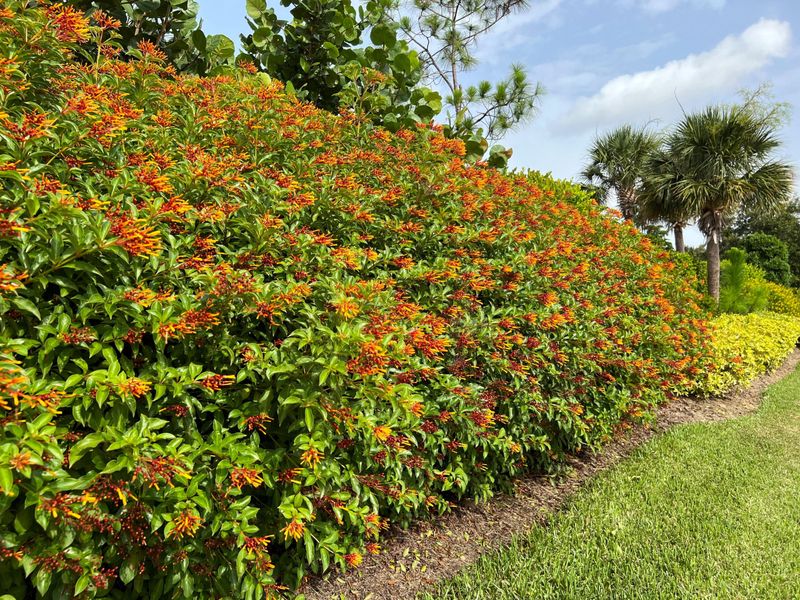
Where you plant firebush matters more than almost anything else you do. Pick the sunniest spot you have, ideally one that gets sun for most of the day.
UF/IFAS says firebush flowers best in full sun and tolerates partial shade, but flowering is reduced there.
A shady corner will still give you a leafy shrub. It just may not give you the thick cover of orange-red blooms that made you want it.
Soil is the second piece. Firebush prefers well-drained ground, and many Florida yards already offer that with sandy soil.
If your site holds water after summer storms, choose a slightly higher spot or build up a gentle mound.
Before digging, stand in the spot at a few times of day and watch the shadows from trees, roofs, and fences. A south or west exposure often works well.
Leave space around the plant so air can move through the leaves.
Water regularly while the plant establishes
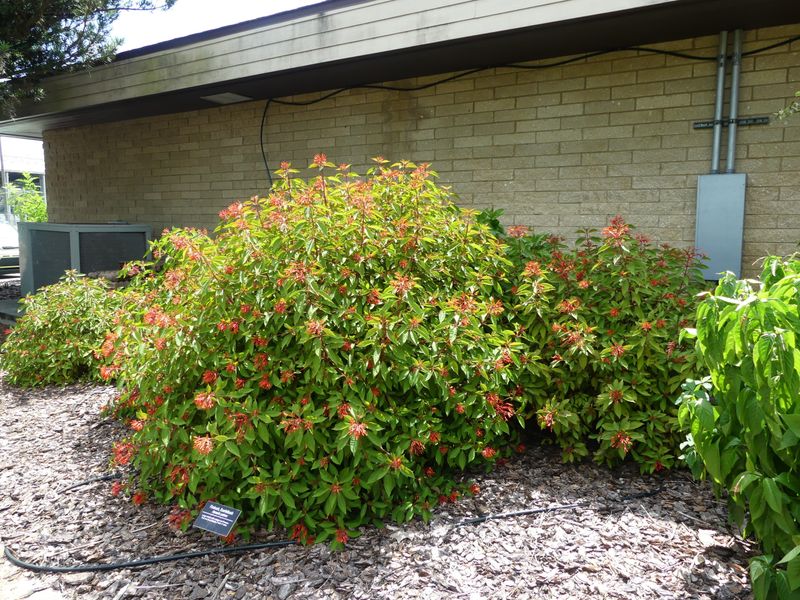
A new firebush is not a plant to ignore. Its roots need time to spread into surrounding soil, and during that period UF/IFAS recommends regular watering until the plant is established.
In sandy soil, water drains fast, so a young plant can dry out quickly in warm weather. Check the soil a few inches down and water deeply when it feels dry, rather than giving a light sprinkle each day.
A layer of mulch, kept a few inches from the stem, helps hold moisture. Watch for wilting leaves, which are a clear sign your new plant is thirsty.
After the first growing season or so, the routine changes. Established firebush tolerates heat and drought, which is why it is relatively easy-care.
Even then, a long dry spell, a very sandy site, or a plant in a container may still need a drink, so look at the leaves instead of assuming it will manage alone.
Make room for growth and prune with restraint
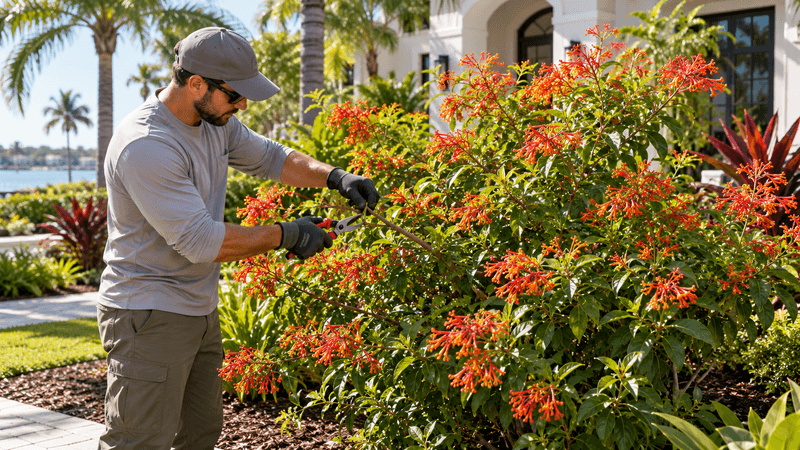
Firebush is vigorous, and that surprises people who buy a small nursery pot. UF/IFAS reports it may reach 15 feet in South Florida.
Plan for a wide, tall shrub, and keep it away from walkways, windows, and the edge of a small bed.
If space is tight, pruning can manage size. Light trimming to shape the plant or remove stray stems is usually gentler than cutting it back hard.
The catch is flowers. Hard or frequent pruning can reduce flowering, so a plant sheared into a tidy ball may give you fewer blooms than one left looser.
You do not have to prune every year. If your firebush has room, let it fill out and trim only when something is in the way.
If it is outgrowing its spot, consider moving it or choosing a more compact cultivar next time, which the next section covers.
Check the plant label and account for cold
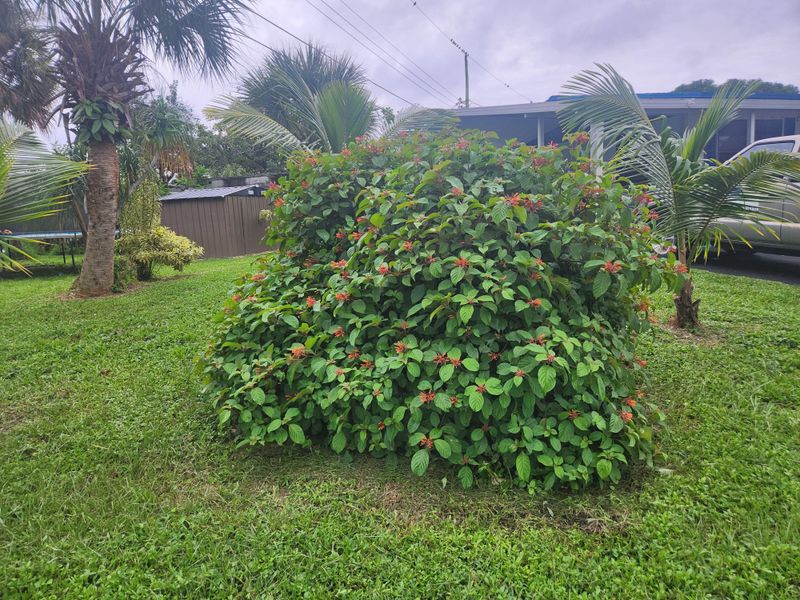
Not every firebush at the garden center is the same plant. Firebush is native to the central and southern Florida peninsula, and the Florida Wildflower Foundation profile gives the native range as Marion County south.
It can be grown farther north, but that does not make it native to every Florida locality.
If you want a smaller shrub, look for ‘Calusa’, a native compact cultivar. Plants sold as “Dwarf” or “Compacta” may be H. patens var. glabra, which is nonnative.
Check the botanical name and cultivar on the tag, and ask the nursery if it is unclear.
Cold also shapes what you will see. UF/IFAS notes that in North Florida, firebush can die back after a freeze and regrow.
In colder areas, above-ground growth may be lost, so do not count on evergreen leaves.
Once it is established, firebush can be relatively easy-care, but flowering and hummingbird visits depend on where you live. A good plant in the right spot gives you the best chance at both.
Sometimes the best wildlife garden starts with reading one small tag.