
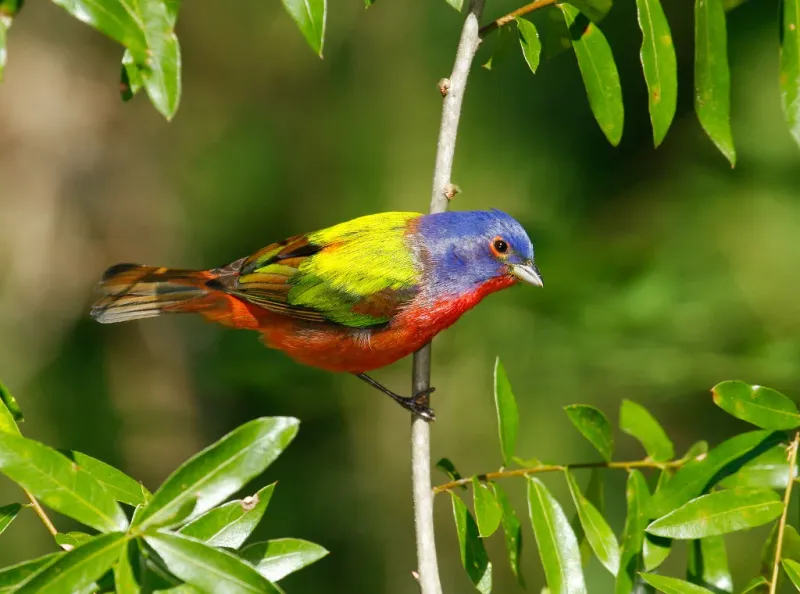
A male Painted Bunting looks like someone spilled a paint box on a sparrow, with a blue head, red belly, and green back. Florida is part of this bird’s winter range, but a sighting in any one yard is never certain.
You can still make your yard a better fit for the way these birds live and feed. Here is a practical plan for cover, seed, and safe feeding.
Florida’s winter range does not predict a yard visit
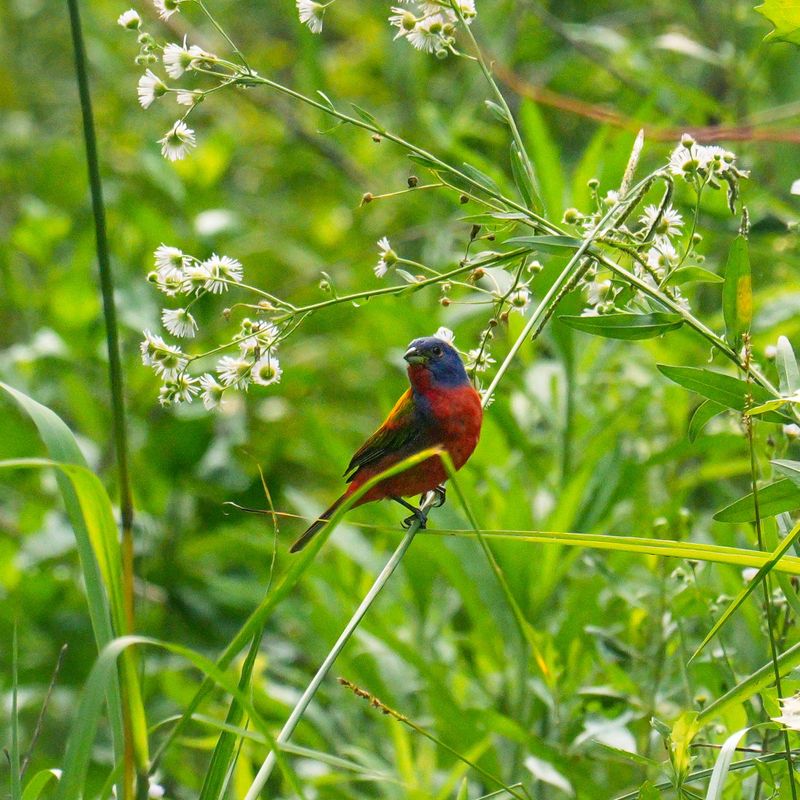
Florida is part of the story, but only part of it. Florida Fish and Wildlife Conservation Commission monitoring describes an eastern population that winters in south and central Florida.
A separate western population breeds in parts of the Panhandle and winters farther south, in Mexico and Central America. So not every Painted Bunting seen in Florida is a winter resident, and not every region of the state sits in the same range.
Range maps describe where a bird tends to spend its winter. They do not tell you whether the shrubs behind your garage will get a visit this January.
Two yards on the same street can have very different luck because of food, cover, neighbors, and plain chance.
That is why this article is not a promise. No layout, plant list, feeder, or birdbath can bring a migratory bird in on schedule.
What you can do is offer features the species is known to use. Cornell Lab of Ornithology notes that buntings are more likely to visit feeders in yards with low, dense vegetation.
Think of the steps ahead as making your yard more welcoming and more suitable. Whether a bunting shows up is up to the bird, and the rest of your yard still helps other wildlife either way.
Pair low cover with accessible foraging space
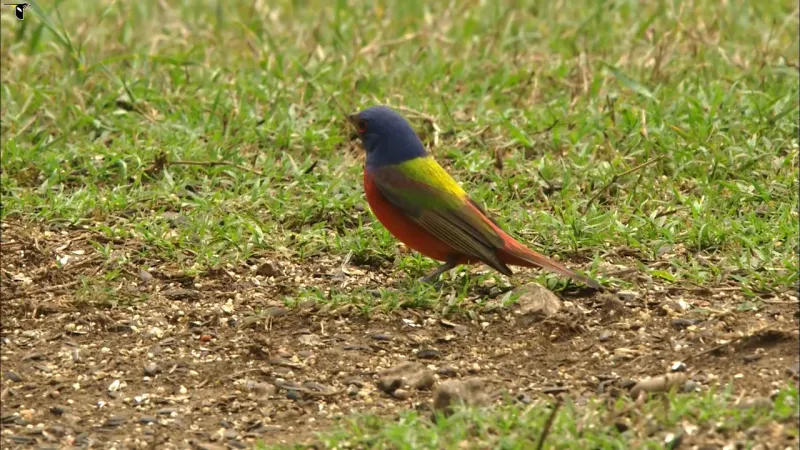
Painted Buntings spend winter in shrubby or grassy habitats, and they favor dense, weedy growth. Cornell’s life history notes say they forage on the ground among grasses or at seed feeders.
They are shy birds that tend to stay close to thick cover.
A useful yard idea follows from that. Keep a patch of low, dense vegetation, such as a rough corner of shrubs and grasses, and place an open, easy-to-reach feeding area near it.
A closely mown, exposed lawn with nothing low and thick beside it offers the birds little to work with.
Treat this as a habitat-informed suggestion, not a tested formula. Nobody has proven an ideal spacing, size, or shape for a bunting-friendly yard.
Cornell does say that yards with low, dense vegetation are more likely to see buntings at feeders.
Cats complicate the picture. UF/IFAS Extension advises keeping feeders away from cover where cats can hide and ambush birds.
Leave a clear stretch of open ground between feeder and thicket so you can see anything approaching, and keep pet cats indoors.
Keep some seed-producing vegetation

Natural seed is the quiet backbone of a bunting’s winter diet. Cornell lists seeds from grasses and other plants as natural foods, and it names bristle grass, panic grass, sedges, and pigweed.
Those are documented foods, not a shopping list for every Florida garden.
The practical takeaway is simple. Instead of cutting every grassy or weedy patch to the ground, let a section go to seed through the cool season.
Standing seed heads give birds food and low cover in one spot. Cornell’s food notes are the best guide to what these birds actually eat.
Native plants come into this from a wider angle. FWC supports native plants as the foundation of wildlife landscaping, and native grasses and seed producers can offer food and shelter to many species.
That is general habitat value, not proof that any one native plant draws Painted Buntings. Choose plants suited to your soil and sun, such as sandy, fast-draining ground, and treat them as regionally appropriate habitat support.
If a patch also feeds sparrows and other seed eaters, count that as a win.
Use a feeder only as an optional supplement
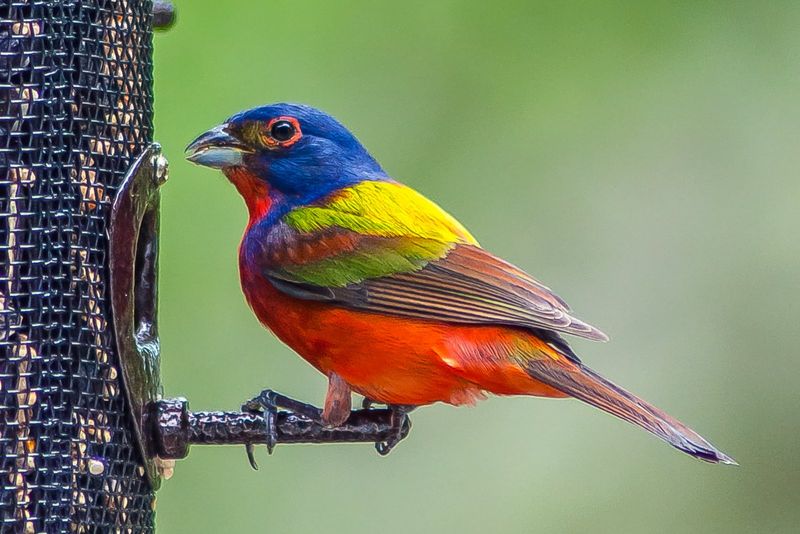
A feeder is an extra, never a requirement. FWC states that birds do not need supplemental feeding, and native plants are its suggested way to draw a wide range of wildlife.
If you want to try one anyway, white millet is a reasonable choice. The U.S.
Fish and Wildlife Service says Painted Buntings prefer it. A low tray or ground-level feeder suits their habit of feeding near the ground.
Offer only a modest amount, about what birds can eat in a day. Cornell’s seed guide describes white millet as a seed for ground-feeding birds and warns that it can also attract cowbirds, blackbirds, and House Sparrows.
Expect other visitors at the tray.
Millet will not replace natural food or good cover, and it cannot ensure a bunting shows up. Think of it as a small bonus on top of a yard that already offers the basics.
Offer water for wildlife, not as a proven bunting lure
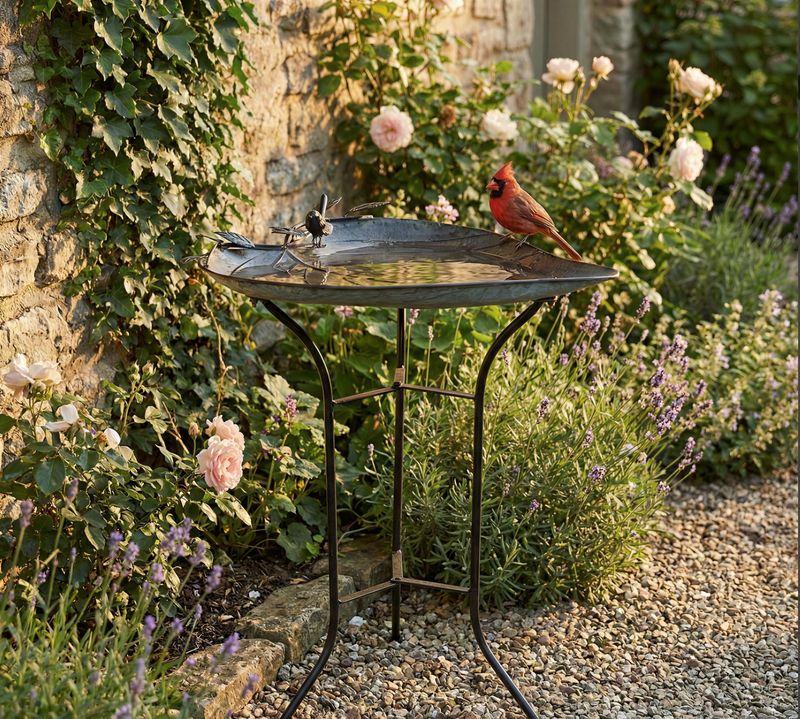
Water is a classic part of a wildlife-friendly yard. FWC’s refuge planting guidance lists food, water, and shelter as resources that help wildlife use a space.
That is a broad statement about many animals.
No source reviewed shows that adding a birdbath specifically increases Painted Bunting visits. So skip any claim about the perfect distance from the thicket or the best height.
Nobody has tested that for this species.
Still, a shallow, clean bath helps the other birds, butterflies, and small animals that share your yard, especially during dry stretches. Rinse it often and refill it with fresh water so it does not turn into a mosquito nursery or a source of disease.
Put it somewhere you can see it from a window and where cats cannot easily hide nearby. Enjoy it for what it is, general wildlife support.
Reduce feeder hazards and keep equipment clean
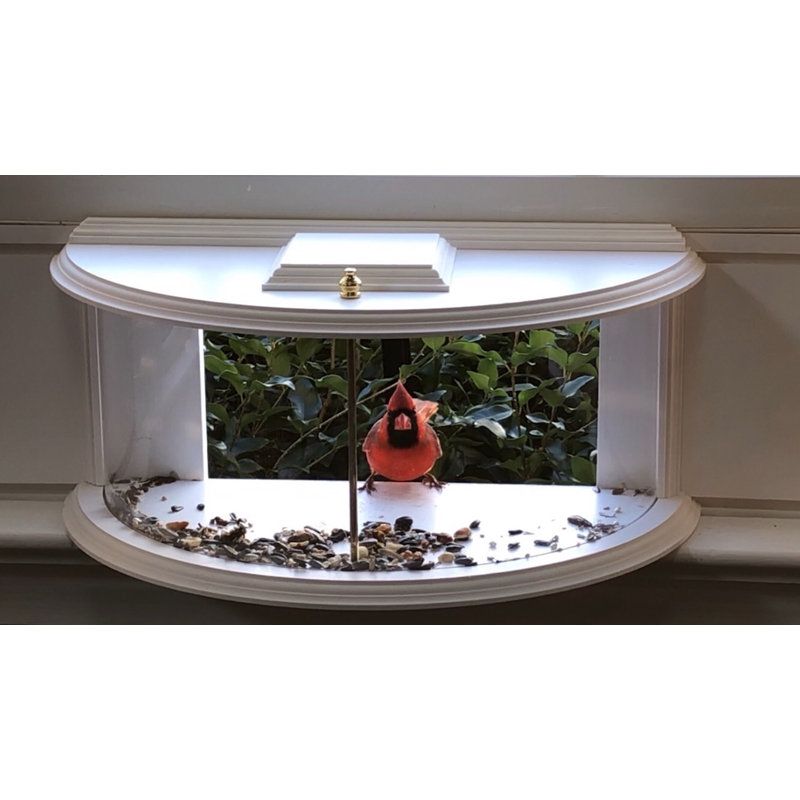
Start with the cat problem. UF/IFAS advises placing feeders away from cover where cats can ambush birds.
The best fix is to keep your cats indoors, which protects birds and your pets.
Windows are the next risk. Feeders close to a house can add to window strikes.
U.S. Fish and Wildlife Service guidance says that if a feeder, bath, or birdhouse cannot go farther from a window, placing it within 3 feet reduces the room birds have to build up collision speed.
Then comes upkeep. Audubon recommends cleaning seed feeders about every two weeks, and more often if disease is suspected.
Florida humidity speeds up mold, so check seed after rain.
Remove wet or spoiled seed right away, and offer small amounts so little goes to waste. Cornell also cautions that uneaten seed can cause sanitation problems.
If you see sick birds or a disease outbreak, pause feeding, clean everything, and let the birds forage naturally for a while.
Make the yard welcoming and leave the outcome to migration
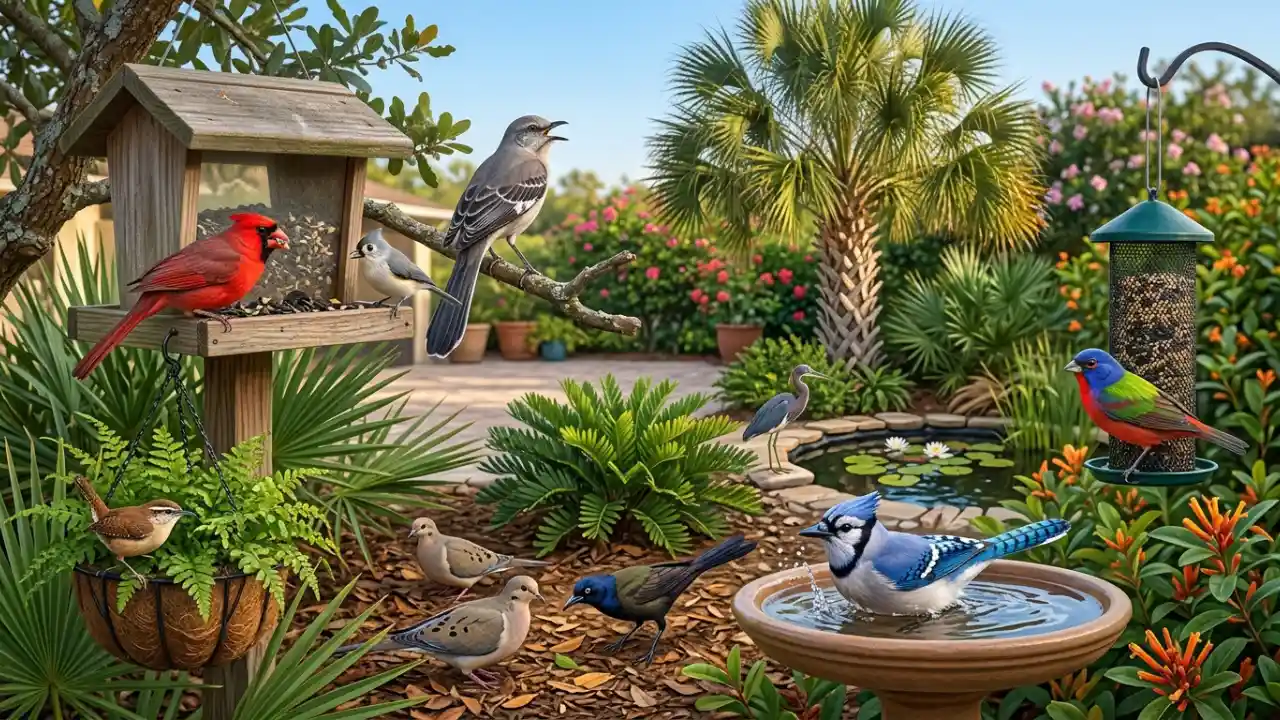
Keep a patch of low, dense cover, let some grasses and weeds go to seed, add a small feeder only if you want one, and set out clean water as general wildlife support. Each step fits what Cornell describes about the bird’s habits, and FWC backs food, water, and shelter for wildlife in general.
These choices make a yard more suitable, but they cannot promise a sighting. Even so, you will likely see other birds using the space.
A bunting may or may not stop by, but a yard built for the birds that do come is never wasted.