
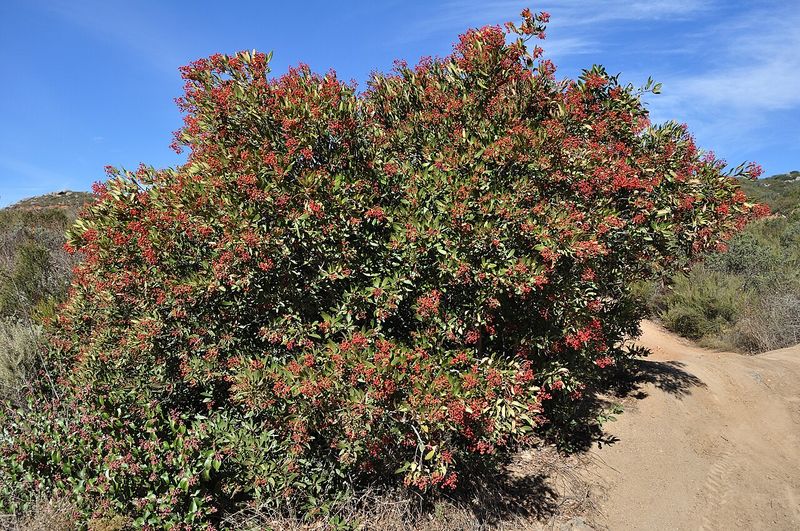
Drive through a California hillside in December and you may spot clusters of bright red berries glowing against dark green leaves. That shrub is toyon, a native plant that can turn a yard into a winter snack stop for birds.
The timing of those berries and the birds that eat them often overlaps, but the two do not run on the same clock. Here is how the fruit cycle works, which birds may stop by, and how to plant toyon so it has its best shot at helping wildlife.
Toyon’s red fruit is the end of a summer-to-winter cycle
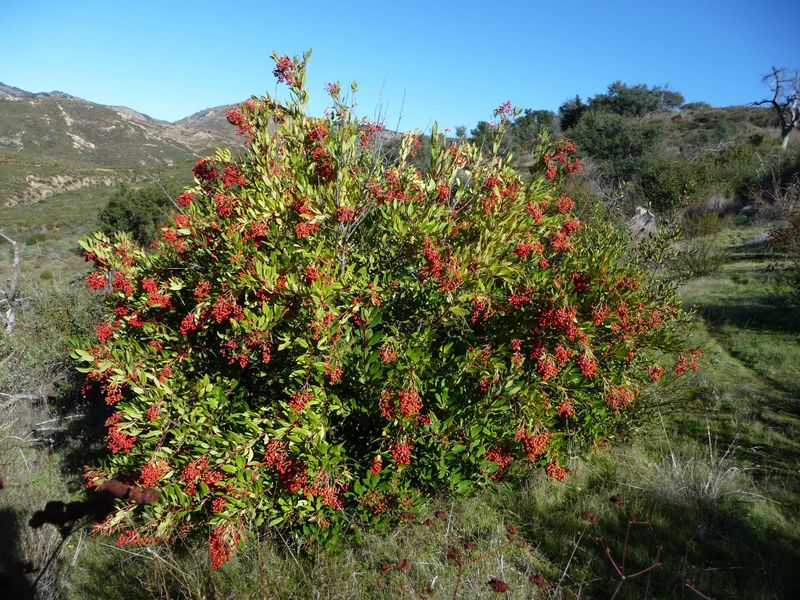
Toyon’s year starts with flowers. Clusters of small white blooms open in summer, and each one has the chance to become a berry-like fruit.
By late summer the fruit is green and hard. According to the USDA Forest Service species review, fruit develops from late summer and reaches maturity around December.
UC sources describe the berries turning red in fall or early winter, and some describe the fruit more broadly as a winter feature.
That spread of dates matters. Fruit color change depends on your site, your microclimate, and the weather that year, so a coastal yard and an inland foothill yard may not match.
Red berries that ripen in one neighborhood in November may look unfinished in another until later.
Once red, the fruit often hangs on for weeks. UC Master Gardeners of Sonoma County note that the berries persist and are eaten by birds and other wildlife, which is why a hungry flock can strip a shrub quickly or leave berries for a while.
Crop size also changes from year to year. A young shrub, a dry year, or a shaded spot can all mean fewer berries.
Treat a heavy crop as a pleasant bonus, not something to count on every winter. For a look at how the plant is used in public gardens, the UC Davis Arboretum profile is a handy reference.
Birds do not arrive on a toyon timetable
A tidy story says berries turn red and the birds show up. Real life is looser than that.
The berries do not call the birds in, and the birds do not follow a calendar tied to toyon.
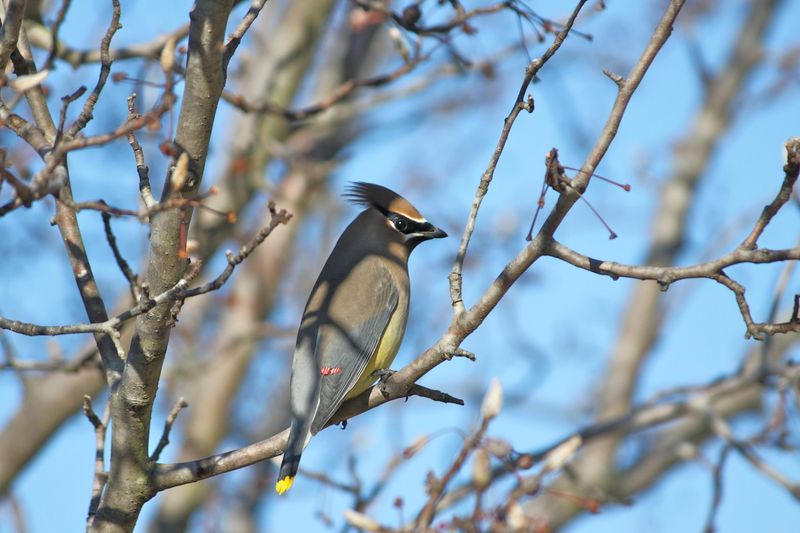
Cedar waxwings are wanderers. Audubon’s field guide explains that they move irregularly, and where they spend winter changes with the food supply.
A flock may sweep through your block one year and skip it the next.
American robins are a different story. Many never leave California, and others stay elsewhere through winter.
Cornell Lab of Ornithology points out that robins seen in winter are often local birds that changed their habits, switching from worms to fruit and gathering in flocks where berries are plentiful.
So what you may notice in December is a seasonal overlap. Fruit is ripe, and fruit-hungry birds are out looking.
That is a lovely coincidence to plan around, but it is not a schedule.
A practical way to see this in your own yard is to jot down the first date you see red berries and the first date you see birds feeding for a few winters. Your notes will tell you more than any general rule.
A fruiting shrub can feed winter visitors
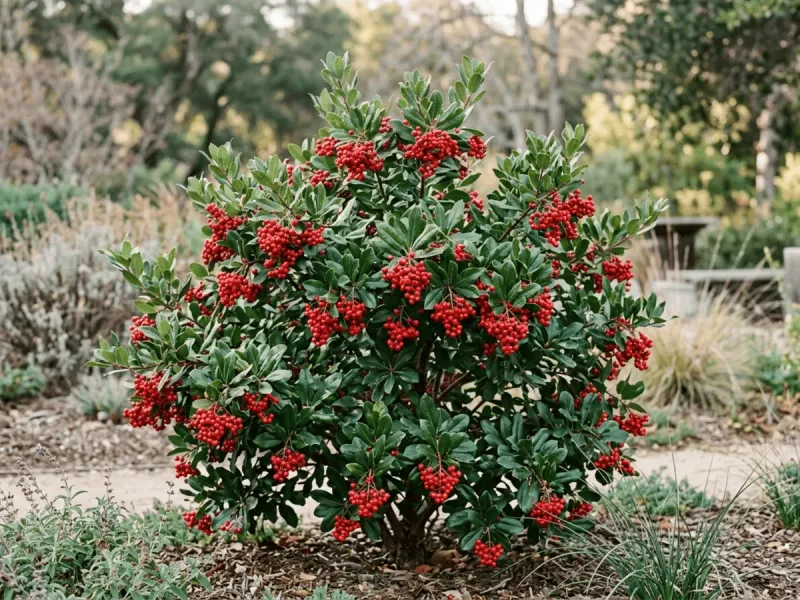
Winter can be lean for fruit eaters, and a berry-heavy shrub fills a gap. Cedar waxwings are documented visitors to toyon, as noted by the UC Davis Arboretum, and UC Master Gardener guidance lists robins among the birds that use it too.
Waxwings travel in flocks and look for fruiting plants in cold months, according to Audubon. That behavior is why one well-loaded shrub can draw a crowd and then be picked clean in a day or two.
It also explains the limits. A planted toyon may attract birds, but it cannot promise flocks, regular visits, or a particular feeding schedule.
Neighbors with berry trees, nearby parks, and local weather all shape where birds go.
To give your shrub a better shot, think like a bird. Place it where you can watch from a window, and keep a perch such as a nearby tree or fence within a short flight.
Adding a shallow bird bath within sight offers water, which fruit eaters also appreciate.
Other wildlife may sample the fruit as well, so a stripped branch is not always the work of waxwings. Consider it a sign your plant is doing its job.
Make room for toyon in a fire-aware yard
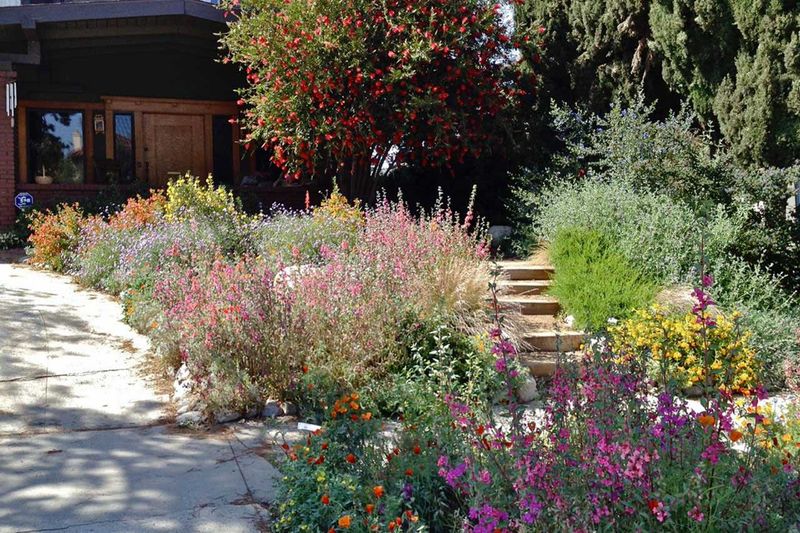
Toyon is an evergreen California native that grows as a large shrub or a small tree. UC IPM recommends full sun to partial shade, so a bright spot gives the best chance at flowers and fruit.
Plan for size, because published numbers differ. Sonoma County Master Gardeners give roughly 8 to 12 feet tall, while UC Davis describes 10 to 20 feet tall and wide.
Leave room for the bigger end of that range so you are not pruning hard every year.
A good test is to picture the shrub at 15 feet wide. If it would crowd a walkway, window, or fence, move the planting spot.
Fire rules come first. No plant is fireproof, and wildlife goals do not override local requirements.
Check UC ANR Fire Network guidance and the California Board of Forestry and Fire Protection zone rules, then confirm details with your local fire agency.
In practice, that often means keeping the area right next to the house clear and placing toyon farther out, with spacing and upkeep that fit your zone. Hillside and wildland-edge homes may have stricter limits, so call before you dig.
Plant in the rainy season, then support establishment
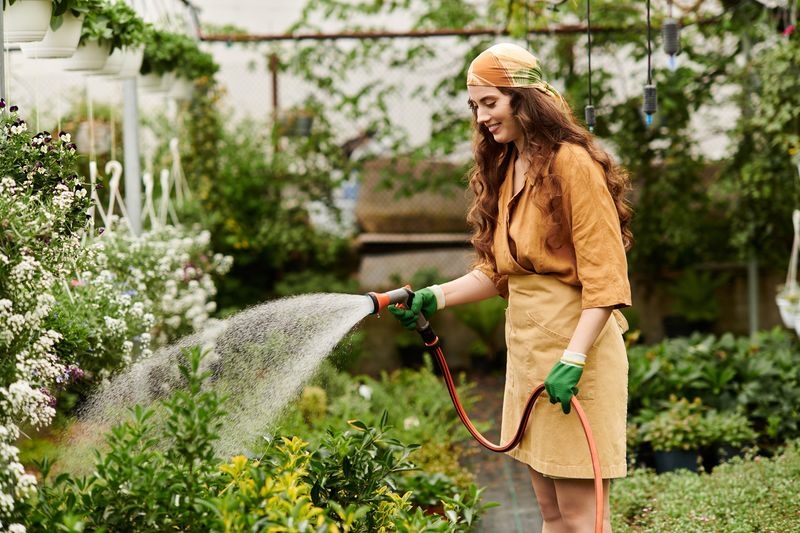
California natives are happiest when roots settle in during cool, wet months. UC Master Gardeners of Alameda County recommend planting in late fall or early winter, when seasonal rain can help new plants get going.
Rain helps, but it is not a guarantee. Winters can bring long dry spells, and a new shrub with a small root ball can dry out fast.
Check the soil near the root ball with your finger, and water when it feels dry a few inches down.
Drought tolerant does not mean never water. A new toyon needs care through its first dry periods, including the first summer, while roots spread beyond the planting hole.
A few habits make a difference. Water slowly so moisture soaks in rather than runs off, and spread a few inches of mulch while keeping it back from the trunk.
Taper off as the plant settles in.
Once established, toyon handles dry summers, according to UC IPM, and occasional irrigation may improve fruit production. In a drought year, a deep soak now and then could be what separates a bare shrub from a berry-laden one, and local water rules still apply.
The UC Davis Arboretum profile shows how the plant performs in a managed garden.
Keep the berries for wildlife—and give the shrub time
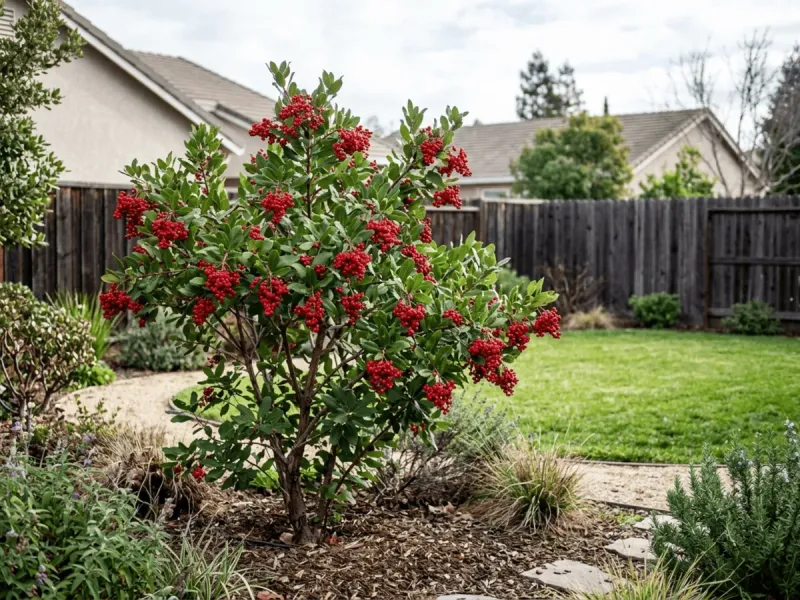
Those shiny berries are for the birds. UC guidance advises avoiding the berries altogether and supervising children and pets around the plant.
Research adds some background. A peer-reviewed study found cyanogenic compounds in immature fruit and a shift of those compounds from pulp to seeds as the fruit matured.
That is a narrow finding about plant chemistry, not a recipe or a safety guide, and nothing here suggests that cooking makes the berries safe to eat.
Patience matters too. UC Marin Master Gardeners note that toyon can take several years to establish.
Fruiting and bird activity vary, as the USDA species review describes for fruit timing, so your first winters may bring a light crop and few visitors.
Plant it, water it through the early dry spells, and let it grow into its space. A toyon that is fed, sited well, and left alone may one day reward you with a quick winter flurry of wings.
Good habitat is slow, and that is the point.