
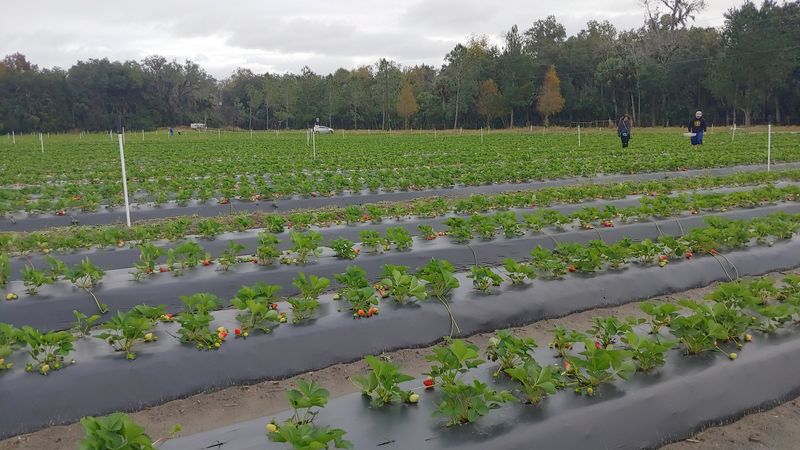
Fresh strawberries in a Florida winter sound great, but the calendar matters a lot. Where you live in the state decides whether a November planting is right on time or already late.
Sandy, fast-draining soil adds another twist, because it dries out quickly. Here is how to plan your bed or pots, and what kind of harvest to expect.
Florida’s planting window depends on where you garden
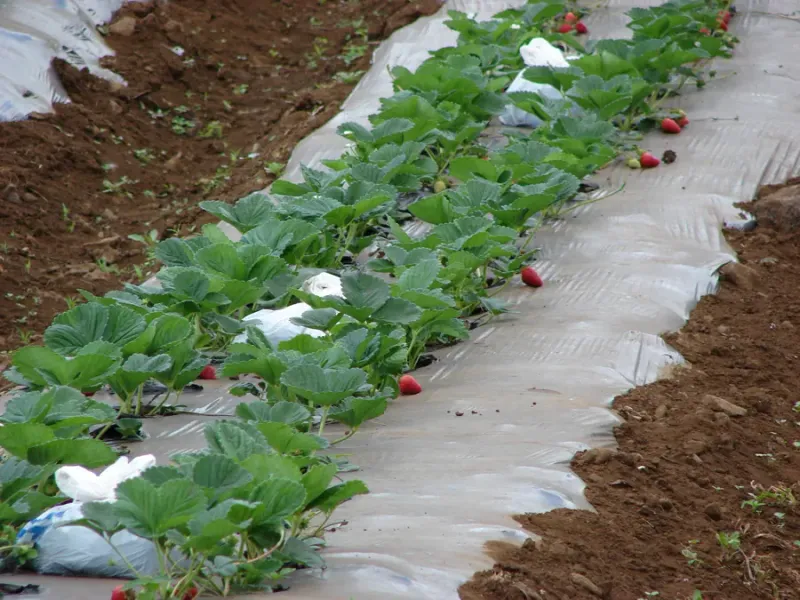
Gardeners in Pensacola, Orlando, and Miami do not share one strawberry calendar. According to UF/IFAS Gardening Solutions, the home-garden planting windows are September 15 to October 15 in North Florida, September 25 to October 25 in Central Florida, and October 1 to December 1 in South Florida.
That means November is not Florida’s prime planting month across the whole state. It is late for many North and Central Florida gardeners, since their windows close in October.
In South Florida, a November planting still falls inside the recommended dates.
If you garden in the northern or central part of the state and missed your window, you can still try planting. Just treat it as a gamble with a slower start and a later harvest.
Cool weather slows growth, so plants set out late have less time to get established before winter.
One more detail can trip people up. Commercial growers follow their own schedule, and the UF/IFAS commercial strawberry production chapter gives narrower dates, ending November 1 in South Florida.
Those dates are built for farm fields, so use the home-garden windows for your yard.
A quick way to apply this: find your region, check today’s date against your window, and decide whether you are on time, borderline, or late. Your answer shapes everything that follows, from how closely you watch the plants to how patient you need to be.
January berries are possible, not a dependable deadline
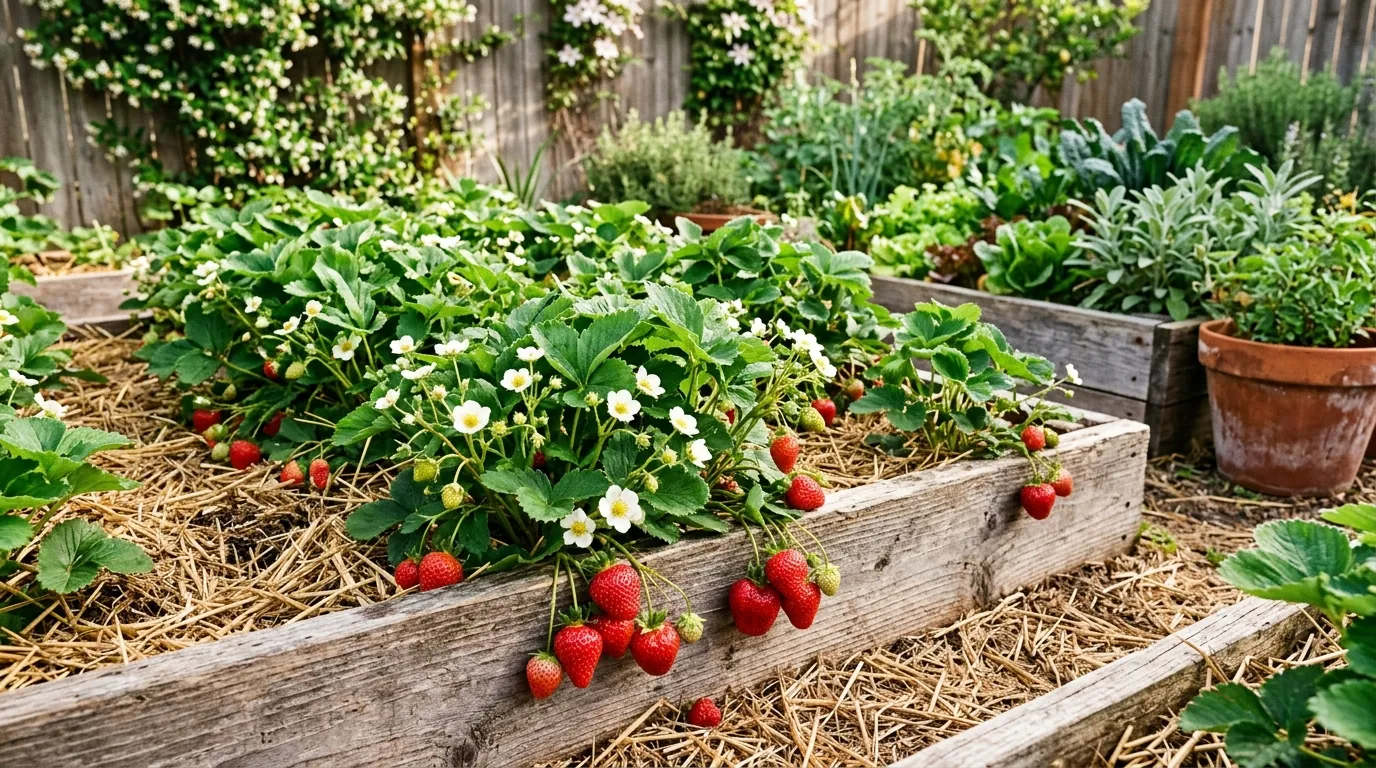
Ask three sources when strawberries will ripen and you get three answers. That is because they describe different situations.
Consumer guidance in the UF/IFAS home-garden publication points to roughly 90 to 110 days from planting to first harvest.
Commercial growers see something much shorter. The commercial production chapter lists 35 to 50 days, but that number comes from farm conditions and should not be used to predict what happens in a home bed or container.
A third data point comes from Duval County. A county Extension post says October-planted bare-root plants might not give berries until around Valentine’s Day.
Do the math with the home-garden range. A plant set out on November 10 would reach 90 days around February 8 and 110 days around February 28.
January fruit is not impossible, especially in warmer South Florida with healthy transplants and good care, but it is not something to count on.
Transplant type, variety, weather, and care all shift the timing. So treat January as a pleasant surprise.
Plan around February and March for the bulk of your picking, and you will be less disappointed if the first berries come later than hoped.
Choose a sunny site and a workable growing setup
Sun comes first. UF/IFAS home-garden guidance calls for at least eight hours of direct sunlight and well-drained, slightly acidic soil, with a pH between 5.5 and 6.5.
A spot that gets shade by midafternoon will likely give you leafy plants and few berries.
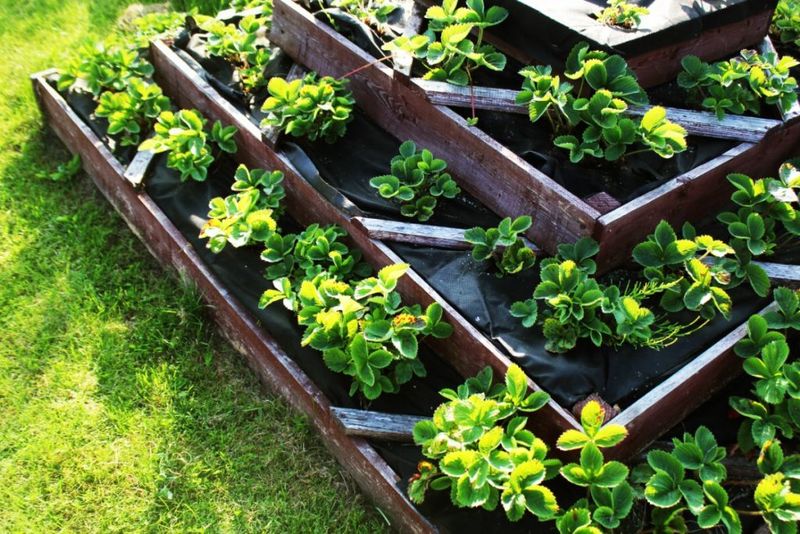
Raised beds are a reasonable fit where drainage is a concern, and UF/IFAS suggests a bed about 7 to 9 inches high. Opaque mulch has two jobs: it suppresses weeds and keeps the fruit cleaner by holding berries off bare ground.
Here is the catch for sandy yards. Your soil already drains fast, so a bed filled with plain sand may dry out even sooner.
Fill it with a growing mix that holds some moisture and nutrients, such as quality garden soil blended with compost. UF/IFAS raised-bed guidance notes that raised-bed soil can dry quickly.
Containers work too. Planter boxes, strawberry pots, and barrels can all grow strawberries, but they need suitable potting media, not native sand alone.
Make sure every container has drainage holes.
Choose a bed if you have open ground and want room for a dozen or more plants. Choose pots if your sun is limited to a patio or if you want to move plants during a cold snap.
Neither option ensures a harvest, and both still need regular moisture checks.
Plant suitable transplants with the crown at the right depth
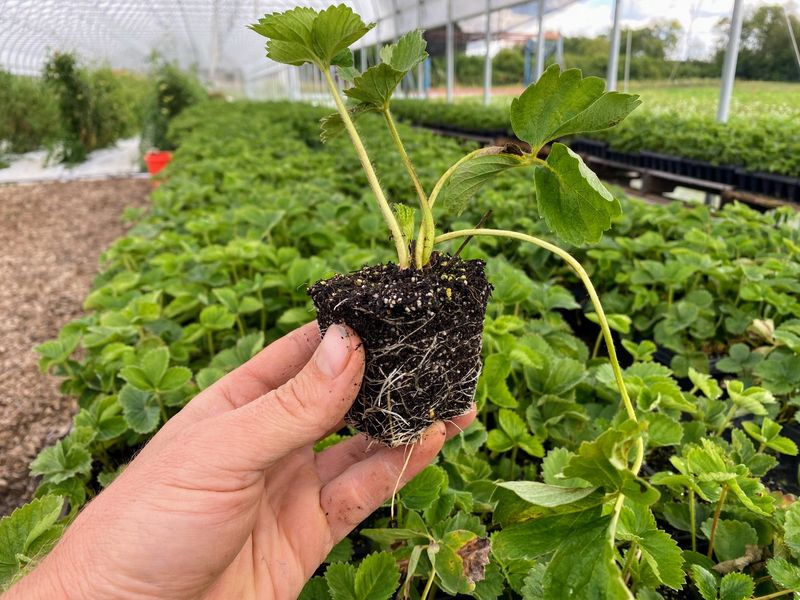
Variety choice helps. UF/IFAS recommends ‘Camarosa,’ ‘Florida Brilliance,’ and Sweet Sensation ‘Florida127’ for home gardens. ‘Camarosa’ has been productive in North Florida, while the other two have performed well early in the season in Central Florida.
No single one is named best for the whole state, so match your pick to your region.
Start with healthy transplants that have green leaves and a solid root system. Avoid plants that look wilted, yellowed, or crowded in their trays.
Depth matters more than most beginners expect. Dig a hole wide enough to spread the roots out, then set the plant so the roots are covered with soil.
The crown, the thick part where leaves and roots meet, should sit at the soil surface, not buried below it.
Two mistakes show up again and again. A buried crown can lead to a plant that rots or struggles, while a plant set too high leaves roots exposed to air and drying.
A quick check after planting is to gently press the soil and look for a crown sitting level, with no root showing.
Early watering depends on what you bought. Bare-root plants with leaves may need frequent overhead irrigation during the first one to two weeks while they settle in.
Container-grown plugs generally need much less sprinkler irrigation after transplanting, though they still need the soil kept from drying out.
Monitor moisture and use fertilizer cautiously
Sandy ground lets water slip away fast, and raised beds and pots can dry out just as quickly. The UF/IFAS raised-bed publication warns that raised-bed soil may dry quickly, so a bed is not a set-and-forget project.
The best tool is your finger. Push it an inch or two into the soil each day or two in the early weeks.
If it feels dry, water; if it feels damp, wait. UF/IFAS home-garden guidance describes keeping established beds moist, which is a better goal than following a fixed schedule.
Skip commercial farm irrigation schedules. Those were built for large fields with specialized equipment and do not translate to a backyard bed or a pot on the patio.
Clues of trouble include wilting leaves at midday, pots that feel light when lifted, and small, dry berries.
Fertilizer needs the same caution. Commercial acreage rates are not meant for home beds or containers, and copying them is an easy way to overdo it.
The UF/IFAS strawberry nutrient guidance bases its recommendations on soil-test results and cautions that excessive fertilizer can reduce crop quality.
Your local county Extension office can explain how to submit a soil sample. For potted plants, follow the directions on a product made for fruiting plants and measure carefully rather than adding extra.
Protect plants from freezes and pick berries at the right stage
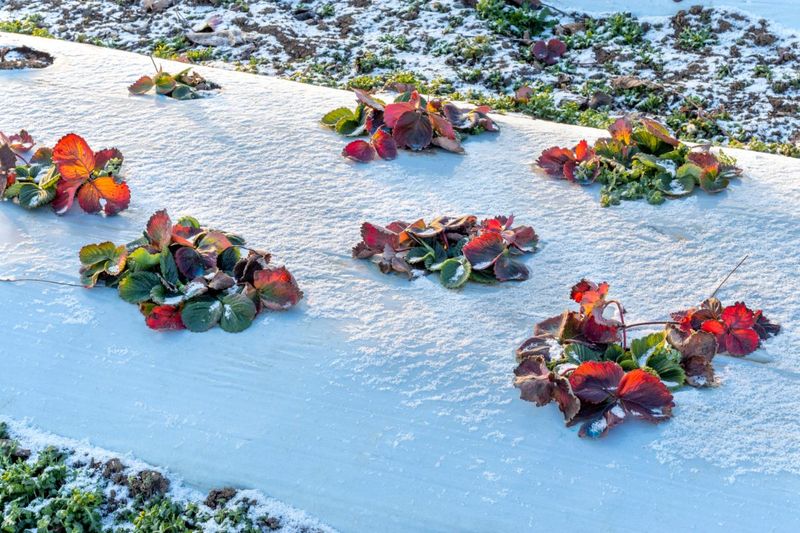
Florida winters bring surprise cold snaps. According to UF/IFAS home-garden guidance, strawberry flowers and fruit can be damaged below 32°F.
When a freeze is forecast, cover plants with sheets, blankets, or frost cloth, and make sure the cover reaches the ground so it holds in some warmth.
Remove the covers the next morning once temperatures rise, so plants do not overheat in the sun. Container growers have an extra option: move pots against a warm wall or under a porch.
Picking at the right moment is the next step. Harvest when about three-quarters of the fruit surface is red.
Berries will not keep sweetening once they are off the plant, so a berry picked pale will taste pale. The UF/IFAS Gardening Solutions page is a useful companion for planting and care details across the season.
Check plants every day or two once fruit starts to color, since ripe berries go from ready to overripe fast. Pinch the stem just above the berry rather than pulling the fruit itself.
Good timing and steady care can support a crop, but they cannot promise one on a certain date. A few cold nights can set the schedule back, and the plants simply follow the weather.