
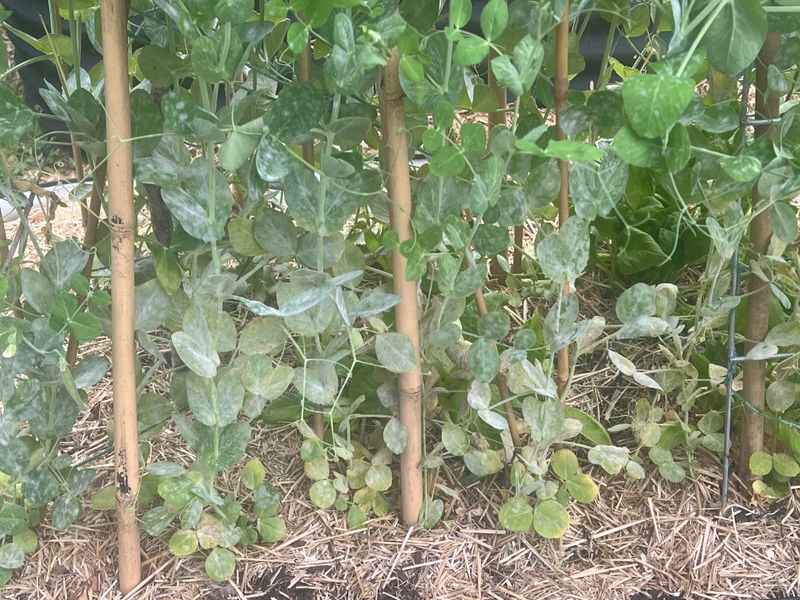
You walk out to your fall snap peas and spot a dusty white film on the leaves. It looks like someone sprinkled flour over the vines.
Powdery mildew is one possible cause, but it is not the only one, and the right next step depends on what you find up close. Here is how to check your plants and set up your bed so disease has a harder time getting started.
White powder on peas can point to mildew, but check before diagnosing
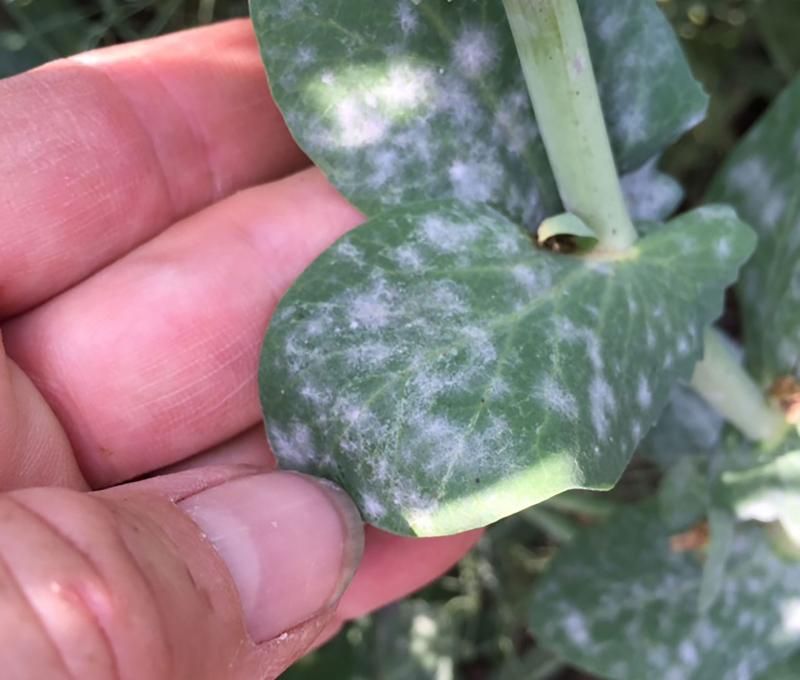
Powdery white growth on a pea vine deserves a closer look before you name the problem. On peas, University of Minnesota Extension notes that powdery mildew can begin as white areas on lower leaves deep in the canopy, then spread up the stems and onto the pods.
Walk the row and lift leaves from the bottom up. Check the undersides too, since the first patches often hide where the vines are thickest.
Leaves can turn yellow and drop, and a badly hit planting may end up stunted, with lower-quality pods.
A chalky look alone does not settle the question. White mold, for example, is linked to stem rot and wilting rather than a dusty coating that rubs off on leaves, stems, and pods.
A pea leaf diagnostic guide shows how these problems can differ.
If your plants do not fit either picture, snap a clear photo and send it to your county Extension office. A quick expert look beats guessing.
Weather clues matter more than the month on the calendar
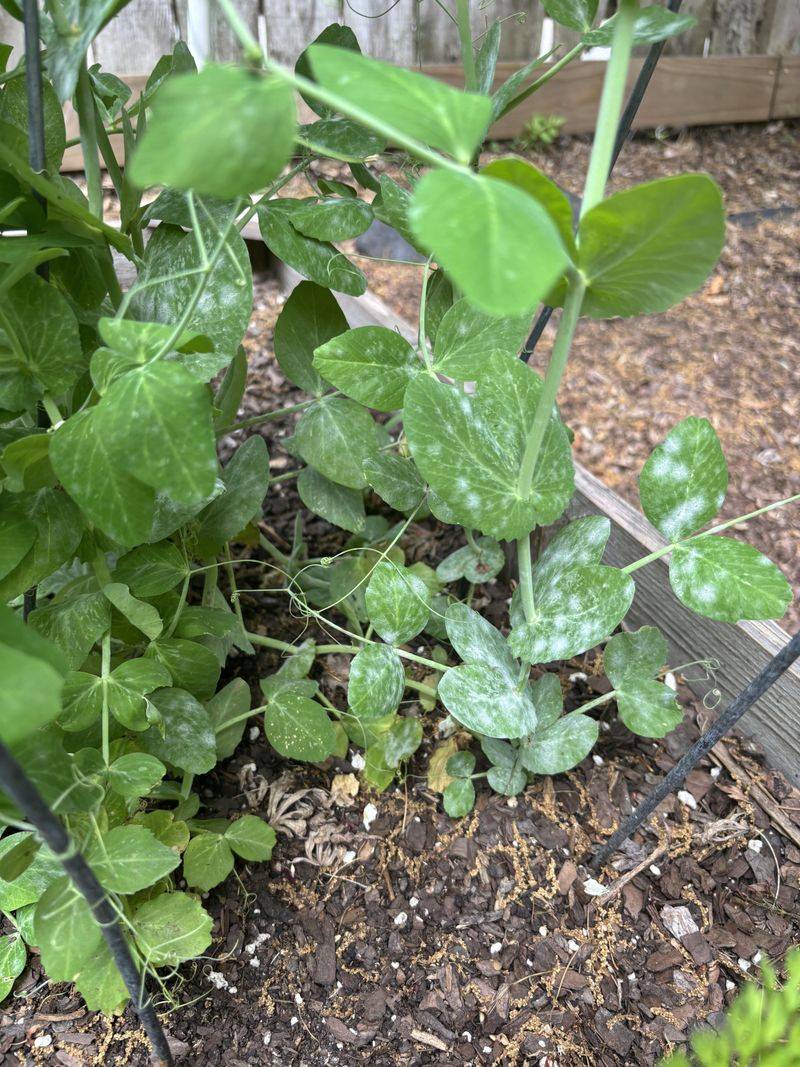
Plenty of gardeners blame a cool, dry November for white leaves, but the month itself is a weak clue. Pea-specific guidance points to a different pattern: warm, dry days followed by cool, dewy nights tend to favor pea powdery mildew.
Notice what your own weather has been doing. A string of mild afternoons with heavy dew at dawn is worth paying attention to, while a cold snap with steady rain tells a different story.
Dry-looking leaves do not clear the plant, either. According to Utah State Extension, powdery mildew does not need free water on the leaf surface to infect, although humidity or dew can help it along.
So treat weather as a clue to keep in mind, not proof. Only a close look at the plant can tell you what you are dealing with.
Texas and Florida do not share one November planting window
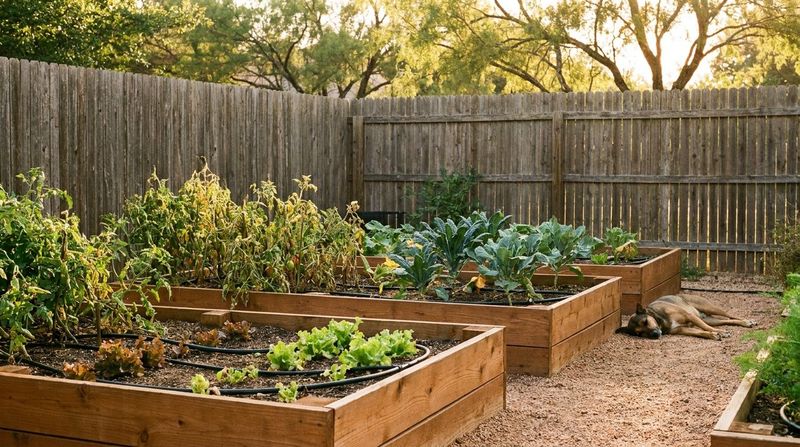
Texas and Florida stretch across very different climates, so no single month fits every pea bed. Texas A&M’s older home-garden guide to sugar snap peas ties fall planting to the last 8 to 10 weeks before the first expected frost.
That means your date depends on when frost usually arrives where you live. A Panhandle garden and a Gulf Coast garden will count back from very different dates.
Because the guide is older, check current local Extension advice and the seed packet for timing.
Florida adds its own twist. UF/IFAS legume production guidance lists snowpeas separately from southern peas and gives different windows by region, so it does not set one schedule for every Florida snap pea garden.
Planting time also shapes when your vines are lush and crowded, which is when disease can find an opening. Know your local window first.
Reduce crowding to improve airflow through the pea canopy
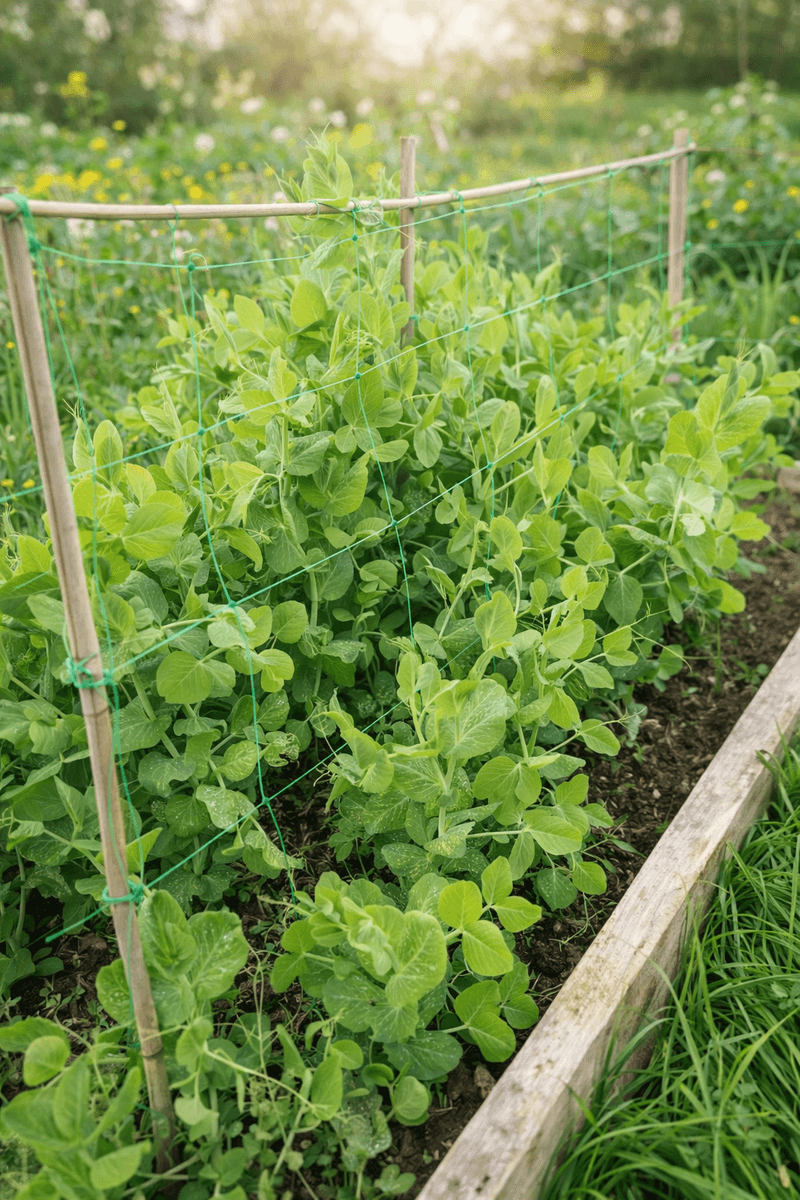
Packed vines hold humidity close to the leaves. Utah State’s powdery mildew guide says more spacing improves air movement and lowers canopy humidity.
That makes airflow a way to reduce risk, not a treatment that wipes out mildew already on the plants.
Start with simple habits. Avoid sowing too thickly, pull weeds that fill in the bed, and give vining peas a trellis so the vines stand up instead of piling into a mat.
For row spacing, Texas A&M offers 18 to 24 inches between single or paired rows as a home-garden example. Treat it as a starting point, and follow your variety’s growth habit and seed packet directions.
Resist the urge to strip healthy leaves in hopes of curing the problem. Removing good foliage costs the plant energy, and it will not restore damaged leaves.
Resistant varieties and fungicides both have limits
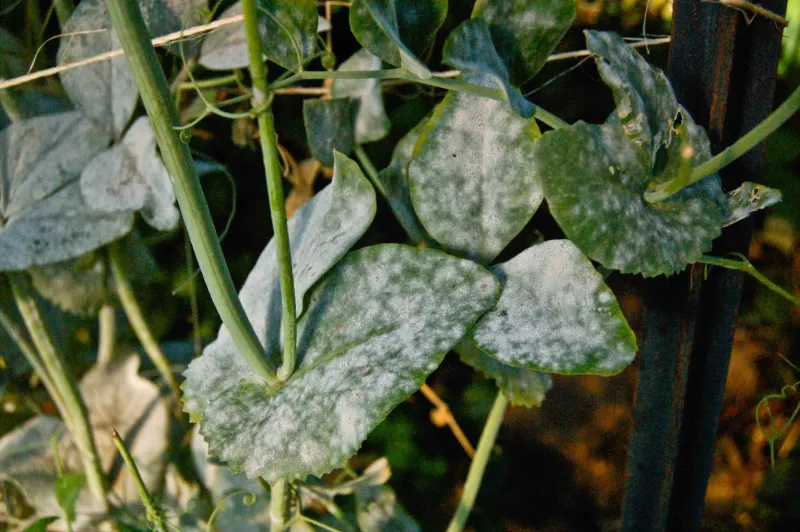
When you shop for seed, look for varieties listed as resistant to powdery mildew. It is a smart head start, but not a shield.
The Utah State guide cautions that resistance to one pea mildew species does not necessarily cover other species.
Fungicides are another tool with boundaries. Use only a product labeled for peas, and follow its directions and harvest restrictions exactly.
Rules and permitted crops are set by labels, as Texas A&M’s vegetable handbook reminds growers. There is no fixed spray schedule that suits every garden.
Warm weather adds a caution. Utah State flags possible plant injury from oils above 85°F, sulfur above 80°F, and applying oil and sulfur within two weeks of each other.
Southern afternoons can cross those lines quickly, so read labels with the forecast in mind.
Details on how the disease behaves are also covered in Utah State’s legume guide.
Treat airflow as prevention, not a promise to save pods
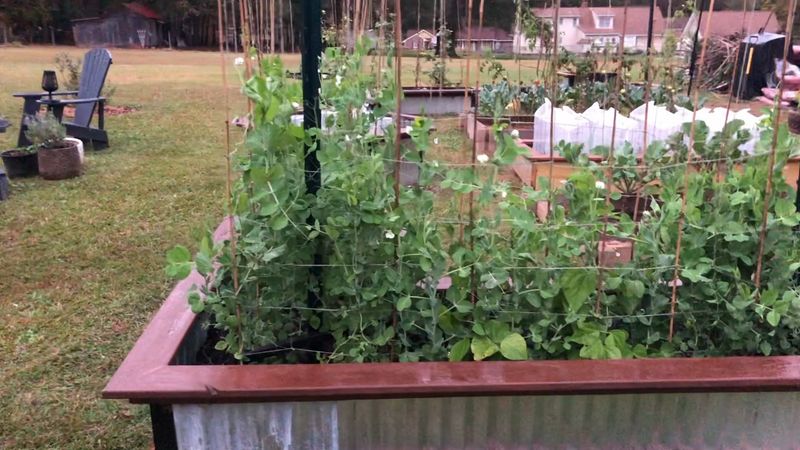
A practical order of operations keeps things calm. First, inspect the leaves, undersides included, instead of guessing from the weather.
If the signs do not match what you expected, send a photo to your local Extension office.
Next, loosen up the bed. Thin out crowding where seedlings are jammed, pull weeds, and get vines onto a trellis.
Utah State’s guidance on mildew backs better spacing as a way to lower disease pressure.
Keep expectations honest. These steps may reduce risk, but they do not guarantee control of an infection already underway, bring damaged leaves back, or protect a particular pod harvest.
Since mildew can spread to stems and pods, as Minnesota Extension describes, early checks matter.
Think of airflow as the habit that makes trouble less likely, not the rescue that arrives after it.