
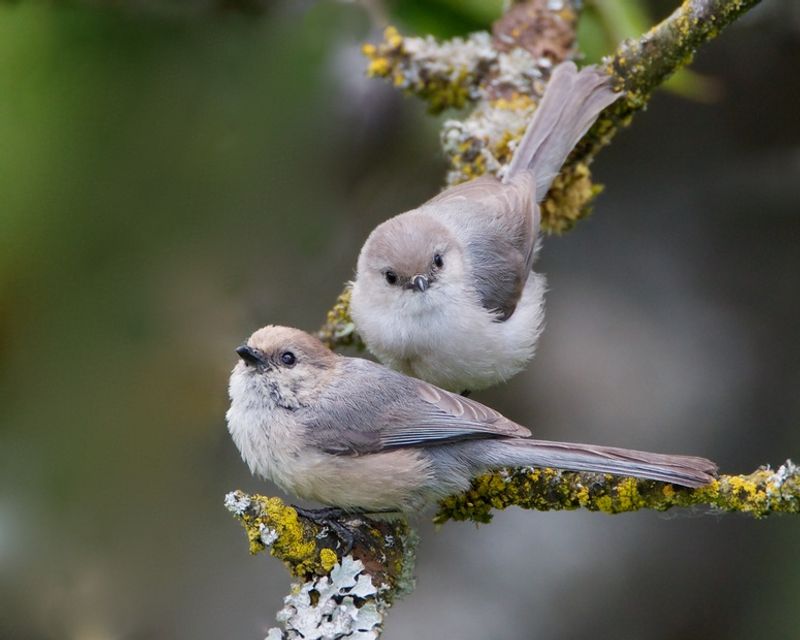
Tiny gray birds sometimes sweep through California yards in chattering groups, hopping across branches and then vanishing a minute later. These are bushtits, and their diet includes some of the same insects that gardeners worry about, like scale insects and aphids.
That does not mean a flock will fix a pest problem on your shrub. Here is what is known about these birds, and how to make smart, wildlife-aware choices when bugs show up on your plants.
Bushtit flocks are a familiar part of many California yards
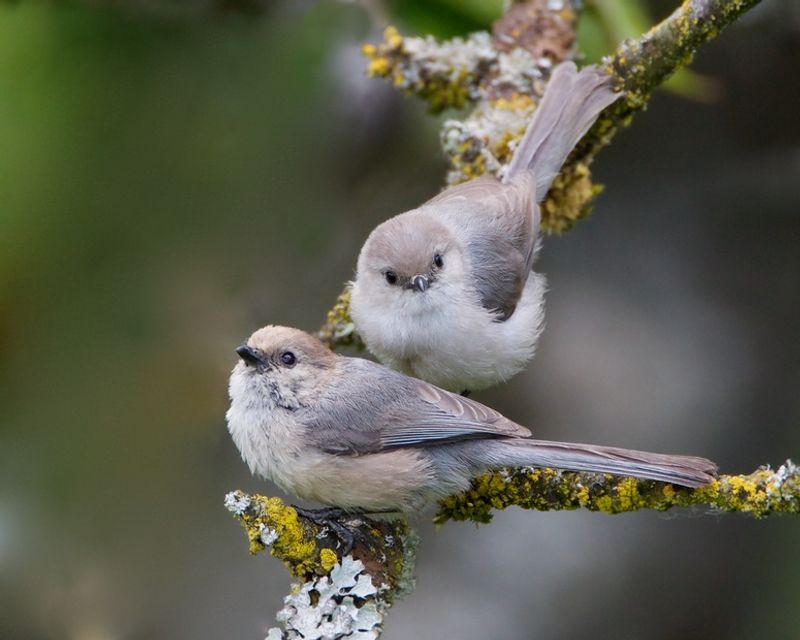
Bushtits are tiny, long-tailed gray-brown birds, and they rarely travel alone. Cornell Lab describes them as birds that move in flocks, picking insects from foliage as they go.
In a yard, that looks like a stream of birds flowing from one shrub to the next, calling to each other with thin, high notes.
Many people link bushtits with winter, but flocking is not limited to that season. Bushtits can flock year-round.
Winter flocks may roam widely in search of food, which is one reason a group can show up in your yard one week and be gone the next.
Breeding season changes the picture. Pairs become more territorial while they nest, so the big roving crowd breaks up for a while.
If you see just two or three birds working a shrub in spring, you may be watching a nesting pair rather than a flock. A USGS bird guide covers this seasonal shift.
Bushtits are common residents across much of California, but not every corner of it. California Wildlife Habitat Relationships notes they are absent from some areas, including parts of the southeastern desert.
If you garden in the Mojave or Colorado Desert, you may never see them.
Spotting a moving flock in your shrubs tells you the birds are foraging. It does not tell you they are going after one particular pest.
What might a bushtit be finding on your shrub?
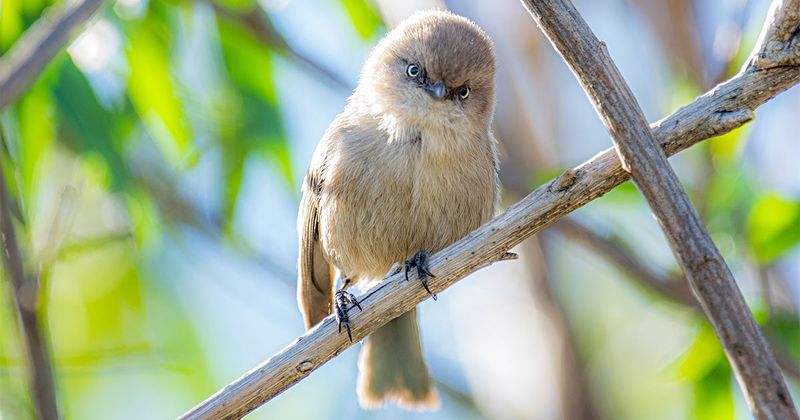
Watch a bushtit for a minute and you will see how it works. It hops along twigs, peers at leaf surfaces, and sometimes dangles upside down to reach the underside of a branch.
This is called gleaning, which means picking small prey off plant surfaces.
Cornell Lab’s life history account lists small insects as the main food, including scale insects and aphids. Audubon’s field guide gives a similar picture of a bird that feeds on tiny insects found on foliage and twigs.
Scale insects and aphids are different pests. Aphids are soft-bodied, often cluster on new growth, and leave sticky honeydew.
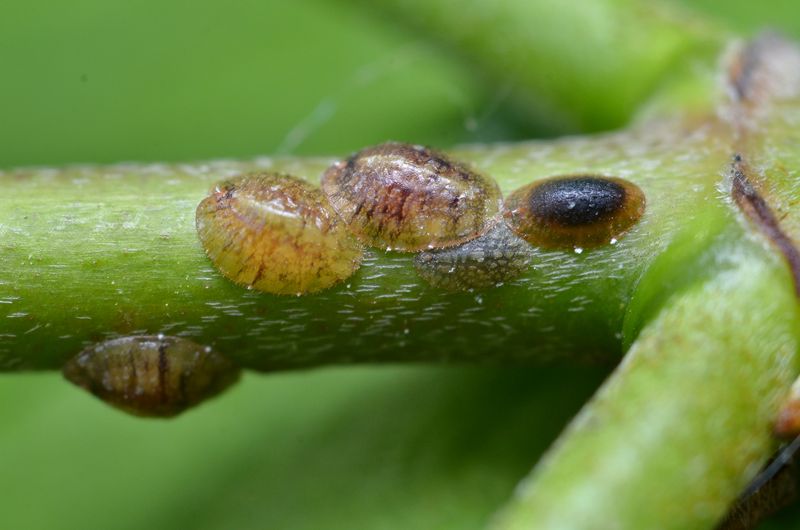
Scale insects are often immobile, with a waxy or hard cover that looks like a bump on stems or leaves. A bushtit’s diet naming both does not blur the line between them for you.
Here is the catch. A bushtit on your shrub could be taking scale, aphids, or any of many other tiny insects and spiders, and from a distance you cannot tell which.
Seeing the bird there does not prove it is eating the pests you have found.
No one can say how many insects a flock removes from a given plant. Treat the visit as a nice sign of wildlife in your yard, not as a measurement of anything.
A flock can help without controlling an infestation
Picture two columns. In one, write what is documented: bushtits eat small insects, and scale insects and aphids are on the menu.
In the other, write what is not known: how many a flock removes from your shrub, and whether that is enough to prevent damage. Nobody has filled in that second column.
So the smart move is to welcome the birds and keep doing your own pest check. A flock moves on quickly, often within minutes, and a heavy infestation can keep growing long after the birds leave.
If leaves are yellowing, twigs are dying back, or the plant is coated in sticky residue, the problem needs your attention no matter who visits.
Start by identifying what you have. Scrape a bump gently with a fingernail or look closely with a hand lens.
UC IPM’s scale guide notes that many scale species are usually kept in check by predators and parasites, which is a good reason to look before acting.
Then monitor. Check the same branches every week or two, noting whether the population is growing, holding steady, or shrinking.
Jot down dates or snap a photo so you can compare.
Bushtits belong in a wildlife-friendly yard because they are interesting and they eat insects. Their visits just are not a pest plan, and their documented diet does not change that.
Does spraying really starve the flock?
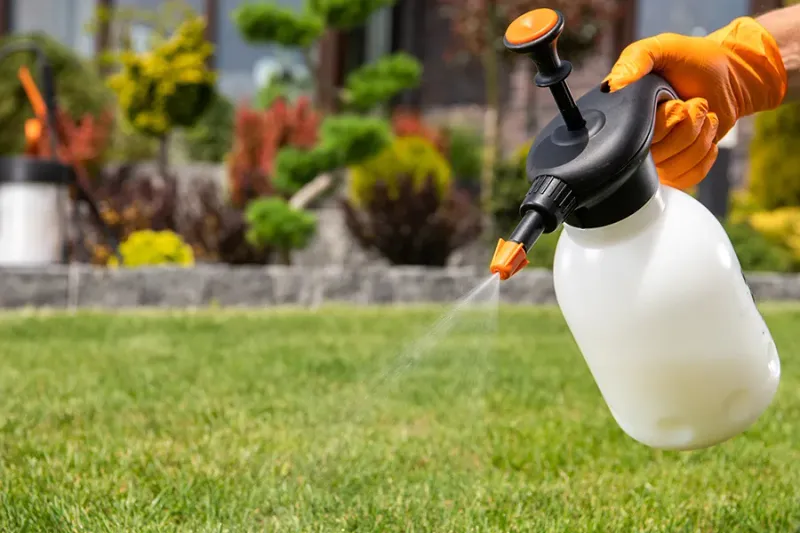
It is a scary idea: you spray a shrub, the bugs vanish, and the birds go hungry. Real, but the evidence stops short.
No source reviewed shows that home scale sprays reduce bushtit numbers or leave a local flock without enough food.
What is established is narrower. Insecticides can harm insects, including the natural enemies that help hold pests down.
UC IPM’s aphid guidance warns that broad-spectrum sprays can kill those helpful insects. Fewer insects overall could, in theory, mean less food for insect-eating birds, but that is a possible concern, not a proven result for bushtits.
Risk also varies. Some products are narrow in what they affect, others are broad, and how and when you apply them matters.
No pesticide should be assumed harmless to birds or beneficial insects.
A few habits lower the risk. Read the label and follow it exactly, including any wildlife cautions.
The EPA advises avoiding applications near areas frequented by wildlife, including bird flocks.
In practice, that means checking the shrub before you spray. If a flock is working through it, wait.
Choose a time when birds are not actively using the plant, and treat only the plants that need it.
Check the scale before reaching for a treatment
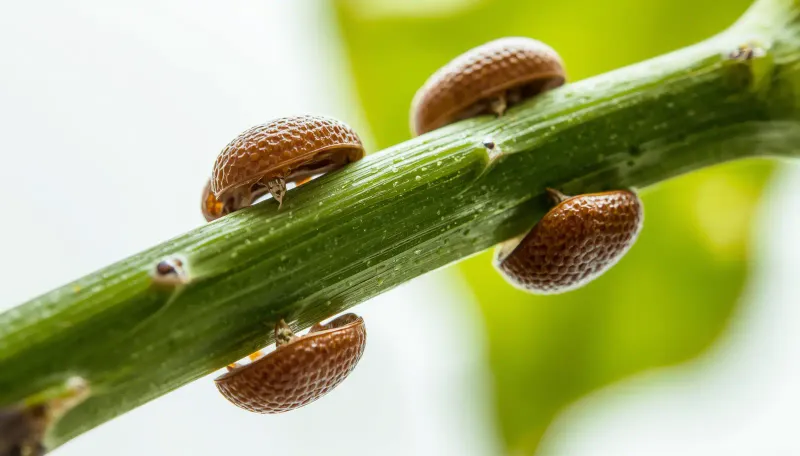
Scale control goes best in order: identify, inspect, monitor, then decide. Skipping the first three steps is how people end up treating a problem that was already fading.
Begin with identification. There are many scale species, and they differ in appearance, timing, and vulnerability.
Look at stems and leaf undersides for small bumps that stay put, and note whether the plant is also coated in honeydew or sooty mold.
Next, look at what the scales are doing. UC IPM explains that many scale species are usually kept in check by predators and parasites.
If many of the scales on your shrub are dead, or have tiny exit holes left by parasitic wasps, that is a reason to keep watching rather than spray right away.
Monitoring is simple. Pick a few branches, check them every week or two through the growing season, and compare what you see.
Is the number of live scales climbing, and is the plant showing real stress?
If treatment is warranted, UC IPM describes horticultural oils and other contact products as options. How well they work depends on the scale type, its life stage, the timing of the application, and thorough coverage of the plant.
A spray that misses the vulnerable stage may do little.
Always follow the product label, and check it for cautions about specific plants, since some shrubs are sensitive to oils. When the label, the timing, and your monitoring notes all line up, you can treat with confidence.
For aphids, start with the least disruptive fix
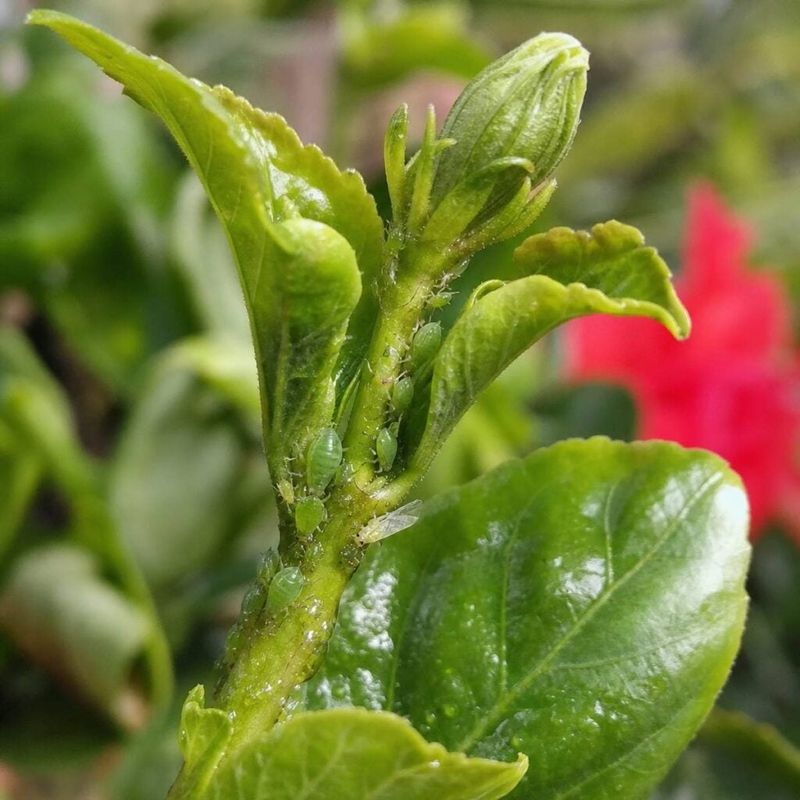
Aphids are a different problem with a different playbook. They are soft, they multiply fast on tender new shoots, and they are often easier to deal with than scale.
UC IPM recommends nonchemical steps first. The simplest is to tolerate a light infestation on an established plant, since a few aphids rarely hurt a healthy shrub.
If the colony is limited to one spot, prune it out. Snip off the infested tip or branch and drop it in the trash.
This works well when aphids have crowded onto a few curled shoots.
For sturdy plants, a strong stream of water from the hose can knock aphids off. Aim at the clusters in the morning and repeat as needed.
Skip this on delicate plants, where the spray could do more harm than the insects.
Choosing among these steps comes down to what you see. Light and scattered?
Tolerate and watch. Concentrated on a few shoots?
Prune. Widespread on a tough shrub?
Rinse it off.
Broad-spectrum sprays are best avoided where possible, since they can also kill natural enemies of aphids. And while bushtits may pick aphids off while foraging, they are not a fix you can count on, so keep checking your plant yourself.
Let the birds forage while you make the pest decision
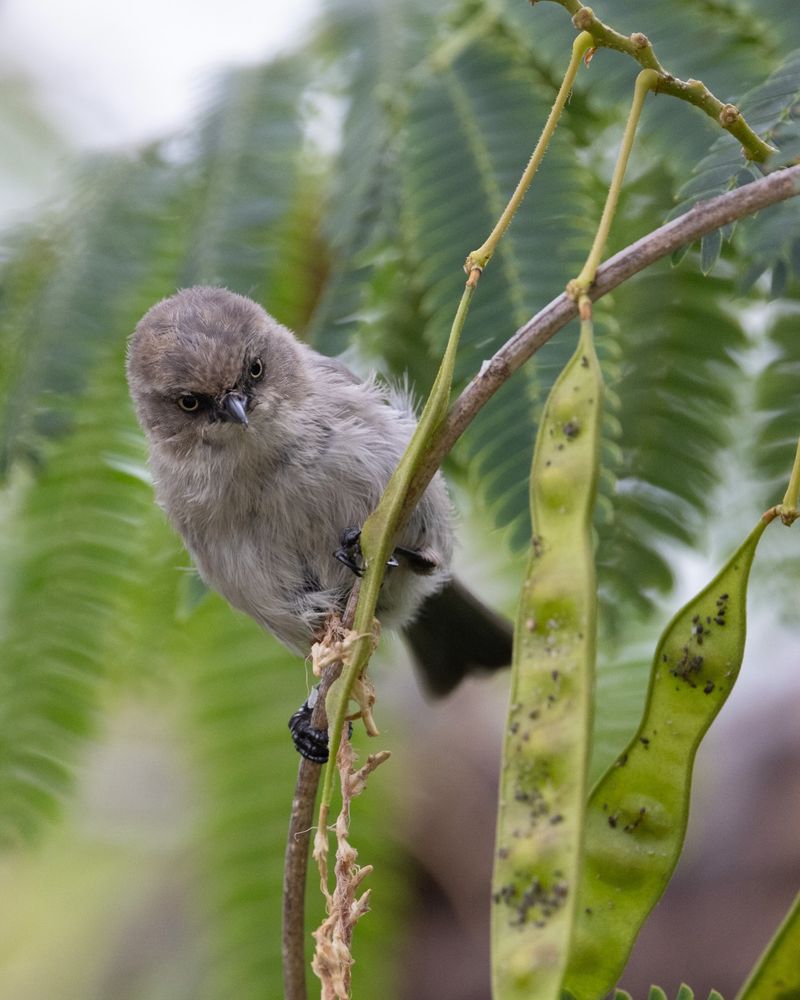
Enjoy the bushtits. They are lively, they eat insects, and a flock moving through a shrub is a good sign that your yard works for wildlife.
Then make pest decisions the way you would without them. Identify the insect, since scale and aphids call for different responses, and keep monitoring.
If treatment is needed, follow the label and keep birds in mind, as EPA guidance suggests.
The flock will likely be gone by lunchtime, so the plant care stays with you.