
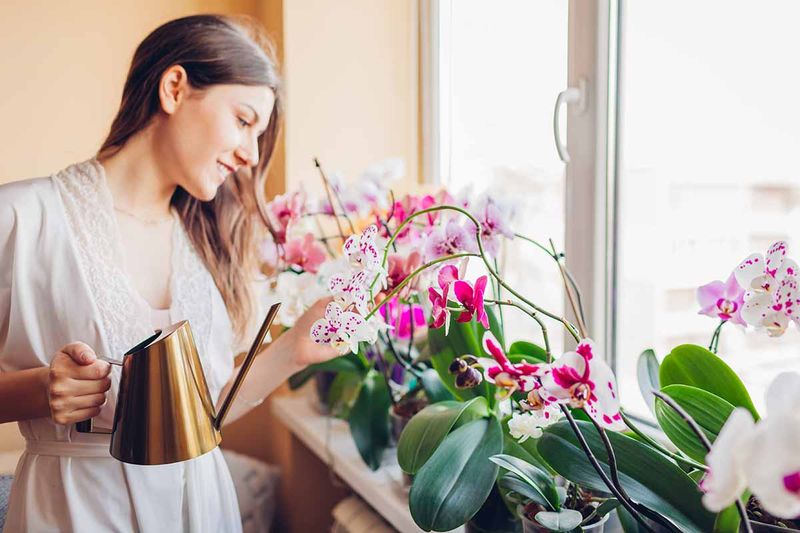
Peek at the roots of your moth orchid and you may spot a color change that hints at when the plant has had enough water. That clue is handy, but it only tells part of the story.
Indoor winter conditions in Florida and Texas homes can speed up or slow down how fast the pot dries. Here is how to read the roots, check the potting mix, and water with confidence.
What color are firm Phalaenopsis roots when they are dry?
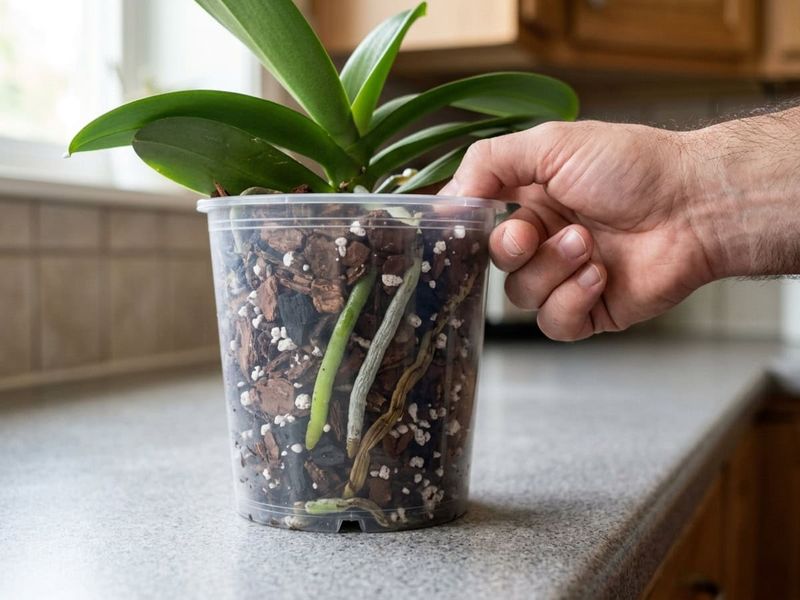
Firm, exposed roots on a moth orchid change color depending on how wet they are. According to University of Maryland Extension, dry roots look silvery-white or dull silver, and wet roots turn green.
Think of that color shift as a clue about the roots you can see. It tells you the outer surface of those roots is dry or freshly soaked.
It does not automatically tell you what the whole plant needs, because the roots tucked inside the pot are doing plenty of work out of sight.
A clear inner pot makes this much easier. You can turn the pot and look at roots pressed against the plastic, as Smithsonian Gardens describes in its Phalaenopsis care sheet.
Roots buried under bark or moss are hidden, so they will not give you the same visual signal.
So treat silvery roots as a reason to look closer, not as a command to grab the watering can. The next step is checking what is happening in the potting mix.
Check the potting medium before deciding to water
Roots are only half of the check. The potting mix gives the rest of the answer, and there are a few easy ways to read it.
Press a fingertip into the mix and notice whether it feels dry or still damp. Lift the pot and feel its weight, since a pot that has gone light usually means the mix has dried out.
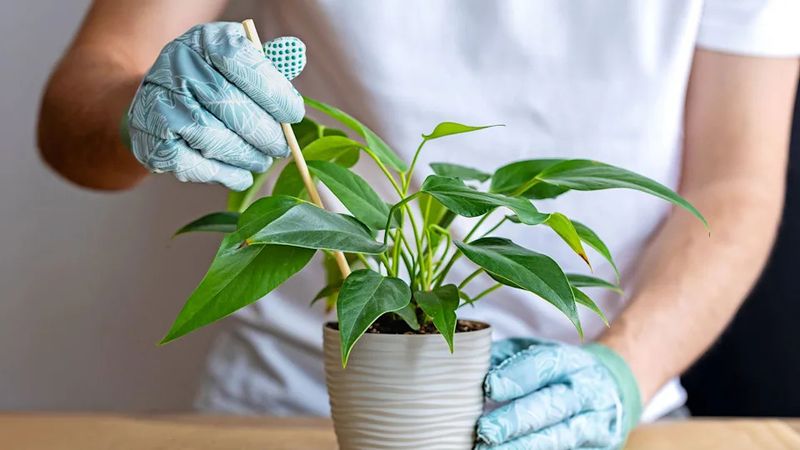
You can also slide a plain wooden chopstick into the medium, leave it a moment, and pull it out. If it comes out dark and damp, moisture is still lingering below.
Iowa State Extension recommends watering Phalaenopsis as the medium dries, before the plant starts to wilt. Bark and moss dry at different speeds, with moss often holding water longer, so the same number of days can mean very different things in two pots.
That is why neither root color nor a calendar should make the call alone. Use both clues together, and let the mix have the final say.
Indoor winter conditions can change how quickly the medium dries
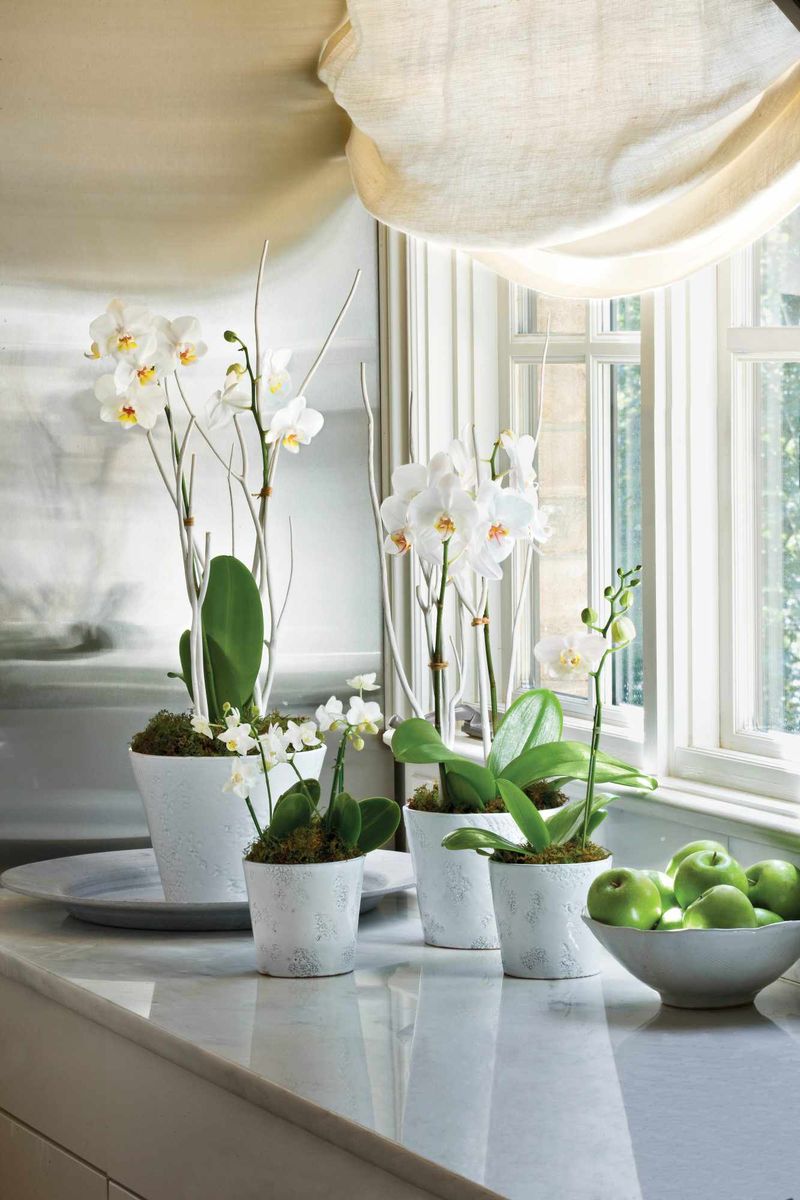
Winter does not dry every home the same way. What matters is the air, light, and warmth around your orchid, not just the date on the calendar.
A shaded north window in a cool room may keep the mix damp for a long stretch, while an orchid near a warm vent can dry out surprisingly fast.
Lower light and cooler temperatures can slow drying, and warm, dry indoor air can change how much moisture the plant needs. Iowa State Extension notes that season, light, temperature, humidity, pot, and growth stage all play a part, and it says there is no universal schedule.
The American Orchid Society’s Phalaenopsis culture sheet gives different watering intervals for different conditions, which backs up the same idea.
If you grow in Florida or Texas, take a look at your own spot. A sunny, air-conditioned room, a humid sunroom, and a heated den will each behave differently, so skip rules like once a week or every ten days and keep checking the roots and mix.
When the medium is dry, water thoroughly and let it drain
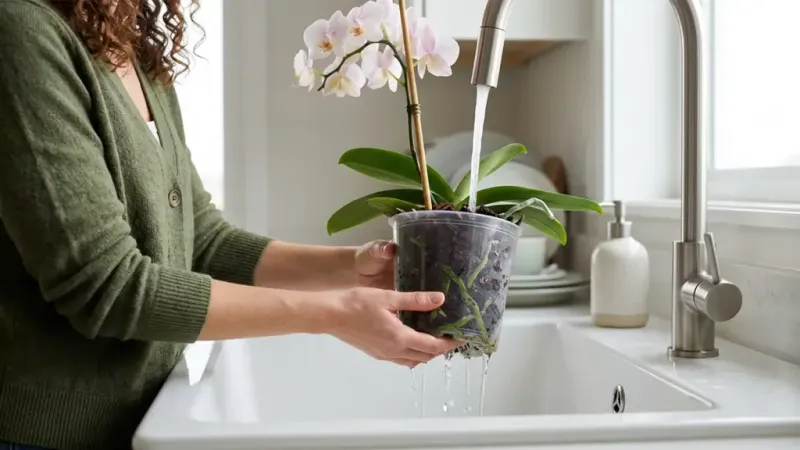
Once the roots and mix tell you it is time, water with a method that soaks the whole pot. Pour or run water over the medium until it is thoroughly wet, then let the extra drain away completely.
As Iowa State Extension advises, do not leave the pot sitting in water.
Morning is a good time for the job. The American Orchid Society suggests watering Phalaenopsis in the morning so leaves and the mix have the day to dry a bit.
Aim the water at the medium and keep it from pooling in the crown, where the leaves meet. Water trapped there can cause trouble.
A quick tip of the plant or a dab with a paper towel can clear stray drops.
Think of all this as technique, not a timetable. You decide when to water by checking, and the method simply makes each watering count.
Wrinkled leaves can point to damaged roots, not just thirst
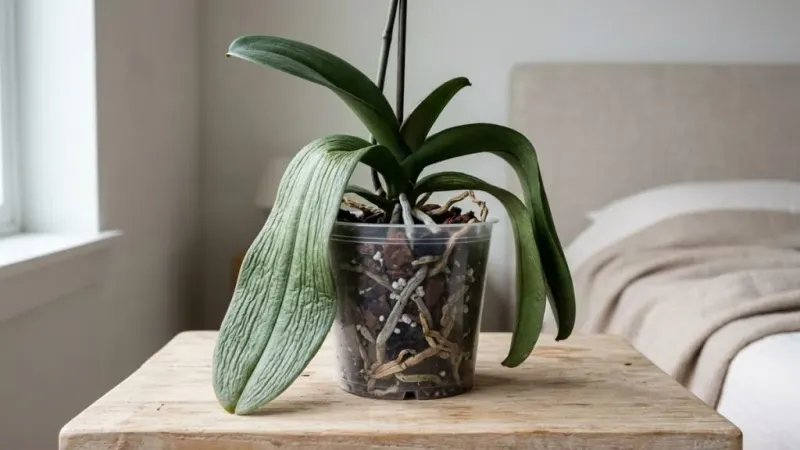
Limp or wrinkled leaves mean the plant is not getting enough water to its tissues. That sounds like a plain call for water, but it is not proof the pot is dry.
According to the American Orchid Society, overwatering, root rot, or other root damage can block water uptake and produce the same look, even when the mix is wet.
Before adding more water, check the medium and then the roots. Healthy roots are firm.
Roots that are brown, soft, hollow, or shriveled are likely damaged, and they are not simply thirsty. New root tips can be bright green as they grow, so a green tip alone is not a warning.
The AOS guide to orchid roots and Iowa State’s orchid diagnosis page are good references for comparing what you see.
If the mix is wet and the roots look poor, more water will not help. Firm roots with a dry mix point toward real thirst instead.
Not every orchid follows the Phalaenopsis rule
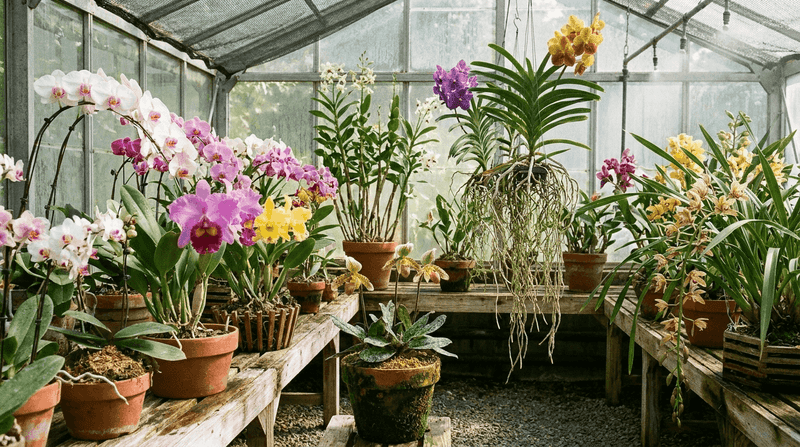
Orchids are a huge family, and they do not all drink the same way. Everything here is aimed at Phalaenopsis, the familiar moth orchid with broad, flat leaves and no pseudobulbs.
Pseudobulbs are the swollen, bulb-like stems some orchids use to store water. Iowa State Extension explains that orchids without them, including Phalaenopsis, are generally watered as the medium dries.
Many orchids with pseudobulbs, such as plenty of Cattleyas and Oncidiums, are generally allowed to dry completely between waterings.
So a rule that suits your moth orchid could be wrong for a Cattleya on the next shelf.
Take a moment to identify what you are growing. Look for pseudobulbs at the base of the plant, check the tag if you still have it, or ask a local orchid society or garden center.
Once you know the type, you can match your watering to it.
Use roots and medium together before you water
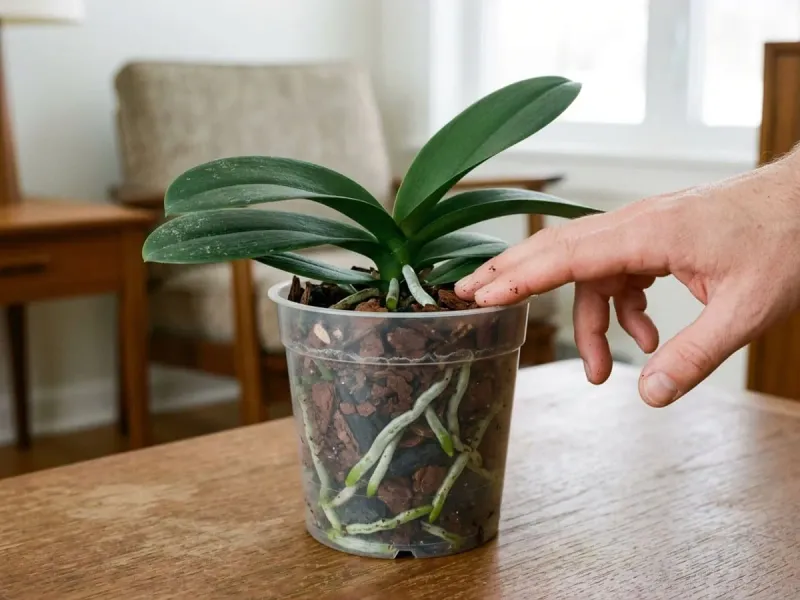
Here is a quick check to run before you water. Look at the firm, visible roots: silvery or dull silver suggests they are dry, as University of Maryland Extension describes.
Then check the mix by touch, weight, or chopstick, and water when it is dry or nearly dry, as Iowa State Extension recommends.
Keep your home’s light, warmth, and air in mind, since they set the pace. Your orchid gives hints, and you do the final reading.