
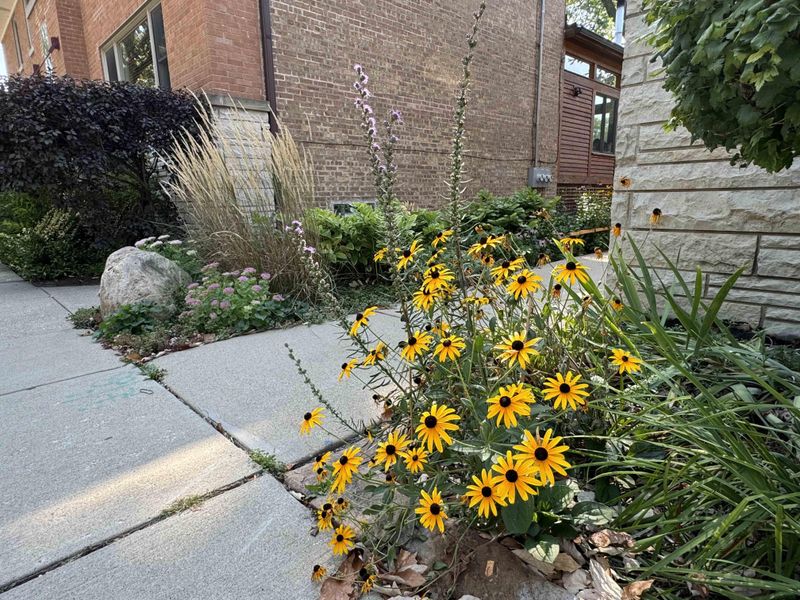
That little strip of dirt around your mailbox might be the toughest spot in your whole yard. It bakes next to hot pavement, gets splashed by road grit, and rarely sees a hose, which is why petunias often fizzle there by August.
Native North Carolina wildflowers grew up handling heat, drought, and poor soil, so many of them keep blooming when imported annuals give up. Better yet, late September is a great time to plant them, so their roots can settle in before spring and greet you with color next year.
1. Butterfly Milkweed
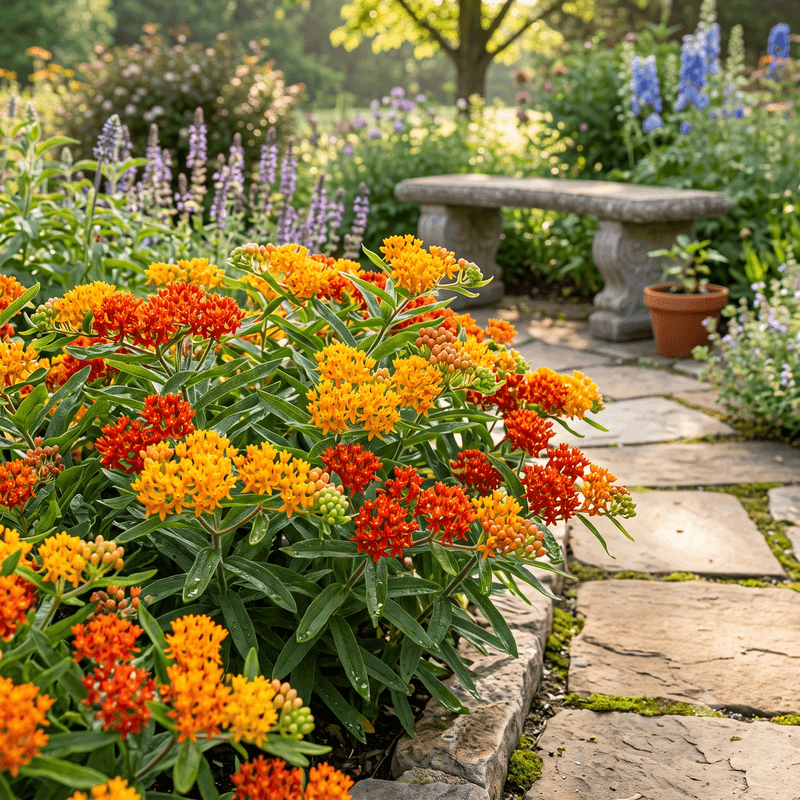
Picture a clump of flame-orange flowers glowing beside a sizzling asphalt road while a monarch drifts in for a sip. Butterfly milkweed (Asclepias tuberosa) handles that scene with ease.
It grows wild in dry fields and roadsides across all three NC regions, from the mountains to the coastal plain.
Its secret is a deep taproot that reaches moisture petunias never find. Once established, it rarely needs watering, and it actually prefers lean, sandy, or rocky soil.
Rich garden soil and too much water can make it sulk.
Monarchs lay eggs on milkweed, so your mailbox bed can double as a butterfly nursery. Plant small container plants now through October, since that taproot makes older plants hard to move later.
Expect it to wake up late in spring, so mark the spot and be patient.
2. Purple Coneflower
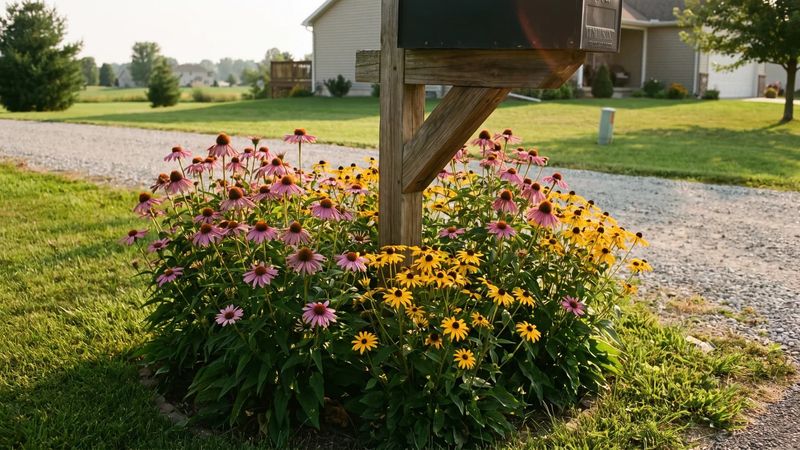
Ask any longtime Piedmont gardener for one bulletproof perennial, and coneflower usually comes up first. Echinacea purpurea forms sturdy clumps of pink-purple daisies with spiky orange centers.
It blooms from early summer well into fall.
Heat reflecting off a driveway doesn’t faze it. The thick, hairy leaves help it hold moisture, and mature plants can ride out weeks without rain.
Petunias, by contrast, tend to stretch, flop, and stop flowering when nights stay hot.
Here’s the bonus: leave the seed heads standing in fall. Goldfinches love picking at them, which gives you a little wildlife show every time you grab the mail.
3. Black-Eyed Susan
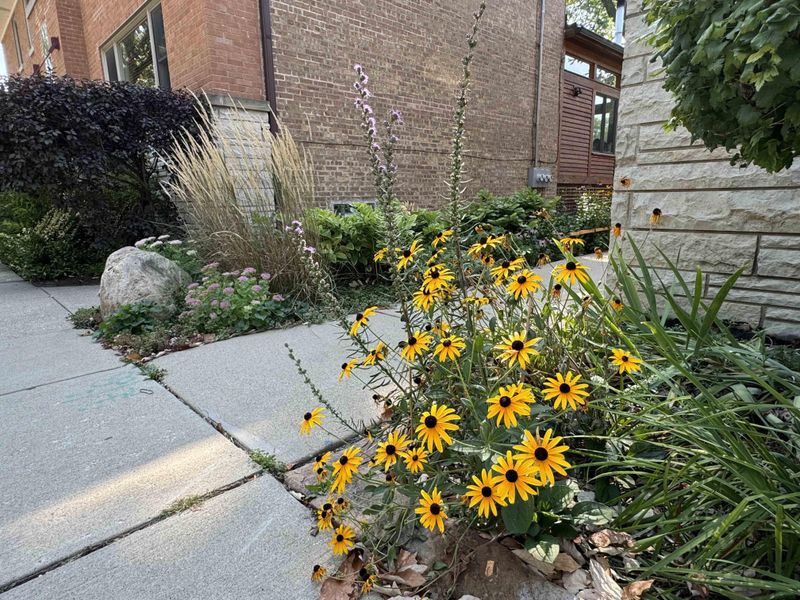
Cheerful, stubborn, and almost impossible to kill, black-eyed Susan is the friendly neighbor of the native plant world. Rudbeckia fulgida and Rudbeckia hirta both grow naturally in NC.
Their golden petals and chocolate centers brighten roadsides from July into October.
These plants spread into a dense mat over time. That’s great news for a mailbox bed, because a thick carpet can shade out weeds and keep soil cooler.
Fewer weeds means fewer trips out with a hoe in July.
Bees and small butterflies visit often, and birds may nibble the seeds in winter. Divide crowded clumps in fall and share them with neighbors.
4. Lanceleaf Coreopsis
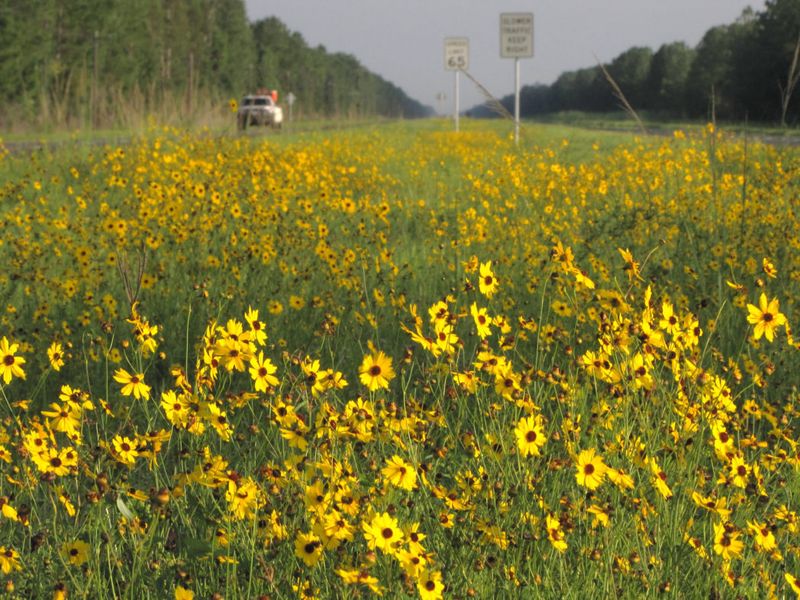
Did you know coreopsis is the state wildflower of Florida, yet it’s just as at home along NC highways? Lanceleaf coreopsis (Coreopsis lanceolata) thrives in thin, sandy ground that would starve most bedding plants.
That makes it a natural fit for coastal plain yards and gritty curbside strips.
Bright yellow flowers pop up in late spring and keep coming if you snip spent blooms. It reseeds gently, filling gaps without turning into a bully.
Skip fertilizer, since rich feeding can make stems floppy.
Sow seed or set plants this fall for a strong spring show. A little cold winter weather actually helps the seeds sprout.
5. Blanket Flower
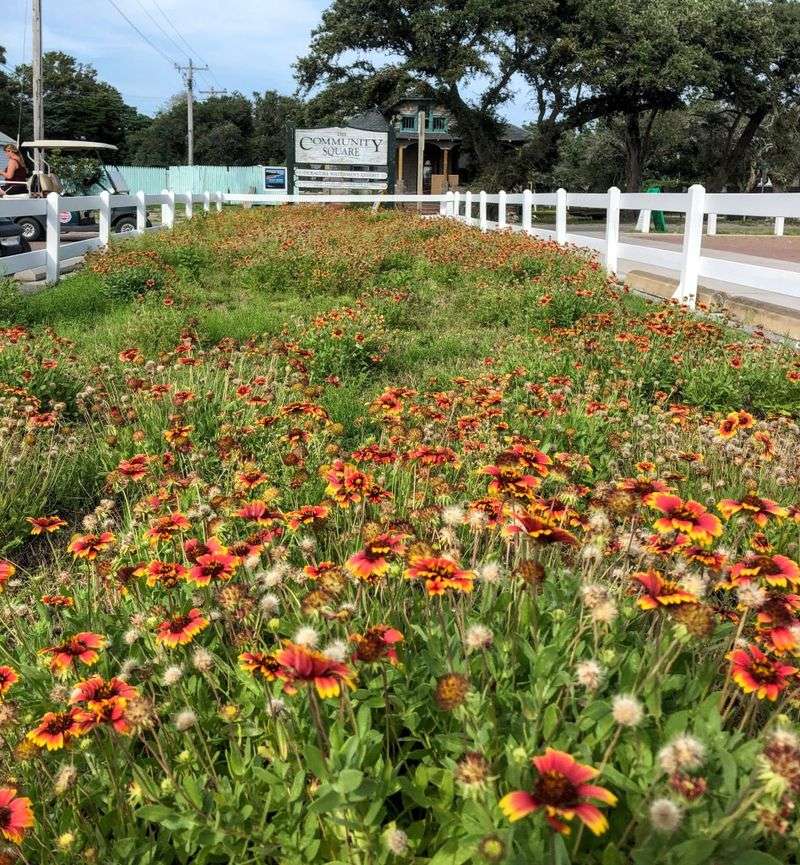
Salt spray, sand, and blazing sun sound like a bad vacation for a plant. Blanket flower (Gaillardia pulchella) treats it like home.
You’ll spot it blooming on dunes along the Outer Banks, where few other flowers last the summer.
The red-and-yellow pinwheel blooms look almost painted. Flowering can run from late spring until frost with very little help from you.
If your mailbox sits where winter road salt splashes or sea air drifts in, this is a smart pick.
It tends to be short-lived, but it reseeds freely. Let a few flowers go to seed and new plants may appear on their own.
6. Narrowleaf Mountain Mint
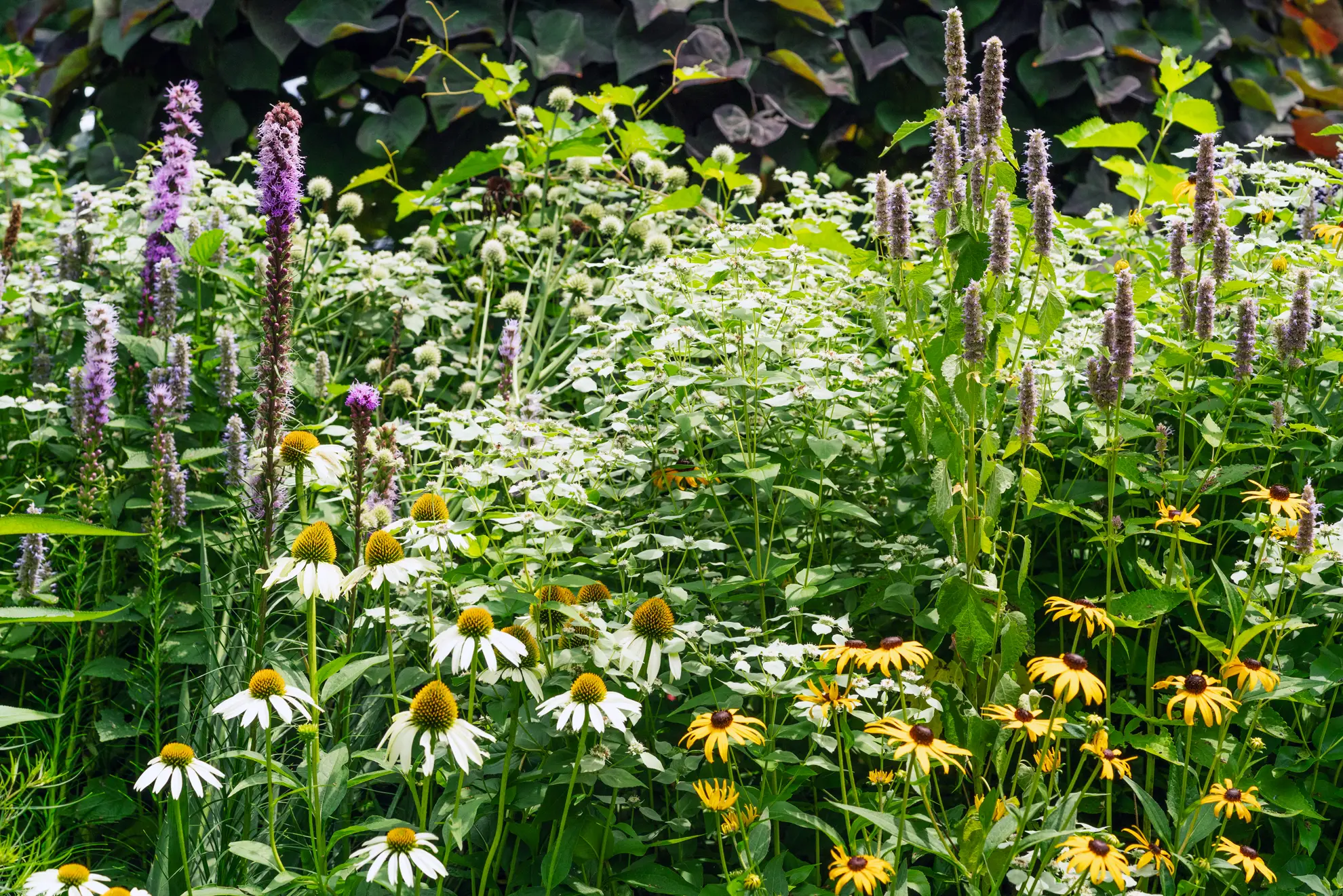
Stand next to mountain mint in July and you’ll hear it before you notice it. The tiny white flowers draw a buzzing crowd of native bees, small wasps, and beetles.
Some gardeners call it one of the busiest pollinator plants around.
Pycnanthemum tenuifolium has fine, needle-like leaves with a crisp minty scent. Deer usually leave it alone, which matters a lot in mountain and Piedmont neighborhoods.
It handles dry, sunny spots and spreads at a steady, manageable pace.
Don’t worry about the visiting wasps. Most are small and focused on nectar, not people, and some may help keep garden pests in check.
7. Smooth Aster

Most mailbox beds look tired by October. Smooth aster (Symphyotrichum laeve) waits for that moment to shine, covering itself in lavender-blue stars with yellow centers.
It handles summer heat and dry spells, then blooms when migrating monarchs need fuel heading south. Late bees stock up on its nectar too.
Planted with coneflower and milkweed, it stretches your color season from early summer into fall.
Plant it now while it’s in bloom at native nurseries. Trim stems back by a third in early June for a tidier, bushier plant.
Fill the strip with a few of these natives this fall, and next summer your mailbox may be the brightest spot on the street.