
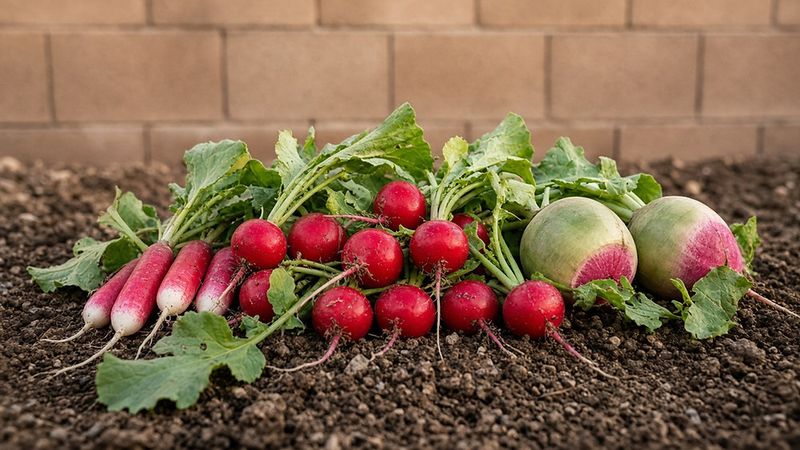
A radish that looked perfect on Monday can feel woody or cracked a little later, and that is frustrating after waiting weeks for a crop. Spongy centers and split skins are two different problems with different causes.
Sorting them out helps you pull radishes at the right moment instead of guessing. Here is how to read the clues in your own fall bed in Florida or Texas.
Why over-mature radishes can turn pithy
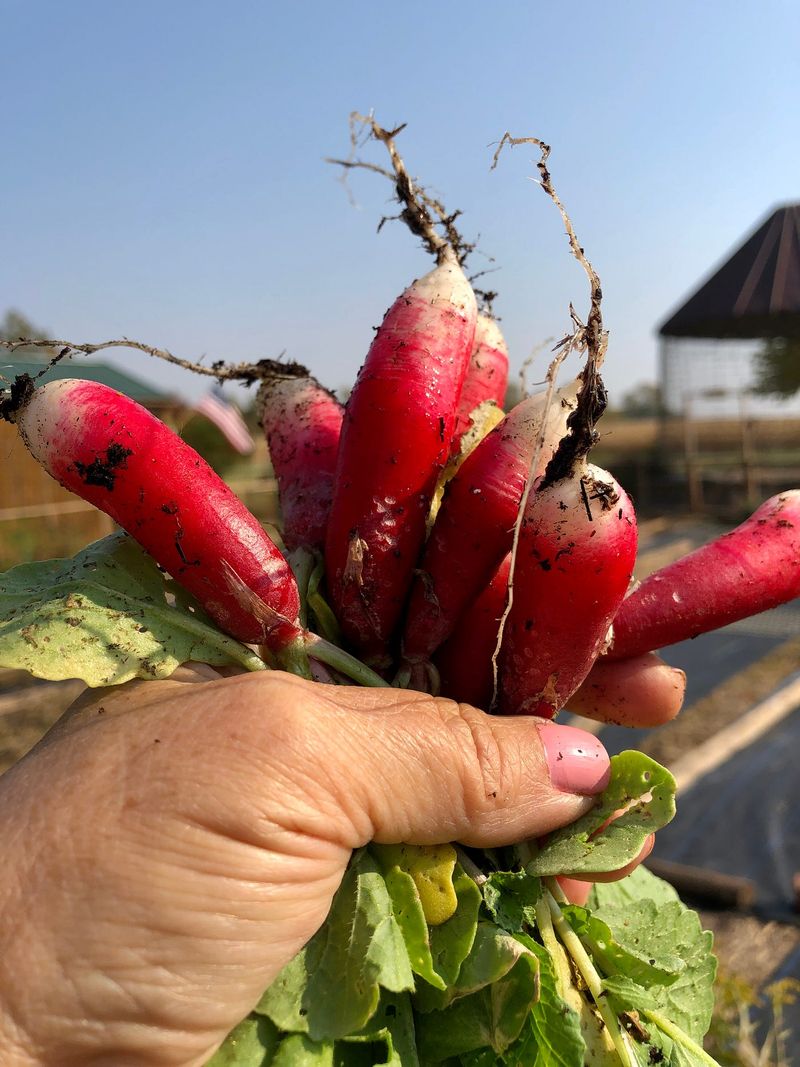
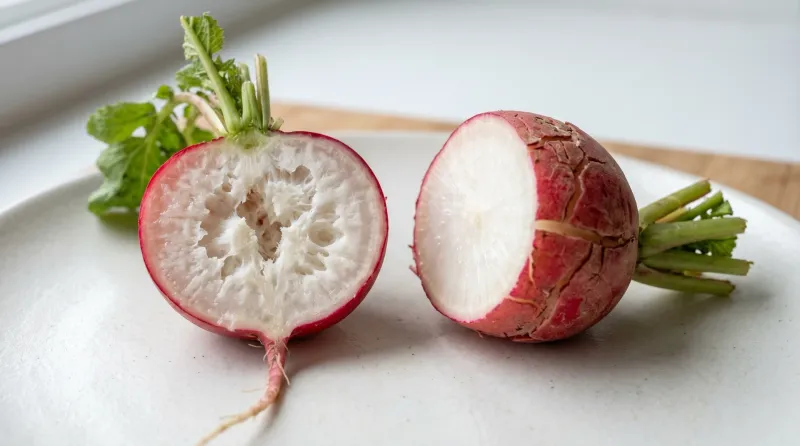
Bite into a radish that stayed in the ground too long and you may find a dry, soft, almost foam-like center. UC Davis postharvest guidance links over-maturity with a pithy or spongy texture, which is the main reason timing matters so much with this crop.
Old roots can also feel tough and fibrous, and the flavor often gets stronger. UC IPM advice says to harvest while roots are young and tender, since waiting turns them woody.
Notice what is missing here: there is no magic one-week cutoff. Radishes mature at different speeds depending on the variety and the weather, so a spongy radish tells you the root went past its best stage, not that a specific number of days passed.
Pithiness is also a separate symptom from splitting. A radish can be spongy inside with an unbroken skin, and a split radish can still be crisp.
Cut a few open when you pull them so you can tell which problem you are really looking at.
A split root points to a different clue
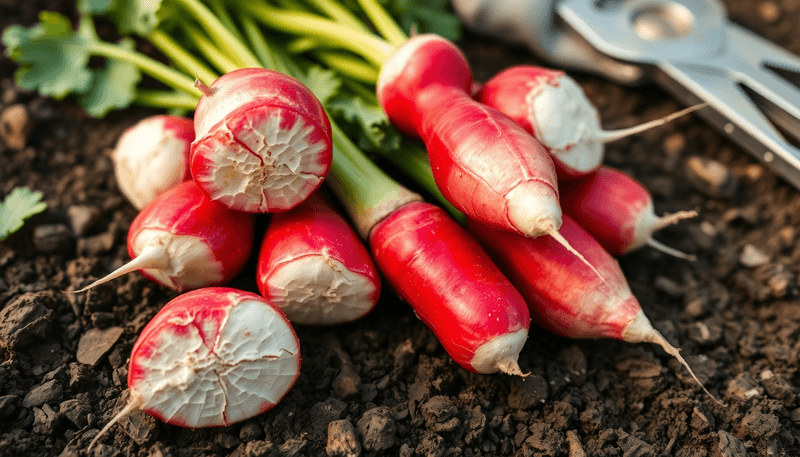
Cracks running down the skin of a radish are a separate clue from a spongy center. Extension guidance connects splitting with uneven moisture, such as a long dry stretch followed by a heavy soaking.
University of Minnesota Extension describes cracking tied to irregular watering.
Roots swell quickly when water suddenly returns, and the skin may not keep up. Some sources also tie cracking to old, mature roots, so age can play a part too.
Utah State University Extension covers both moisture swings and quality loss from stress.
You cannot always name the cause by looking at one split root. Ask yourself a few questions instead.
Did the bed dry out between waterings? Were the roots already past their expected harvest window?
Is the inside firm or spongy?
Split radishes are often still edible if the flesh is crisp. Treat the crack as a hint to check your watering habits, not as proof of one cause.
Use harvest estimates as check-in dates, not deadlines
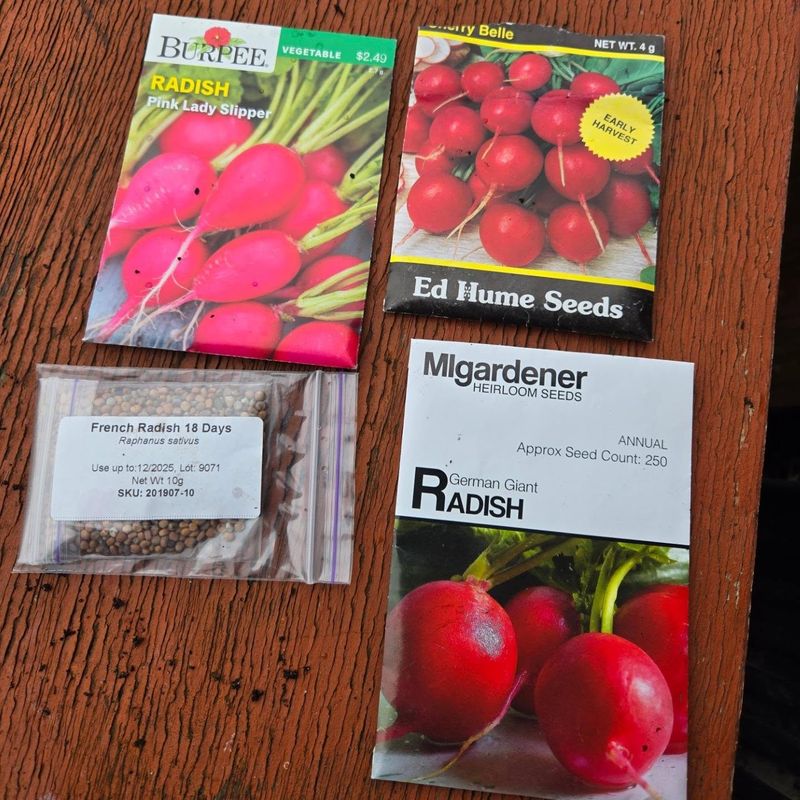
Published timing for common small radishes varies quite a bit. UF/IFAS advises harvesting on the younger side, about 20 to 30 days after sowing.
Texas A&M AgriLife gives about 4 to 5 weeks, and UC IPM offers 3 to 6 weeks depending on variety.
Those ranges overlap but do not match, and none of them is a shared calendar for every garden. They are also not a grace period.
Nothing in them says roots are fine for a week past the estimate or ruined after it.
Your seed packet is the best starting point. Mark the sowing date, then treat the packet’s estimate as the day you begin checking roots, not the day you must pull them all.
Warm weather, soil, and variety can all shift the pace. A quick check every day or two near the window beats a strict count, and it keeps you from missing a crisp radish.
Check root size and tenderness before pulling
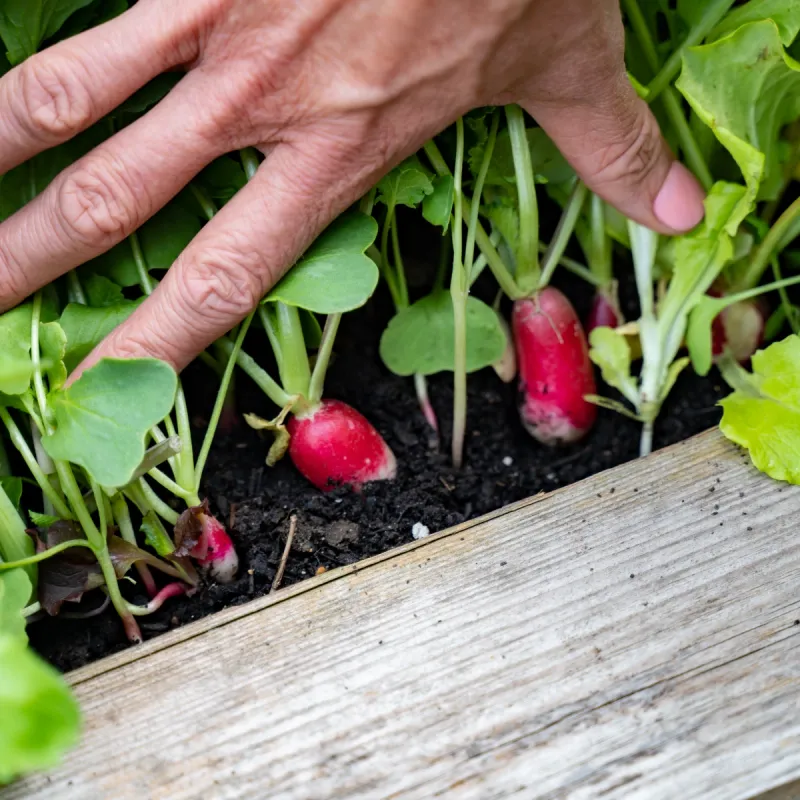
Once you are near the expected window, check a few roots. Brush soil from the top and look at the shoulder to judge the size.
Then pull one test radish, slice it, and taste it for crispness.
If it is usable and tender, harvest the row. If it is small, give it a few more days and test again.
Texas A&M AgriLife describes a medium radish as about 1 inch across, but that is only a rough picture, since varieties differ in size.
Some radishes are naturally bigger or smaller, so judge by the type you planted. A tender, firm root of the right size for your variety is the goal.
Also separate common radishes from larger ones. UF/IFAS says its 20 to 30 day advice is for common radishes, while daikon takes longer.
Follow the guidance for the exact variety on your packet.
Warm conditions can affect quality in specific ways
Heat gets blamed for a lot, so it helps to be precise. UF/IFAS says warmer temperatures can intensify bitterness and pepperiness in radishes.
Utah State University Extension reports that heat can lead to bitterness, hot flavor, and hollow roots. Those are flavor and structure issues you may notice when a warm spell hits.
Those sources do not say a warm fall spell alone makes radishes spongy or split. Sponginess is tied to over-maturity, and splitting is tied to uneven moisture and, in some guidance, mature roots.
So if your radishes taste harsh during a warm week, heat may be part of it. If they are spongy, look at age.
If they are cracked, look at your watering. Keeping the causes separate helps you decide what to adjust next time.
Florida and Central Texas have different fall guidance
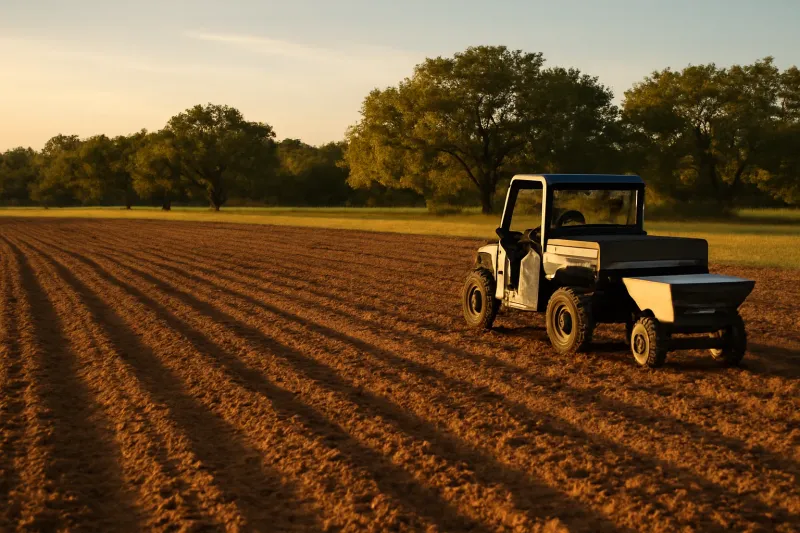
Florida and Texas do not share one fall schedule, and neither state is a single climate. UF/IFAS says common radishes do best in Florida from September through March.
For Texas, Texas A&M AgriLife lists September planting with October through December harvest. That schedule is for Central Texas, so do not copy it for the Panhandle, the Gulf Coast, or far West Texas without checking local guidance.
North, Central, and South Florida also differ, so a long planting window does not mean every month works equally well at your address.
Use these dates as a starting frame. Then adjust for your local frost dates, your county extension office, and the variety on your seed packet.
Your own garden notes from past falls are useful too.
Stagger sowings and keep moisture more even
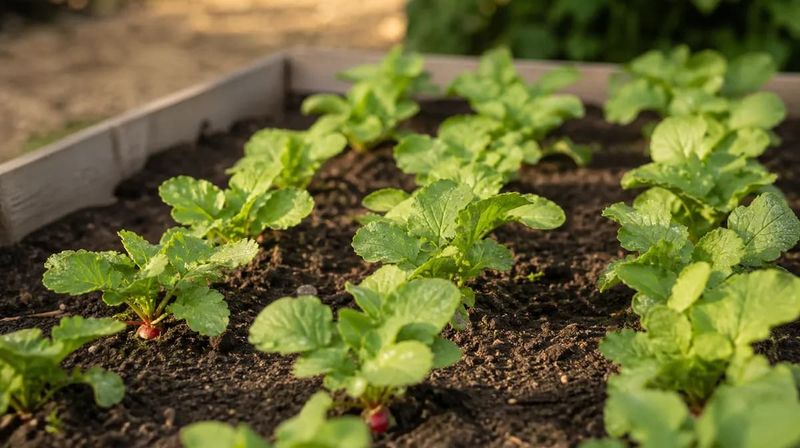
Sowing all your radishes at once means they can all be ready at once, and some will wait too long. Repeat sowings spread the harvest into smaller batches.
Texas A&M AgriLife recommends plantings 8 to 10 days apart.
UF/IFAS suggests sowing every few weeks. These are two separate options, not one required interval, so pick a rhythm that matches how many radishes your household eats.
Then follow a simple sequence. Use the variety’s expected window to start checking, judge roots by size and tenderness, and water so the soil stays more evenly moist.
University of Minnesota Extension links irregular watering with cracked roots, so steadier moisture may reduce splitting risk.
Radishes reward attention in small doses. A quick check each day beats a calendar.