
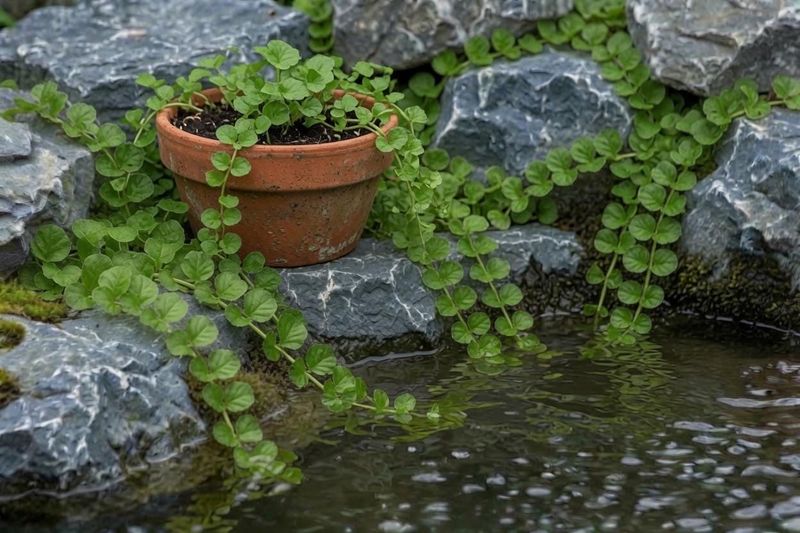
A green, trailing edge along a pond looks great, but the plant you pick can matter for years. Creeping Jenny is a common choice, yet some North Carolina cities list it as invasive.
There is a low native option for parts of the state, and it comes with its own catch. Here is where it fits, where it does not, and what to know before you plant.
Creeping frogfruit can fit a coastal pond bank
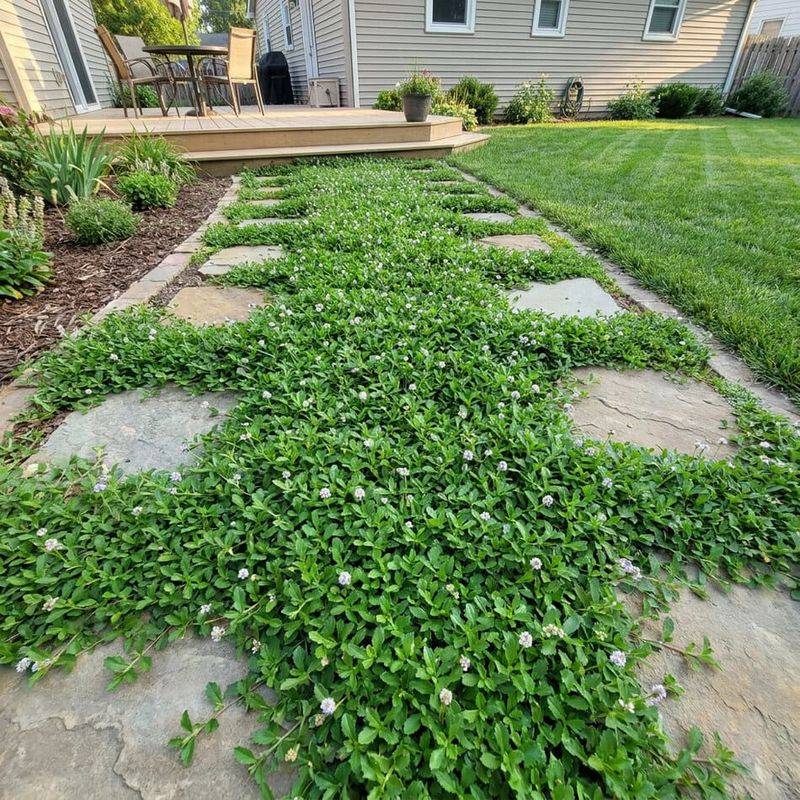
Creeping frogfruit (Phyla nodiflora) is a low, trailing plant that can soften the edge of a pond. It grows only about 3 to 6 inches tall and spreads along the ground.
Small white-to-purple flowers appear on the mat, and pollinators visit them.
Wildlife value adds to the appeal. North Carolina Extension’s plant profile lists frogfruit as a larval host for the Phaon crescent, buckeye, and white peacock butterflies.
That means caterpillars can feed on the leaves, not just adult butterflies sipping nectar. A pond bank planted with it can support more life than a patch of bare soil or turf.
Still, a plant’s good qualities do not make it right for every yard. Frogfruit is not a statewide native replacement for creeping Jenny, and it does not suit every pond.
Its light, moisture, and spreading habit all matter. The next sections cover where it is native, how wet is too wet, and how much room it will want.
Think of frogfruit as a good fit for a certain kind of bank, not as a swap you can make anywhere. If your pond is in the mountains or the inland Piedmont, treat it as an option to check first rather than a sure thing.
A short look at your site now can save you a lot of pulling later.
Check where its native status applies
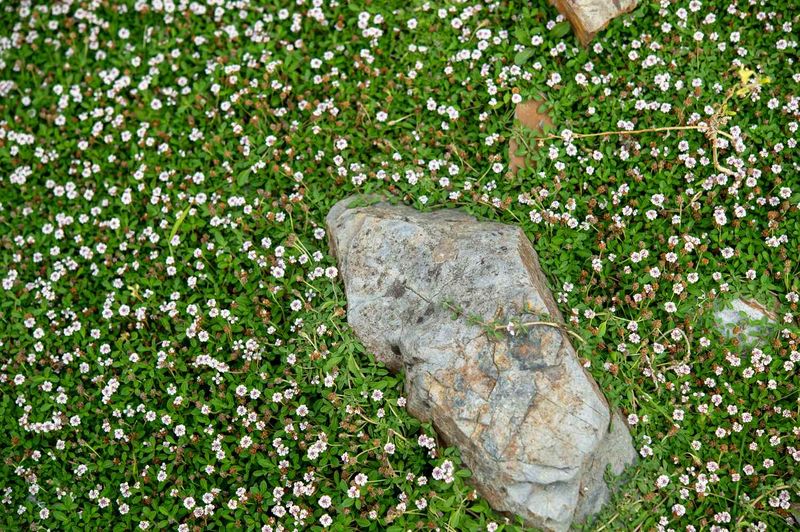
Calling frogfruit a North Carolina native needs a regional qualifier. The Vascular Plants of North Carolina account places Phyla nodiflora mainly along the Outer Banks and coast.
Records on the adjacent mainland are uncommon. The same account describes the species as essentially coastal in the South Atlantic states, and it identifies one McDowell County record as non-native.
You may see broader claims online. The Extension Plant Toolbox lists frogfruit for the Coastal, Piedmont, and Mountain regions.
That listing tells you where the plant can be grown. It does not show that the plant is indigenous in all three regions, and the state flora gives a much narrower native range.
So what should you do if you live inland? Start by asking where a nursery’s plants came from, and look for local provenance when you can.
Then compare the plant’s needs with your bank’s light and moisture. A Wilmington or Outer Banks pond owner is on much firmer native ground than a homeowner near Asheville or Hickory.
If you cannot confirm that frogfruit belongs in your area, talk with your county Extension office before you buy. Local staff can point you to other low plants suited to your region.
Plant it on a moist bank, not underwater
Frogfruit does best in sun to part shade and in soil that stays moist. According to North Carolina Extension, it tolerates wet soil and occasional flooding.
Nothing in that guidance supports planting it underwater or leaving it submerged all the time.
Walk your bank after a rain to see how it behaves. North Carolina streambank guidance separates the water’s edge, where roots may stay wet much of the time, from nearby ground that floods only seasonally.
That same thinking works on a pond. The strip that is damp but not standing in water is the best target for frogfruit.
Lanceleaf frogfruit (Phyla lanceolata) is a related plant you may come across. The state flora documents it at coastal pond margins, but it is uncommon to infrequent.
It grows upright or leaning, roughly 1 to 1.5 feet tall, so it is not an equivalent low trailing mat.
Before planting, note how many hours of sun the bank gets and how long the soil stays wet after storms. If the spot is under standing water for weeks, frogfruit is the wrong plant for it.
Save it for the slightly higher, damp band above the waterline.
Plan for frogfruit to spread
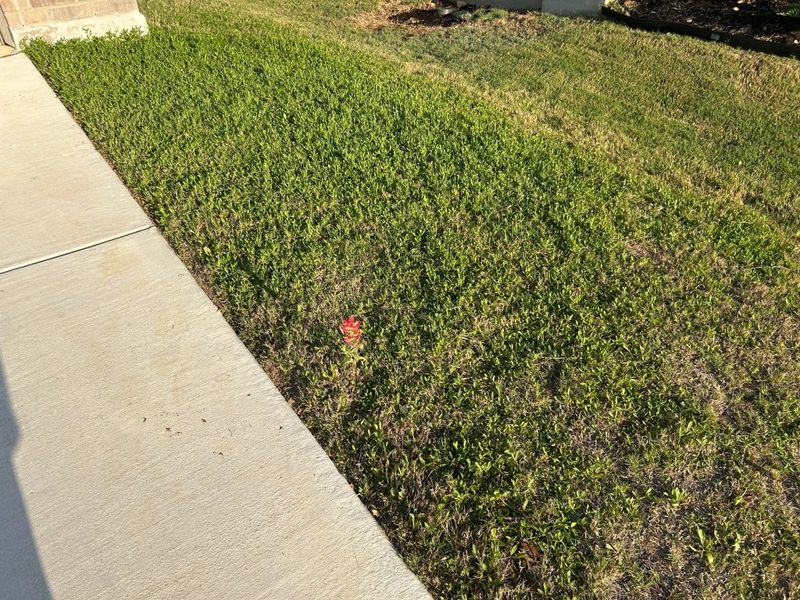
Native does not mean well-behaved. Frogfruit roots at the nodes along its stems, so each trailing piece can start a new plant.
Extension describes it as fast-spreading.
The state flora goes further. It calls Phyla nodiflora a “weedy native” and notes that it can form dense patches many yards across in suitable coastal settings.
Its species account is a useful reality check before you plant a whole bank.
Ask yourself whether a wide, dense mat is what you want. It may be a fine fit for a broad, informal shoreline.
It may be a poor choice beside a prized perennial bed, a neat path, or a dock where you want clear edges.
Plan to walk the border every few weeks in the growing season. Look for stems that have crept past where you want them.
A trench or edging strip may slow the spread, but you should not count on a simple boundary to hold it, since rooted stems can hop over or tunnel through weak edges.
Start small, give it a defined space, and expand only if the patch behaves in your conditions.
Treat creeping Jenny as a local concern, not a statewide verdict
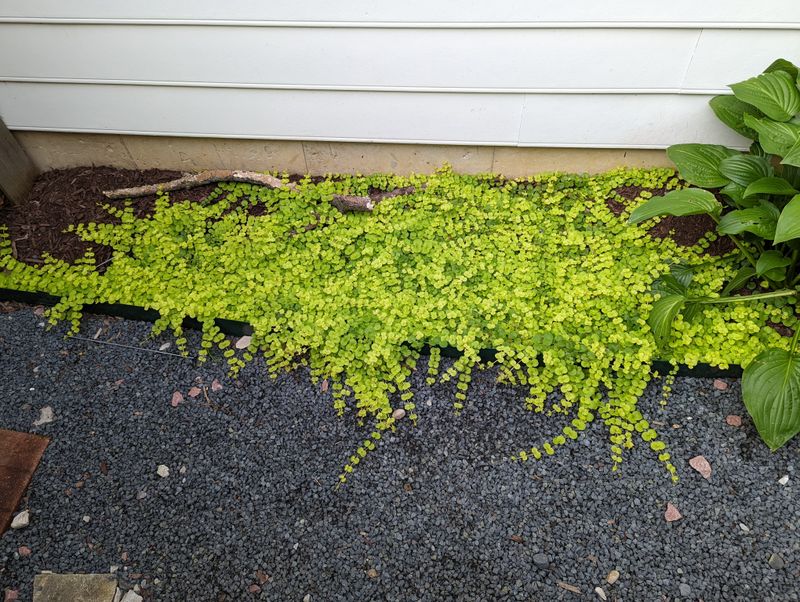
Creeping Jenny is non-native to North America and has escaped cultivation. The U.S.
Forest Service review says it can occasionally dominate plant communities, but it typically does not substantially modify natural habitats over large areas. That is a more measured picture than a blanket warning.
Some local governments are more cautious. Raleigh’s Plant Raleigh list treats it as a significant threat, and the Charlotte-Mecklenburg list labels it an invasive exotic.
Those are local listings, not a statewide ban or legal status.
If you decide to remove it, expect a project. Its stems root at the leaf nodes, so trimming or one casual pull can leave pieces behind that regrow.
Remove runners carefully, bag the debris, and recheck the area for new shoots.
Near water, be extra careful with chemicals. The North Carolina DEQ aquatic weed program explains that herbicide choice depends on the target plant and the waterbody, and it notes ecosystem and water-use concerns.
Skip improvised spraying and contact your county Extension office or a qualified aquatic-plant professional for a plan that fits your pond.
Match the plant to your place
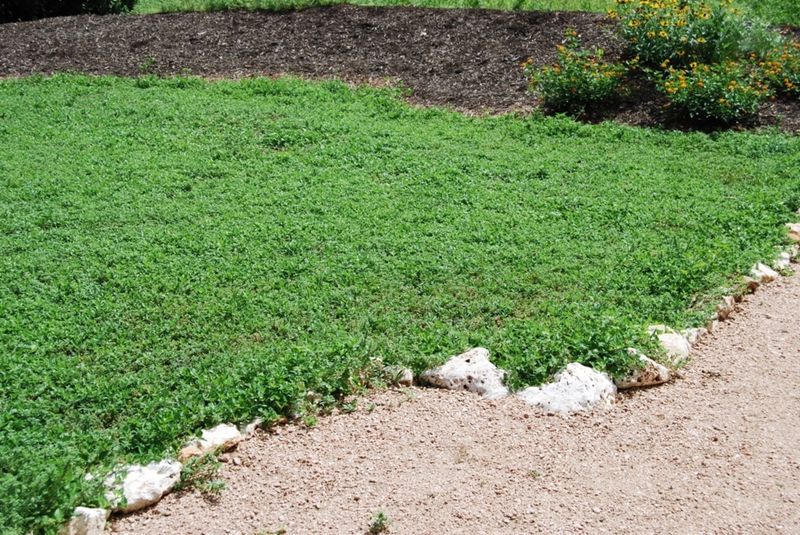
Consider creeping frogfruit only when the pieces line up: your local status, the light, the moisture, and the room for spread. It belongs on a moist bank, not under water, and it is not a no-spread substitute for creeping Jenny.
Before planting, confirm with your county Extension office that it suits your area, since the state flora documents it mainly along the coast. Then plan to check the edge regularly, as Extension describes a fast-spreading plant.
A good pond edge is a choice made one bank at a time.