
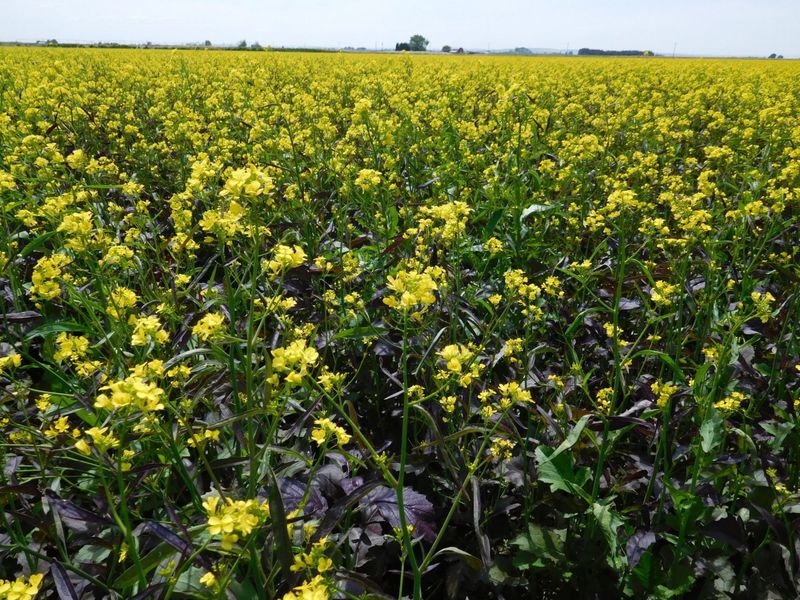
Yellow leaves at the bottom of your mustard greens can make your stomach drop. Sometimes the plant is hungry for nitrogen, but sometimes something else is going on.
A quick look at the whole plant can save you from feeding a problem that fertilizer will not fix. Here is how to read the clues and decide on your next step this week.
Yellow lower leaves are a clue, not a diagnosis
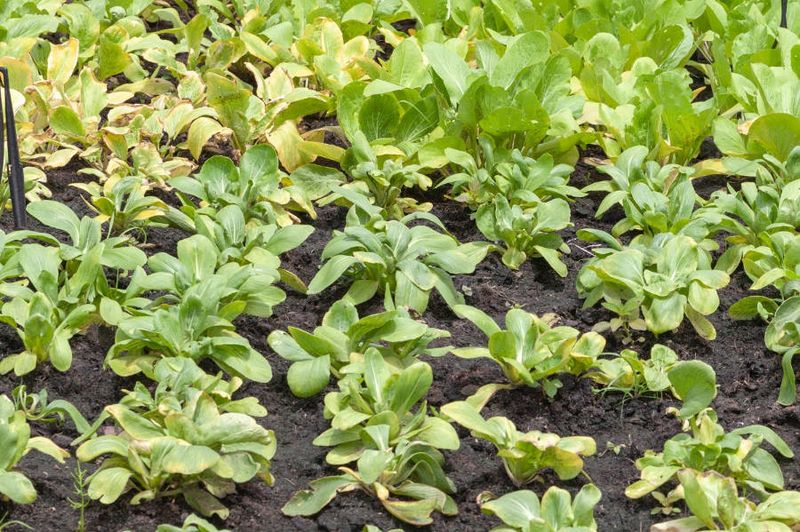
Yellow leaves at the base of a mustard plant do not prove the bed has run out of nitrogen. Nitrogen shortage is one possible reason, but it is not the only one.
Older leaves can also yellow naturally while the rest of a vegetable plant stays healthy. According to University of Maryland Extension, drought, waterlogged soil, fertilizer injury, pests, and disease can all cause yellowing too.
That is why the smartest first move is to look before you feed. Crouch down and check the whole plant: its size, its color, how quickly it is growing, and the condition of the soil around it.
Check a few plants, not just one.
Feeding first and diagnosing later can miss the real cause, and extra fertilizer can add stress instead of relief. A few minutes of careful looking this week gives you a much better shot at choosing the right response.
When yellowing points toward nitrogen deficiency
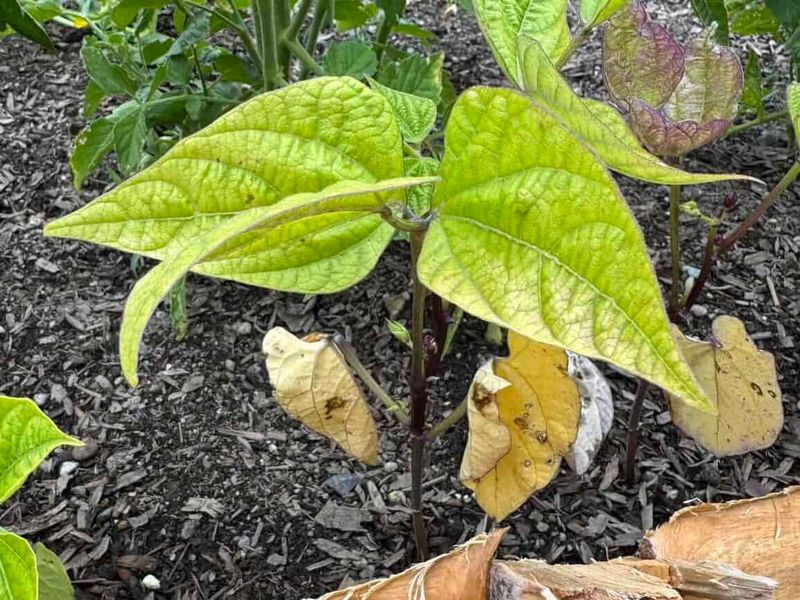
Picture a row of mustard greens where the oldest leaves are turning yellow fairly evenly, and the whole plant looks pale and is growing slowly or staying small. That combination fits nitrogen deficiency better than yellowing alone.
There is a reason the oldest leaves go first. Nitrogen moves around inside a plant, so when supplies run short, the plant pulls it from older leaves to feed new growth, as described by University of Georgia Extension.
Matching this pattern raises your suspicion, but it does not confirm how much nitrogen is in your bed. Think of it as a good lead, not a verdict.
If the yellowing is patchy, limited to a leaf or two, or shows up alongside spots or damage, hold off on the nitrogen theory. The next section walks through what else to rule out.
Check moisture, fertilizer history, pests, and lesions
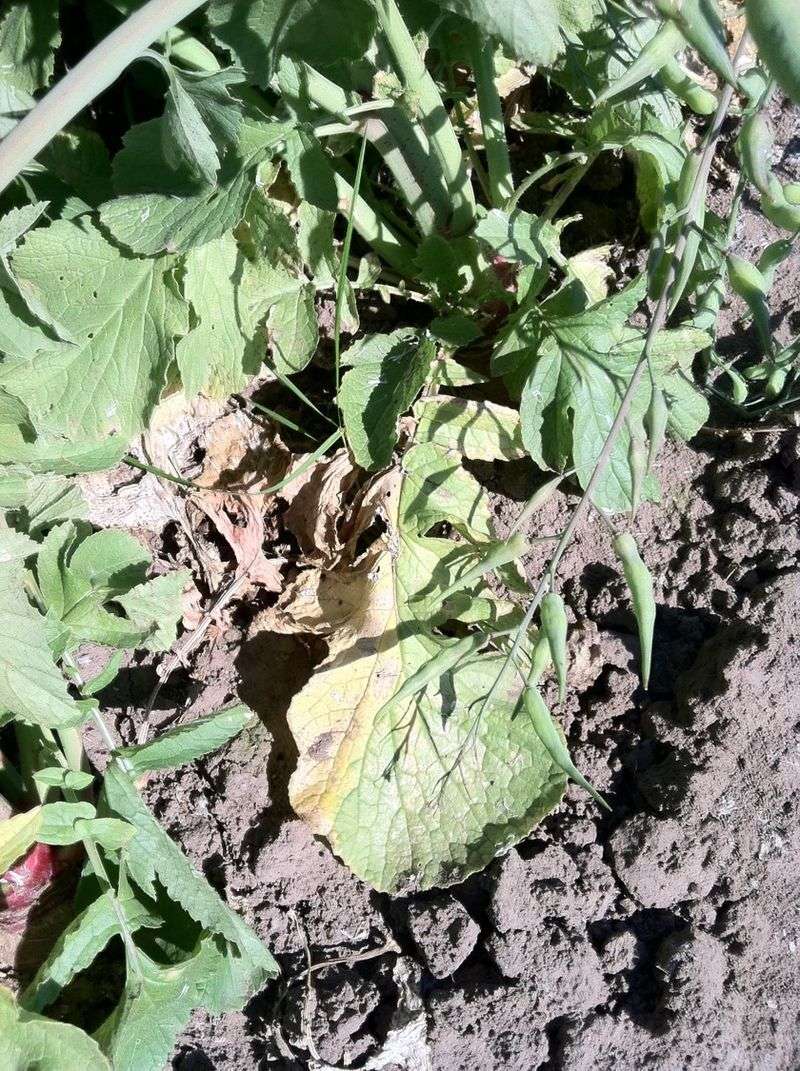
Start with the soil. Push a finger a couple of inches down: bone dry and soggy ground can both cause yellowing, as University of Maryland Extension notes.
Next, think back. Did you fertilize recently, maybe with a heavy hand?
Fertilizer injury can look like a nutrient problem, so more product is the wrong answer there.
Then flip a few leaves over and look for insects. Also compare your plants: are they vigorous overall, or weak across the board?
Finally, study the leaf shapes and markings. Yellow V-shaped lesions starting at leaf edges, spotted or water-soaked areas, and yellow blotches with misshapen leaves all point toward disease, according to Oklahoma State University Extension.
If you see those signs, investigate the disease with your local extension office instead of reaching for fertilizer.
Consider fall growing conditions in Texas and Florida
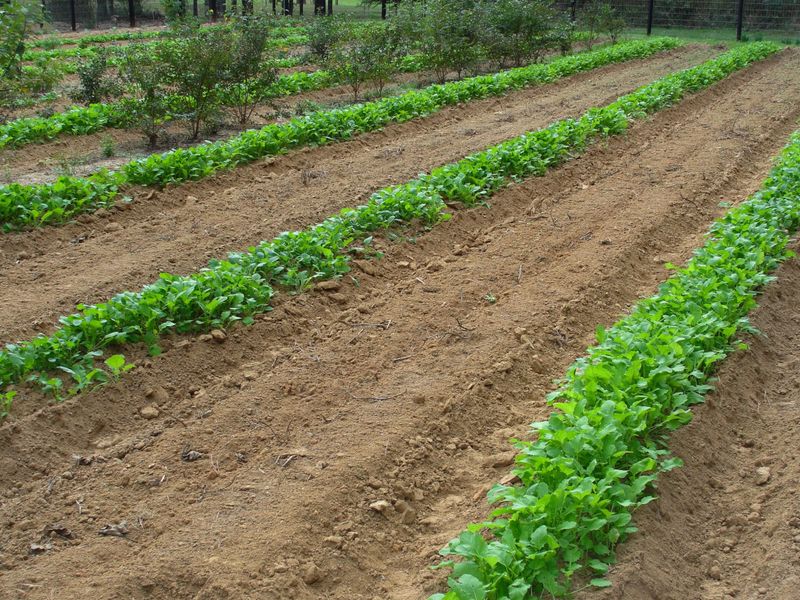
Mustard is a cool-season crop, and fall in the South can be a bit of a tug-of-war with leftover warmth. Your plants may be reacting to the weather as much as to the soil.
In Florida, UF/IFAS gives August through February as a general planting season for greens, with timing varying by location. A planting at the edge of that window may face different stress than one in the middle.
In Texas, Texas A&M AgriLife Extension says prolonged temperatures above 75°F can slow mustard growth and reduce quality.
So if growth is sluggish during a warm stretch, heat may be part of the story. Add that to your notes on moisture, pests, and leaf markings before deciding that nitrogen is the culprit.
Use fish emulsion only when the evidence supports feeding
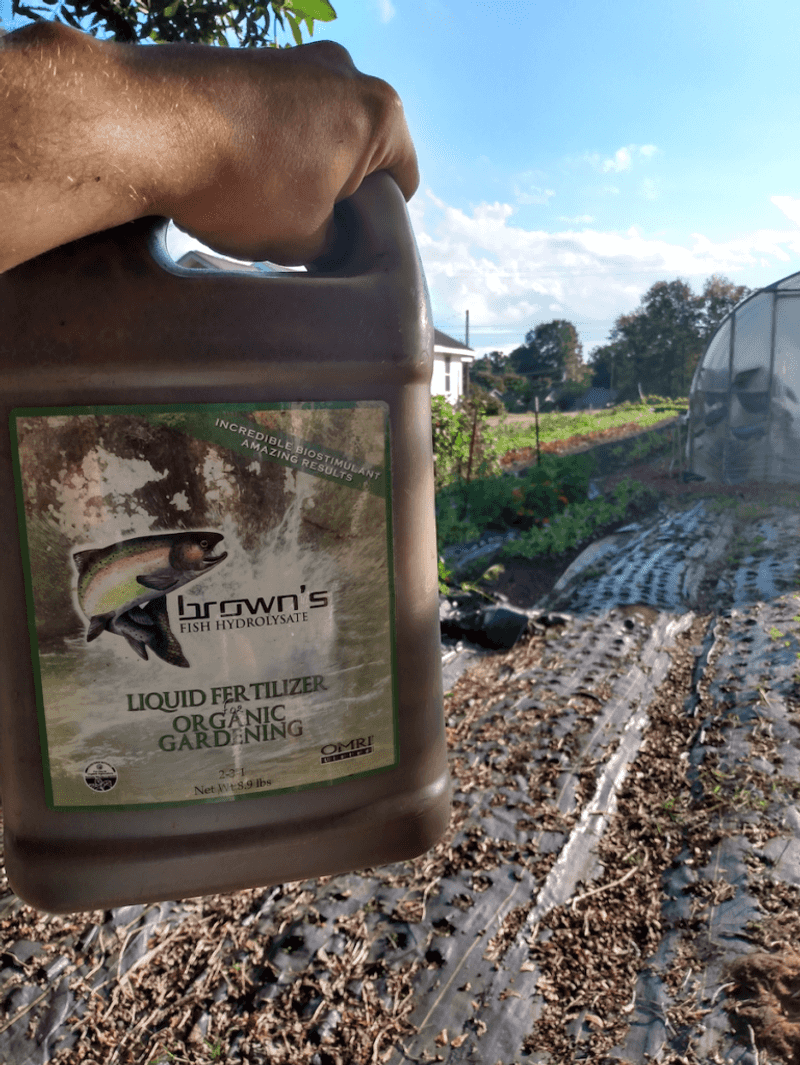
If your checks point to a nutrient shortage, fish emulsion is one possible option. It is not a guaranteed rescue, and one feeding may not quickly turn yellow leaves green.
Choose a product labeled for edible crops and follow its directions for rate and method, since products vary. UF/IFAS describes fish emulsion as typically nitrogen-rich and gives a general pattern of mixing with water and applying around plants every two to three weeks or as needed.
Treat that as general guidance, not a universal rate, and avoid overfeeding.
Do not count on a soil test to settle the question in Florida. UF/IFAS says its home-garden soil test does not measure nitrogen.
Also skip the per-acre numbers in Texas A&M’s mustard greens guide. Those are commercial recommendations and do not convert into a home-garden dose.
Use leaf quality to guide harvest
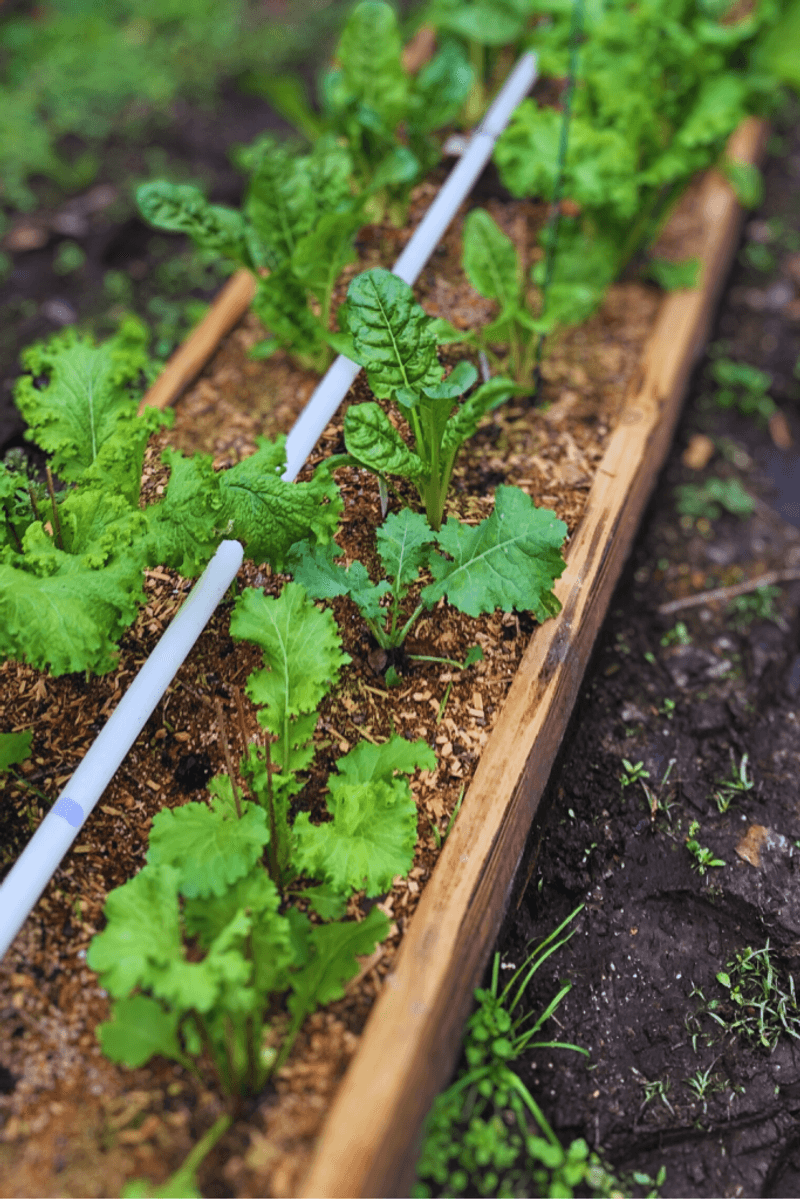
Harvest timing is its own question, separate from figuring out why leaves turned yellow. Texas A&M AgriLife Extension advises harvesting greens while they are young and tender, before leaves turn yellow or brown.
That makes the greenest, freshest leaves your best picks for quality. Pick regularly so leaves do not sit on the plant and age.
The same source notes that slight bronze tints are normal on mustard greens, so a little color shift is not automatically a red flag.
Keep in mind that this is advice about eating quality. Leaf color alone does not tell you whether a leaf is safe or unsafe, so use it only as a guide for what tastes and looks best.
The best fix for yellow leaves may be a plate of greens picked a little earlier.